Winter Layering Knits: Wool and Silk Done Right
- Words by
- Julio Arco
- Published
- Reading
- 5 min
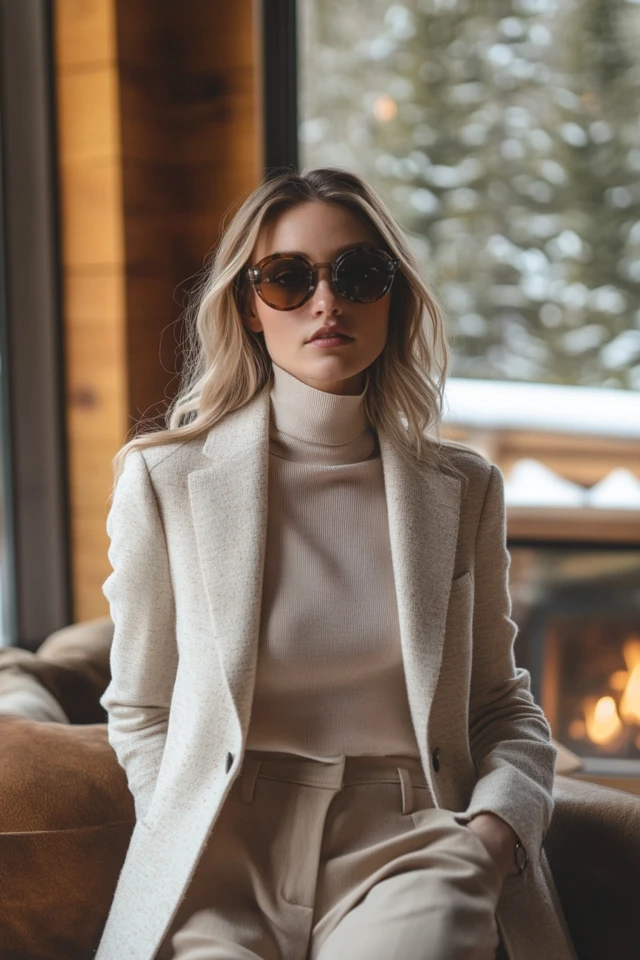
The simplest way to layer winter knits is in three steps: a thin, smooth layer against your skin, a knit for warmth in the middle, and a coat or structured jacket on top. Silk works well as the thin first layer and wool as the warm second one, because the slick surface of silk lets the knit slide over it instead of grabbing.
Below is how to choose each layer, how to keep the result from looking bulky, and four outfit formulas you can copy.
What is the 3 layer rule for winter?
It is a sequence: base, mid, outer. The base sits against your skin, the mid layer holds in warmth, and the outer layer blocks wind and weather. Each one has a different job, so swapping one fabric for another changes how the whole outfit feels.
For outdoor exercise, Texas A&M's Howdy Health says the layer closest to your skin should be made of moisture-wicking materials that draw sweat away. The same page advises avoiding cotton, because it absorbs moisture and can keep it next to your skin, making you cold. For everyday city dressing you will sweat less, but the order still holds: keep damp-prone cotton out of the base layer on long, cold days.

Choosing a smooth base layer
A silk blouse, camisole or turtleneck is a good base for office and evening outfits. It is thin, so it adds warmth without adding thickness at the waist or arms, and the smooth surface reduces friction under a sweater.
- A silk turtleneck under a blazer or sweater gives a clean neckline and covers the throat.
- A silk camisole works under an open cardigan, and it is easy to take off indoors.
- A slip dress can sit under a chunky knit if you want a longer line.
Neutral shades such as cream, black or blush are the easiest to reuse. Through the lens of evidence-based design, I'd pick the base color for what shows at the neckline and cuffs, since that small strip of color sits right beside your face and sets how the knit above it reads.
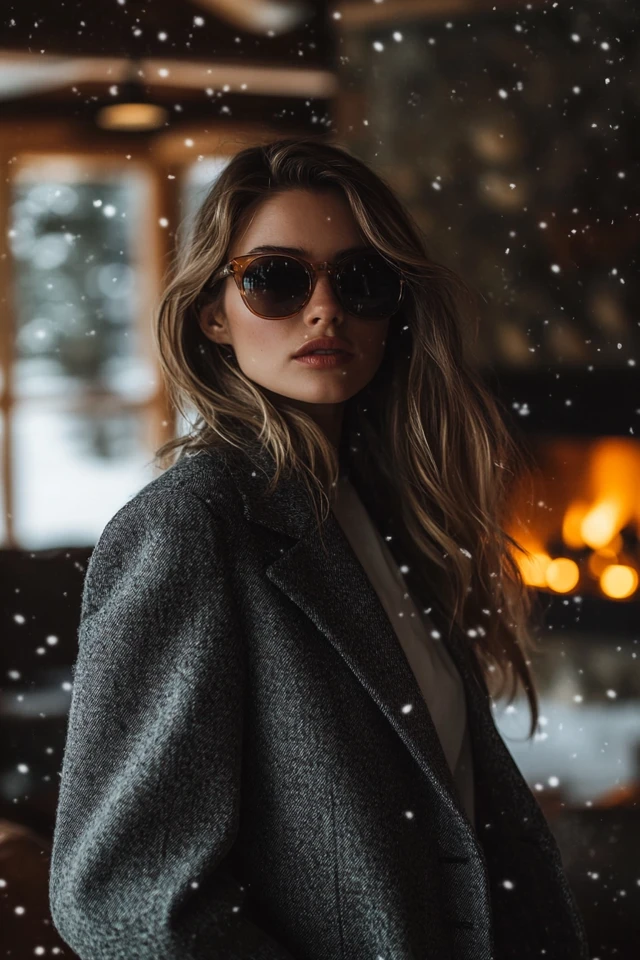
Mid-layer knits: sweaters and cardigans
This is where the warmth lives, so it is where fabric choice matters most. Fine merino pullovers are the slimmest option and layer easily under a coat. Chunky wool sweaters give texture but take up room, so they need a looser outer layer.
If you are layering with merino wool, a fine gauge is usually the one that fits under a tailored blazer without pulling across the shoulders. A cardigan is more flexible than a pullover, since you can open it, button it or belt it as the day warms up.
If you like the contrast of rough and sleek, see how the same idea plays out in chunky knits with leather pants, or go softer with wool and cashmere layers.
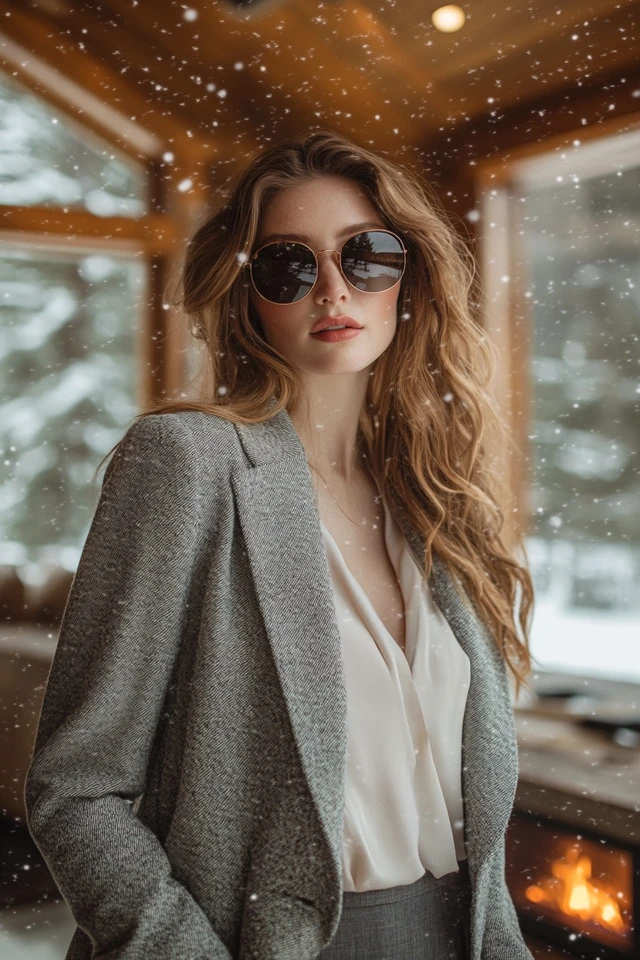

Finishing with a top layer
The outer layer should be cut roomier than what is under it, otherwise the stack compresses and the knits lose their loft, which is what traps warmth. Check that you can lift your arms and cross them without the sleeves binding.
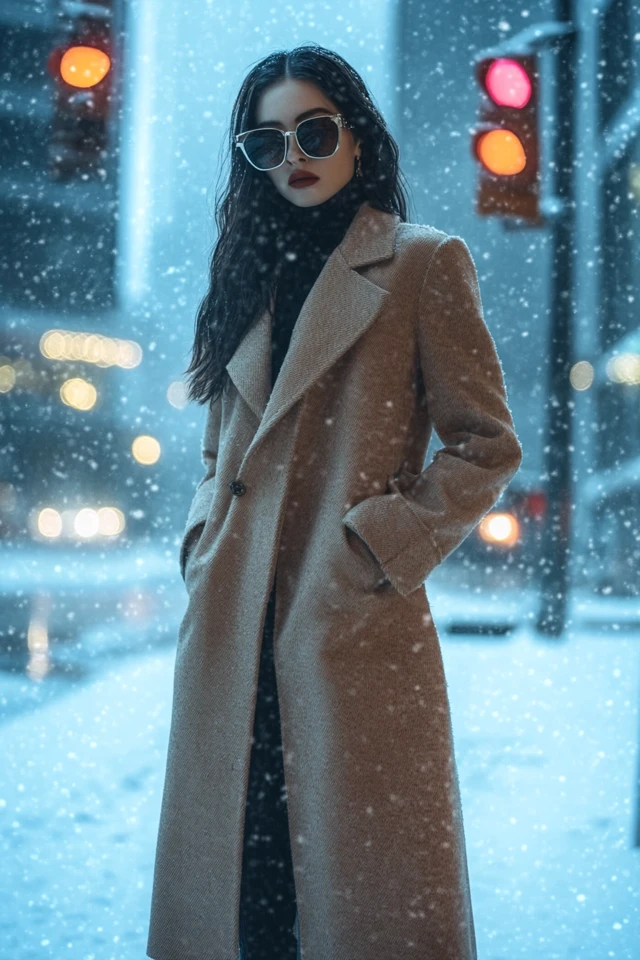
A wool coat is the classic choice, and a structured wool blazer works on milder days. For more on coat shapes, read about sculpted wool coats and combining wool and cashmere in winter coats.

How to layer without looking bulky
Bulk comes from stacking thick things at the same point on the body. A few adjustments help.
- Keep one layer slim. If the sweater is chunky, make the base and the bottoms fitted.
- Taper somewhere. Slim trousers or a pencil skirt balance a roomy cardigan.
- Tuck or half-tuck the base layer so the waist stays visible.
- Let the neckline step down: a high silk collar, then a lower knit neckline, then an open coat.
- Stay within one or two tones so the eye reads a single column.
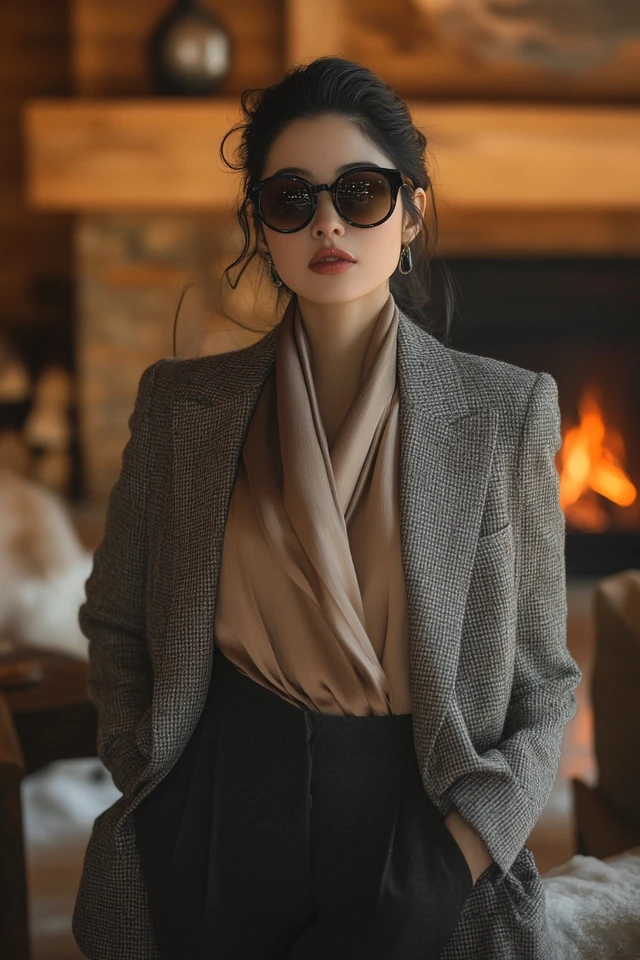
Common winter layering mistakes
A jacket that pulls at the shoulders over a sweater is a fit problem, not a you problem. Size the outer layer for the layers it will cover.
- Wearing cotton as the base layer on long, cold days, for the moisture reason above.
- Putting two thick knits on top of each other, which compresses both.
- Matching every texture. Mixing one matte knit with one sleek layer reads richer than three of the same surface.
- Forgetting sleeve length, so a base cuff peeks out unevenly or bunches inside the knit.
Four wool and silk outfit formulas
Casual weekend
Cream silk turtleneck, oversized taupe or gray wool cardigan, high-waisted jeans, ankle boots, and a wool beret.
Workday
Black silk blouse, navy wool blazer, slim wool trousers, heeled ankle boots, and a silk scarf at the neck. For softer blouses, see chiffon and silk blouses.
Evening
Black silk slip dress under a fitted wool coat in emerald or burgundy, with heels and a small metallic clutch. More sheer ideas are in elegant silk sheer layers.
Travel
Blush silk camisole, camel longline cardigan, stretchy wool-blend leggings, flat boots, and an oversized scarf you can wrap or use as a blanket.
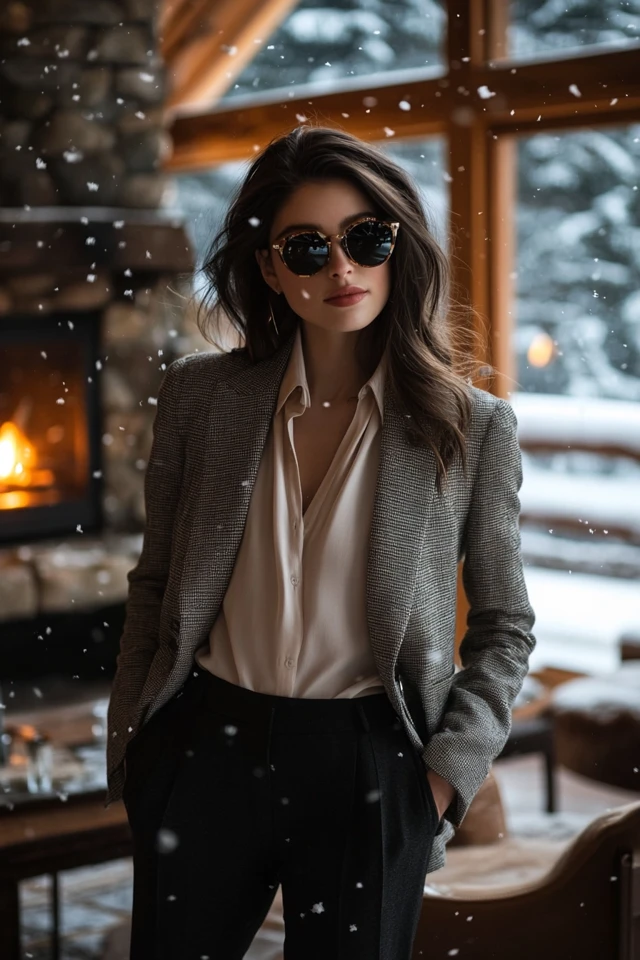
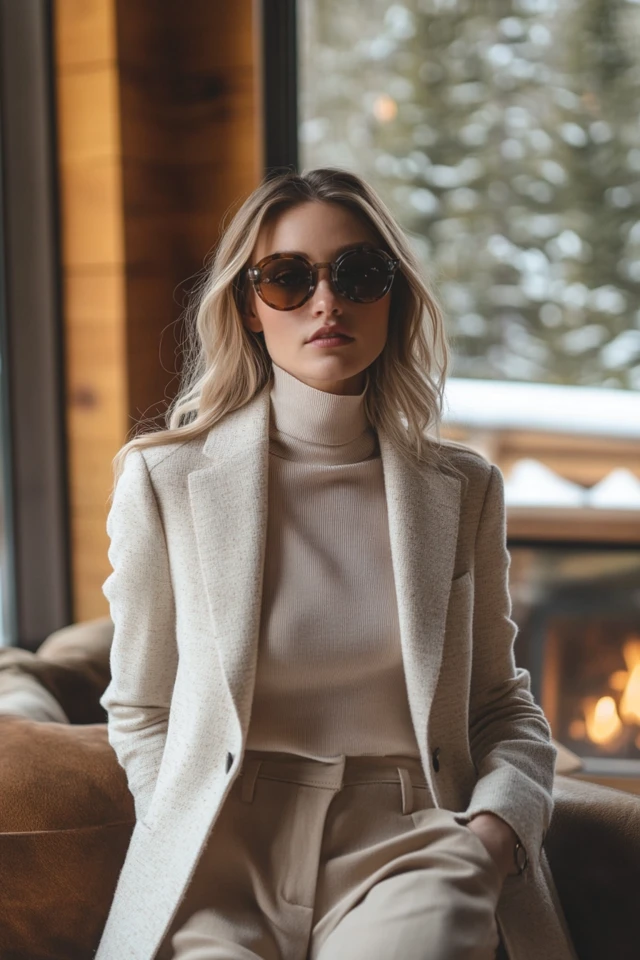
As an architect trained in evidence-based design, I'd treat the scarf as your adjustable layer: it changes both warmth and the color near your face in seconds. For a dressier take on wool, try wool with sequins.
Frequently asked questions
What is the best layering system for winter?
A three-part system works for most days: a thin smooth base, a wool knit for warmth, and a roomier coat on top. Adjust the middle layer first, since it is the easiest one to add or remove.
What are some common mistakes people make when layering for winter?
The usual ones are cotton next to the skin, stacking two thick knits, and an outer layer cut too snug. Fit the coat over your sweater, not over a T-shirt.
Can wool and silk be worn in mild weather?
Yes. A silk top with a fine merino cardigan is light enough for transitional days and easy to remove indoors.
How do I care for wool and silk garments?
Follow the care label on each piece, as wool and silk often need gentle washing and low heat. When the label says dry clean only, take it to a professional.
Filed under Fabrics & Textures