Nail Texture Techniques: Flocking Velvet Mani Guide
- Words by
- Julio Arco
- Published
- Reading
- 4 min
A flocking velvet manicure is built from fine fibers (the flock) pressed into a tacky layer of gel color, so the nail ends up matte, soft-looking and slightly fuzzy. If you want one, the short version is: apply a base color, cure it, add a tacky layer, press on the velvet powder, brush off the excess and seal only where you want a glossy contrast.
It is one of the easier nail texture techniques to copy, and it works on short nails as well as long ones. Below: the steps, the finishes that pair well with it, and how to keep it from looking bulky.
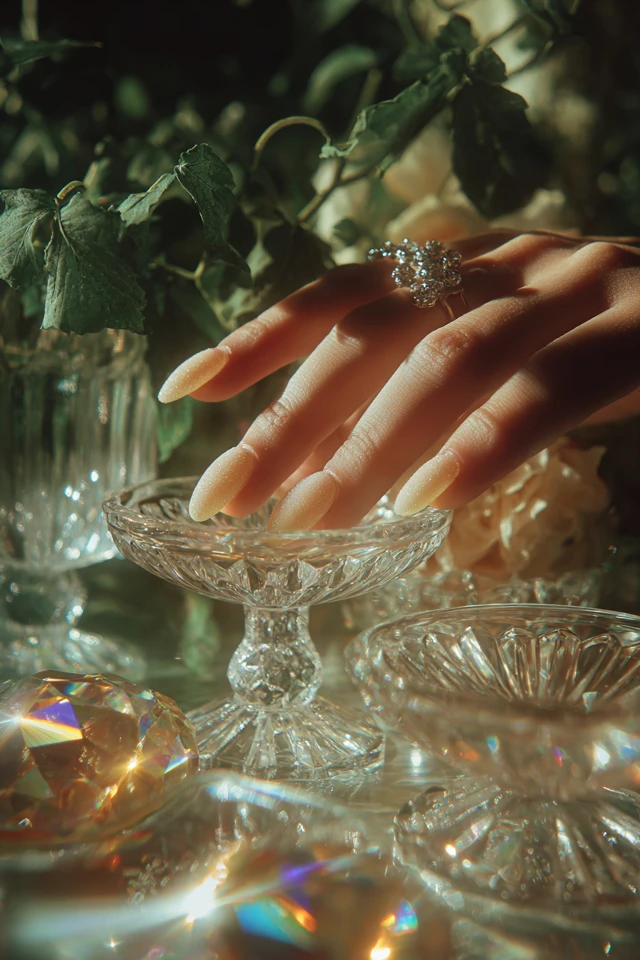
How to do textured nails with flocking velvet
Technicians use slightly different products, so follow the instructions on your own gel system. The general order is the same:
- Prep the nail: push back the cuticle gently, buff the shine off lightly and wipe away dust.
- Apply a thin base color and cure it. A color close to the flock shade gives the deepest result.
- Apply a thin layer of the tacky gel or no-wipe layer the system calls for, and cure only if the instructions say so.
- Press the velvet powder on with a sponge applicator or a soft brush. Tap it in rather than rubbing.
- Brush away loose fibers with a clean, soft brush before they settle into the cuticle area.
Keep every layer thin. Texture reads best when the nail is still a nail shape, not a lump.
Why velvet looks the way it does
Through the lens of evidence-based design, I'd start with texture before color. A flocked surface scatters light in many directions instead of reflecting it in one, so the same emerald or navy looks deeper and calmer than it does in a glossy finish. That is why a velvet nail can look richer than its color suggests.
Matte and glossy nail contrast
Pairing velvet with shine is the simplest way to make the texture obvious. A few combinations that work:
- Velvet on four nails and one glossy accent in the same color family.
- Velvet across the nail with a thin glossy line at the tip or the cuticle edge.
- A glossy base with a velvet half-moon or diagonal block.
Keep the glossy parts in the same color family as the velvet. When both finishes share a hue, the eye reads the difference in surface, which is the point.
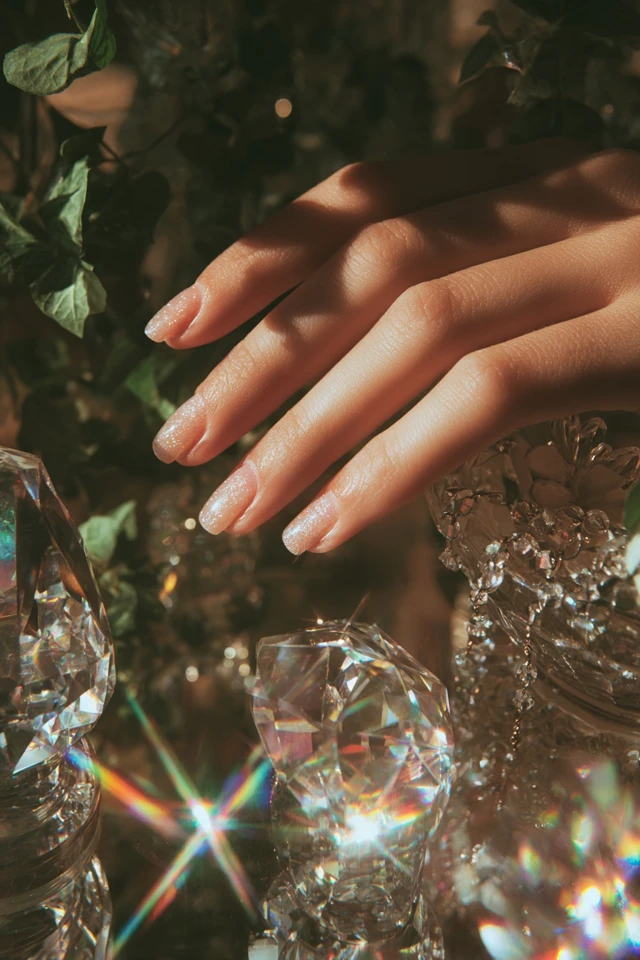
Nail texture techniques for short nails
Short nails can carry velvet well. Choose a mid to deep shade, since very pale flocking can look chalky on a small surface, and keep the layers thin so the nail does not look swollen. Placing the velvet on one or two nails and leaving the rest glossy also keeps the look light.
If you wear acrylic extensions, the same flocking steps apply over a finished, cured surface. For more velvet ideas on enhancements, see velvet acrylic nails.
Other ways to add texture to a manicure
Flocking is one option among several. Others you can ask a technician about:
- Embossed or sweater-style patterns sculpted in gel.
- Rhinestones, pearls or caviar beads placed in one spot rather than all over.
- Magnetic gel for a shifting sheen, such as the one in magnetic flocking velvet nails.
- Chrome powder over a matte top coat for a metallic haze.
If you like the fuzzy look specifically, textured fuzzy flocking design nails has more design ideas, and midnight velvet mani shows a darker palette.
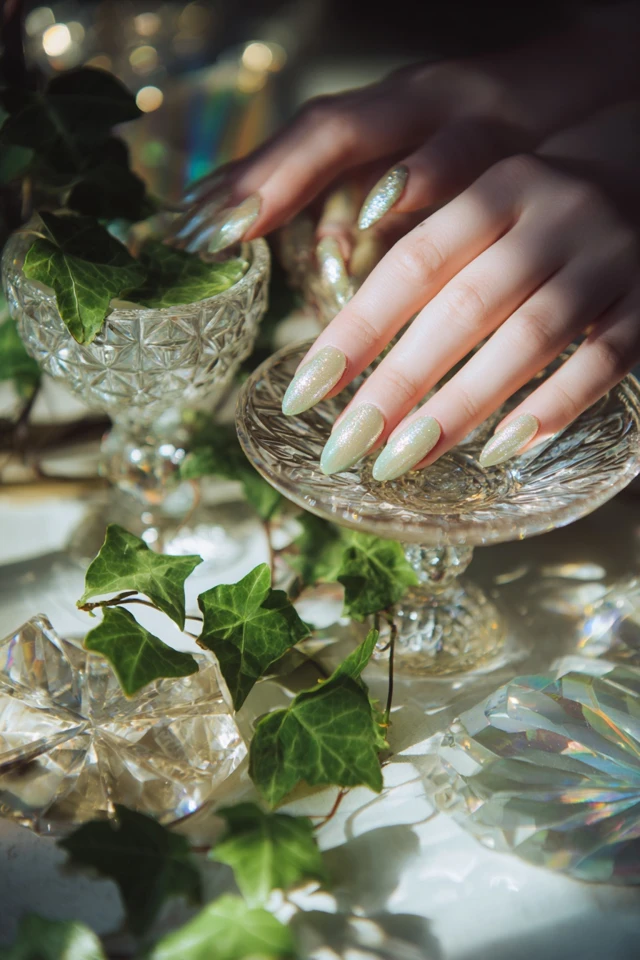
Color pairings that work
Jewel tones suit velvet because the soft surface keeps them from looking harsh. Emerald with a cream accent, sapphire with a warm brown, and amethyst with a muted gray are all easy to wear. Since texture already adds interest, I'd keep the palette to two colors at most.
Keeping your natural nails healthy
A textured manicure is only as good as the nail under it. According to a review in the National Institutes of Health's PMC archive, a healthy nail has a smooth glossy surface and a translucent nail bed visible underneath. Heavy buffing and aggressive removal work against that.
Removal matters most. The American Academy of Dermatology says acetone is the most effective way to remove gel polish at home, and the Cleveland Clinic notes that careless removal can temporarily damage nails, with cracking and peeling the most common issues. Do not pick or peel flocked gel off. If your nails look weak or ridged, check with a dermatologist or nail professional.
Frequently asked questions
How do you do textured nails?
Apply a thin base color, add a tacky layer, press on a texture such as velvet powder, then brush off the excess. Other options include embossed gel, beads or rhinestones placed in one area.
How do I stop ridges on my fingernails?
Ridges are common and have several causes, so it is best to ask a dermatologist rather than guess. Avoid heavy buffing, which can make the surface look uneven.
Can I get a velvet manicure on short nails?
Yes. Choose a mid to deep shade, keep layers thin, and consider velvet on one or two nails with a glossy finish on the rest.
Filed under Nail Design