Waterproof Chunky Boots for Muddy Fall Trails
- Words by
- Julio Arco
- Published
- Reading
- 4 min
For muddy fall trails, pick waterproof chunky boots with an ankle-high shaft, a deep-lugged rubber sole, sealed seams and a snug heel. That combination keeps water out, grips wet leaves and still looks good with jeans afterward.
Below: what to check before you buy, how the fit should feel, how to style them from trail to town, and how to keep them in shape.
What makes an ankle boot work on a muddy trail?
Ankle boots cover enough to keep splashes and wet grass off your socks, and they stay lighter and easier to flex than taller hiking boots. That makes them a good fit for orchard paths, park loops and easy to moderate hikes. For steep or technical terrain, look for a firmer, higher boot. If snow is the issue, see warm hiking boots for snow-covered trails.
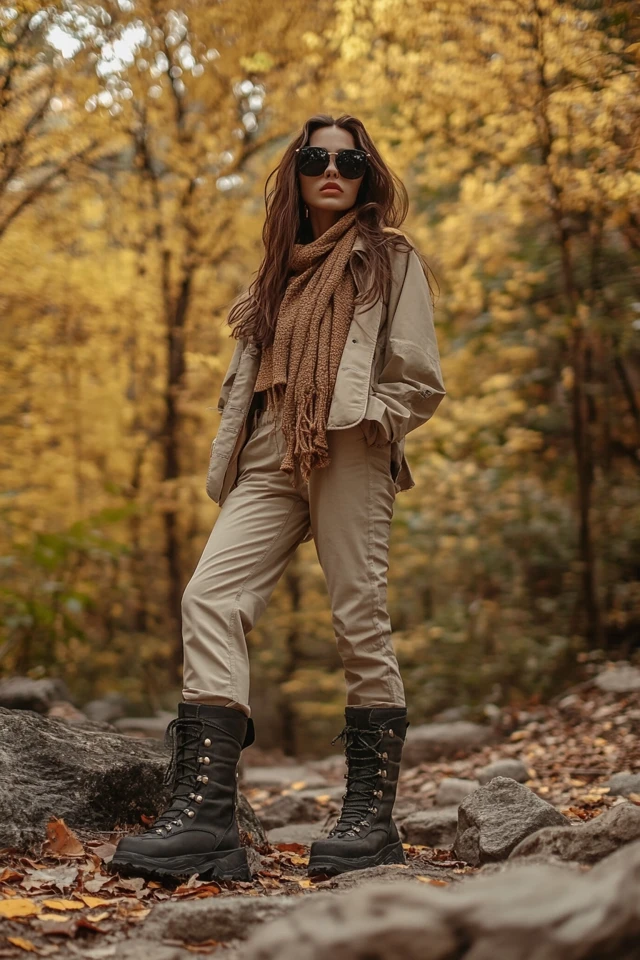
Most are built from waterproof leather, rubber or treated synthetics. A chunky sole adds a visual weight that balances wide-leg pants and also usually means deeper lugs, which is where the grip comes from.
Which features matter most?
Waterproofing
Look for a waterproof membrane (Gore-Tex is a common one), sealed seams and a rubber outsole. Treated leather alone resists water for a while, but a membrane keeps working when the leather gets scuffed.
Traction
Choose deep, widely spaced lugs. Mud packs into tight treads and turns them smooth, while wider spacing sheds it as you walk.
Fit and comfort
Snug at the heel, roomy at the toes. Harvard Health advises leaving at least a quarter- to a half inch between your longest toe and the end of the shoe. Leave room for the thicker socks you will wear on a cold day, and try boots on late in the day when feet are slightly larger.
Podiatrist Gina Hild, DPM, says "Footwear that offers cushioning plus heel and arch support can help you relieve and manage symptoms". If you have foot pain, check with a podiatrist before choosing.
Heel height
Chunky platforms can feel tall but still have a low heel drop. Harvard Health notes that for women the most comfortable shoes are low-heeled but not necessarily flat, no higher than three-quarters of an inch. For all-day walking, stay close to that.
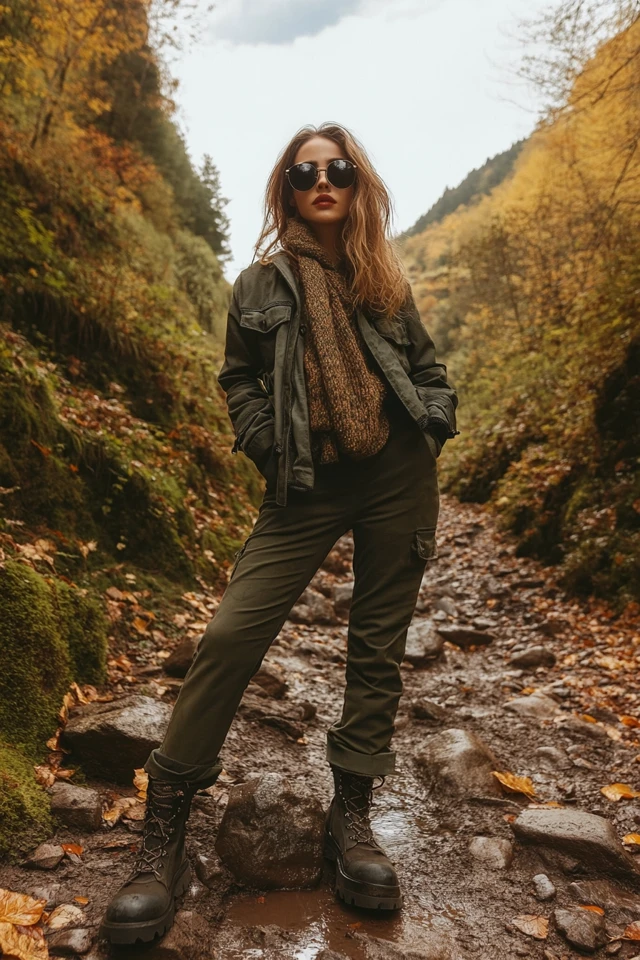
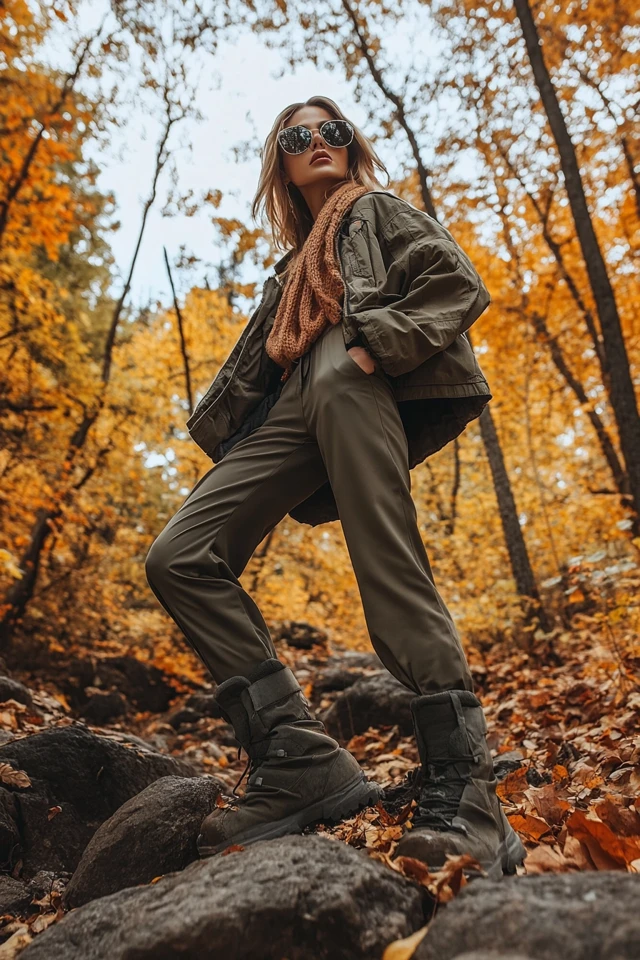
Are chunky boots still in style?
Yes, lug soles and thick platforms remain easy to find in everything from hiking-inspired lace-ups to dressier styles, and I'd treat them as a safe buy because the shape is practical first. Through the lens of evidence-based design, I'd also point out that a heavier sole changes proportion: it makes legs read slightly shorter and grounds a light dress, so balance it with a looser or longer hem.
Waterproof Chelsea boots are the quieter option. They have no laces to soak, pull on quickly and look neat under straight or cropped trousers. Pick a rubber-soled pair with sealed seams if you plan to walk on wet paths.
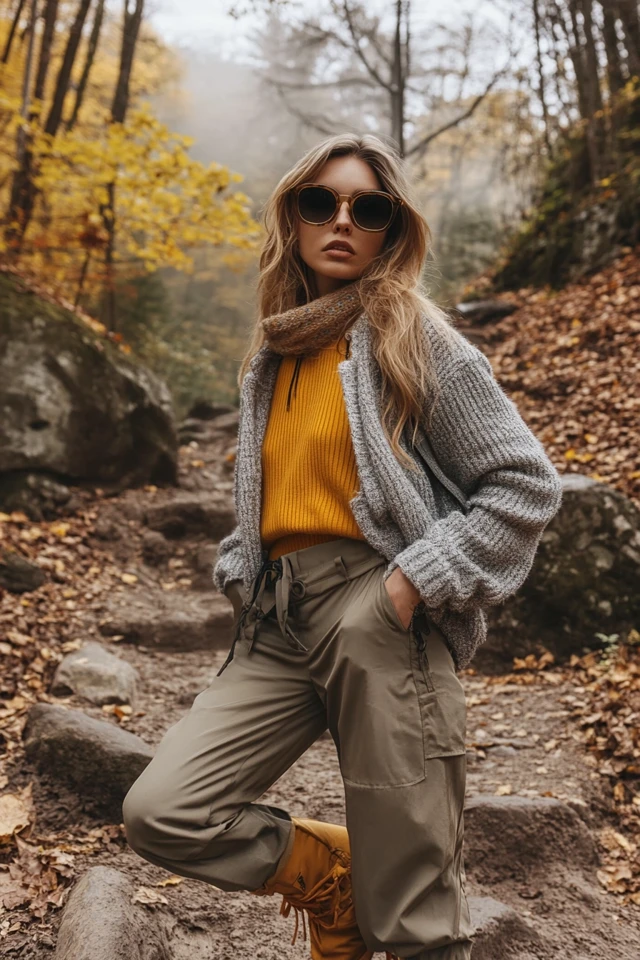
How do you style waterproof ankle boots from trail to town?
On the trail
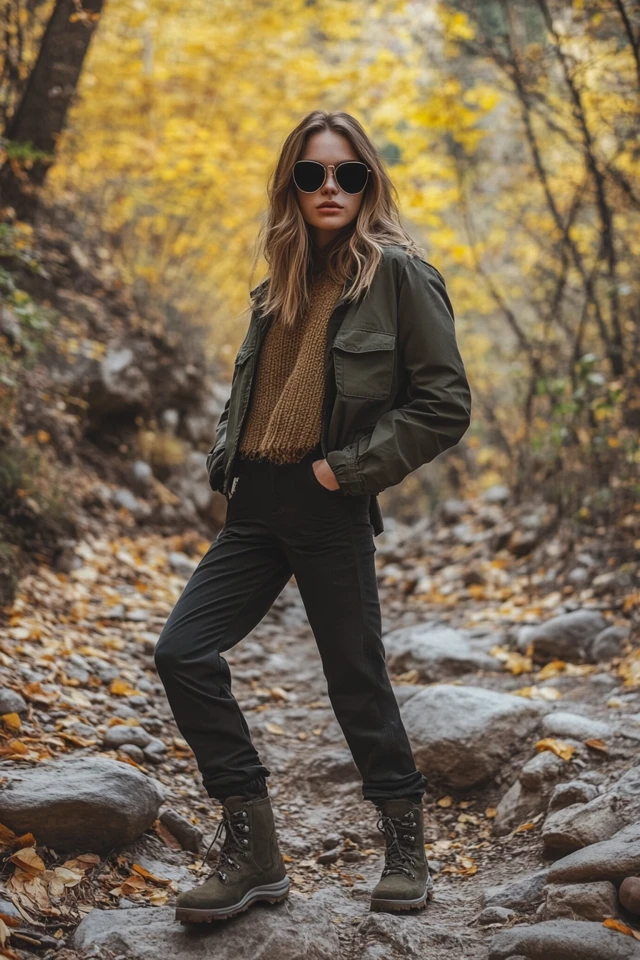
Pair them with leggings or hiking pants, a base layer and a lightweight waterproof jacket. Wool or moisture-wicking socks do more for comfort than any insole.
Casual outing
Swap the hiking pants for cuffed straight-leg jeans, add a chunky knit and a longline coat. The boot's weight matches the knit's, so the outfit feels balanced.
With dresses and skirts
A midi dress with thick tights and chunky boots works well in cool weather. For more ideas, see chunky boots with flowing dresses and floral maxi dresses with boots.
Dressier
Tailored wool trousers and a trench look sharp with a smooth black or brown leather boot. Matte leather reads more formal than a glossy rubber finish.
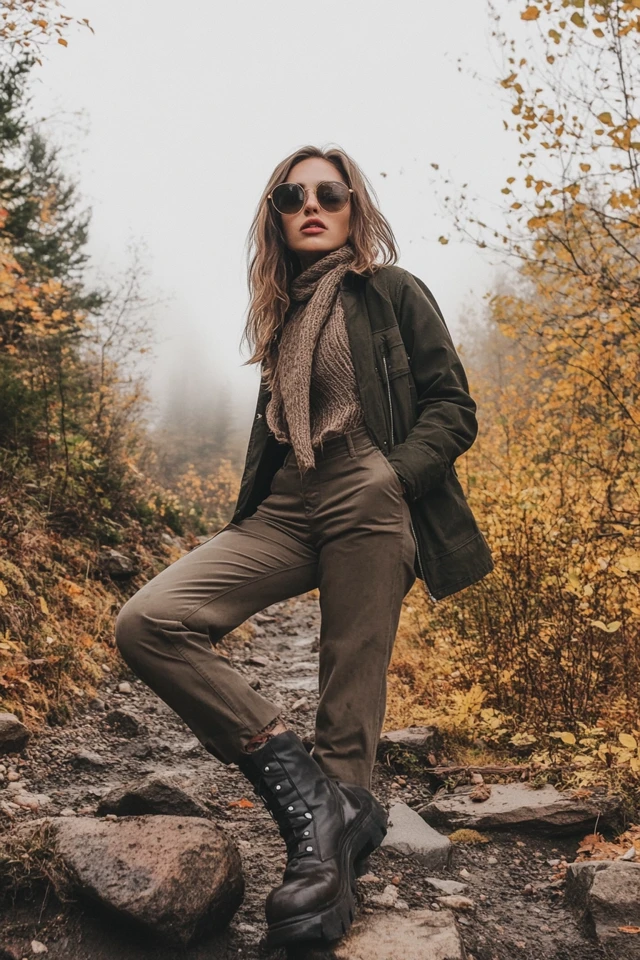
Which colors are easiest to wear?
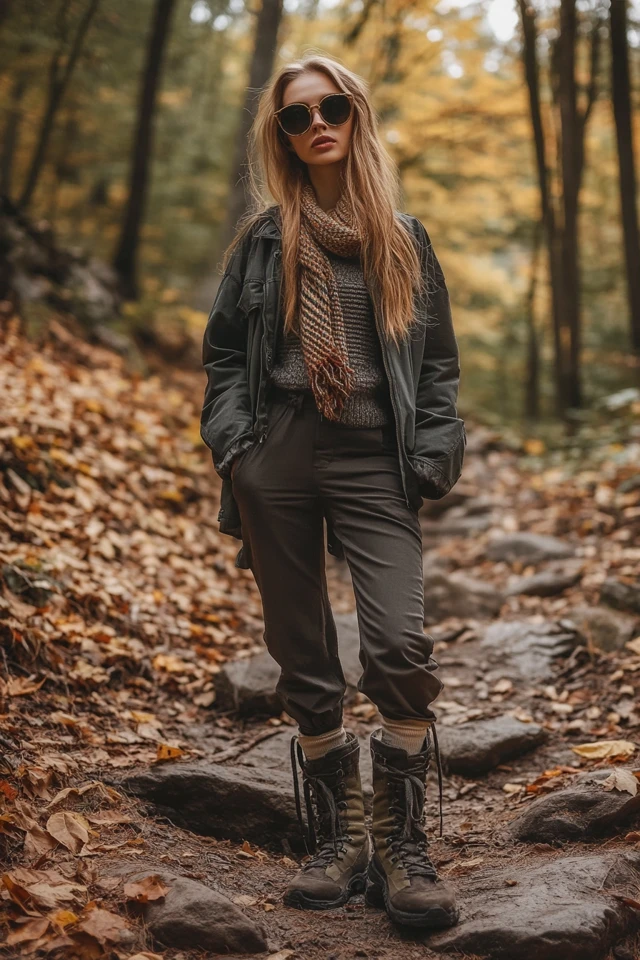
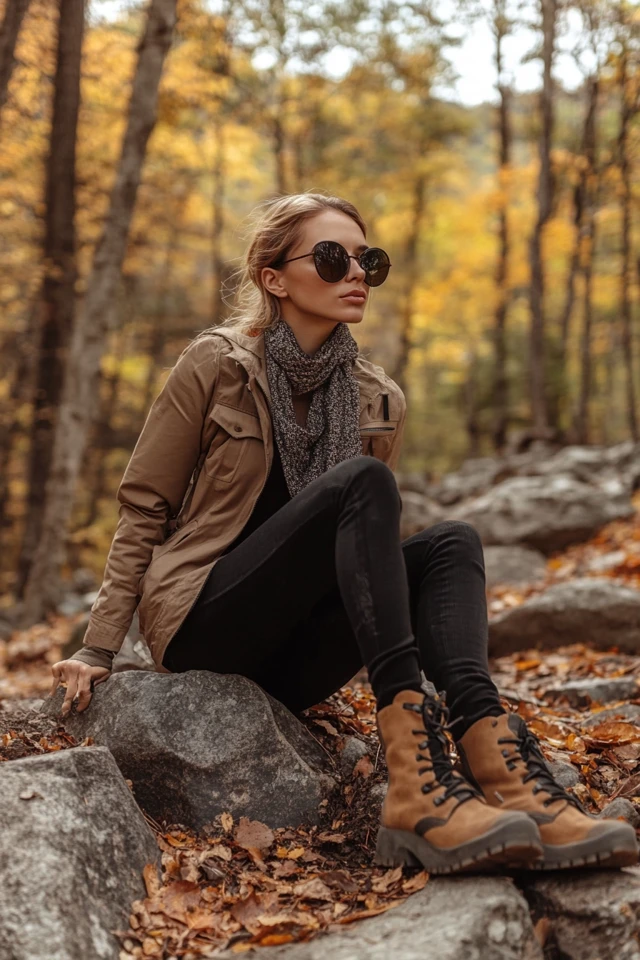
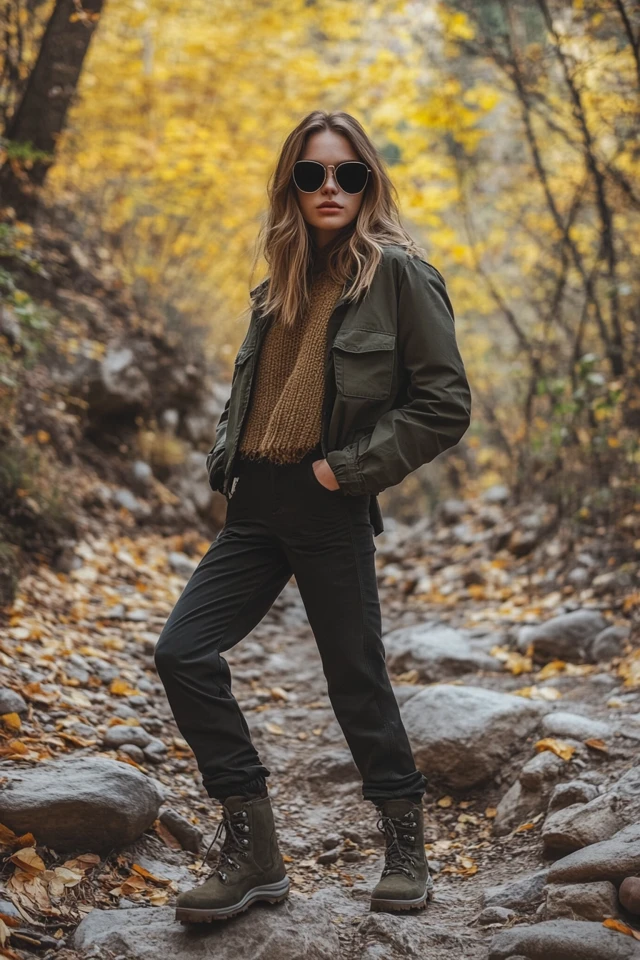
Brown, tan and black work with nearly everything in a fall wardrobe, and they hide mud better than pale shades. Olive and burgundy are good if you want a color: they sit close to typical autumn tones, so they still coordinate with denim, cream and camel. Dark laces on a dark boot keep the look sleek, and contrast laces add a casual edge.
How do you care for waterproof boots?
- Before wearing leather boots in wet conditions, apply a waterproofing spray or wax.
- Break them in around the house or on short walks first to avoid blisters.
- After a muddy walk, wipe off dirt with a damp cloth and clean the treads with a soft brush.
- Let them air dry, stuffed with newspaper, away from direct heat, which can damage materials.
- Condition leather occasionally so it stays supple, and reapply waterproofing when water stops beading.
Replace them when the sole wears smooth or the cushioning is gone. Hild notes that "Shoes typically only last about six months or so depending on the activity level of the individual." Boots worn rarely will last longer, but check the soles each season.
For more wet-weather options, see durable waterproof boots for rainy days, or neutral ankle boots for everyday wear if you want something more low-key.
Frequently asked questions
What are the big chunky boots called?
They are usually called lug-sole boots, combat boots or platform boots, depending on the shape. Lug soles have deep tread, while platforms have a thick, flat sole.
Are chunky boots still in style?
Yes. Lug-sole and platform boots are widely available and pair easily with jeans, dresses and trousers.
Can ankle boots be worn in snow?
Light snow is fine in a waterproof pair with thermal socks. Deep snow or cold needs an insulated boot.
How do I prevent blisters in new boots?
Choose a snug heel with room for your toes, wear moisture-wicking socks and break the boots in on short walks first.
Filed under Weather Style