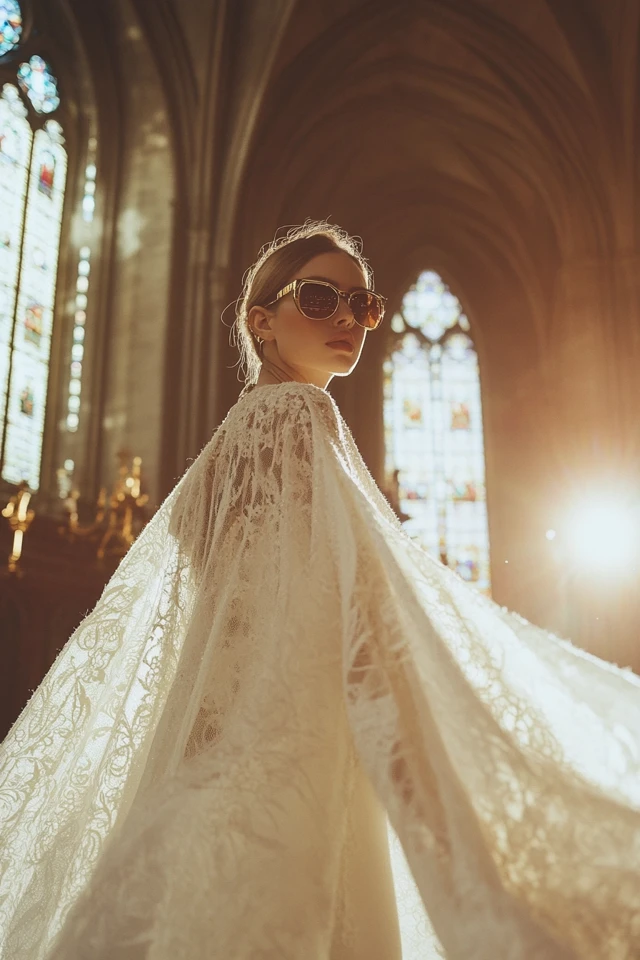
Flowy Cape Dresses for Grand Entrance Events: Grace, Drama, and Effortless Elegance
- Words by
- Julio Arco
- Published
- Reading
- 5 min
A cape dress is a gown with a layer of fabric attached at the shoulders that falls over the back, arms or both. For formal events, pick a floor-length column or A-line gown with a cape in chiffon or crepe, keep jewelry simple, and let the cape be the one dramatic detail.
Formal dresses with a cape work because they add movement and coverage without a separate wrap. Below: how to match the style to the event, which fabrics and colors behave best, and how to finish the look.
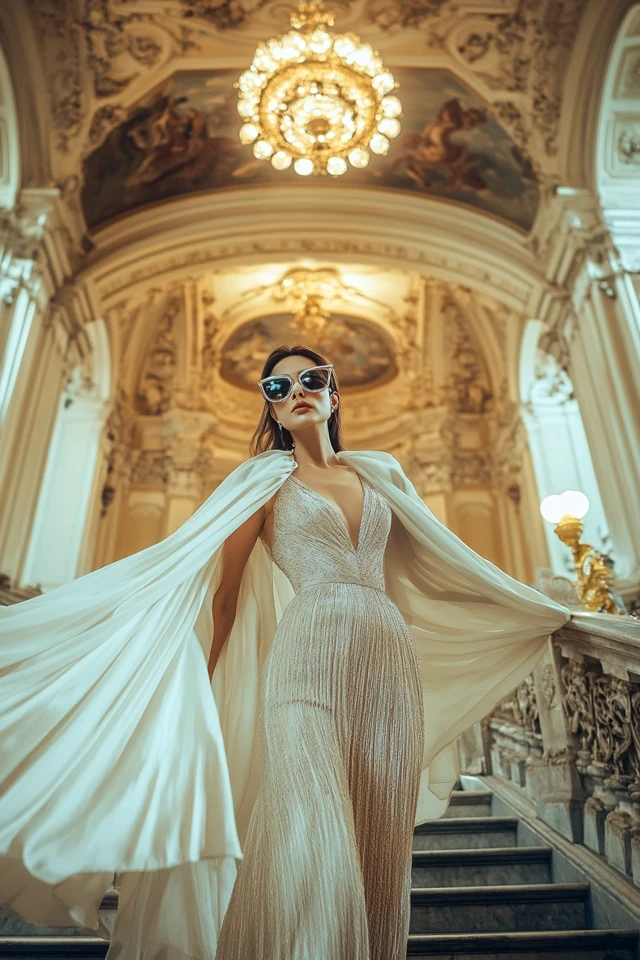
What counts as cape formal attire?
The cape can take three forms. A full cape hangs from the shoulders and can reach the floor. Cape sleeves are a short, draped layer over the upper arms, which read softer and are easier to wear when you will be hugging, dancing and sitting. A detachable cape lets you change the look between the ceremony and the party.
All three can sit on a sheath, column, A-line or ball gown skirt. The skirt sets the formality, and the cape sets the drama.
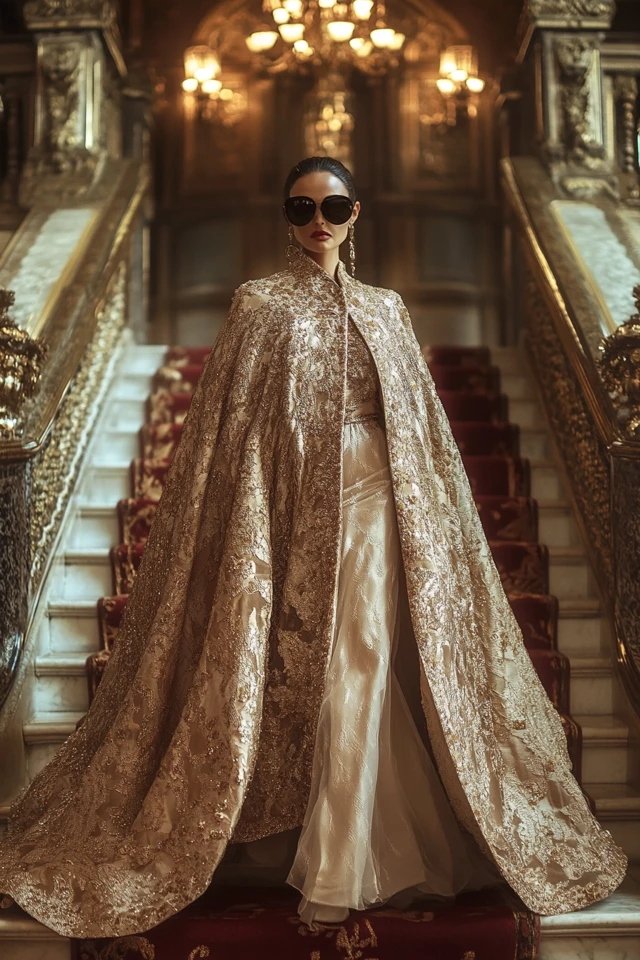
Which cape dresses suit black-tie events?
For a black tie cape gown, choose floor length, a fabric with some weight and a clean line. Crepe, satin and velvet hold their shape and look deliberate under evening light. A column gown with a sweeping back cape is the most streamlined option. A ball gown with a cape is the most ceremonial, and it suits galas with a lot of floor space.
Through the lens of evidence-based design, I'd treat the cape as the first thing the eye reads, so I'd keep the rest of the outfit quiet. Texture changes how a color reads: a matte crepe in black looks deeper, while satin in the same black picks up highlights and looks lighter.
Check one thing before you buy: sit down in it. A long cape that bunches behind you or pulls at the neckline when you sit is a design problem, not a you problem. Detachable or split capes solve it.
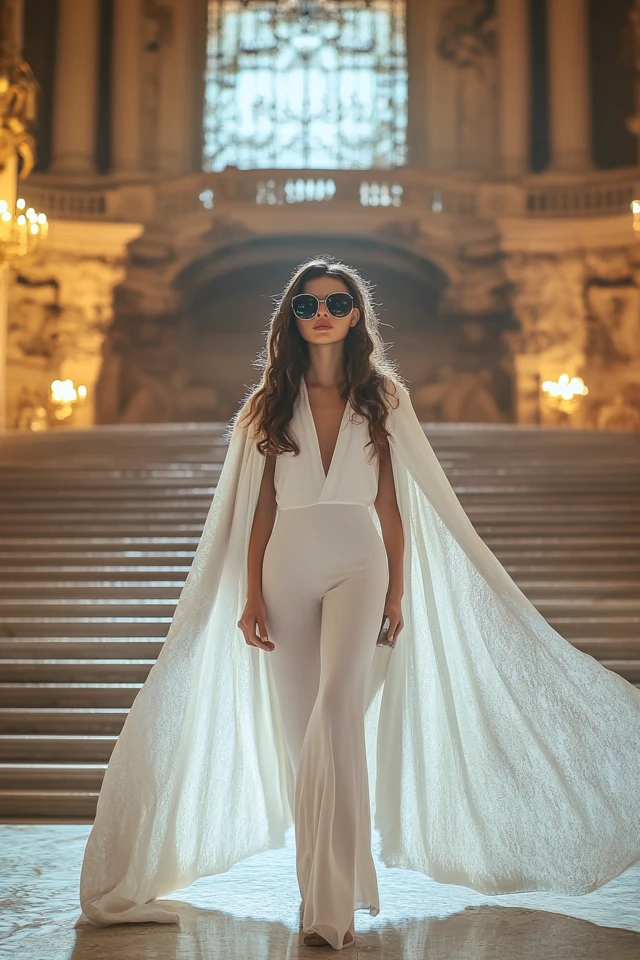
Are cape dresses good for weddings?
Yes, and they are useful ones. Cape dresses for weddings give shoulder coverage for a church or temple ceremony, then look elegant at the reception without extra layers. Guests should avoid white, ivory and anything close to the bride's palette.
- Evening ceremony: a velvet or satin cape gown in a jewel tone.
- Daytime or outdoor: chiffon in a soft shade, with a shoulder-length cape that will not catch in the wind.
- Destination or warm weather: tulle or lightweight chiffon, which breathe better than velvet.

Mother of the bride dresses with a cape
Mother of the bride dresses with a cape are popular because they cover the arms gracefully while keeping the look polished. Choose a column or A-line gown with a sheer or chiffon cape overlay, which flatters most figures and is easy to move in. Beaded or sequined bodices add shine without needing heavy jewelry.
Keep the color in the same family as the wedding party but not identical. Dusty blue, champagne, sage and deep navy are common choices. The same advice works for any woman, at any age, who wants more coverage with elegance: fit at the shoulder matters more than the date on the tag.

Which fabrics and cape sleeves work best?
Fabric decides how the cape moves.
- Chiffon floats and moves with a breeze. It suits outdoor events and warm weather.
- Crepe drapes cleanly with a little weight. It is the safest choice for sleek gowns.
- Satin and silk catch light and look formal. They also show creases and water marks.
- Velvet looks rich and suits cool evenings, but it is heavy to wear for hours.
- Tulle gives a soft, see-through layer for romantic looks.
A cape sleeve evening gown in chiffon is the easiest first step if a full cape feels like too much. For a dramatic back, look for a cape that opens in a split or a keyhole, so the movement shows when you walk.
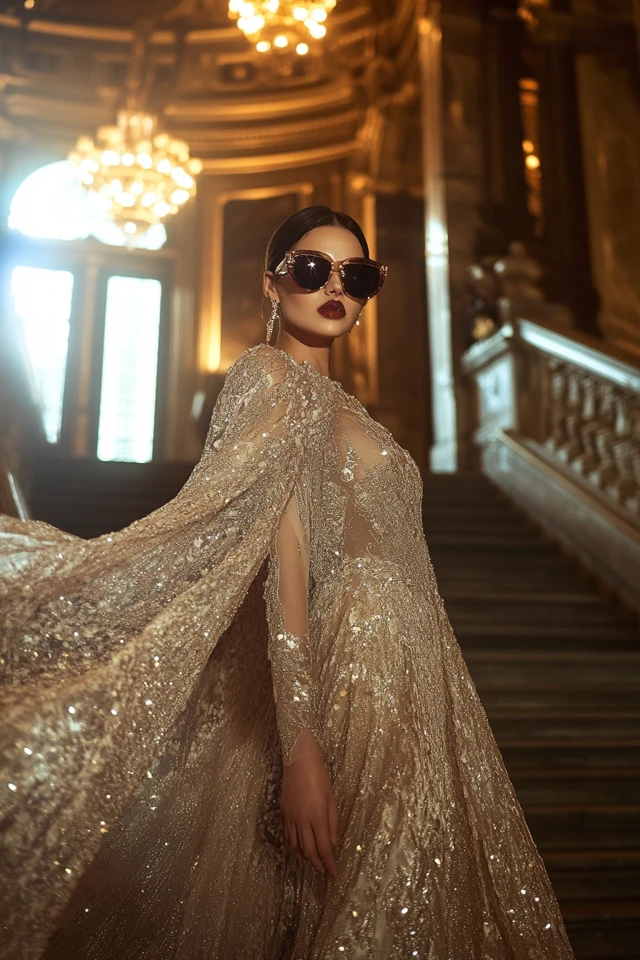
Black and jewel-toned gowns with cape sleeves
A black gown with cape sleeves is the dependable pick for black tie. Navy reads softer next to skin and works well in photographs. Emerald, sapphire and burgundy look strong in velvet and satin. Pastels suit daytime and spring weddings.
If you like metallic or beaded styles, choose one place for the shine. A beaded bodice with a plain chiffon cape looks balanced. A beaded cape on a beaded gown competes with itself.
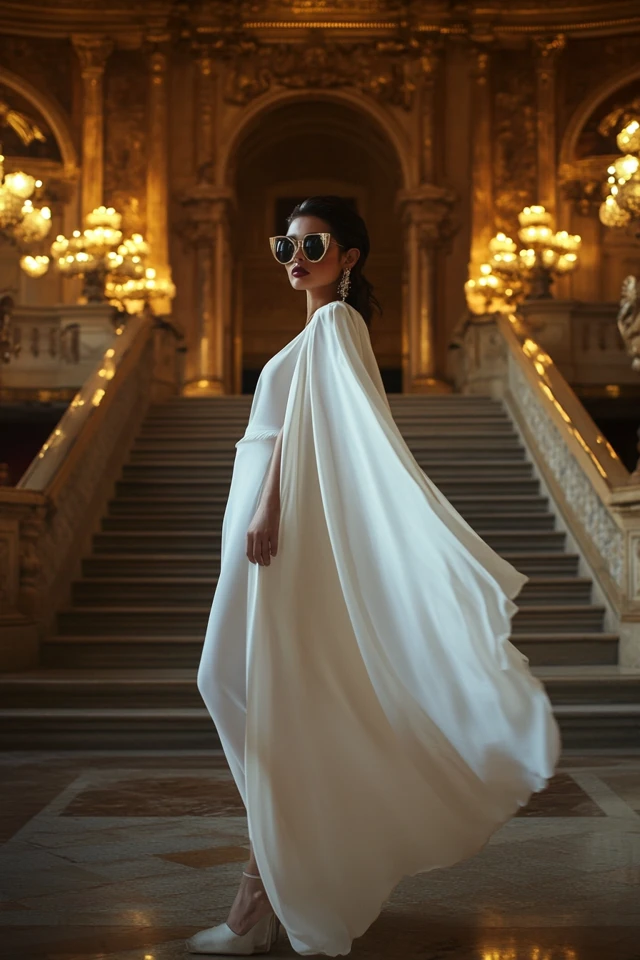
How to style a cape gown
- Jewelry: with a high neckline, go for earrings and skip the necklace. With a plunging neckline, a fine pendant is enough.
- Hair: an updo or hair pinned to one side keeps the back of the cape visible.
- Shoes: the hem should skim the top of your shoes. Hem a long gown while wearing the heels you will wear that night.
- Bag: a small clutch. A shoulder strap will crush the cape.
For more cape ideas, see draped cape dresses for evening elegance and regal gold capes and dresses for gala entrances. If you prefer a fitted shape under your cape, sculpted corset dresses are worth a look, and statement heels can finish the outfit.

Care and comfort
Hang the gown on a padded hanger and steam the cape from a distance rather than pressing it, especially chiffon and velvet. Check the care label before steaming. Practice walking and turning in the full outfit once at home so the cape trails where you expect it to.
Frequently asked questions
What is cape formal attire for ladies?
It is a formal gown or dress with a cape, cape sleeves or an attached overlay that drapes from the shoulders. It gives the drama of a wrap in a single piece.
What are some examples of formal dresses with a cape?
Common examples are a column gown with a floor-length back cape, an A-line gown with chiffon cape sleeves, and a ball gown with a detachable cape.
What are some good formal dresses for a 60-year-old woman?
A column or A-line gown with chiffon cape sleeves is a flattering choice, since it covers the arms and moves easily. Look for a well-fitted shoulder and a fabric with some drape.
Can I wear a cape dress if I'm petite?
Yes. Choose a shoulder-length cape or cape sleeves and a single color from neckline to hem to keep the line long.
Filed under Occasionwear