Winter Travel Outfits: Warm Layers With a Faux Fur Vest
- Words by
- Julio Arco
- Published
- Reading
- 5 min
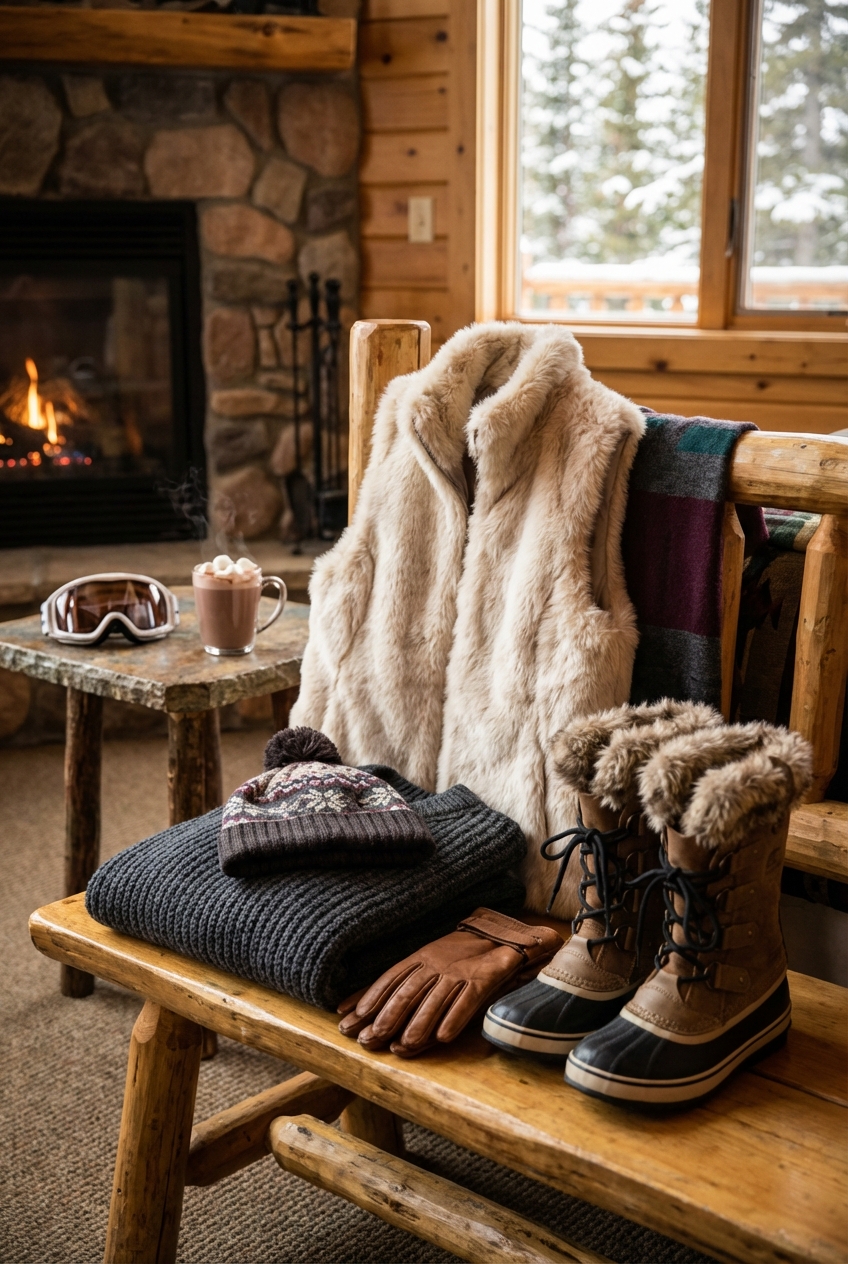
The best winter travel outfits for a ski town are built in layers: a moisture-friendly base, a fitted knit, a faux fur vest for texture, streamlined bottoms and boots with real grip. That formula keeps you warm outside and looks put together once you walk into the lodge.
Below is how to choose each piece, how to balance the volume of a fluffy vest, and a short capsule you can fit in a carry-on.
How do you dress in cold weather without looking bundled?
Think in layers you can add or remove. The National Park Service tells winter visitors to bring layered clothing that can easily be added or removed to adapt to changing weather, and the same logic works for travel days, slopes and dinners.
A vest fits that system well. It adds warmth to your core and leaves your arms free to hold a drink or a phone. It also lets the sweater underneath show, so the outfit has depth instead of one big puffy shape.
What goes under the vest: base layers and knits
Start next to the skin. UAF's international student guide lists polypropylene, polyester or merino wool as the most common base layer materials. It also notes that cotton absorbs moisture and holds it against the skin instead of moving it outward. If you will be active outdoors, skip cotton, including socks and underwear.
For the visible sweater, merino, cashmere and alpaca all work. Merino is the easiest to wear indoors and out because it is fine and does not feel heavy. Alpaca has a loftier texture and tends to run warm.
Match sweater bulk to vest pile
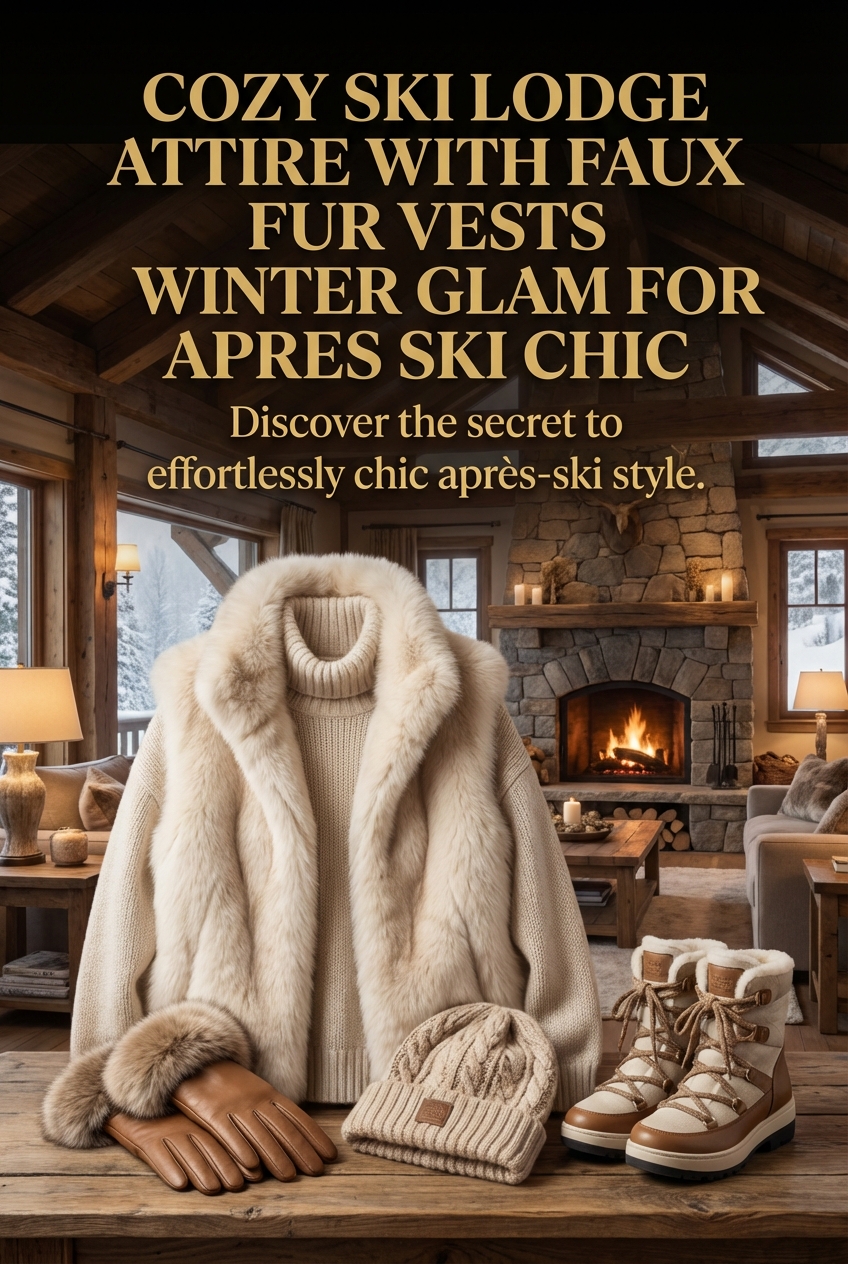
Through the lens of evidence-based design, I'd pick the sweater by texture before color. A long-pile vest already gives the eye a lot of surface to read, so a sleek, flat knit or a fitted ribbed turtleneck underneath keeps the upper body from looking boxy. A short-pile or sheared vest can handle a chunkier knit.
Check the armhole too. If you wear a sweater with full sleeves, the vest needs a deep enough armhole so the fabric does not bunch at the shoulder.
Sleeve length
The cuff should land around the wrist bone. Too long and it bunches under gloves or when you hold a cup; too short and cold air gets in. A ribbed cuff stays put best.
How to choose a faux fur vest
Look at the pile. Part the fibers: if you can see the mesh backing easily, the fur is thin and will look flat. A dense pile with fibers that move separately reads richer and feels softer.
- Cropped (at the waist): shows off a high-waisted wide-leg trouser.
- Hip length: the most versatile, since it covers the waistband and works with slim jeans or leggings.
- Knee length: dramatic and warm, but it can overwhelm a smaller frame unless you wear a boot with some height.
If you want more ideas for the layer itself, see faux fur vests for layered winter looks and fluffy faux fur vests for cooler evenings.
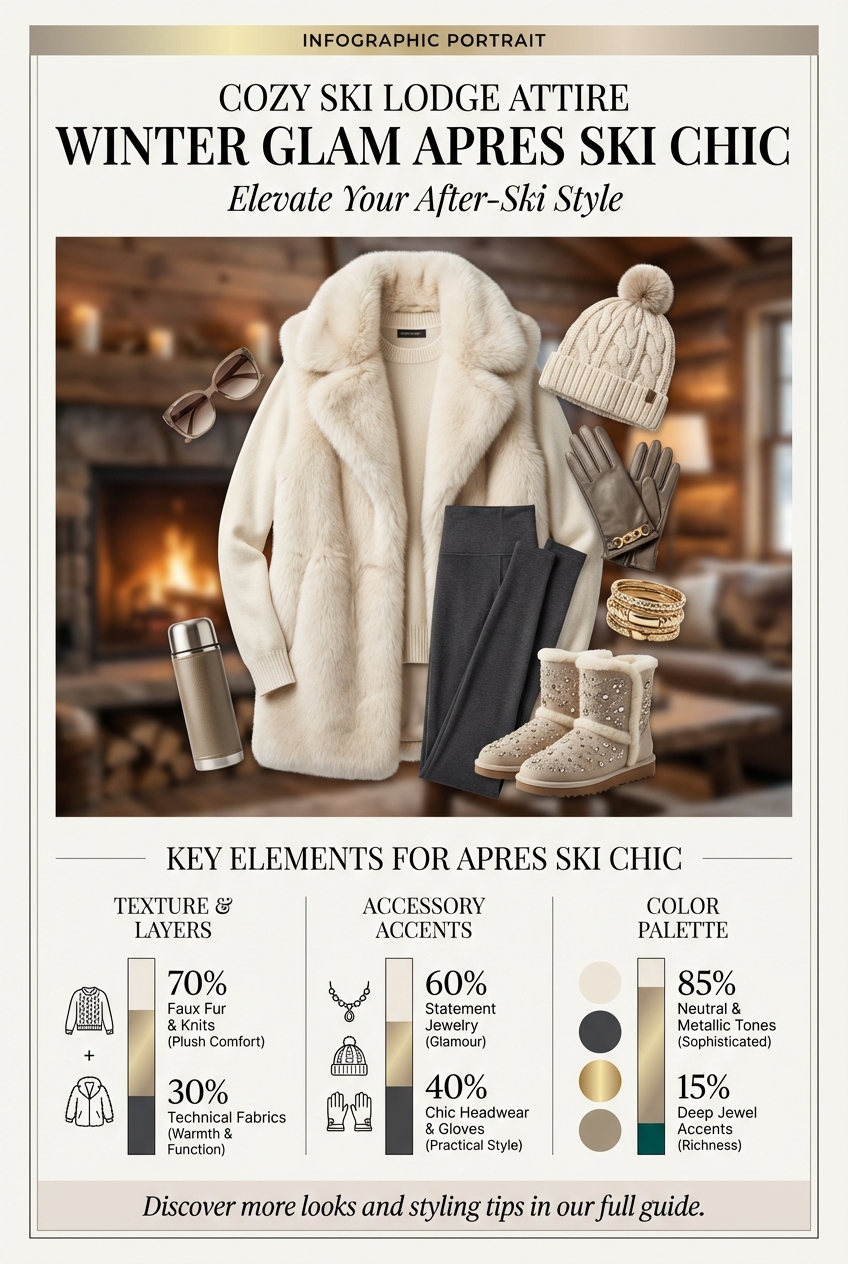
What to wear on the bottom half
A vest adds volume on top, so keep the legs streamlined. Slim coated or dark denim, thick faux leather leggings and tapered velvet trousers all do the job. Check that leggings stay opaque when you sit, and pick a dark color if you will be traveling and eating in the same outfit, since it hides marks better.
Velvet is a good evening option because it catches firelight and still feels cozy. Keep the hem tapered or cropped so your boots show.
Boots and warm footwear for winter trips
Lodge floors are wet and decks can be icy, so choose a lug sole over a heel. Harvard Health says the most comfortable shoes for women are low-heeled but not necessarily flat, no higher than three-quarters of an inch. The same page recommends a quarter- to a half inch of space between your longest toe and the end of the shoe, which matters when thick socks and swollen feet are involved.
A shearling-lined hiking boot is the workhorse. Oversized padded boots look playful with a big vest, but tuck slim leggings into them so the shape stays clear. For anything with suede, treat it for weather first, because salt stains are hard to remove.
One more point on gloves: UAF Outdoor Adventures says "One starting point is that mittens are warmer than gloves." Pack mittens for the cold hours and keep thin gloves for the lodge.
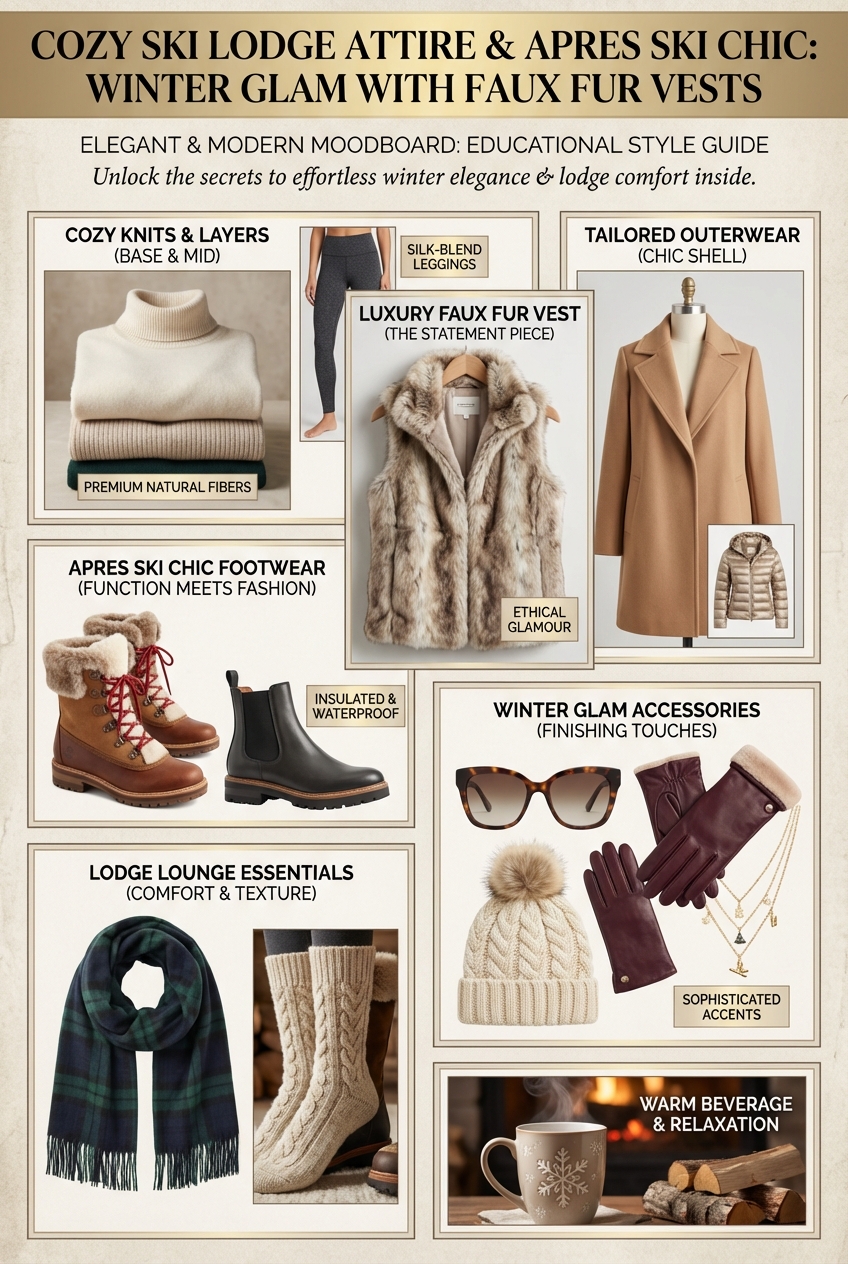
Accessories that earn their space in a carry-on
Pick small things. A cashmere or merino beanie in a neutral shade matching your sweater draws the eye in one line. Sunglasses help on a bright deck, since sun at altitude is strong. For jewelry, earrings work better than a big necklace, which tends to snag on knits or get lost in layers.
For a bag, a small crossbody or belt bag keeps your hands free. Worn across the chest under an open vest, it stays out of the way.
A small winter travel capsule wardrobe
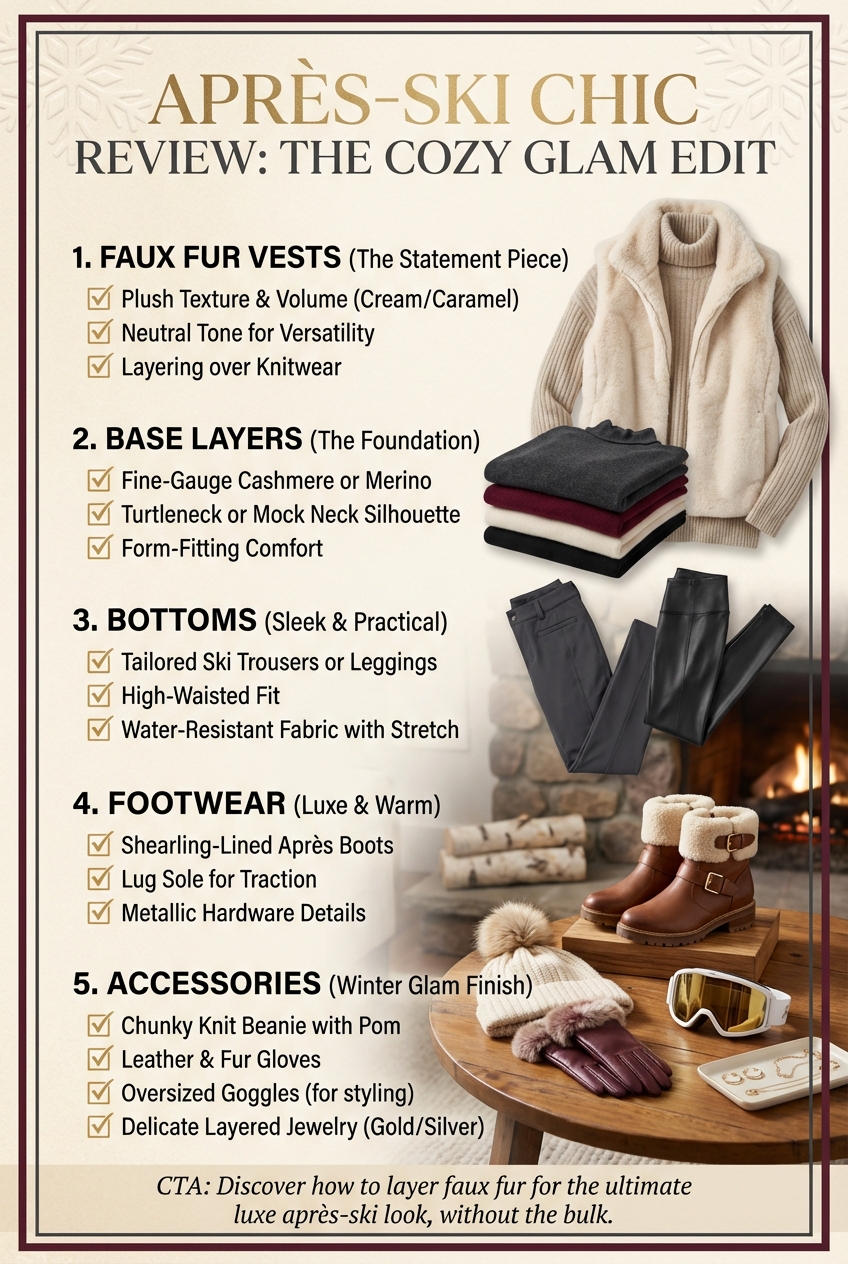
For a weekend, a winter travel capsule wardrobe can be as short as this list:
- Two base layers in merino or synthetic fabric
- One fine-knit turtleneck and one textured sweater
- One faux fur vest in a neutral shade
- Slim dark jeans and one pair of leggings or velvet trousers
- Waterproof lug-sole boots, worn on the plane to save luggage space
- Mittens, a beanie and a small crossbody bag
Stay with one or two colors so everything mixes. Black with a jewel-toned vest looks sharp, while cream on cream looks soft but needs varied textures to avoid going flat, and it shows wine and mud. For more combinations, try cozy winter lodge styles with knit sweaters or ski lodge styles with faux fur layers.
Quick check before you leave the room
- Can you raise your arms without the vest pulling?
- Is the base layer smooth at the waist?
- If the vest is fluffy, are the pants slim?
- If the boots are big, is the sweater fitted?
- Are socks warm but loose enough to keep circulation going?
- Is lip balm in a pocket? Air at altitude is dry.
Frequently asked questions
What is the best outfit to wear on a winter trip?
A moisture-friendly base layer, a fitted knit, a vest or jacket you can remove, slim bottoms and waterproof boots with grip. Choose dark or neutral colors so pieces mix and hide marks.
What are some good clothes for winter travel?
Merino or synthetic base layers, a fine-knit sweater, warm socks, mittens, a packable outer layer and one pair of sturdy boots. Skip cotton next to the skin if you will be outside for long.
How do I clean a faux fur vest after a spill?
Check the care label first. Spot clean gently with mild detergent and cold water, avoid the dryer and heat, and take it to a professional cleaner if the spill is large.
Can a petite person wear a faux fur vest?
Yes. Choose a cropped or hip-length vest with a medium pile, and wear a same-color top and bottom underneath to keep the line long.
Filed under Outfit Ideas