
Seasonal Capsule Wardrobe Transition: A Practical Plan
- Words by
- Julio Arco
- Published
- Reading
- 5 min
You don't need a new wardrobe when the weather changes. Keep a year-round core of about two thirds of your pieces, add or remove a few seasonal items, and use layers to cover the swing between a cold morning and a warm afternoon.
The in-between months are the hard part, because one day can ask for a sweater and a light shirt. The plan below gives you a method for that: what stays, what rotates, how to layer and where to put what you aren't wearing.
How do you transition a capsule wardrobe between seasons?
Think in three groups. The first is your year-round core: neutral trousers, dark denim, plain tees, a button-up shirt, white sneakers, a blazer. These don't move. The second is a small seasonal group, maybe 6-10 pieces, that you swap in and out. The third is storage, for everything the current weather rules out.
Do the swap when you notice you're reaching past the same items for two weeks, not on a fixed calendar date. Climate varies too much for a date to be reliable. If you want a longer walkthrough, this guide to transitioning your capsule wardrobe between seasons covers the same idea in more detail.
Start with the pieces that work all year
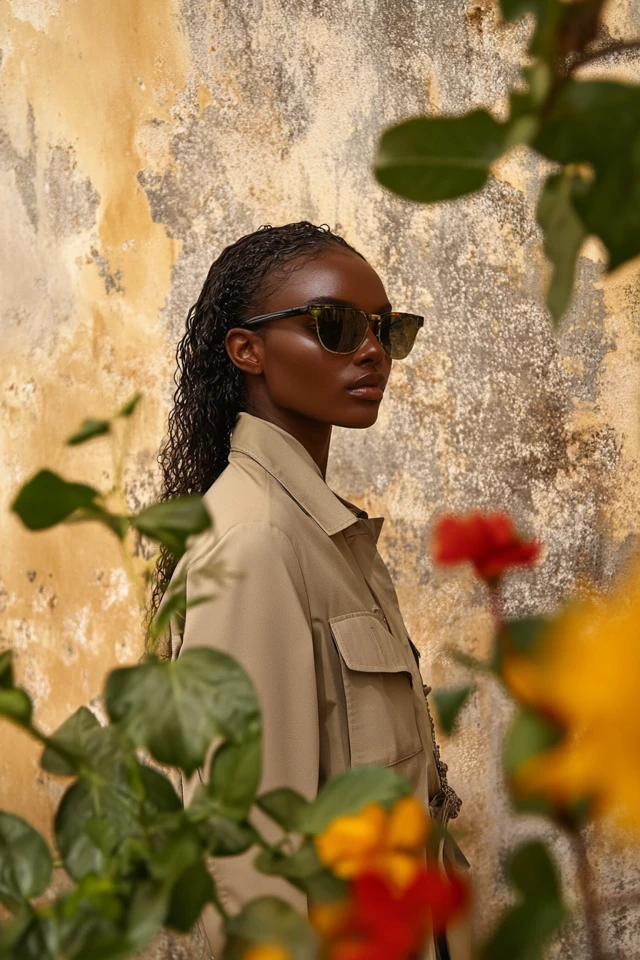
A good core item passes one test: you can wear it in at least three of the four seasons, alone or under something. Tailored trousers, a lightweight knit, a long-sleeve tee and a trench-style coat all qualify. A trench is thin enough for mild days and roomy enough to go over a sweater when it cools.
Keep the core in a quiet palette. Beige, gray, navy and white let anything you add look intentional. If you're unsure which tones suit you, seasonal color analysis for capsule wardrobes is a useful place to start.
Layer for a day that changes temperature
Use three layers you can peel off: a base (tee or camisole), a mid-layer (cardigan, thin sweater or button-up) and an outer layer (trench, denim jacket or blazer). Each one should work without the others, so removing one never leaves you with half an outfit.
Fabric matters more than most people expect. For cold-weather activity, Texas A&M's Howdy Health advises that the layer closest to your skin should be made of moisture-wicking materials that draw sweat away from your skin. It also says to avoid cotton, because it absorbs moisture and can keep it next to your skin. That advice is about exercise, so for everyday outfits treat it as a reason to prefer merino or a thin blend as a base on days when you'll walk a lot.
Through the lens of evidence-based design, I'd also look at texture. A smooth knit under a coarser weave reads as a deliberate contrast, and it keeps bulk down at the neck and sleeves where layers tend to bunch.
Which fabrics and pieces suit in-between weather?
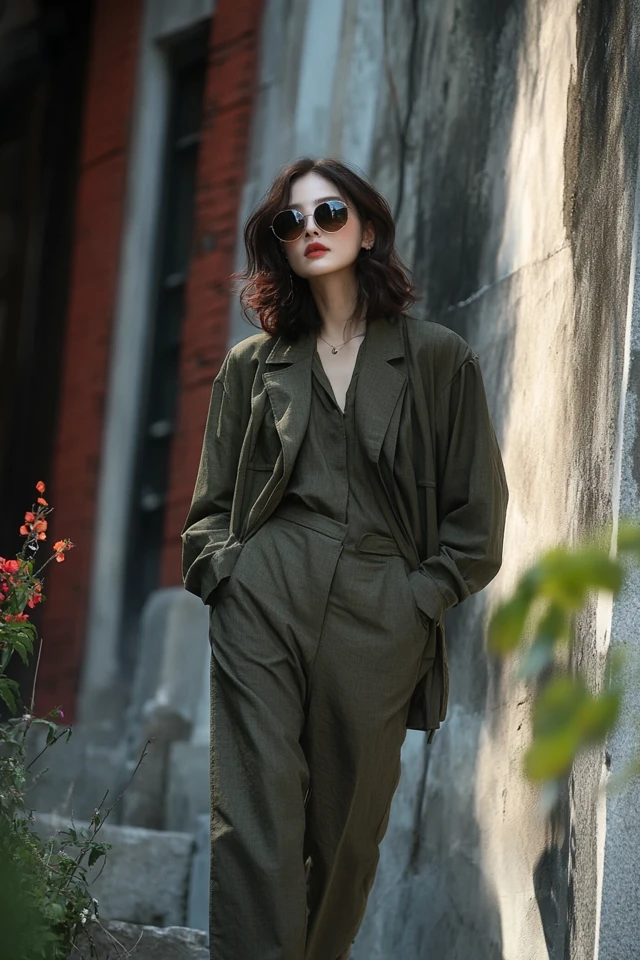
Look for mid-weight, breathable cloth: merino, fine-gauge cotton knits, denim, light wool. Avoid anything very heavy or very sheer, because those only suit one end of the temperature range.
- Tops: long-sleeve tees, button-up shirts, thin sweaters in neutral tones.
- Bottoms: cropped or ankle-length jeans and trousers, midi skirts that work with or without tights.
- Outerwear: trench, denim jacket, blazer.
- Shoes: ankle boots, loafers, white sneakers.
- Extras: a lightweight scarf, a crossbody bag, tights.
A midi skirt or dress that works bare-legged in September and with tights in November is one of the best value pieces here, since it covers two seasons.

How do you build a summer to fall capsule wardrobe?
Keep your summer dresses and tees, and give them a second life with a cardigan, tights and ankle boots. Then add only what the cold actually requires: one or two knits, a jacket with some weight, closed shoes.
Shift color slowly. A rust, mustard or deep green piece next to your neutrals is enough to signal fall. Through the lens of evidence-based design, I'd add one accent near the face, such as a scarf or knit, because that is where the eye lands first and one color there changes how the whole outfit reads.

For spring, reverse it: a sage or soft pastel cardigan over a neutral turtleneck brings in freshness without a new purchase. More ideas on adding small seasonal touches are in how to add seasonal highlights to a capsule wardrobe.
Seasonal capsule wardrobe checklist
- Pull everything out and sort into keep, rotate out and let go.
- Check that each core piece layers with at least two others.
- Note gaps: usually one mid-layer or one pair of shoes, not a whole category.
- Repair, wash or clean what is going into storage.
- Bring in the 6-10 seasonal pieces and try three outfits before buying anything new.

How do you decide what to keep or let go?
Changing seasons is a good moment to edit. Jasmine Harris-Speight, an MSU Extension instructor, suggests asking: "When deciding what to keep, ask yourself: Does this item hold a sentimental place in my heart? Will I miss this item if I get rid of it?"
If you let pieces go, consider where they end up. The EPA reports that the recycling rate for all textiles was 14.7 percent in 2018, so donating or reselling wearable items beats the trash by a wide margin.

How do you store off-season clothes?
Clean everything first, since stains set over months in storage. Fold knits rather than hanging them so shoulders don't stretch, and hang coats and blazers. Use breathable garment bags or cotton boxes instead of sealed plastic, which can trap moisture.
Keep the stored group somewhere dry and out of direct sun. Label the box so the next swap takes ten minutes. For a fuller approach to the yearly rhythm, see seasonal capsule wardrobes and adjusting essentials throughout the year.

A simple sample transition capsule
A compact version might hold 20-30 pieces in total, which is a range, not a rule. Adjust it to your climate and routine.
| Category | Pieces |
|---|---|
| Tops | 2 long-sleeve tees, 2 button-ups, 2 thin sweaters |
| Bottoms | Dark denim, tailored trousers, midi skirt |
| Outer layers | Trench, blazer, denim jacket |
| Shoes | Ankle boots, loafers, white sneakers |
| Extras | Lightweight scarf, crossbody bag, tights |
If you add a trend piece, such as chunky loafers or wide-leg cropped trousers, pick one that works with both sneakers and boots so it earns its place in several outfits. For a bigger-picture look at this balance, read how to create a capsule wardrobe that adapts to trends.

Frequently asked questions
Are capsule wardrobes seasonal?
They can be either. Many people keep one small year-round core and swap a handful of seasonal pieces in and out, which avoids rebuilding the whole closet.
How many pieces should a transitional capsule have?
A range of about 20-30 pieces works for many people. Fewer is fine if you do laundry often, and more suits a wide temperature range.
How do I handle sudden weather changes?
Carry one removable layer, such as a cardigan or light jacket, and wear shoes that cope with both dry and damp days.
Can I wear bold colors or prints in a transitional capsule?
Yes. Keep them to one or two pieces and pair them with neutrals so they combine with the rest of your core.
Filed under Capsule Wardrobe