Floral Summer Dresses: How to Choose and Style Them
- Words by
- Julio Arco
- Published
- Reading
- 4 min
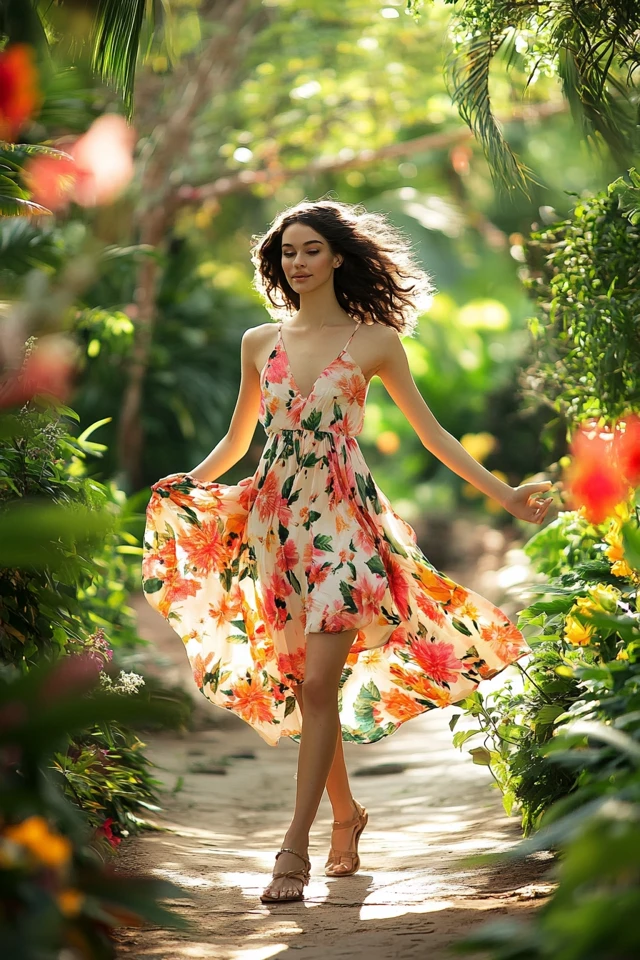
The easiest floral summer dress to wear is a midi or maxi in a lightweight fabric, with a print scale that suits your frame and a simple pair of flat sandals. Dress it up with a block heel and small jewelry, or down with sneakers and a denim jacket.
Below: how print scale and color read, which length suits which occasion, how to wear florals to a wedding, and what to put on your feet.
How do you choose a floral print?
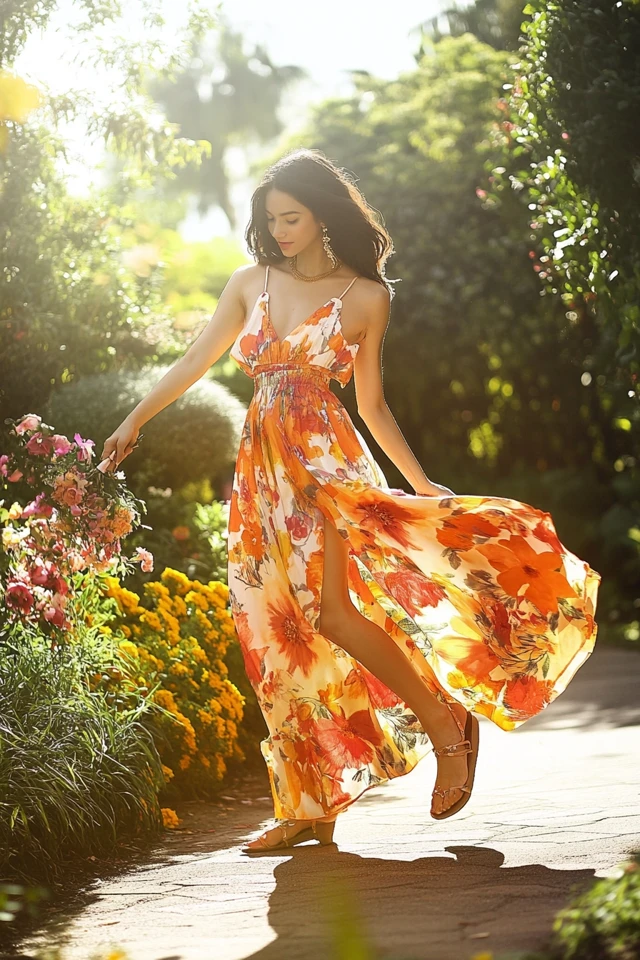
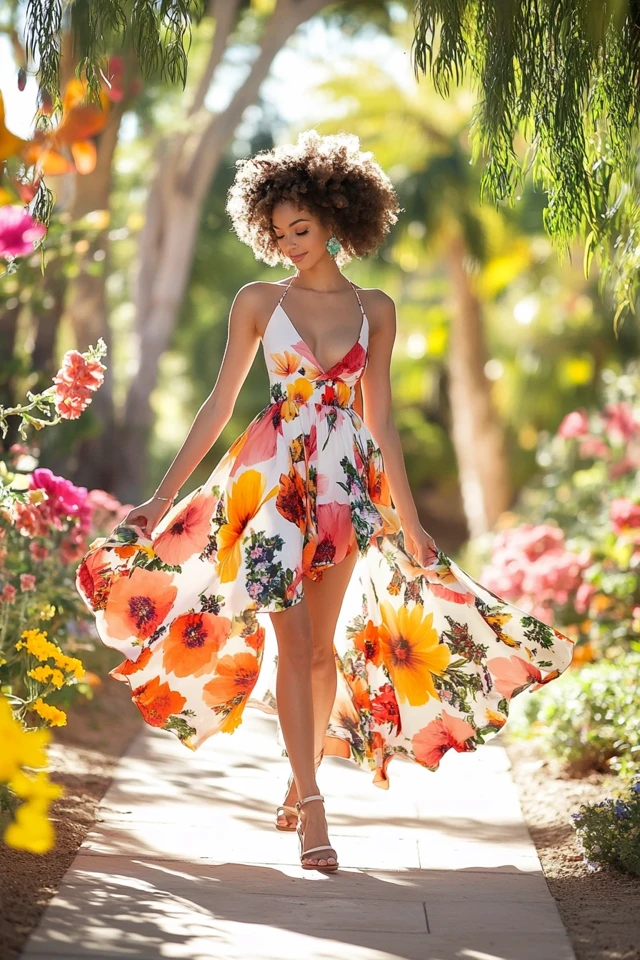
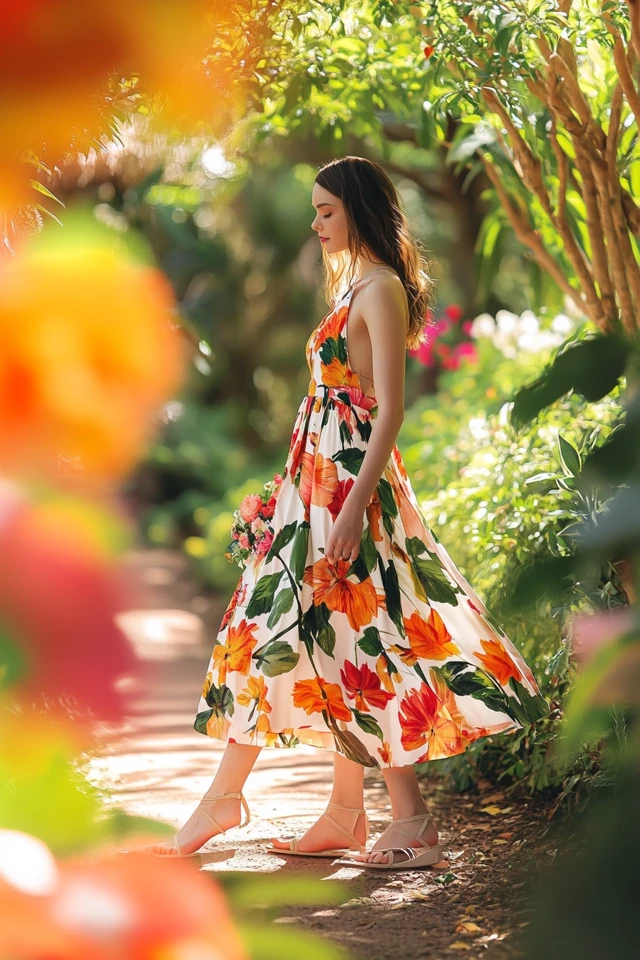
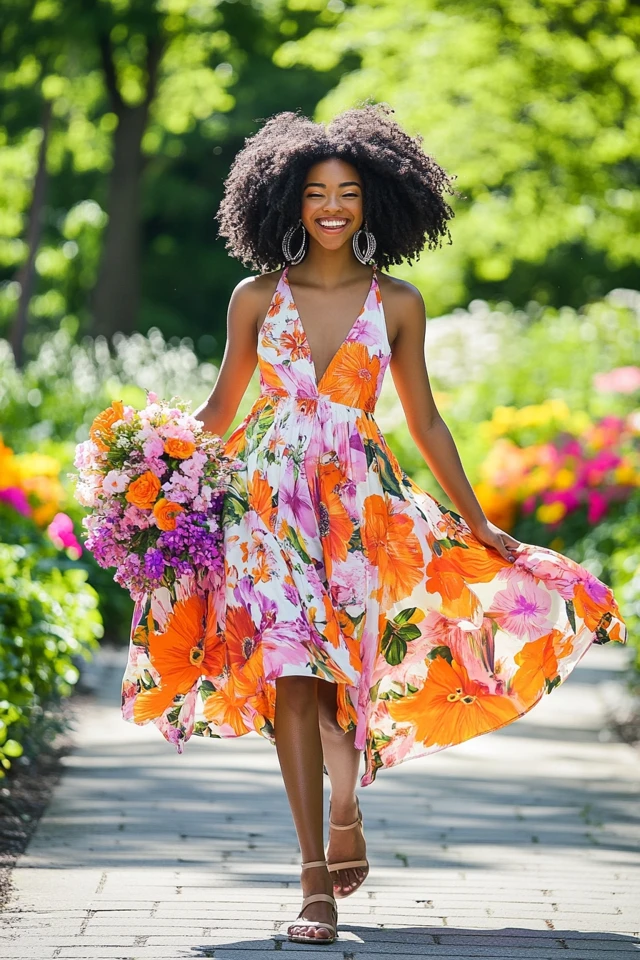
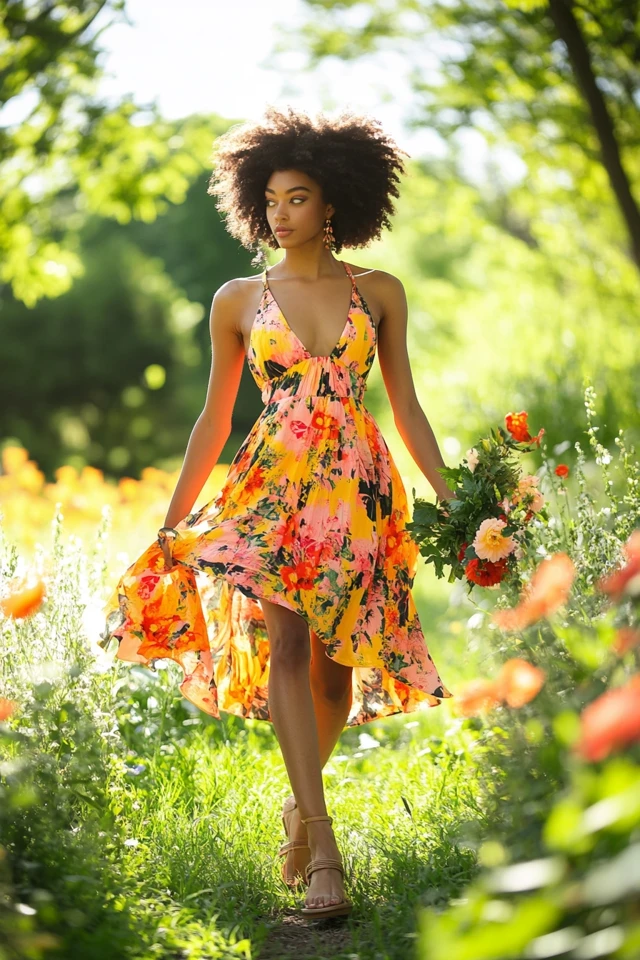
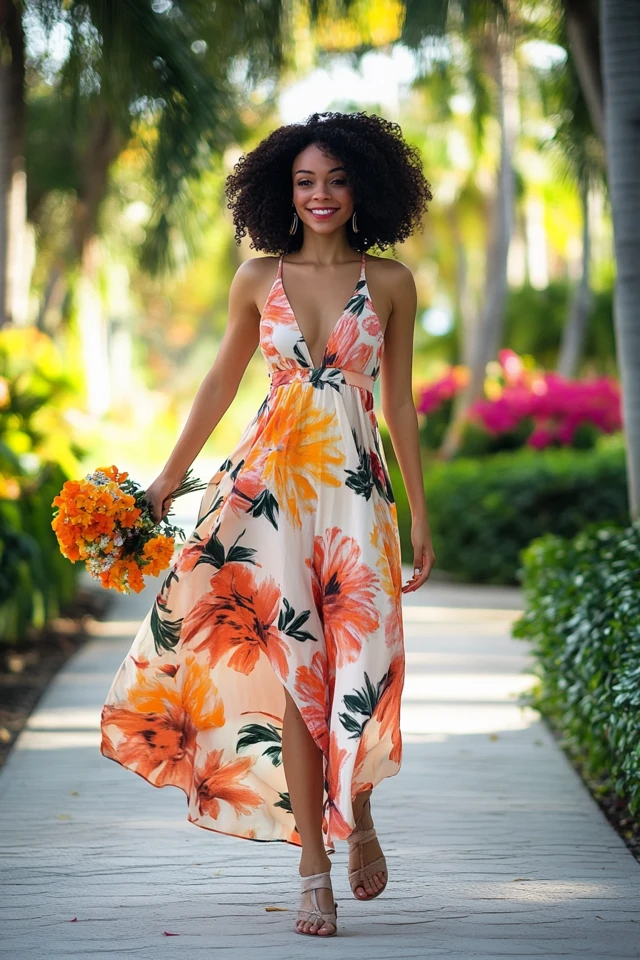
Start with scale. Small, clustered flowers look delicate and sit quietly on a petite frame. Medium prints are the most forgiving across body types. Large, painterly blooms need some room, so they tend to look best on midi and maxi lengths where the pattern can spread out.
Then look at the background. Through the lens of evidence-based design, I'd treat the background color as the first thing the eye reads, because it sets the mood before anyone notices the flowers. Here is how the common options come across:
- Pastel grounds (blush, lavender, pale blue) read soft and relaxed, and suit daytime.
- Bright grounds (yellow, coral, green) read energetic and warm, good for vacations and outdoor events.
- Dark grounds (navy, black, deep plum) make the flowers look richer and more formal, which works for evenings.
- Unexpected pairings such as fuchsia with teal feel modern and graphic.
If you are new to florals, start with a smaller print or a muted palette. You can go bolder once you know what you like.
Maxi, midi or mini: which length works?
Midi floral summer dresses
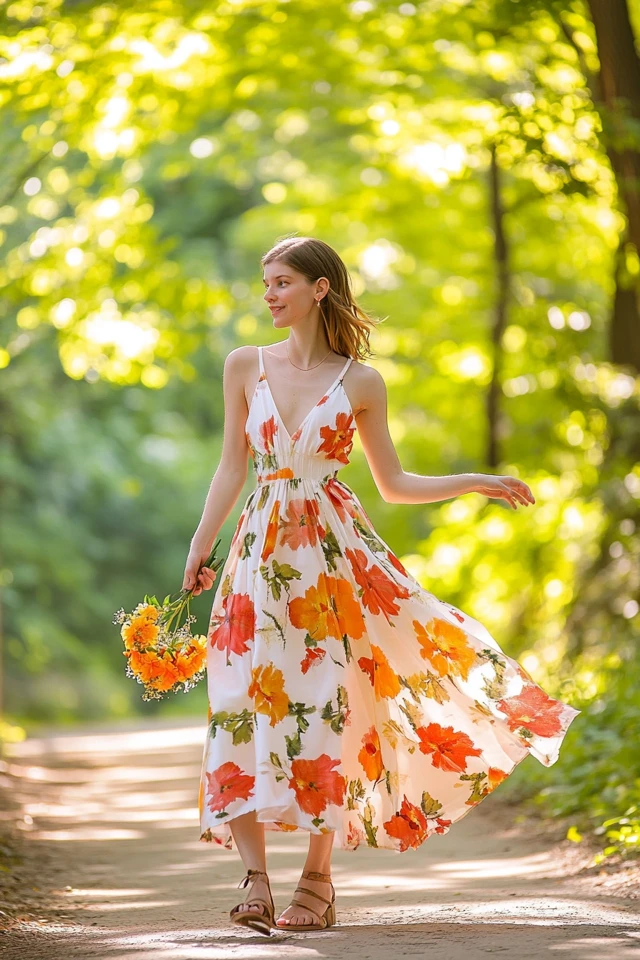
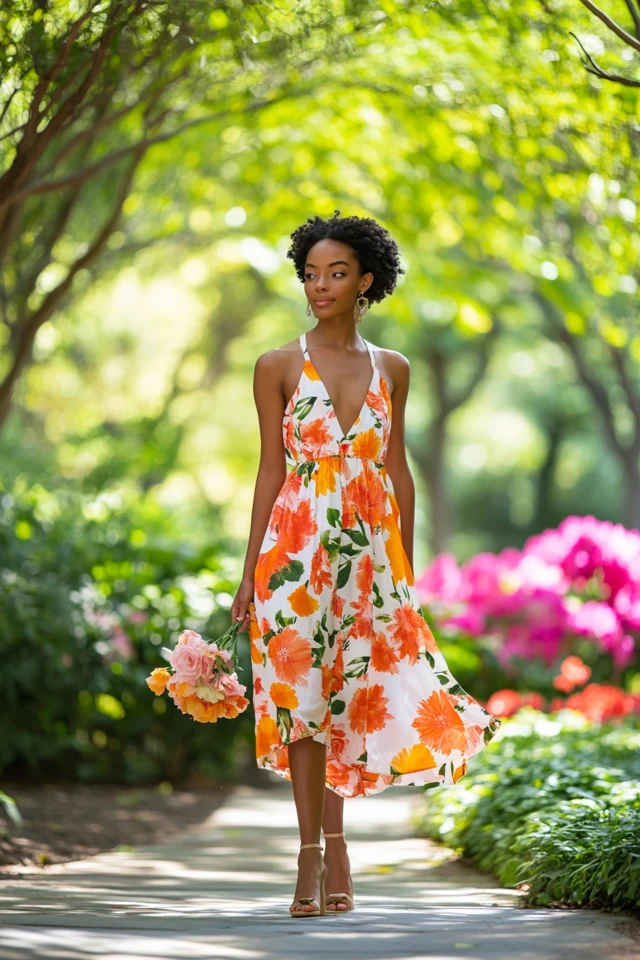
A midi hem lands between the knee and mid-calf, which makes it the most versatile length. It works with flats, sneakers or heels, and it is easy to move in. If you are petite, check that the hem does not cut across the widest part of your calf; a slightly shorter or longer midi often fixes it.
Maxi floral summer dresses
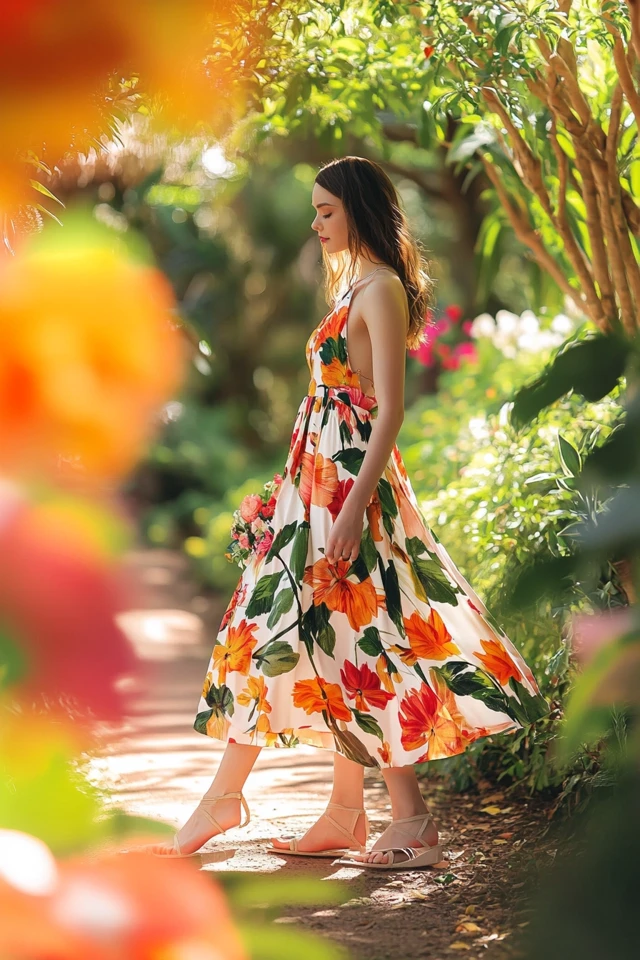
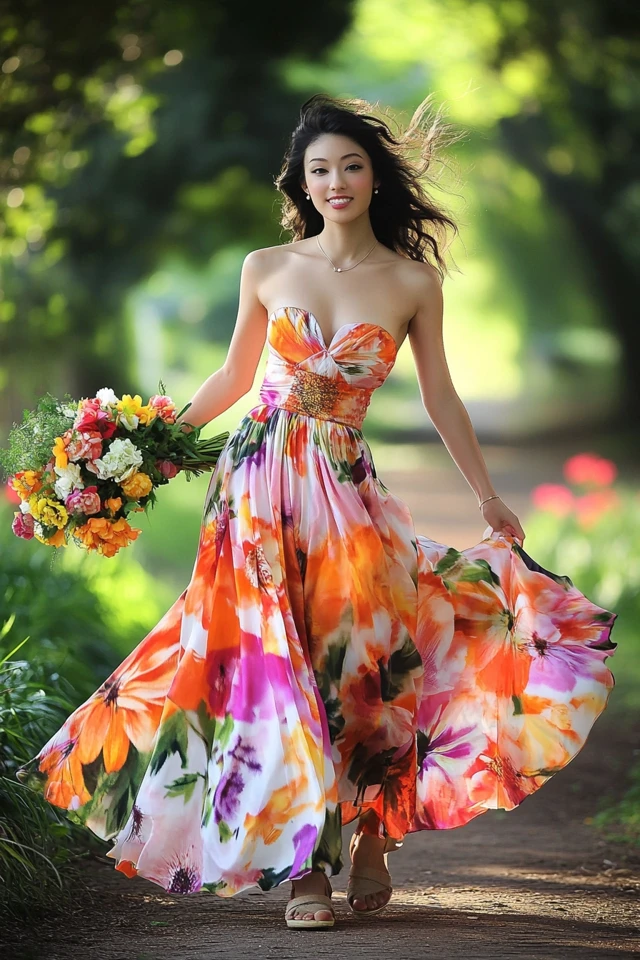
Maxis give you full coverage and a long, continuous line, helpful on hot days when you want fabric that moves air. Tiered skirts add volume, while a defined waist keeps the shape from feeling shapeless. Tall frames can carry oversized prints well.
Mini and short styles
Short dresses suit small, tidy prints and simple shapes. Add a defined waist and the proportions stay balanced.
What body shape suits which floral dress?
A dress that pulls or gapes is a fit problem, not a you problem. These pairings are starting points, not rules:
- Petite: small to medium prints and a defined waist.
- Curvy: wrap dresses and fit-and-flare cuts with medium or large prints.
- Tall: oversized blooms and long skirts.
- Athletic: ruching, tiered ruffles or a fuller skirt add shape.
For more detail on cuts, see summer floral dress style and fit.
How do you wear casual floral summer dresses?
Keep everything else simple so the print does the work. A pastel cotton dress with white sneakers, a denim jacket and a woven bag is an easy daytime formula for errands or a park afternoon. Fabric matters as much as pattern: cotton and linen feel breathable and matte, while viscose drapes more. Our breezy sundress ideas go further on comfort.
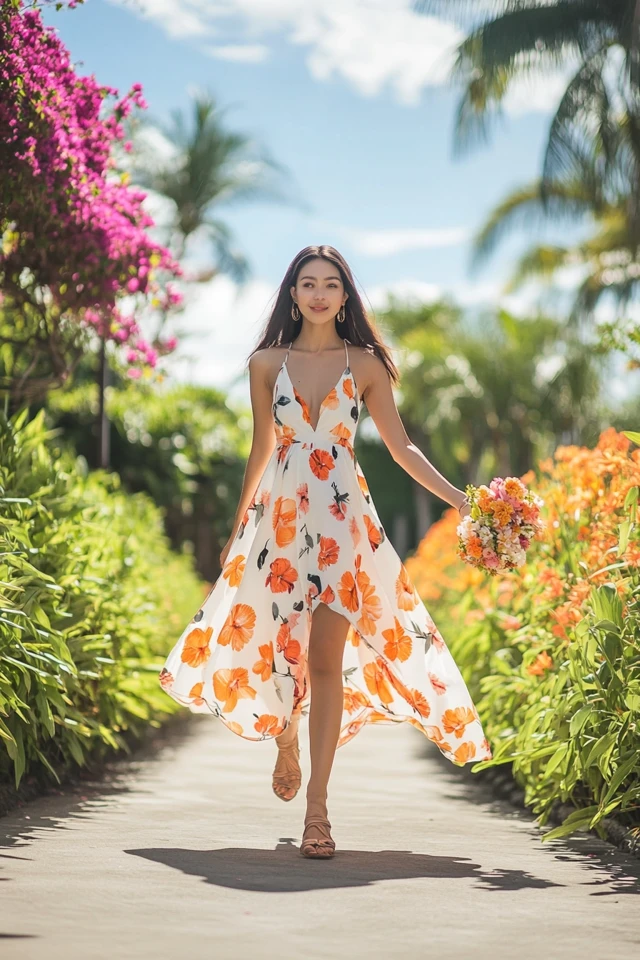
For a vacation look, choose a tropical print with thin straps, then add espadrilles and a wide-brim hat. For an evening, a dark floral with strappy sandals and a light wrap works well.
Can you wear floral dresses to a wedding?
Yes, for most daytime and garden weddings. Floral dresses for wedding guests work best in a midi or long length, in a fabric with some drape such as chiffon or crepe. A long floral dress for a wedding should have a defined waist or a clean neckline so it looks dressed, not beachy.
- Choose a softer or darker background rather than a neon one.
- Check the invitation for dress code, and skip anything that reads close to white.
- Swap flat sandals for block heels or wedges, and add a small clutch.
More ideas are in daytime wedding outfits with bright prints and garden party dresses with floral prints.
What shoes go with a floral dress?
Flat sandals, espadrilles and white sneakers keep it casual. Block heels, wedges and pointed flats move it toward dressy. Match the shoe to one minor color in the print and it will look intentional. Keep jewelry small when the print is busy.
For cooler evenings, add a lightweight cardigan or denim jacket. Pick one layer, not several, so the dress stays visible.
Which floral trends are around?
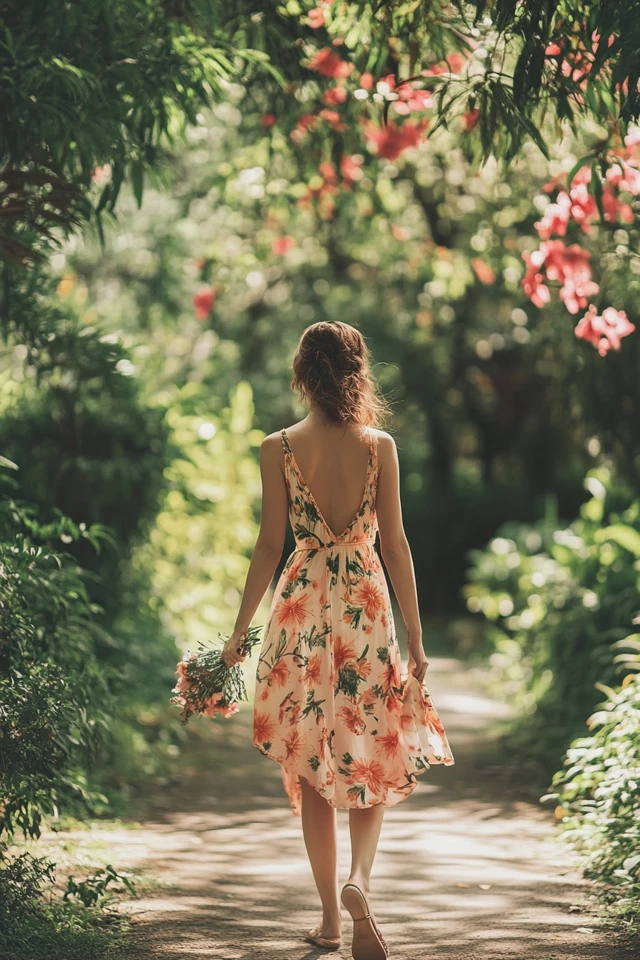
Oversized painterly blooms, tropical leaves and hibiscus, retro daisies in muted tones, and florals mixed with dots or stripes all show up in stores. Trends shift quickly, so choose the print you will reach for repeatedly. For a base wardrobe, see summer floral dress wardrobe basics.
Frequently asked questions
Can an older woman wear a floral dress?
Yes. Age is not a rule for florals; fit and print scale matter more. A midi length, a fabric with drape and a medium print in a color you like are reliable choices.
Can I wear a floral sundress in the evening?
Yes. Choose a darker background, a higher neckline or lace trim, then add heeled sandals and a light wrap.
Are floral prints flattering on everyone?
Generally yes when the print scale suits you. Smaller prints sit well on petite frames, while larger ones balance taller or curvier figures.
How do I style a floral dress for cooler weather?
Layer a fitted sweater or turtleneck underneath, then add tights and ankle boots. A denim jacket works for mild evenings.
Filed under Seasonal Trends