Blazer Style Guide: Fit, Fabric and How to Wear One
This guide covers fit, fabric, color, body proportions and outfit formulas, so you can wear a blazer in July without feeling like you are dressed for an air-conditioned boardroom.
- Words by
- Julio Arco
- Published
- Reading
- 6 min
A good summer blazer comes down to three checks: the shoulder seam sits where your shoulder ends, the fabric is light and breathable, and the length suits the rest of your outfit. Get those right and the blazer works over a tee, a dress or tailored trousers.
How should a blazer fit?
Start at the shoulders. The seam should land at the edge of your shoulder bone, with no dimple or pulling. If the shoulders are off, the rest is hard to fix, so this is the check that decides whether to buy. A jacket that pulls at the shoulders is a fit problem, not a you problem.
Then check the rest in order:
- Buttoned, the front should lie flat. If the fabric forms an X around the button, it is too tight.
- Sleeves usually end around the wrist bone, so a little shirt cuff or bracelet can show.
- Length for a classic cut usually covers the seat or stops at the upper hip. Cropped and longline versions are deliberate choices, and they change how the outfit is proportioned.
- You should be able to cross your arms and reach forward without feeling restrained.
Oversized blazers are the exception to a close shoulder fit: the drop is intended. Keep the rest of the outfit slimmer so the shape reads as a choice.
Blazer vs sport coat: what is the difference?
The two overlap, and shops use the words loosely. In general, a blazer is a structured jacket often sold in solid colors, with a more tailored, dressier feel. A sport coat is usually made in textured or patterned cloth such as tweed or checks, with a softer, more relaxed build, and is meant to be worn with contrasting trousers.
For summer, the practical difference is weight and structure. Many women's blazers sold today borrow from both, so judge by the fabric and shoulder padding rather than the label. Less padding and less lining mean a cooler, more casual jacket.
Which fabrics work for a summer blazer?
Linen, linen blends, lightweight cotton and seersucker breathe well and drape easily. Linen wrinkles, and that is part of its look. If you want a smoother surface, a cotton-linen blend creases less.
Check the lining. A half lining or no lining keeps the jacket cooler. Heavy synthetics tend to trap heat, so read the label before you commit.
Through the lens of evidence-based design, I'd think about texture before color. A slubby linen and a smooth twill in the same beige do not read as the same color, because the surface changes how light reaches your eye. The textured one looks more relaxed and a shade deeper.
What are the different types of blazers?
- Single-breasted: one column of buttons, the most versatile and easiest to wear open.
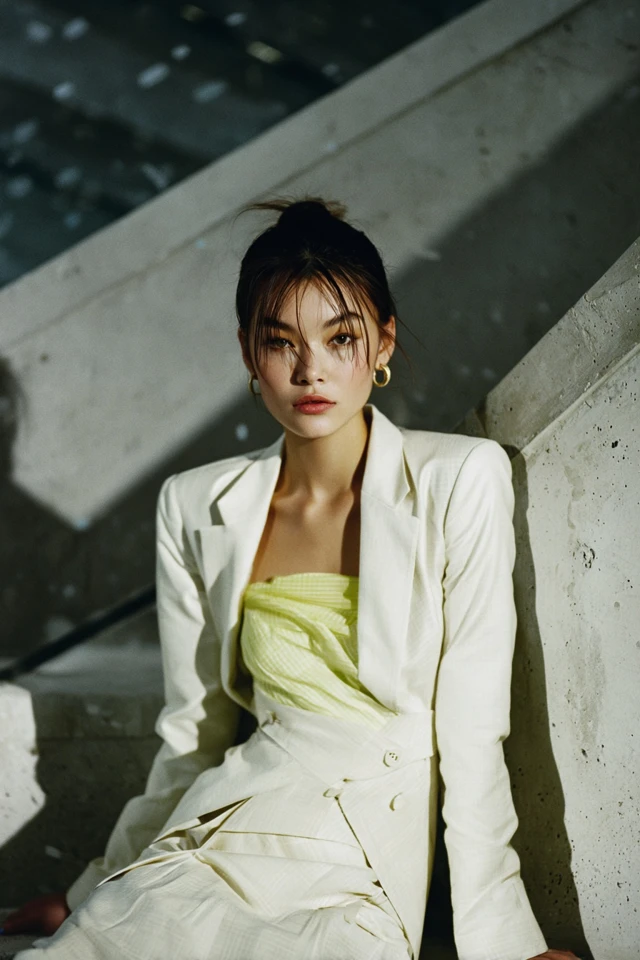
- Double-breasted: overlapping front with two columns of buttons, a stronger, more formal line that looks good with a soft shoulder.
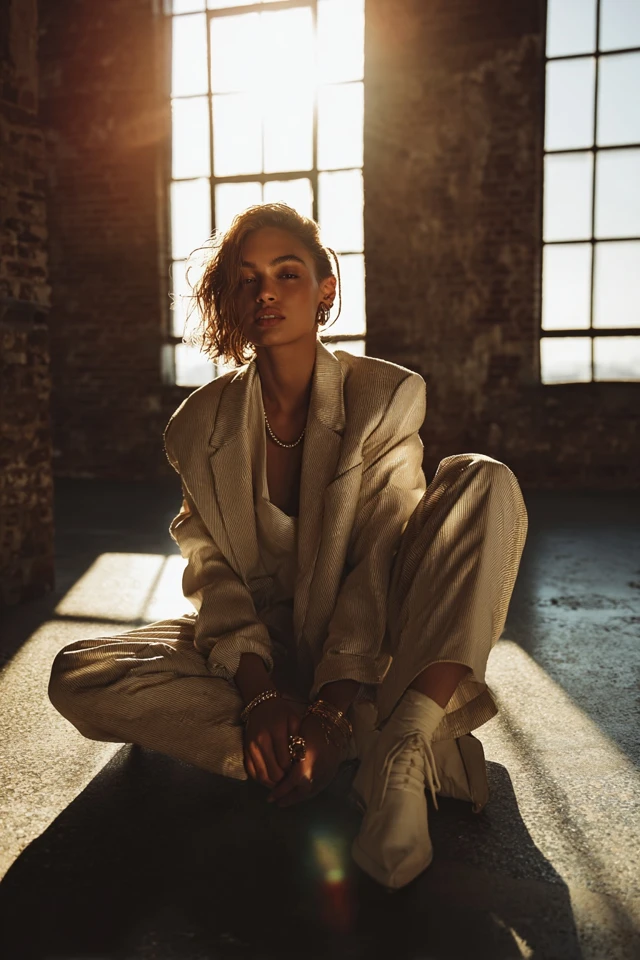
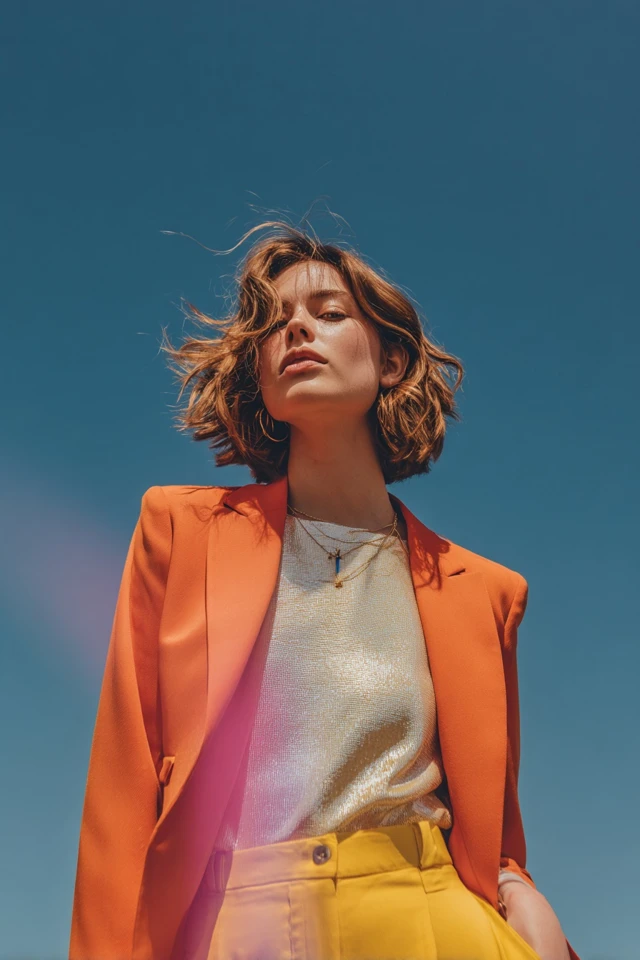
- Oversized: a relaxed, boxy cut that suits jeans, shorts and slip dresses.
- Cropped: ends at or above the waist, best with high-rise bottoms.
- Longline: falls past the hip, which elongates the torso and works open over slim pieces.
- Unstructured: little padding or interfacing, soft like a cardigan, the most comfortable in heat.
What type of blazer for my body type?
Body-type labels are a starting point, not a rule. The idea is to balance the eye's attention, so use these as suggestions and trust the mirror.
- If your waist is defined, a single-breasted blazer with light shaping follows it without clinging.
- For a straighter frame, a belted blazer, structured shoulders or a cropped cut can add the look of shape.
- If you carry more width through the hips, a blazer ending at the upper hip or a longer one that skims past them both work. Darker bottoms and a lapel with presence draw the eye up.
- For a fuller midsection, try a longer open-front blazer in a fabric that falls straight, rather than one that is tight at the button.
- With broad shoulders, pick softer lapels and an unstructured shoulder so the line does not add width.
As an architect trained in evidence-based design, I'd treat the lapel and neckline as the first thing the eye reads. A deeper V draws the gaze down the center of the body and tends to look longer and leaner.
What color blazer should you choose?
Neutrals such as navy, camel, cream and light gray are the easiest to repeat with other pieces you own. White and ivory feel fresh in summer, though they show marks, so a linen blend in off-white is more forgiving.
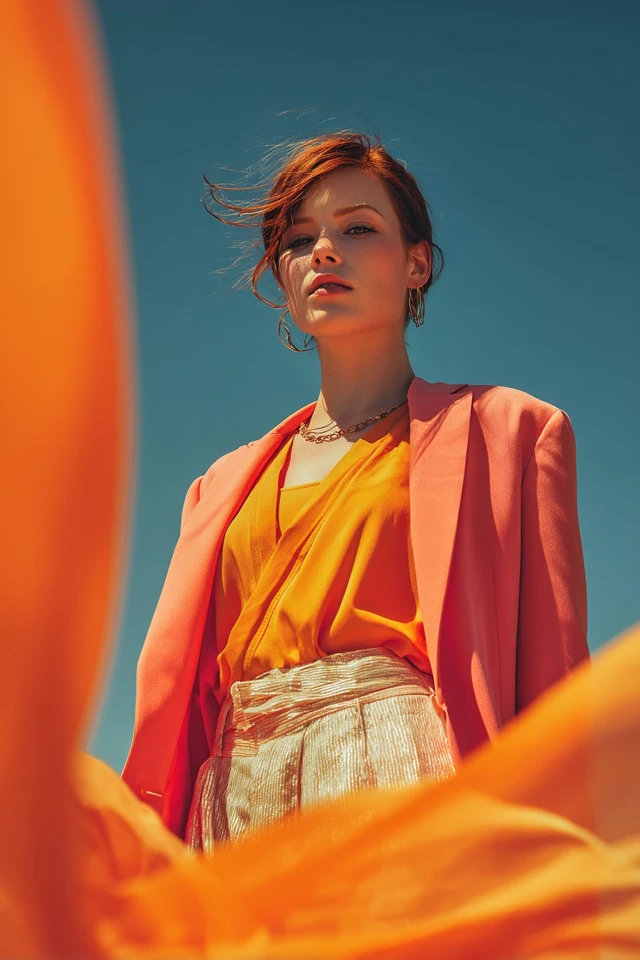
Pastels and brights are good for adding a single note. Pair a soft pink or pale blue blazer with white or denim, and let a cobalt or coral one stand alone with neutral trousers. As a rough guide, warm skin often looks good in olive, rust and ivory, and cool skin in soft grays, blues and crisp white, but hold the fabric up near your face and see what feels right.

What to wear with a blazer
For casual blazer outfits, treat the blazer as the dressy layer and keep the rest relaxed.
- Weekend: an oversized blazer, white tee, straight jeans and loafers or clean sneakers.
- Brunch: a beige blazer with white trousers, a silk camisole and flat sandals.
- Office: a matching-tone blazer and tailored trousers over a crisp sleeveless blouse, with a pointed flat or low block heel.
- Evening: a cobalt blazer over a slip dress or black cropped trousers, with strappy heels.
- Dress it down: tie a blazer over a sundress, or wear it open over a tank and linen shorts.
Under the blazer, choose thin layers that wick heat: cotton tees, camisoles, fine knits. If you like an athletic mix, see how to layer athleisure pieces in summer, and for pieces that pair well with a neutral jacket, browse these neutral summer staples.
How to wear a blazer: the basic rules
The common answer to the question about the rule of wearing a blazer is about buttons: with a single-breasted jacket, button the top button, or the top two if it has three, and leave the bottom one undone. Double-breasted jackets are usually kept buttoned. In summer, wearing the blazer open is fine and often looks better.
Roll the sleeves to the forearm only if the lining is neat, or push them up slightly for a relaxed feel. Keep accessories light: slim jewelry, a structured bag, sunglasses. For more warm-weather outfit ideas, the casual summer essentials post is a good companion.
Care and shopping tips
Try on a blazer with the top you plan to wear most, since the thickness changes the fit. Prefer a good shoulder over a trendy detail, because a tailor can shorten sleeves and hems but cannot rebuild shoulders easily.
Steam light fabrics between wears and check the care label before washing. Linen and cotton blends sometimes tolerate gentle washing, but structured jackets with padding usually do best with a professional cleaner.
Frequently asked questions
What are the different types of blazer styles?
Common types are single-breasted, double-breasted, oversized, cropped, longline and unstructured. Single-breasted is the most versatile, while unstructured cuts are the most comfortable in heat.
What is the rule of wearing a blazer?
Button the top button of a single-breasted blazer (or the top two on a three-button), and leave the last one open. Double-breasted blazers are usually worn buttoned, though in casual summer outfits an open blazer is fine.
What kind of blazers are in style right now?
Oversized and relaxed cuts in linen or cotton blends are common, along with soft-shouldered double-breasted styles. Neutral and pastel colors are easy to wear, but a well-fitted classic never looks dated.
What type of blazer for my body type?
Choose the cut that balances what you want to emphasize: shaping for a defined waist, a longer line for a fuller midsection, and softer shoulders if yours are broad. Always check the shoulder fit first.
Filed under Outfit Ideas