
Straight-Leg Jeans with Sculptural Seams: How to Wear Them
- Words by
- Julio Arco
- Published
- Reading
- 5 min
Straight-leg jeans with sculptural seams keep the familiar straight line from hip to hem and add shaping through the stitching: curved side seams, extra panels, darts or diagonal lines. The result looks more tailored than plain denim without feeling dressy.
The simplest way to wear them is to let the seams do the talking. Keep the top fitted or tucked, pick a dark or mid wash, and choose shoes with a clean shape.
What makes a seam sculptural?
On standard jeans the side seams run straight down the leg. On sculptural pairs, the seams bend, split into panels or sit off-center, so the leg picks up lines and small shadows. Think of it as architecture in miniature: the seams act like the structure you see on a building facade.
Common details to look for:
- Curved side seams that follow the thigh and knee
- Paneled legs with extra seams front or back
- Darts at the knee or hip for a shaped fit
- Diagonal or asymmetrical stitching
- Raised or contrast topstitching
The leg itself stays straight, so the cut still works with most shoes and tops.

Which wash shows the seams best?
Color changes how much of the seam work you see. Through the lens of evidence-based design, I'd think of wash as a lighting decision: the same stitching reads very differently depending on how much contrast the fabric gives your eye.
- Dark blue or black: the seams show as soft lines, so the look stays quiet and polished. Black is the easiest to dress up.
- Mid blue: a balanced choice that shows the shaping without making it the main event.
- Light wash: seams catch more light and look casual, and panels become very visible.
- Cream, beige or grey: a soft, low-contrast look that suits mild weather.
- Bold colors: the cut becomes secondary, so keep the rest of the outfit plain.
Contrast topstitching (white thread on dark denim, for example) turns the seams into graphic lines. Matching thread keeps them subtle. Decide which effect you want before you buy.

How should sculptural seam jeans fit?
Fit matters more here than on plain denim, because misplaced seams are obvious. A curved seam is meant to sit over a specific part of the leg. If it lands in the wrong spot, the shaping works against you.
- Check the waist first. It should sit flat without gaping at the back.
- Look at where knee panels or darts fall. They should sit at your knee, not above or below.
- Sit down in them. Seams that pull or twist when you sit are too tight.
- Choose a little stretch if you want comfort, but expect it to soften the structure slightly.
If a pair pulls across the hips, that is a sizing or cut problem, not a you problem. Try another size or a different rise before giving up on the style.

Which rise and length suit your frame?
The straight leg is forgiving, so the details below are about proportion rather than rules.
Petite frames
A high rise and an ankle-grazing hem keep the leg line long. Choose vertical seams or gentle curves, and avoid heavy horizontal paneling at the knee.
Curvy figures
A mid or high rise with a structured waistband defines the waist. Seams and darts that follow your shape work well, as long as nothing is stretched tight. For more on the cut itself, see high-waisted straight-leg jeans.
Athletic frames
Diagonal or asymmetrical seams add some softness to the line of the leg. A mid rise looks relaxed, and a flowing top balances the structure.
Taller frames
Full-length hems and bolder seam details suit you. Flats and sneakers keep things easy.
How do you style them?
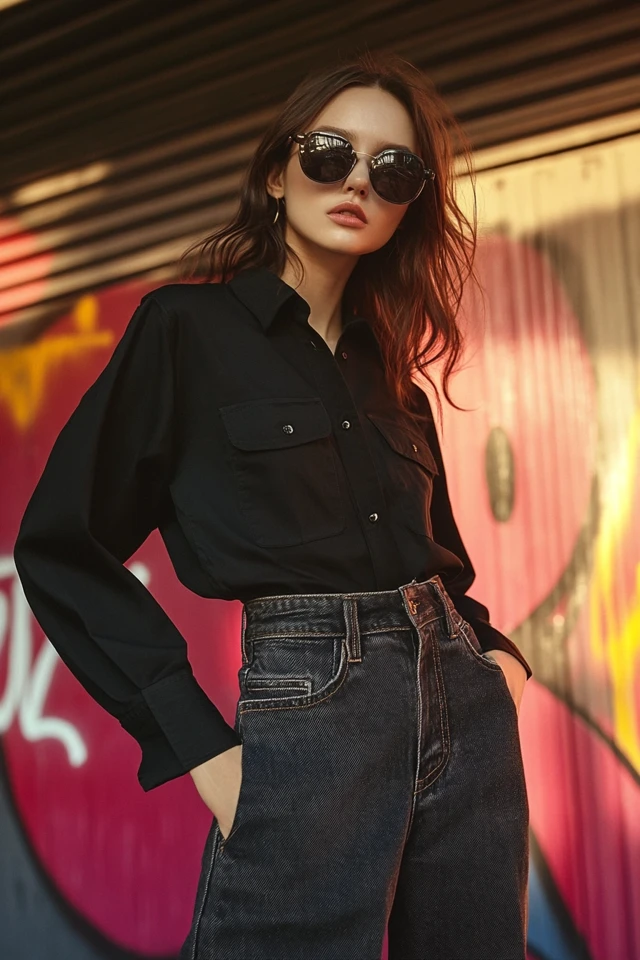
Keep one detail in charge. If the jeans have the interesting seams, make the top and shoes simple.
- With a fitted knit or blouse, tucked in, to show the waist and hip seams.
- With an oversized tee and a cropped jacket for a casual look.
- With a tailored blazer for a smart-casual outfit.
- With loafers or sneakers for daytime, ankle boots or pointed flats for a sharper finish.
- With a belt in a simple style, since it frames the waist seams.
For a plainer classic, compare these with classic straight-leg jeans, or look at straight-leg trousers if you want a similar line in a dressier fabric.

How do they compare with flare jeans?
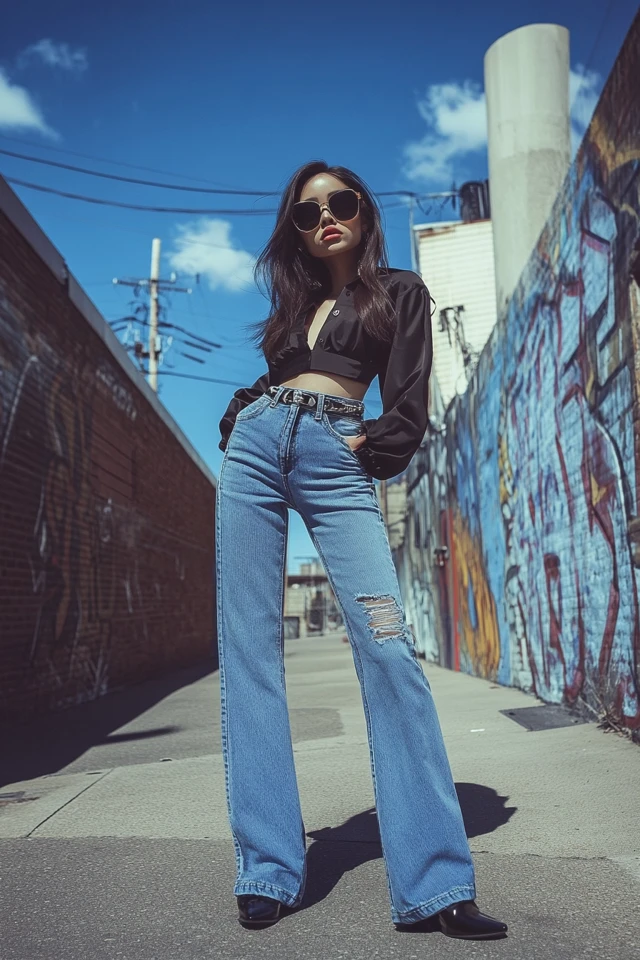
Both shapes can be found with shaped seams, but they behave differently. A straight leg stays the same width to the hem. A flare widens from the knee, which adds volume at the bottom and makes shoes a bigger part of the outfit. If you are weighing bell bottom vs flare jeans, the difference is mostly how dramatic the opening is: bell bottoms widen more.
Flares have a long history. According to FIT's Denim: Fashion's Frontier exhibition, the United States Navy first introduced flared pants in 1905, designed so sailors could roll them up more easily when swabbing the deck. Decades later, FIT's fashion timeline notes that low-rise, flared jeans were prevalent in the early 2000s.
If you like the flare but want a longer leg line, high waisted flare jeans and high rise bell bottom jeans do that by raising the waist. A sculptural straight leg gets the same waist definition without the extra width at the hem, which is easier to wear with sneakers and flat boots.

How do you care for the seams?
- Turn the jeans inside out before washing.
- Use cold water and a gentle cycle.
- Air-dry to help the denim keep its structure.
Raised or paneled seams hold their shape best when they are not tumbled hot. If you like the texture of a heavier fabric, corduroy straight-leg jeans are a good winter alternative, and the same care logic applies.

Frequently asked questions
Are sculptural seam jeans flattering on every body type?
The straight leg works on most frames, and the seams can add shape at the hip or leg. Fit decides the result, so check that panels and darts land where they were designed to.
Can you wear sculptural seam jeans to a dressier event?
Yes, in a dark or black wash with matching thread. Pair them with a tailored blazer, a simple blouse and heels or sleek flats.
What body type do flare jeans look best on?
Flares balance the hips with volume at the hem, so they suit many shapes, especially with a high rise and a hem that skims the shoe. Try a few lengths and rises to see which proportion feels right.
Do stretch sculptural seam jeans keep their shape?
A little stretch adds comfort but softens the structure of the seams. Cold washing and air-drying help the fabric keep its fit.
Filed under Style & Fit