Transitional Spring Layering Outfits in Soft Pastels
- Words by
- Julio Arco
- Published
- Reading
- 5 min
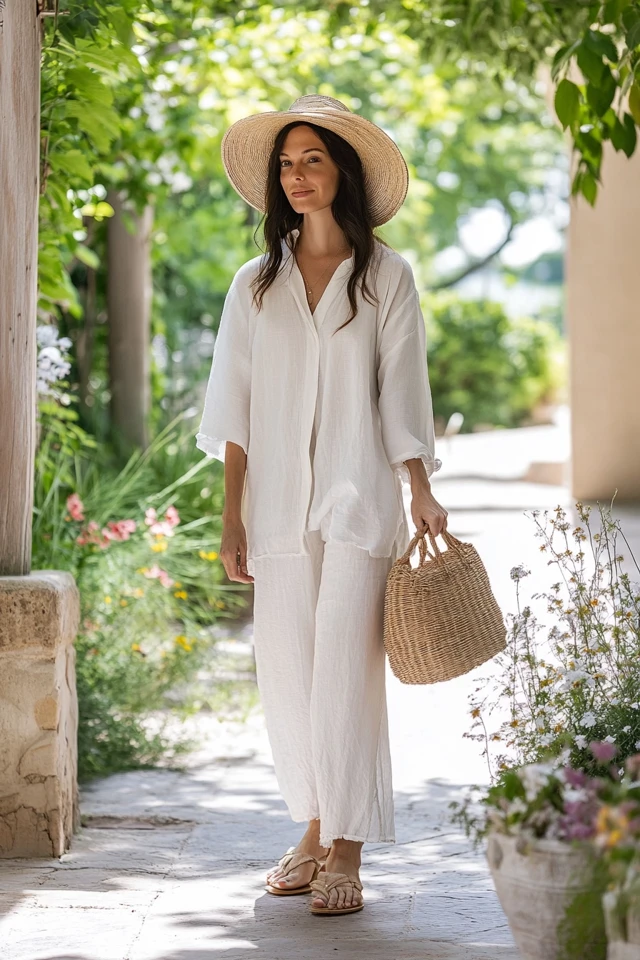
The easiest formula for transitional spring layering outfits is three layers: a neutral base, one pastel middle layer, and a light outer layer you can take off by noon. Keep the base close to the body, keep the pastel where the eye lands first, and choose an outer piece that folds into a bag.
Pastels suit this job because they are light and soft, so stacking two or three of them does not feel heavy the way stacked winter colors can. Below: the pieces to own, how to put them together, and five outfits you can copy.
How do you dress for transitional weather?
Plan for the biggest temperature gap in your day, not the average. If the morning is cool and the afternoon is warm, every layer above your base has to come off easily and still look finished on its own. That means a tee or fine knit that works without the cardigan, and a jacket that does not rely on a heavy sweater underneath.
For winter to spring transition outfits, swap weight before you swap color. Trade the chunky knit for a fine-gauge one, the wool coat for a trench or cotton jacket, and keep a few of your winter neutrals as the base. You do not need a new wardrobe, just lighter versions of what you already wear.
Which layering staples are worth having?
These are the best layering staples for spring, in the order you will probably reach for them:
- A well-fitting tee or fine turtleneck in white, cream or light grey
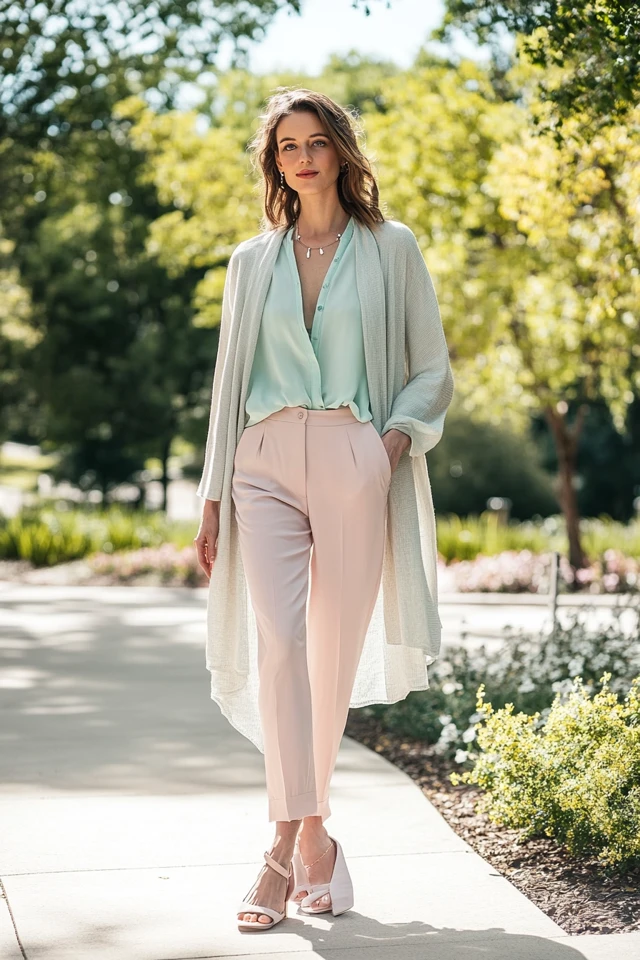
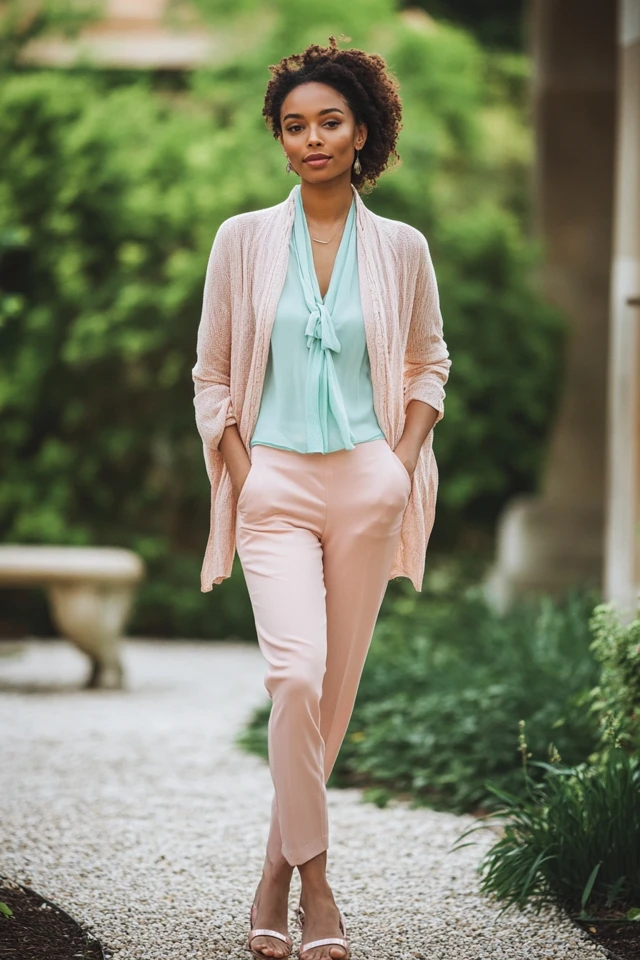
- A fine-gauge cardigan in a pastel such as mint, lavender or blush
- A trench, barn jacket or unlined blazer
- A chambray or denim shirt that works open over a tee
- Light-wash or white jeans, or a midi skirt
- Flats, loafers or clean sneakers
If you are shopping for the cardigan first, our guides to soft knit cardigans for spring layering and pastel cropped cardigans cover fit and length in more detail.
How to build the layers, step by step
1. Start with a neutral base
White, beige or light grey gives the pastels a calm background. A white tee with a cream midi skirt is a simple starting point. Fit matters most here: the base layer should sit close without clinging, so the pieces over it do not bunch.
On fabric, the cotton question depends on your day. For a stroll or errands, a cotton tee is fine. If you will be active outdoors in the cold, Texas A&M's Howdy Health advises that the layer closest to your skin should be moisture-wicking and that you should avoid cotton because it absorbs moisture and can keep it next to your skin. That guidance is about exercise, so for a workout choose a technical base instead of a tee.
2. Add one pastel middle layer
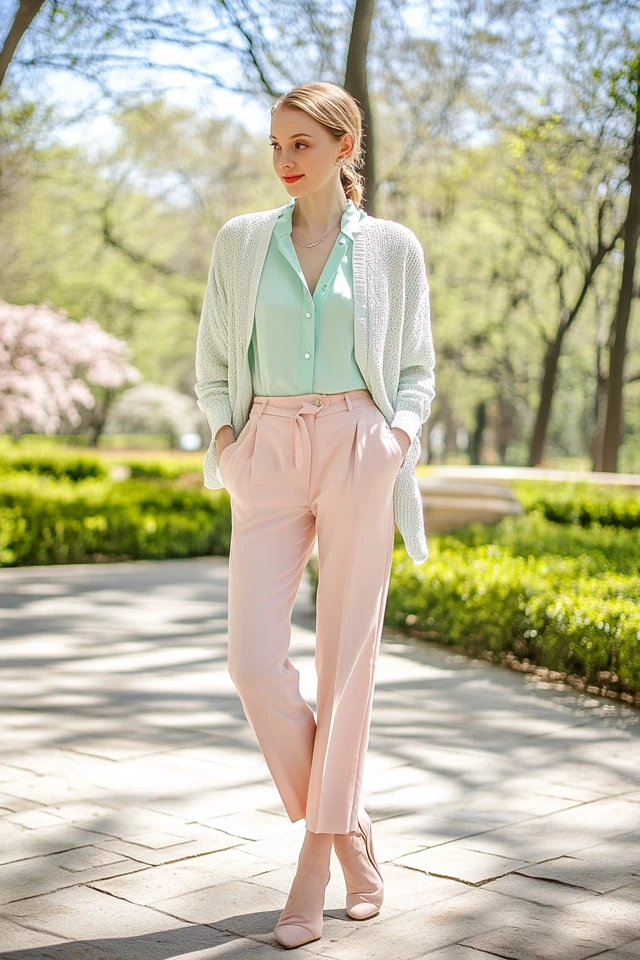
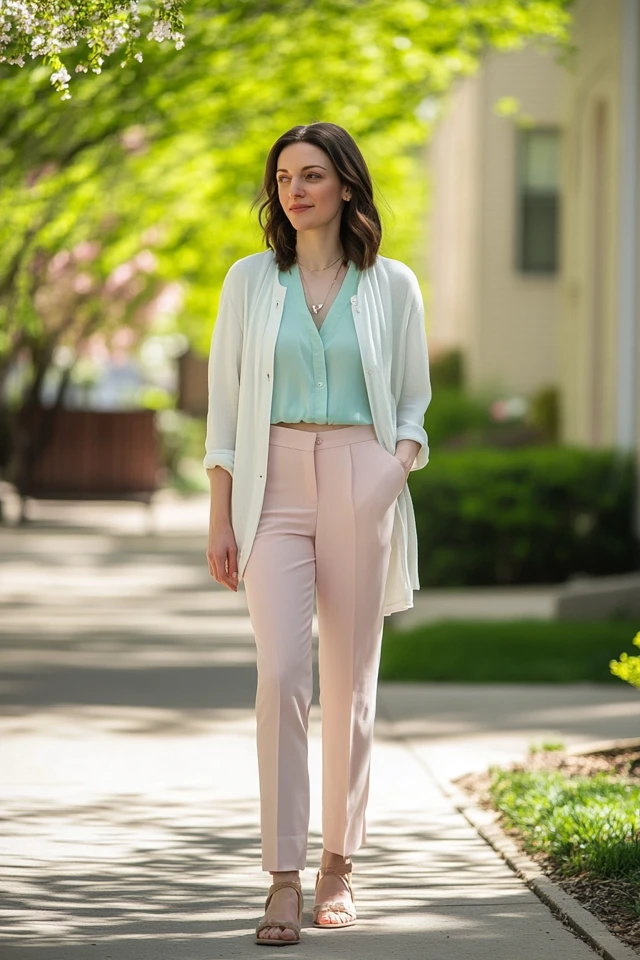
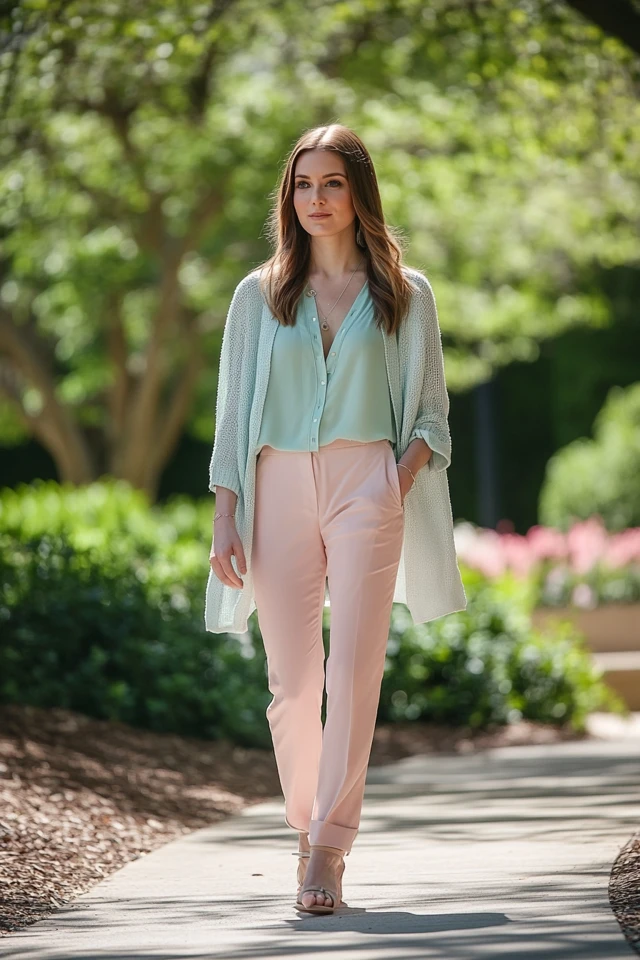
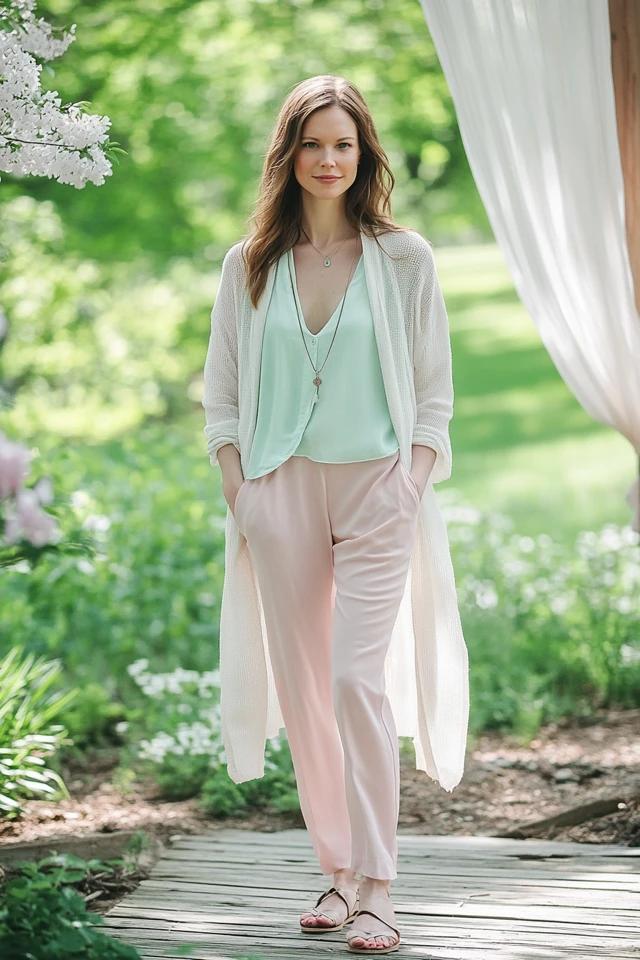
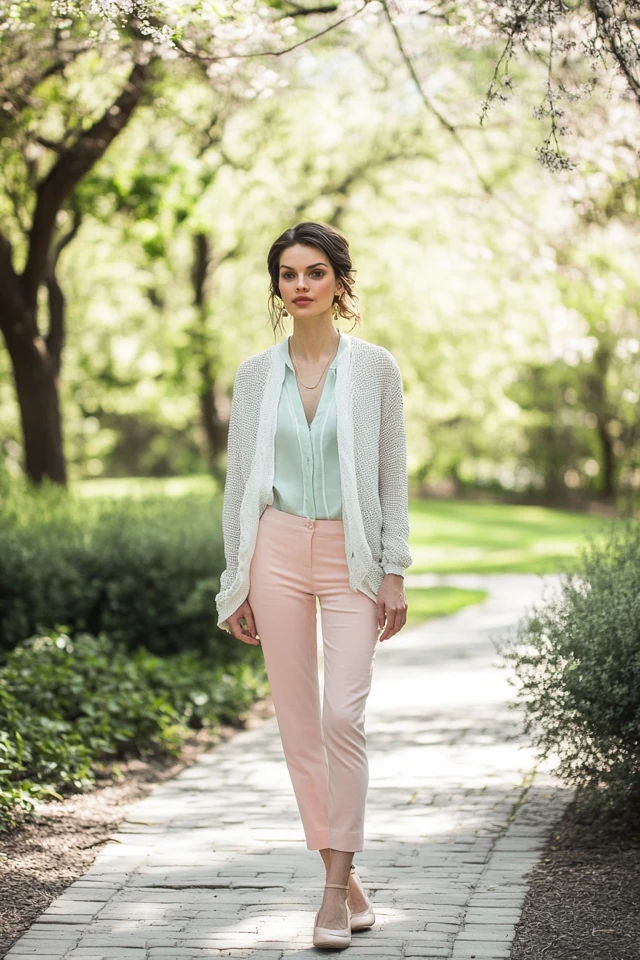
A mint sweater, a lavender button-down or a blush cardigan works. Pick one pastel to lead and let the rest support it. The cardigan and tee spring outfit is the simplest version: white tee, pastel cardigan, jeans, done.
3. Finish with a light outer layer
A trench, a short jacket or an unlined blazer handles the cool edges of the day. Choose lightweight layers for spring that fold or tie around your waist, since you will carry them for half the day.
4. Mix textures, not just colors
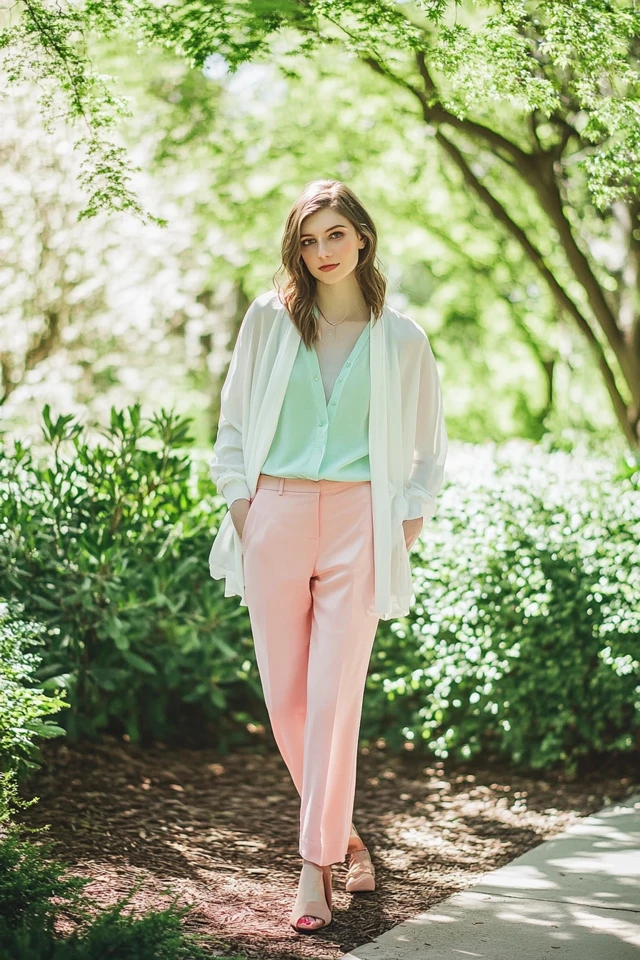
Through the lens of evidence-based design, I'd think about texture before color. A ribbed knit and a smooth cotton in the same blush do not read as the same shade, because the surface changes how light reaches your eye. That is useful: a single color family looks richer when the fabrics differ.
Five transitional outfits to copy
Casual day out
White turtleneck, cropped mint cardigan, light-wash high-waisted jeans, white sneakers. The denim and white keep the mint from taking over.
Office-ready
Blush blazer over a lavender blouse, tucked into beige trousers, with nude pumps. Two pastels this close in softness read as one calm palette.
Weekend brunch
Sky-blue maxi dress, soft cream knit sweater, tan belt at the waist, ankle boots. The belt keeps the sweater from swallowing the dress.
Evening stroll
Buttercream trench over a lilac knit and ivory wide-leg pants, with pointed flats. The trench carries the warmth, so the knit can stay thin.
Pastels with denim
A lavender sweater tucked into high-rise jeans, or a pastel chambray shirt open over a white tee. Denim is the easiest way to make pastels feel casual.
Which pastels go together?
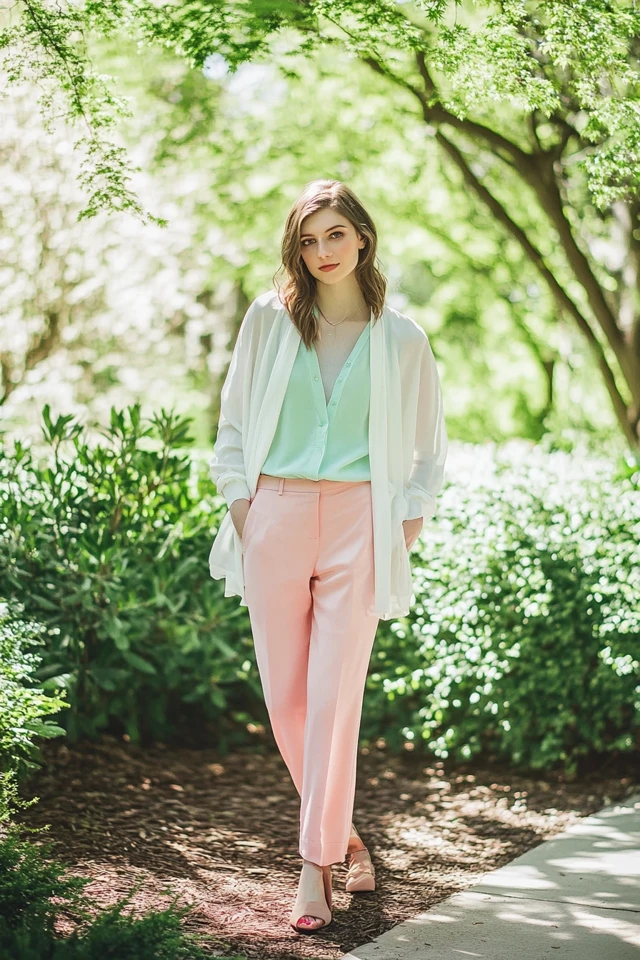
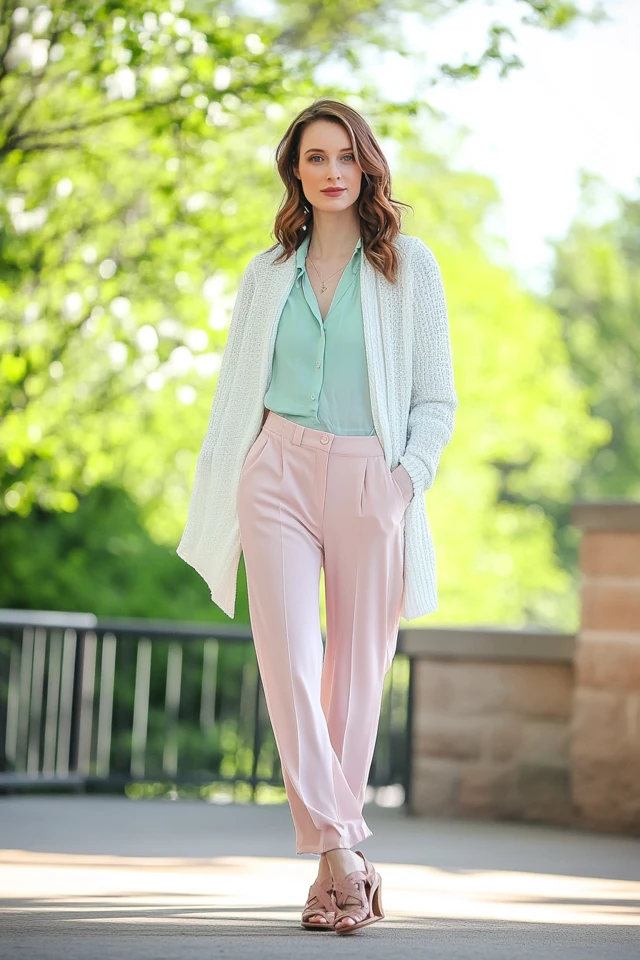
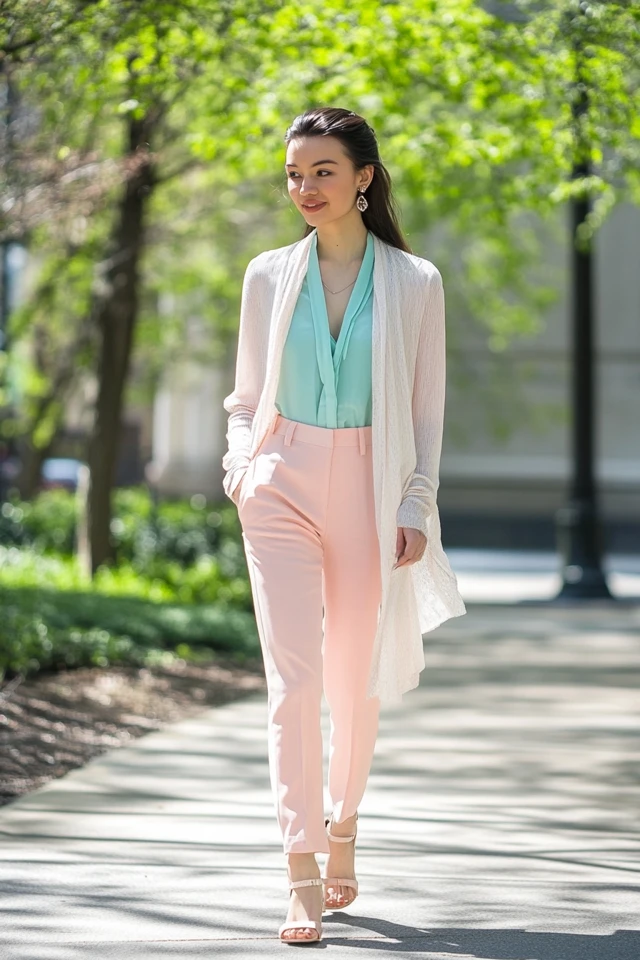
Lavender with baby blue and mint with peach are easy pairings because the colors share a similar softness. Keep the lightness level the same across pieces. A pale pastel next to a saturated one makes the pale one look washed out.
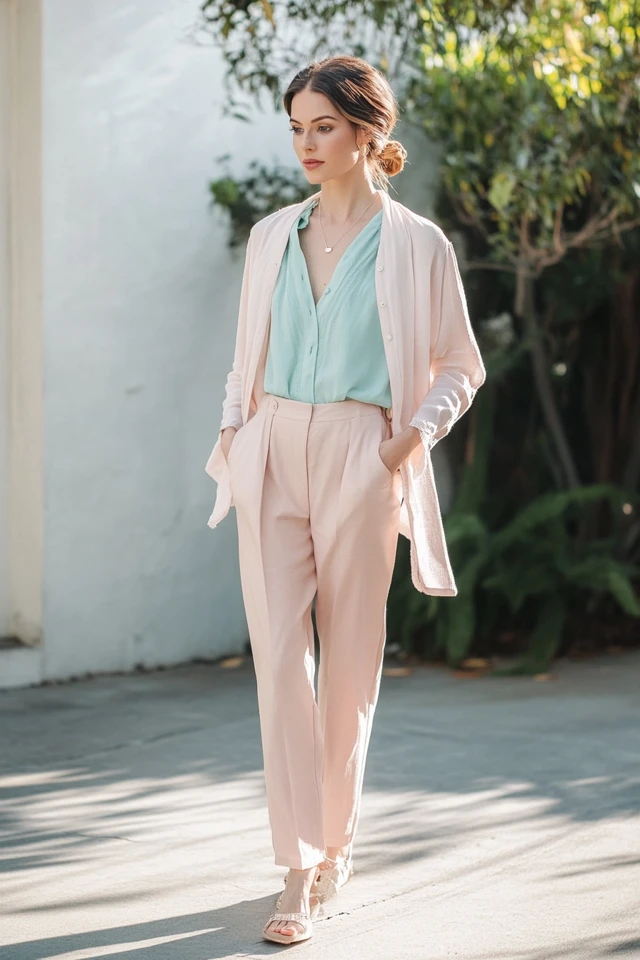
For a monochrome look, wear one pastel in three different textures, such as a knit top, a cotton skirt and a smooth coat. If you want more combinations, see light blue and soft peach outfits and pastel outfits for spring.
Fit, shoes and small details
Keep inner layers streamlined and let the outer layer be a little roomier, so nothing pulls across the shoulders. If a jacket will not close over a sweater, that is a sizing problem, not a you problem. Try a thinner knit under it.
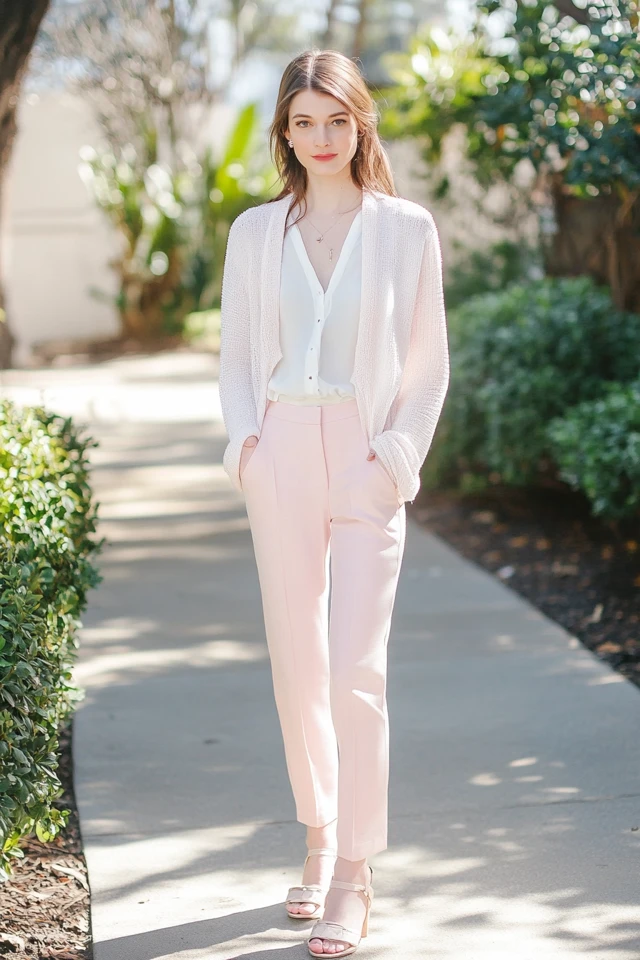
Neutral shoes such as white sneakers, nude flats or loafers finish the look without competing. A pastel scarf, belt or bag adds color if you do not want to buy new clothes. For the heavier end of the season, layering for temperature swings goes deeper on weight and warmth.
Frequently asked questions
What is the 3-3-3 rule for outfits?
It is a wardrobe-planning shortcut, usually three tops, three bottoms and three pairs of shoes that all mix together. It is not a fixed rule, so adjust the numbers to your climate and routine.
Can pastels work for all skin tones?
Yes, though the same pastel reads differently next to different skin. Hold a piece near your face in daylight and see whether it looks fresh or flat, then try a slightly warmer or cooler shade.
Can I wear pastels with darker colors?
Yes. A pastel sweater with navy trousers or a lavender trench over a black dress gives a clear contrast, and the dark piece anchors the softer one.
How can I add pastels without buying new clothes?
Start with accessories: a scarf, bag or belt in a soft shade over the neutrals you already own. One pastel piece is enough to change the look.
Filed under Seasonal Trends