Golden Hour Dresses: What to Wear at Sunset
- Words by
- Julio Arco
- Published
- Reading
- 5 min
Golden hour dresses are flowing, light-catching pieces in soft, warm tones that look good in low, amber sunlight. Think blush, peach, champagne, soft mint and cream, in fabrics that move: chiffon, satin, georgette, tulle.
The "golden hour dress code" is not a formal rule. It is a loose invitation to dress for evening light: romantic, relaxed and a little polished. This guide covers colors, silhouettes, fabrics and outfit formulas for photos, parties and dinners.
What are golden hour dresses?
Golden hour is the stretch of time after sunrise or before sunset when the light is low and warm. A golden hour dress is simply one chosen to work with that light, so the color looks soft instead of flat and the fabric picks up a glow.
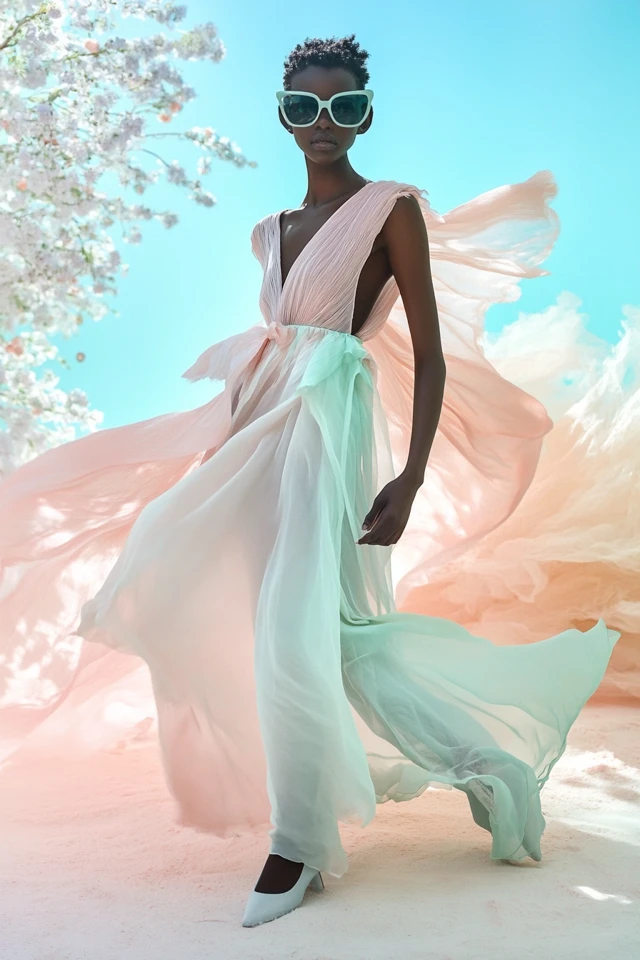
Golden hour romantic dresses lean on movement and softness: a skirt that lifts in the breeze, a sleeve that drapes, a hem that swings when you turn. Prints are optional. Surface and color do most of the work.
Which colors glow at sunset?
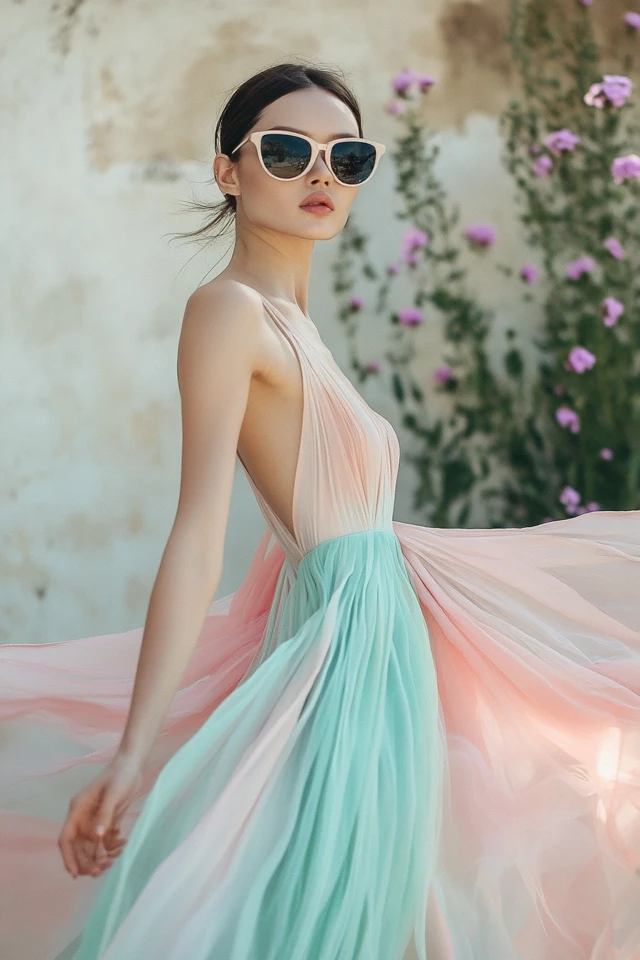
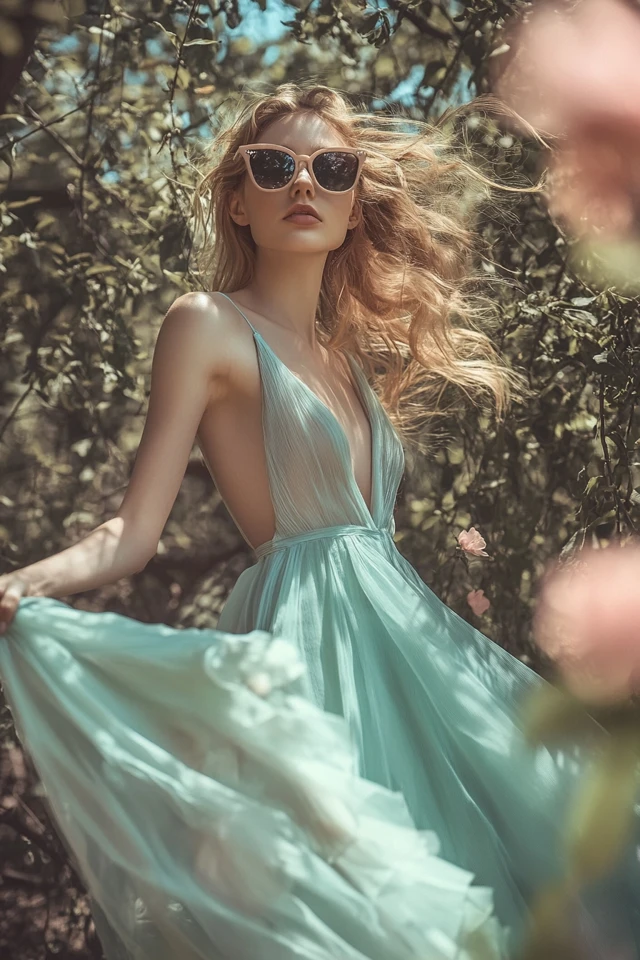
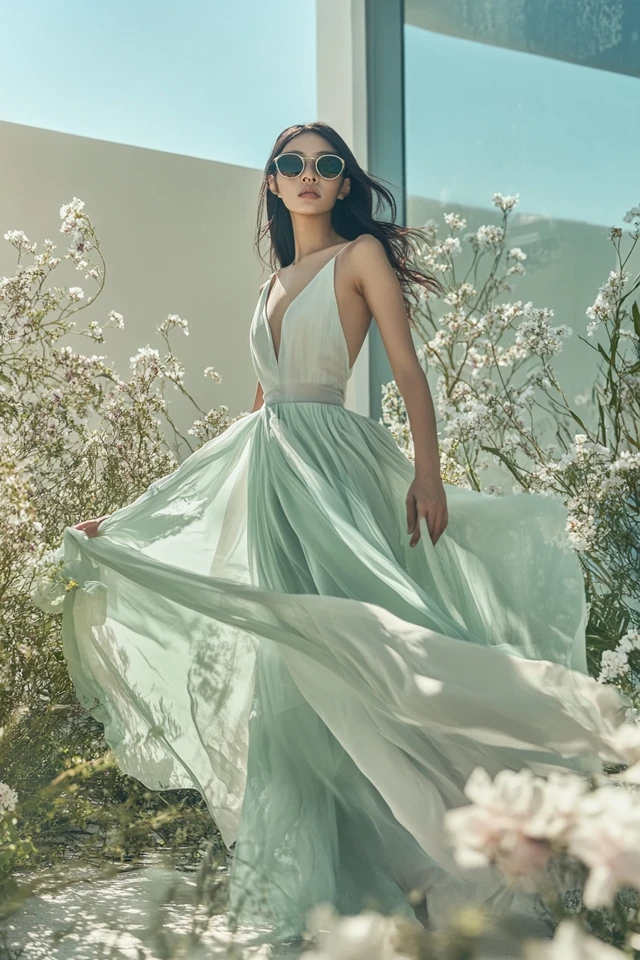
Warm light adds a golden cast to everything it touches. Pale colors take that cast best, which is why blush, peach, apricot, ivory and champagne tend to look luminous at sunset. Soft mint also works, because its cool green sits calmly against the warm light instead of fighting it.
Very dark colors and optic white can be harder. Black loses its detail, and bright white may pick up a strong yellow tint. If you love either, choose a fabric with some texture so the surface still reads.
Pairing mint and blush
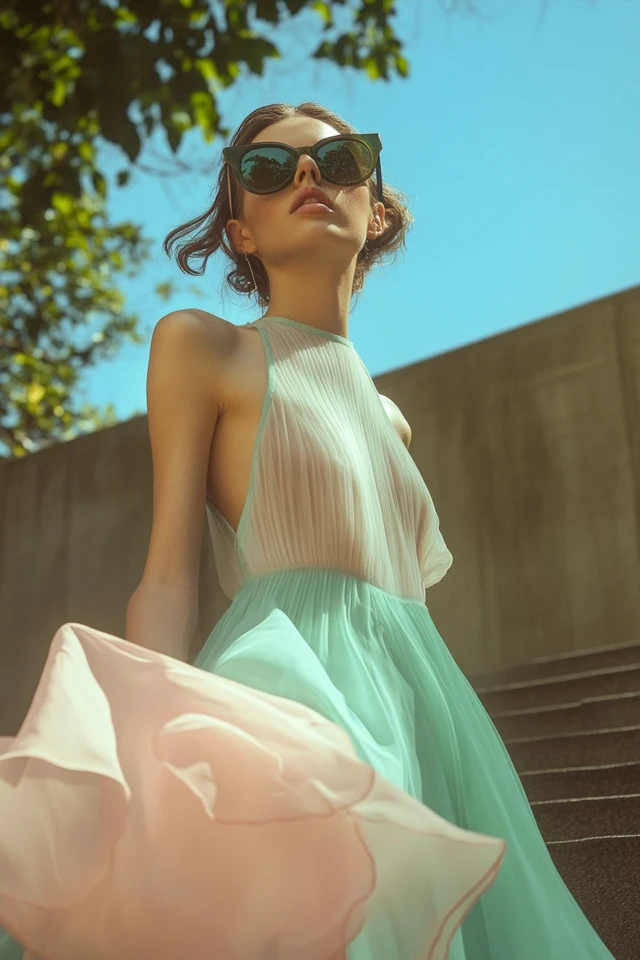
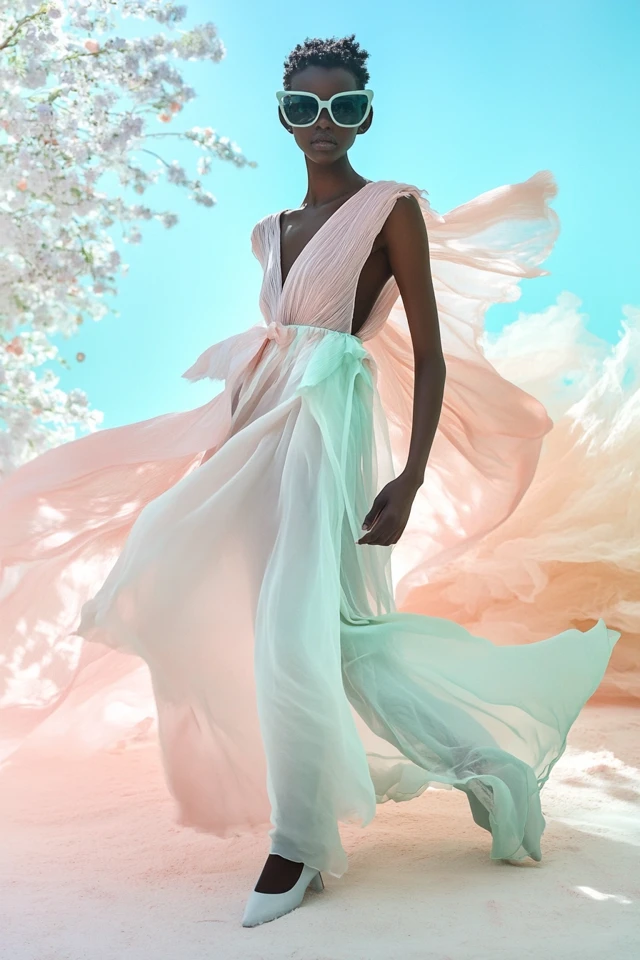
Mint and blush balance cool against warm, and low sun softens the contrast between them. Try a blush dress with mint earrings or a clutch, or the reverse. For more on this pairing, see blush pink and cool mint in everyday looks.
What silhouettes and fabrics work best?
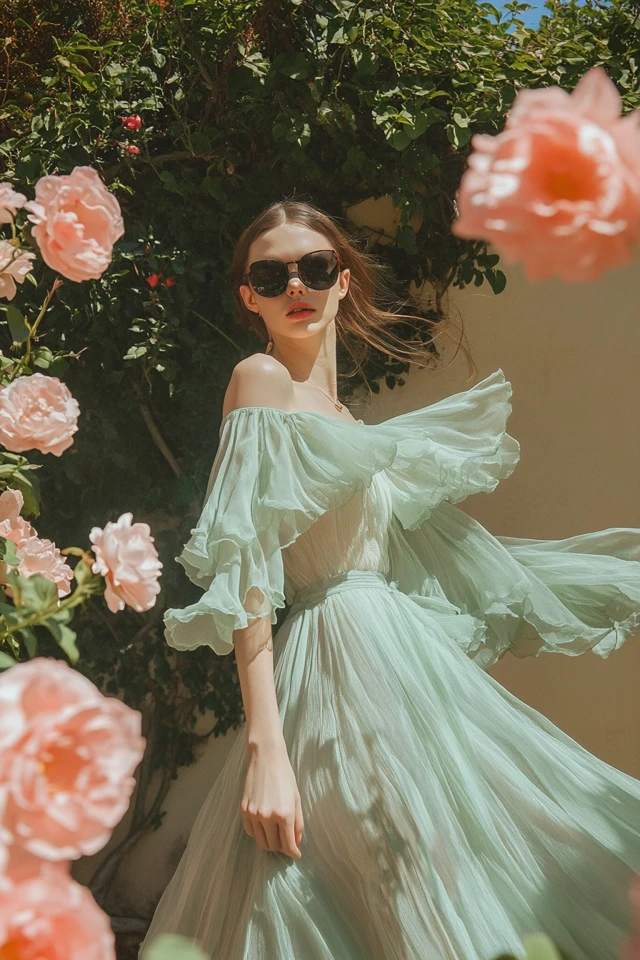
Choose shapes that move. A maxi, a tiered midi or a wrap dress gives you a skirt that catches air, and that movement is what makes sunset photos feel alive.
- Maxi dresses: the most dramatic in wind, and easy to dress up or down.
- Tiered midis: movement without the length, which helps on uneven ground or sand.
- Wrap dresses: adjustable at the waist, flattering across many body shapes.
- Slip dresses: simple and modern, best with a light layer for cooler evenings.
Through the lens of evidence-based design, I'd think about fabric surface before print. Satin reflects light in broad highlights, chiffon diffuses it, and lace breaks it into small patterns. The same blush reads differently in each, so pick the effect you want in photos.
What to wear for a golden hour photoshoot
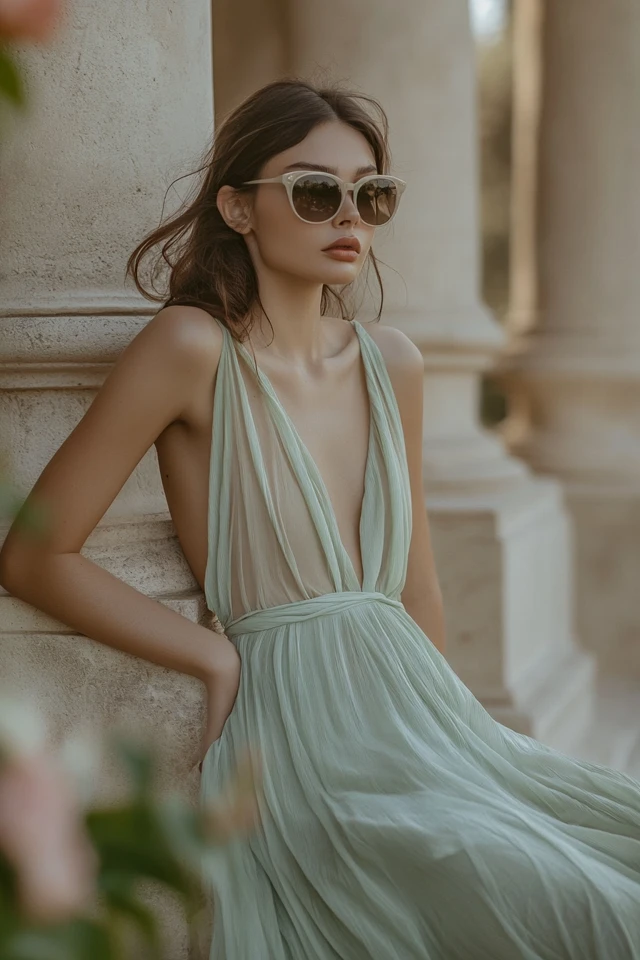
For sunset dresses for photoshoots, start with movement and a color that sits near your skin tone without matching it exactly. A blush that is a shade lighter or warmer than your skin usually looks flattering.
- Check the fabric in daylight first. Some thin chiffons and satins turn sheer when the sun is behind you, so add a slip if needed.
- Keep jewelry simple. Small gold or pearl pieces catch light without competing with the dress.
- Wear shoes you can walk in on grass or sand, such as flat sandals or block heels.
- Bring a light wrap. Temperatures drop quickly once the sun is down.
How to dress for a golden hour party
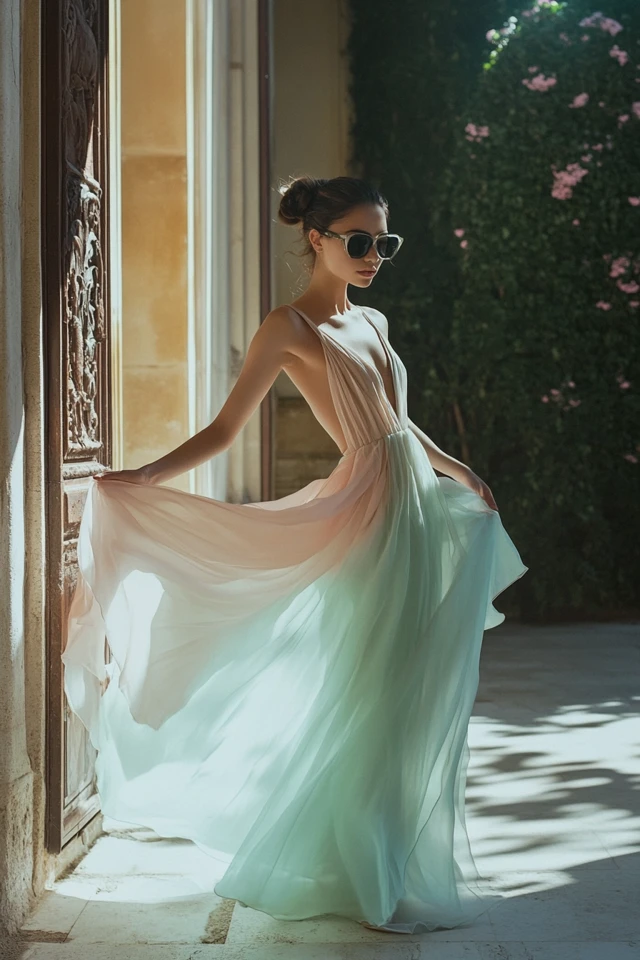
A golden hour party usually means an outdoor or terrace gathering at the end of the day. Aim for chic and comfortable: a midi or maxi in a warm pastel or champagne tone, plus an easy layer.
The golden hour chic dress code is the polished end of this idea. Think a satin slip or a column dress, a structured clutch, and metallic sandals. Keep the palette tight, two or three tones, so the light does the decorating.
If you are heading to a bachelorette, go lighter and more playful: a short tiered dress or a ruffled mini in peach or blush, with shoes you can dance in.
Shimmer, champagne and metallic options
Champagne and soft gold are natural fits for the hour, since they echo the light itself. A subtle sheen, such as satin or a fine sequin, looks warmer in low sun than under indoor lighting.
I'd keep shimmer to one element. A metallic dress with minimal accessories, or a matte dress with gold jewelry, reads more refined than both at once.
Accessories and shoes to pair
- Shoes: nude, tan or metallic sandals lengthen the leg and suit nearly every warm pastel.
- Bags: a small clutch or crossbody in cream, gold or a soft contrasting mint.
- Jewelry: thin gold, pearls or rose gold. Save statement earrings for simple necklines.
- Layers: a cream cardigan, a light shawl or a denim jacket when the air cools.
For a daytime-to-evening version of this palette, ivory and blush combinations are an easy starting point, and yellow and blush sundresses lean even warmer.
Can you wear these dresses in any season?
Yes, with layers. In spring and summer, wear the dress alone or with a light wrap. In fall and winter, add a cream knit, a coat in a neutral shade and closed shoes. A soft knit cardigan over a blush or mint dress keeps the look gentle while adding warmth.
Golden hour comes earlier in winter, so plan any outdoor photos for late afternoon and keep a coat close.
Frequently asked questions
What is the golden hour dress code?
It is an informal theme, not a fixed rule. It means dressing in flowing, warm-toned or softly metallic pieces that look good in low evening light, usually at a relaxed but polished level.
How to dress for a golden hour party?
Choose a midi or maxi dress in a warm pastel, champagne or soft gold, then add flat or block-heel sandals and a light layer for when the sun goes down.
What is the golden hour chic dress code?
It is the dressier take on the theme: satin or column dresses in a tight palette of warm neutrals and metallics, with minimal gold jewelry and a structured clutch.
What color dress looks best in golden hour light?
Soft, warm shades such as blush, peach, champagne and ivory usually glow most. Soft mint also works because its cool tone balances the warm light.
Filed under Color Palettes