Fabric Combination Dresses in Ivory and Blush
- Words by
- Julio Arco
- Published
- Reading
- 5 min
A fabric combination dress joins two or more materials in one garment, such as a chiffon skirt on a satin bodice or a lace overlay on a plain lining. Ivory and blush are an easy palette for it, because the colors are so close that the fabrics do the visual work.
The simple rule: keep the colors quiet and let the textures differ. A matte cotton next to a glossy satin in nearly the same shade looks deliberate, not busy.
What is a combined fabric dress?
It is a dress built from different materials in separate panels, layers or trims. You may also see it called a mixed media dress. The mix can be structural (a knit bodice with a woven skirt), decorative (lace sleeves on a crepe dress) or a full overlay (tulle over satin).
The idea is old. The Kyoto Costume Institute describes an 1850s English day dress this way: "Considering that this mixed fabric of silk and wool is a material hard to print on, this dress with its bright and cheerful colors is a particularly fine example on how much cloth printing techniques had evolved." Mixing fabrics has long been a way to get color and structure from materials that behave differently.
Why ivory and blush suit mixed fabrics
Ivory is a soft, warm neutral. Blush is a pale pink with warm undertones. Because they sit so close in value (how light or dark they are), neither one overpowers the other, and surface texture becomes the main contrast.
Through the lens of evidence-based design, I'd start with texture before color. A matte crepe and a glossy satin in the same blush do not read as the same color, because the surface changes how light reaches your eye. That is why a two-fabric dress in one shade family can look richer than a flat single-fabric one.
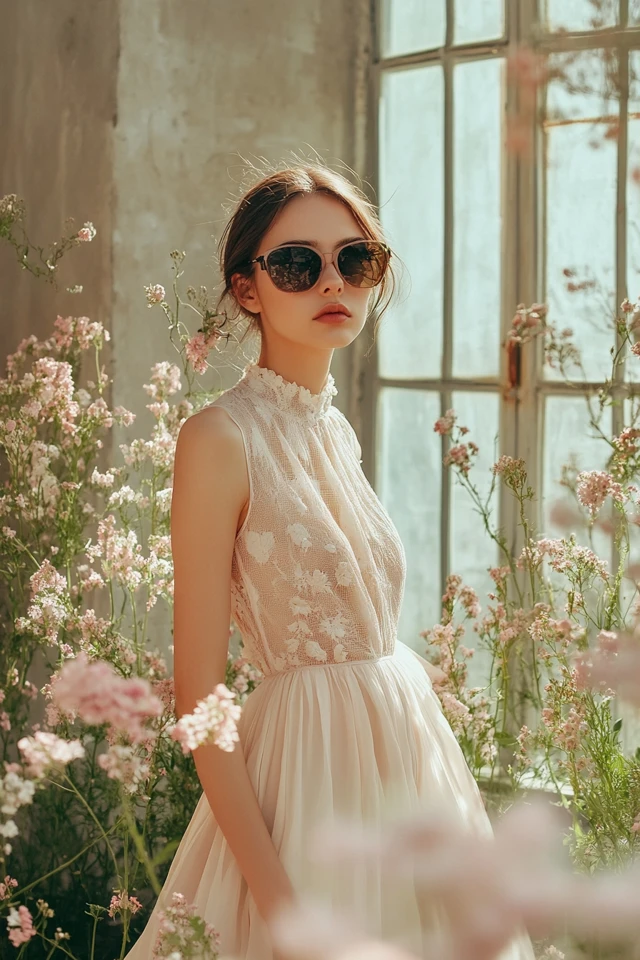
What fabrics pair well together?
A reliable approach is to pair one fabric with body and one with movement. Here are combinations that work in ivory and blush:
| Pairing | How it looks | Good for |
|---|---|---|
| Satin and chiffon | Glossy base, soft floating layer | Weddings, semi-formal days |
| Lace and crepe | Delicate pattern on a smooth, matte base | Showers, daytime ceremonies |
| Cotton and eyelet | Crisp, light, casual | Brunch, garden parties |
| Linen and silk | Dry texture next to sheen | Summer days |
| Knit and woven | Stretch bodice, structured skirt | Everyday wear, travel |
| Velvet and satin | Deep pile against high shine | Cooler months, evening events |
Avoid mixing three or more strongly different textures in one outfit unless one is a small trim. Two is usually enough.
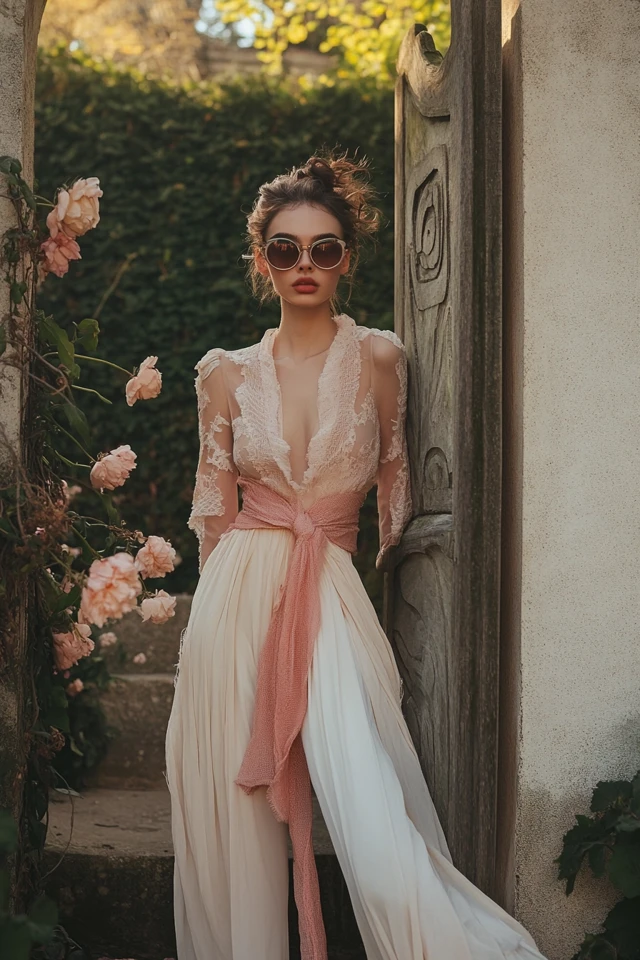
Mixed fabric dress ideas by color placement
An ivory dress with blush in a second fabric
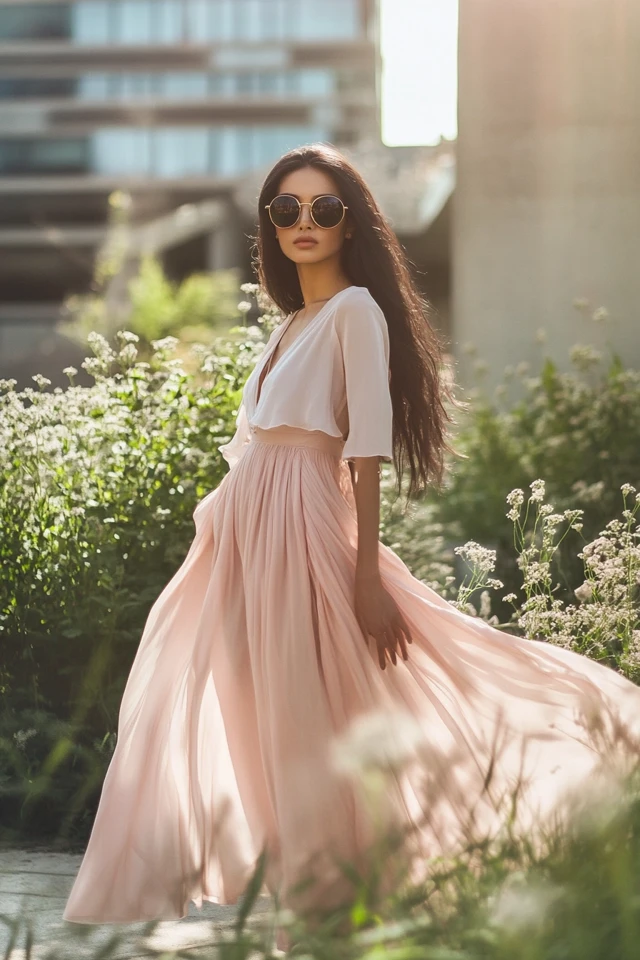
Start with an ivory dress in a wrap, A-line or shirt shape, then add blush through a sheer layer, a satin belt or a silk scarf. A blush chiffon sleeve on an ivory crepe dress is a small change that adds a lot of softness.
A blush dress with ivory lace or embroidery
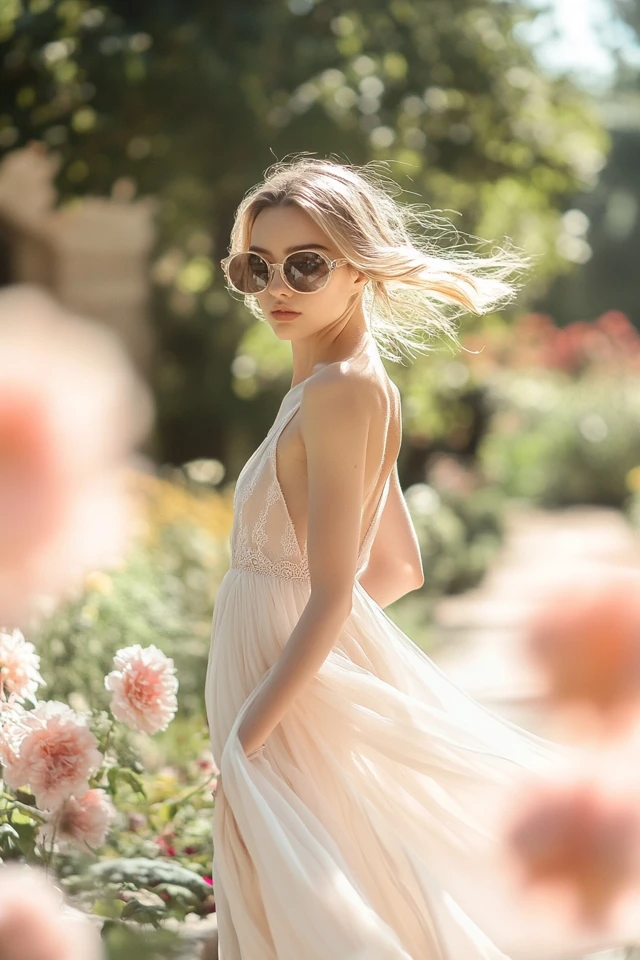
Blush slip dresses, fit-and-flare shapes and maxis all take ivory lace well. Lace overlays on the bodice or hem give texture without adding a second color family. For more blush pairings, see sage green and blush palettes for everyday dresses.
A dress that already combines both
Color-blocked panels, ombre skirts that fade from blush to ivory, and floral prints in both shades all give you the pairing in one piece. Choose a different fabric for each panel, such as matte on top and sheer below, for extra depth.
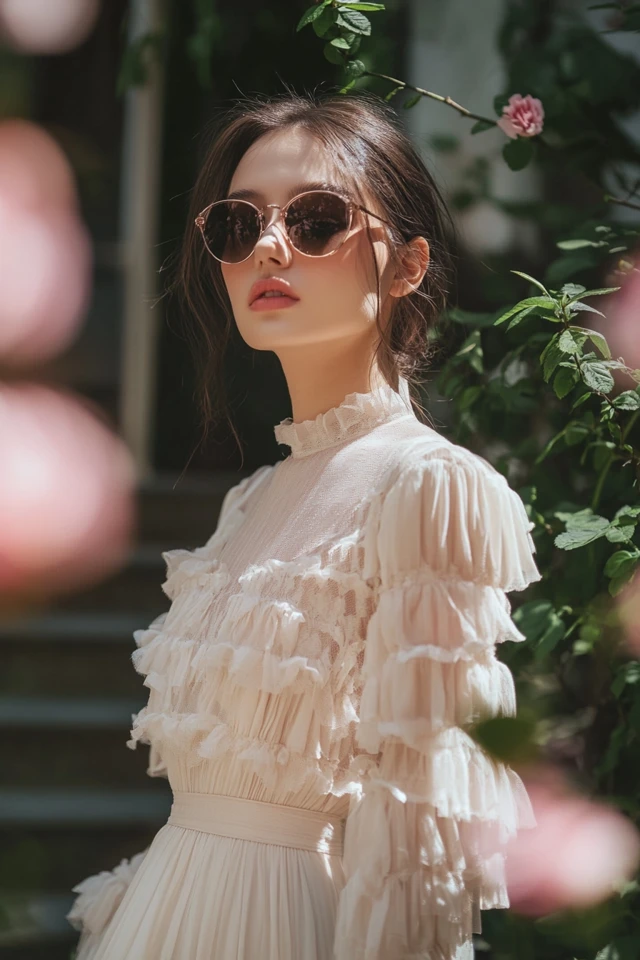
Choosing fabrics for the occasion
Casual fabric combination dresses
Cotton, linen and jersey are comfortable and easy to care for. An ivory linen shift with a blush cotton trim, or a blush shirt dress with an ivory denim jacket, keeps things relaxed. Sneakers or flat sandals suit these well.
Fabric combination dresses for a wedding
For daytime weddings, lace, chiffon, crepe and satin photograph and move well. Check the invitation and the couple's wishes first: ivory is widely avoided by guests at weddings, so a blush base with ivory detail is the safer choice. If you are looking for bolder daytime options, vibrant daytime wedding outfits with bright prints may help.
Special occasion dresses
Fabrics with some structure, like satin, crepe and heavier lace, hold their shape through a long event. Pair them with something lighter, such as chiffon or tulle, so the dress still moves.
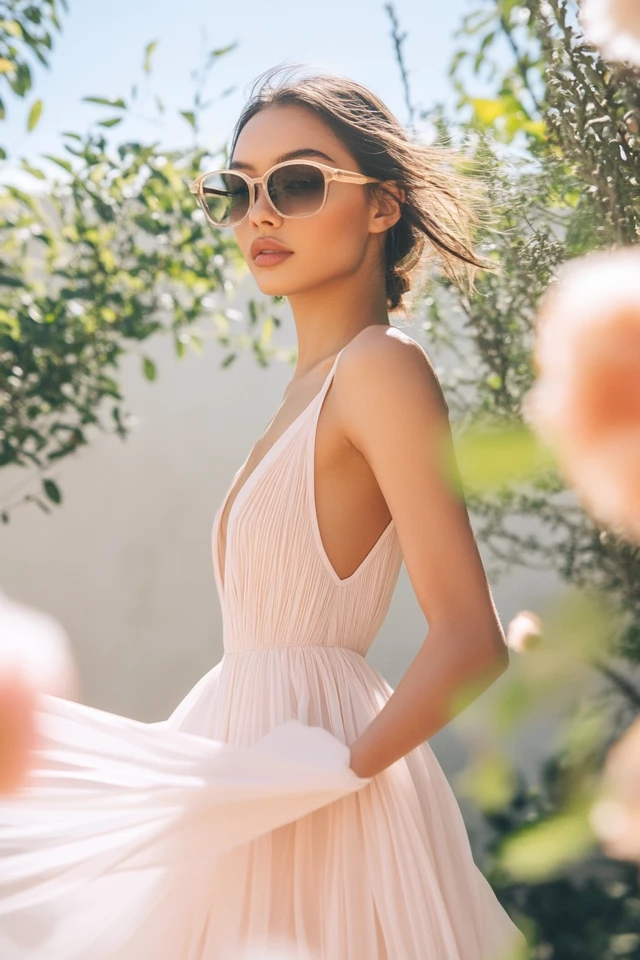
Best fabrics for each season
- Spring and summer: cotton, linen, chiffon and light silk in ivory and blush.
- Fall and winter: wool, velvet and knit in blush, with ivory layers such as a turtleneck or cardigan.
An ivory turtleneck under a blush pinafore with knee-high boots is an easy cold-weather version of the same idea. If you want a mint accent for spring, soft mint and blush in romantic dresses is a good next read.
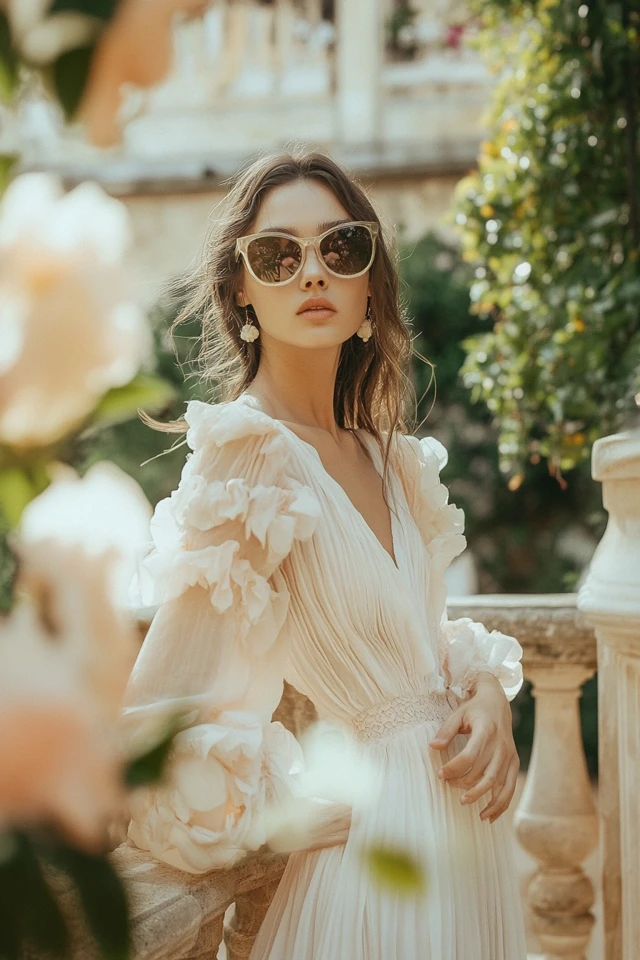
Styling tips for mixed fabric dresses
- Keep accessories simple. Gold jewelry and pearls suit both colors; see how to style glittery accessories for daytime looks if you want more shine.
- Match shoes to one of the fabrics. Nude or beige shoes keep the focus on the dress.
- Use a third layer only if it is plain: a blazer, cardigan or silk scarf in one of the two colors.
- Balance volume. A full chiffon skirt looks best with a fitted top layer or a defined waist.
- Check the dress in daylight. Ivory and blush shift in warm indoor light, and fabrics shift differently.
As an architect trained in evidence-based design, I'd treat the neckline and waist as the first places the eye reads, so put your best fabric contrast there.
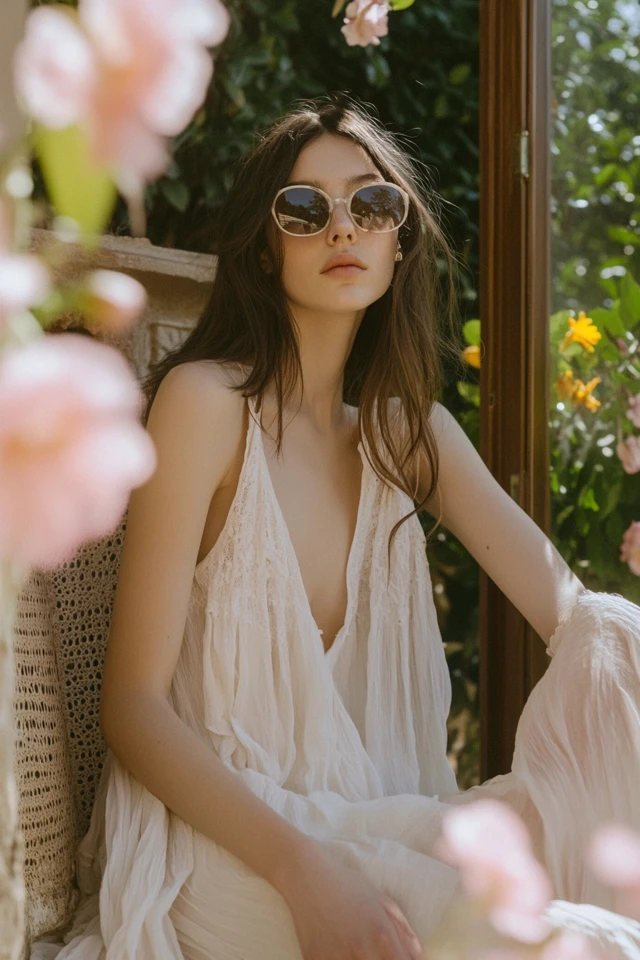
Three outfit formulas
- Brunch: ivory wrap dress, blush kitten heels, a blush crossbody and gold hoops.
- Garden party: blush floral A-line dress, ivory espadrilles, a woven tote and a wide-brimmed ivory hat.
- Semi-formal day event: blush-to-ivory ombre midi, metallic sandals, a cream clutch and blush gemstone earrings.
For a darker contrast on a similar idea, try emerald green and soft ivory pairings.
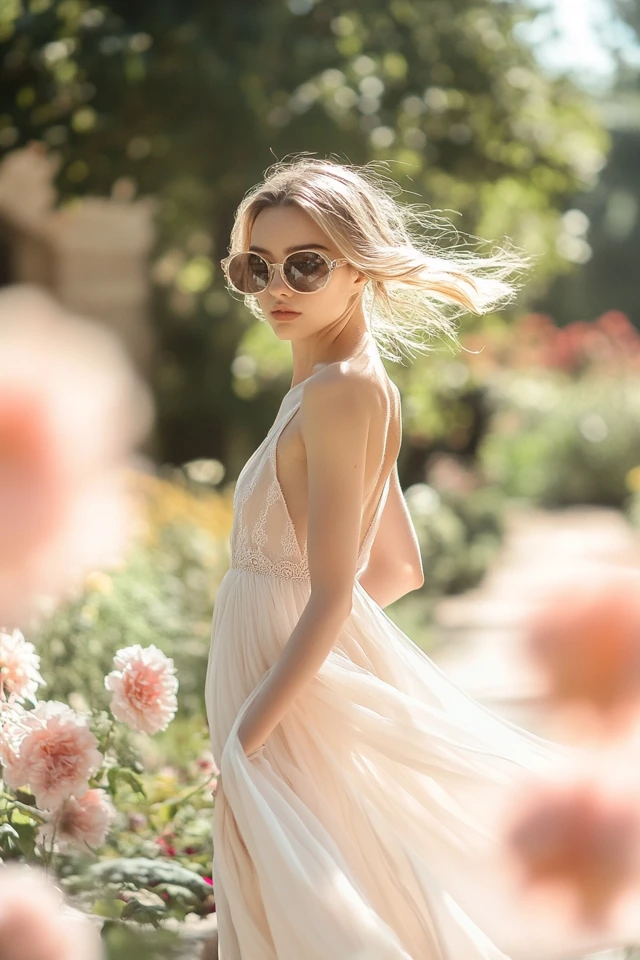
Frequently asked questions
What is a combined fabric dress?
It is a dress made from two or more different materials, such as lace over crepe or a knit bodice with a woven skirt. The fabrics may appear as panels, overlays or trims.
What fabrics pair well together?
Satin with chiffon, lace with crepe, cotton with eyelet and linen with silk are common pairings. One fabric usually gives structure and the other gives movement.
Can I wear ivory and blush year-round?
Yes. Choose light fabrics like cotton, linen and chiffon in warm months, and wool, velvet or knit in cooler ones.
Are mixed fabric dresses harder to care for?
They can be, because each fabric may need different care. Check the care label and consider dry cleaning for lace, satin or velvet combinations.
Filed under Color Palettes