
Geometric Nail Art: Wave Patterns, Shapes and Tips
- Words by
- Julio Arco
- Published
- Reading
- 4 min
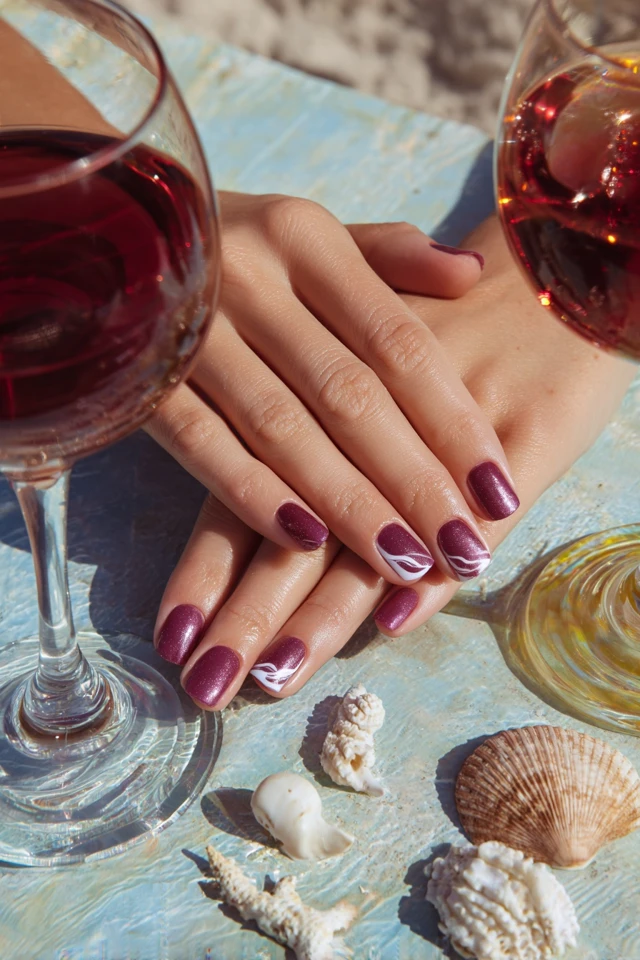
A wave manicure is one of the easiest ways into geometric nail art: a few repeating curved or zigzag lines, two or three colors, and plenty of bare space so the pattern can breathe. Keep the lines consistent in width and the palette small, and it looks deliberate rather than busy.
Below you'll find the patterns to try, how color and finish change the look, which shapes suit straight lines, and how to take gel color off without punishing your nails.
What makes a wave mani geometric?
Geometry on a nail comes down to repetition and edges: parallel lines, triangles, arcs, grids. A wave sits between soft and structured. The curve feels relaxed, but when every ripple has the same height and spacing, the eye reads it as a pattern.
Nails are small, so every line is close to the viewer. That is why uneven spacing shows up fast, and why fewer elements usually look better than more.

Simple geometric nail designs to start with
If you are new to this, begin with one accent nail and leave the others in a solid color. These are easy to copy:
- One thin wavy line across the nail in a contrasting shade.
- Two parallel curves that follow the cuticle line.
- A single diagonal stripe with a straight edge.
- Small repeated dots or short dashes arranged in a row.
Use a thin brush or a nail art striper and work on a fully cured, tacky-free base. Draw the line in short strokes rather than one long pull, and clean up edges with a small brush dipped in remover.
How do color blocking and finish change the pattern?
Color block geometric nails divide the nail into flat fields: a half-moon, a diagonal split, a wave separating two shades. Pick colors with clear contrast in lightness, not just hue, so the boundary stays readable at arm's length. Two close shades blur the edge you worked to make.
Finish matters as much as color. Through the lens of evidence-based design, I'd think about texture before hue: the same navy reads deeper in matte and brighter in gloss, because the surface changes how light reaches your eye. Matte geometric nails look quiet and graphic. A common trick is a matte base with glossy wave lines on top, so the pattern shows through texture alone.
What is the best nail shape for geometric designs?
The best nail shape for geometric designs is usually the one that keeps clean edges visible. Square and squoval nails give straight lines a flat field to sit on. Short almond and round shapes suit waves and arcs, since the curves echo the tip. Longer coffin shapes give diagonals and color blocks more room, though the pattern has to be planned to the length.
For a closer look at shapes, see this short almond manicure, a round silhouette set and mini coffin artistry. For angled cuts, oblique coffin nails and split tip designs show how geometry follows the tip.
On healthy nails, the shape you can keep intact matters more than the shape on the screen. If a long set keeps snapping, go shorter.
Tips for sharper lines
- Cap the free edge so the design does not chip first at the tip.
- Use tape or nail stencils for straight edges, and remove them before curing when the product allows.
- Cure thin layers. A thick line spreads and loses its edge.
- Finish with a top coat that matches the look you chose, matte or glossy.
Taking geometric nail art off safely
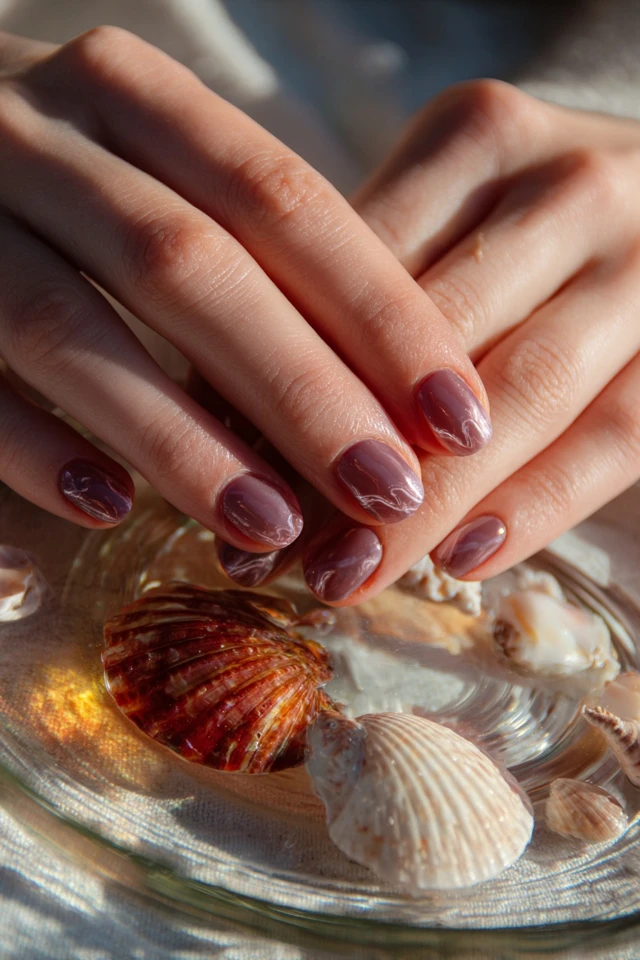
Removal is where nails get hurt. The American Academy of Dermatology says acetone is the most effective way to remove gel polish at home, and that after soaking with plastic wrap for 10 minutes, most or all of the polish should be gone. Don't pick or peel it off.
The Cleveland Clinic notes that careless removal can temporarily damage nails, with cracking and peeling the most common issues. Give your nails a rest between sets. Board-certified dermatologist Chris Adigun, MD, FAAD, puts it this way: "Looking closely at your nails after removing the color helps you spot a problem early." If something looks wrong, check with a dermatologist.
If you like seasonal variations of the same idea, try winter solstice nails for a cooler palette.
Frequently asked questions
What are some examples of geometric nail designs?
Common examples are wavy lines, diagonal stripes, triangles, grids, half-moons and color-blocked sections. Start with one accent nail and keep the others plain.
What is the most attractive fingernail shape?
It depends on your nail bed and how you use your hands. Almond and squoval are popular because they suit most nail beds and hold geometric lines cleanly.
What is the healthiest nail shape?
Shorter, softly rounded or squoval nails tend to snag and break less. If you have recurring splitting or pain, check with a dermatologist.
Can I do geometric nail art at home?
Yes. A thin brush, tape or stencils and thin cured layers are enough for simple patterns. Practice on one nail before doing the full set.
Filed under Nail Design