Sheer Panels and Velvet Holiday Dresses: How to Choose
- Words by
- Julio Arco
- Published
- Reading
- 4 min
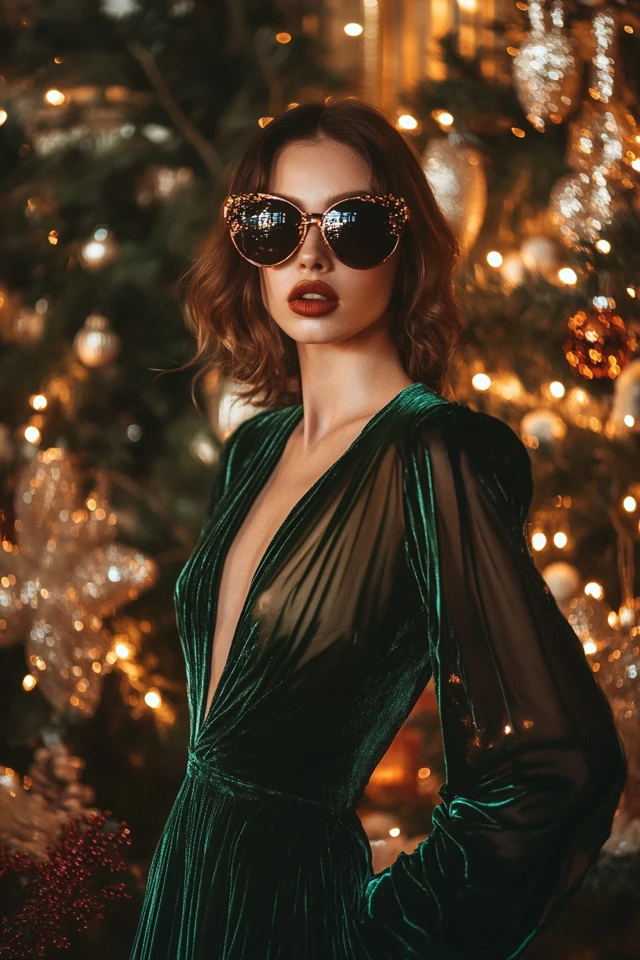
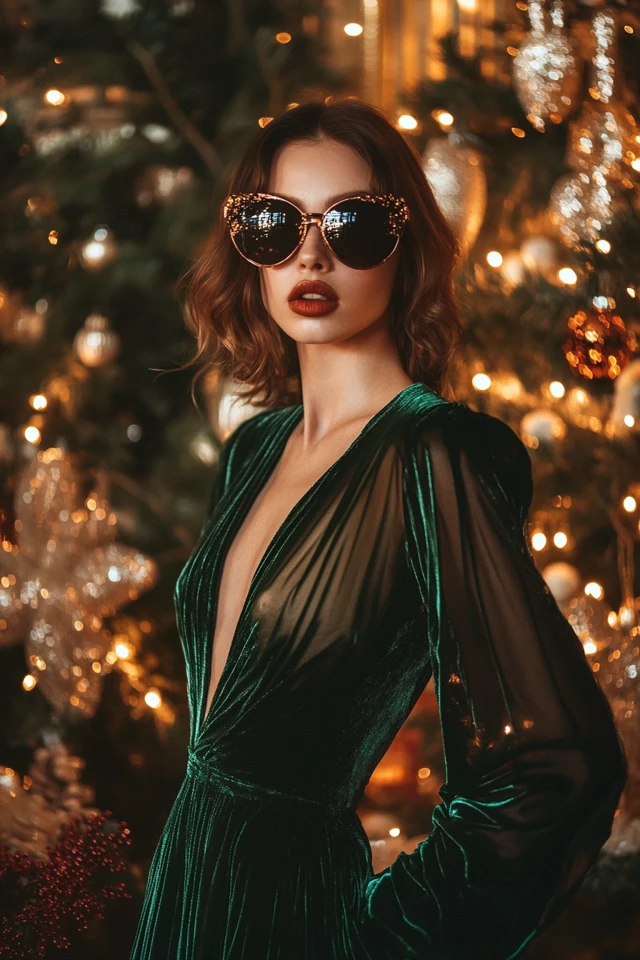
A velvet dress with sheer panels works because the two fabrics behave so differently. Velvet is dense, soft and light-absorbing; sheer fabric is airy and lets skin or lining show through. Put them together and each makes the other look more like itself.
For most holiday events, start with a velvet body and keep the sheer to one area: sleeves, neckline or skirt overlay. One sheer feature reads as a deliberate detail. Three of them start to compete.

Why do sheer panels and velvet work together?
Through the lens of evidence-based design, I'd say it comes down to how surfaces catch light. Velvet has a pile that deepens color and softens edges. Sheer fabric is nearly flat and transparent, so it adds contrast without adding visual weight.
There is a practical side too. Velvet adds warmth and structure to the torso, while a sheer sleeve or skirt keeps the dress from feeling heavy in a warm party room. That balance is why the pairing shows up on so many winter event dresses.
Which silhouette suits your event?
The cut matters more than the fabric combination. Here is how the common shapes behave in velvet with sheer details.
- A-line: velvet bodice, sheer overlay skirt. The most forgiving shape, good for galas and winter weddings.
- Fit-and-flare: fitted velvet top with a sheer, flared skirt that moves when you dance.
- Bodycon: velvet stretches and clings, so choose a lining you like. Sheer panels at the sleeves or waist keep it from looking flat.
- Maxi: a long velvet column with sheer sleeves or neckline reads formal without extra embellishment.
- Mini or high-low: playful, and a good fit for cocktail parties and New Year's Eve.

Where should the sheer go?
Sleeves and necklines
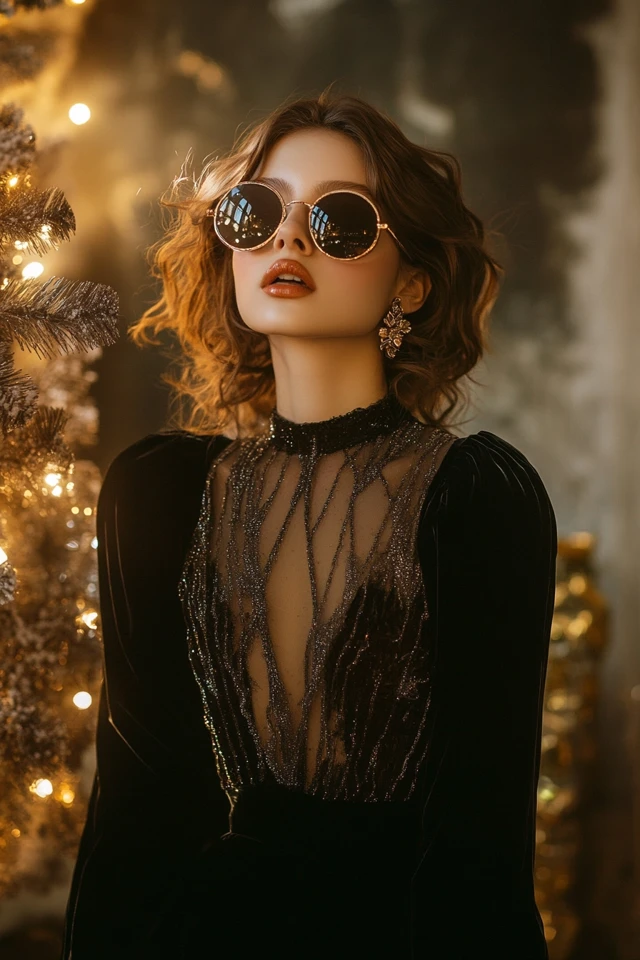
Long or three-quarter sheer sleeves are the easiest entry point. They give light coverage and frame the wrists. An illusion neckline, where sheer fabric fills the space between collarbone and a higher edge, makes a velvet dress feel less severe.
Skirts and cutouts
A sheer overlay on a velvet skirt adds movement. Tulle layers add volume, which suits a more theatrical look. Sheer cutouts at the waist or back are bolder, so choose them when the rest of the dress is simple.
If a sheer panel pulls or shows seams across the shoulders, that is a sizing problem, not a you problem. Try the next size or look for a panel with a little stretch.

What colors and finishes look best?
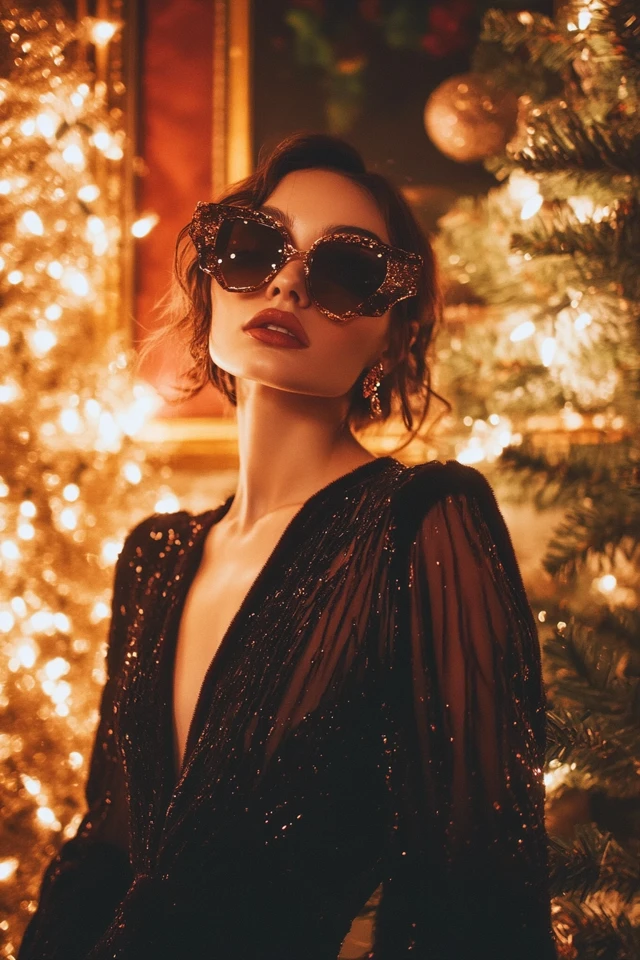
Velvet looks different from every angle because the pile reflects light unevenly. Dark jewel tones such as emerald, ruby, midnight blue and burgundy look deepest, and black velvet with a sheer panel is hard to get wrong. Gold or champagne velvet is brighter and shows more of the surface texture.
Sheer fabric in a matching shade looks seamless. Sheer in black over a lighter skin tone gives more contrast. Beading, lace or embroidery on the sheer area adds detail, but keep the velvet plain so the dress does not turn busy. For more on mixing textures, see velvet and sequins for holiday dresses.
How do you stay warm in a sheer and velvet dress?
Velvet is warmer than most party fabrics, but sheer sleeves and open skirts let heat escape. A long coat, a wrap or opaque tights cover most of the gap. A faux fur stole works if you want to keep the sleeves visible indoors.
If the event is outdoors or you will be walking a lot, consider whether velvet is the right fabric at all. Wool dresses for winter are warmer and drape differently: they look matte and structured rather than plush. Fine merino wool dresses for women are soft against the skin and easy to dress up with jewelry, and wool sweater dresses suit casual gatherings better than a velvet gown does.
If you do wear tights or a base layer under a sheer panel, choose a smooth, non-cotton fabric that dries quickly. Howdy Health at Texas A&M notes that cotton absorbs moisture and can keep it next to your skin, which makes you colder.
How should you style it?
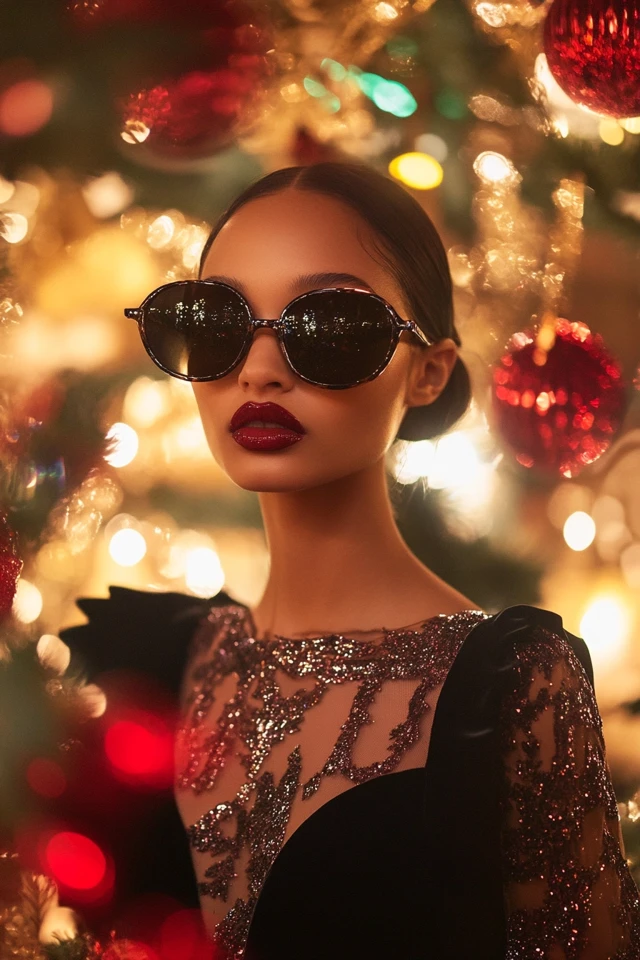
Keep accessories simple so the fabric contrast stays the focus. A delicate chain suits a sheer neckline. Statement earrings work with an updo, which also shows off the neckline. Metallic cuffs sit well over long sheer sleeves.
For bags, a small clutch in metallic or velvet is enough. For shoes, strappy heels suit formal events, pointed pumps are a classic, and embellished flats are the comfortable option. As an architect trained in evidence-based design, I'd treat the neckline as the first thing the eye reads, so choose hair and earrings to support it rather than cover it.
Three outfit combinations
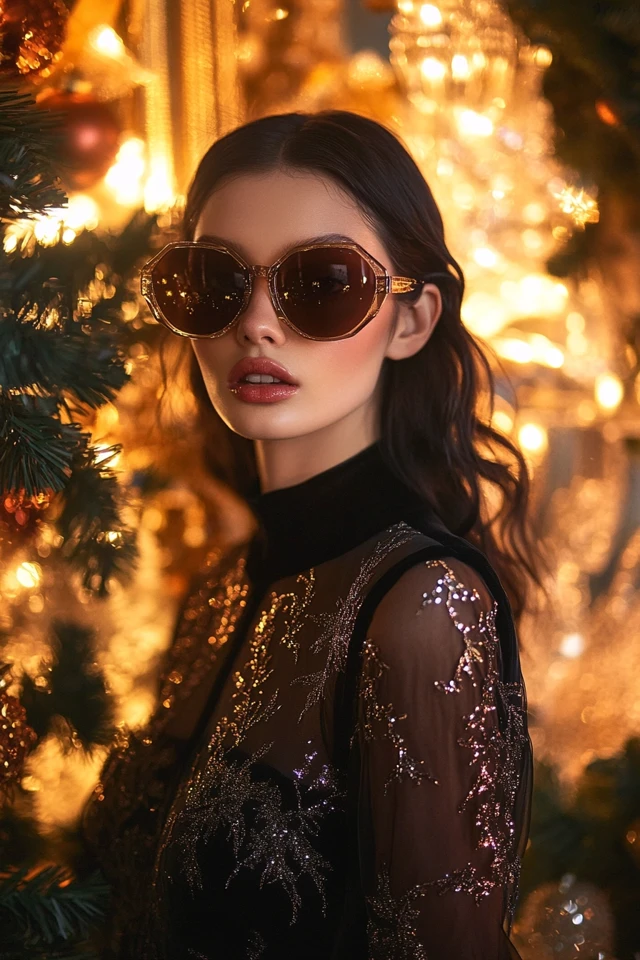
- Classic: black velvet gown with sheer long sleeves and an illusion neckline, crystal drop earrings, a silver clutch and black pointed pumps.
- Romantic: emerald fit-and-flare dress with a sheer tulle skirt, pearl studs, a small white bag and nude pumps, hair in loose waves.
- Bold: ruby bodycon dress with sheer cutouts at the waist and sleeves, a gold cuff, a gold clutch and strappy heels.
For more ideas, read about combining velvet and sheer panels, evening dresses with velvet and sheer panels, or silk and velvet holiday dresses.
Frequently asked questions
Are sheer and velvet dresses suitable for all body types?
Yes, as long as the cut suits you. A-line and fit-and-flare shapes are forgiving, and sheer panels can be placed where you want coverage or where you want to show skin.
Can you wear a sheer and velvet dress to a casual holiday party?
Yes. Choose a shorter length, simple sleeves and minimal embellishment, and pair it with flats or ankle boots to keep it relaxed.
What can you wear under a sheer panel?
Match your skin tone for an invisible look, or use a contrasting layer on purpose. Choose a smooth base layer that suits your dress and the weather.
Filed under Fabrics & Textures