Velvet Satin Evening Gowns With Sheer Panels
- Words by
- Julio Arco
- Published
- Reading
- 4 min
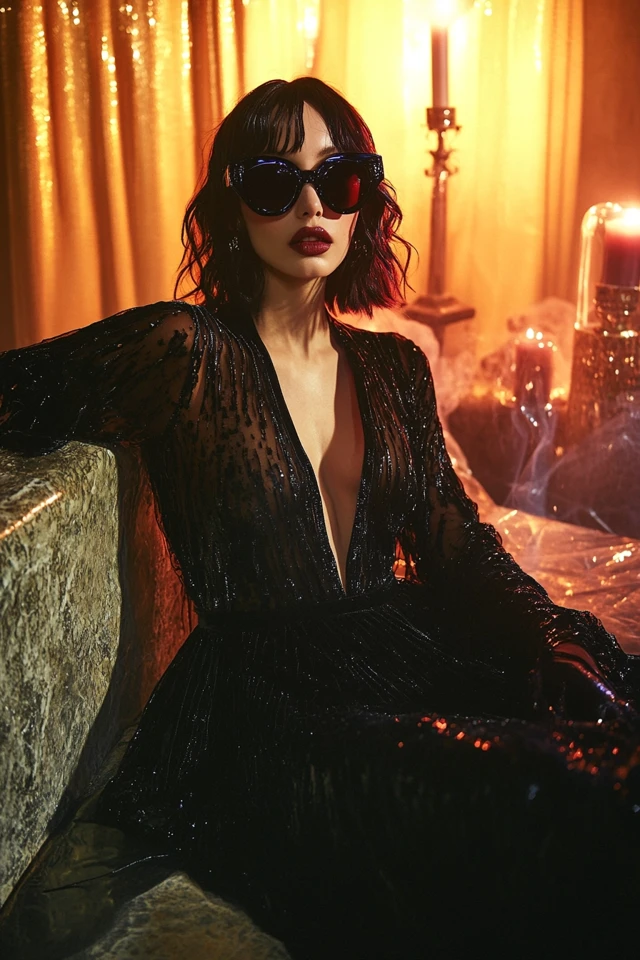
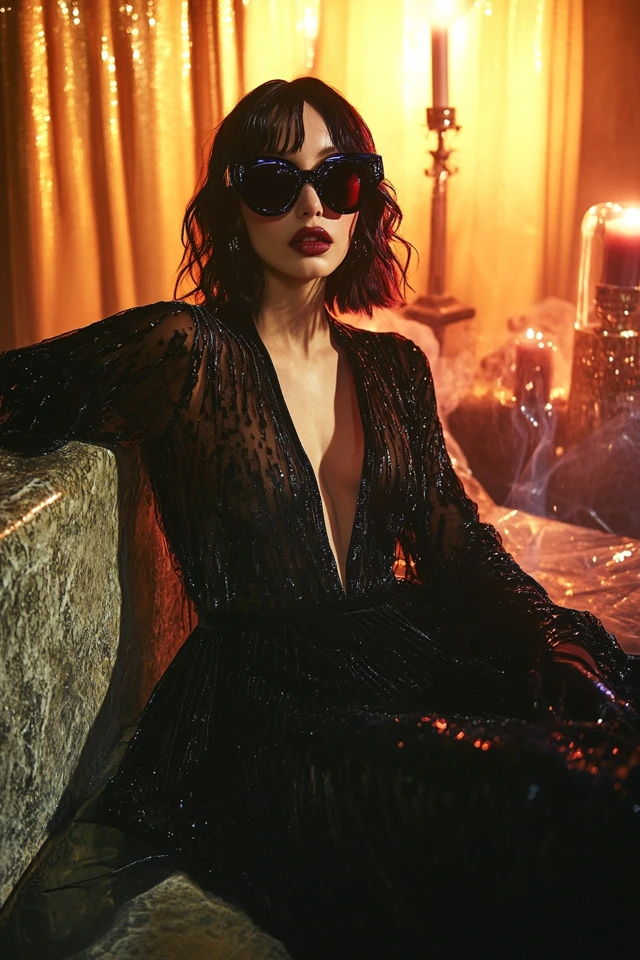
Velvet gives an evening gown weight and depth, and sheer panels give it air. Put them together and keep one of the two quiet: a rich velvet with plain sheer sleeves, or a plain velvet with a detailed sheer yoke. That single rule makes the dress look planned rather than busy.
Below: which colors work, where to place the sheer, how silhouettes change the effect, and how to look after both fabrics. If you are comparing women velvet satin evening gowns as well, the same contrast logic applies to satin, and I link to those guides along the way.
Why do velvet and sheer panels work together?
The two fabrics treat light in opposite ways. Velvet has a dense pile that absorbs light, so the color looks deep and slightly soft at the edges. Sheer tulle, chiffon or organza lets light through, so skin and background show. Your eye reads the contrast as drama without the dress needing much ornament.
Through the lens of evidence-based design, I'd think of texture before color here. The same navy in velvet and in tulle does not read as the same navy, because the surface decides how light reaches the eye.
Which colors suit a velvet and sheer gown?
Jewel tones with a quiet sheer
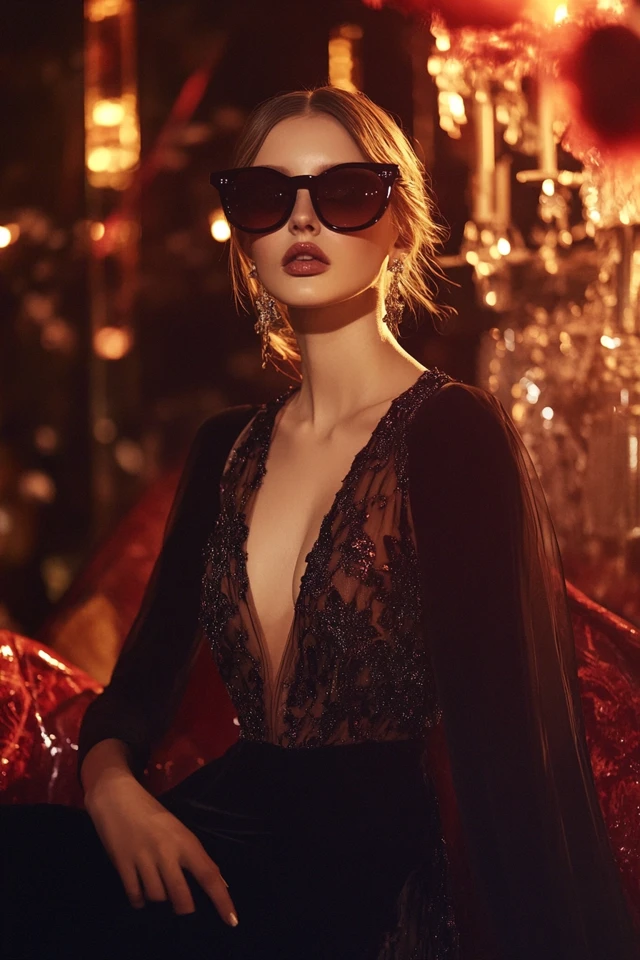
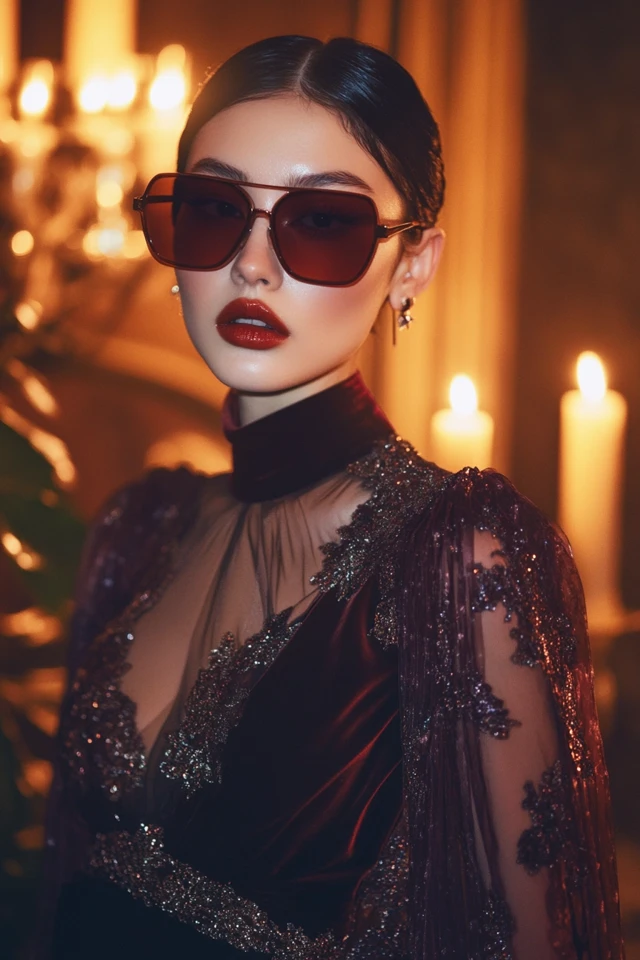
Emerald, sapphire, ruby and burgundy look at their best in velvet because the pile deepens them. Pair them with sheer in a nude, black or matching tone. A ruby velvet with black sheer sleeves is bolder; emerald with a nude sheer is softer and reads more modern.
Black velvet with neutral sheer
Black velvet with nude, ivory or soft gray sheer is the easiest combination to wear. It works across skin tones because the sheer fades toward your own coloring, and the black keeps the outline clean. For a similar contrast with a lighter fabric, see mixing velvet and chiffon for statement gowns.
Where should the sheer panels go?
Placement decides what the dress emphasizes. Some reliable options:
- Sleeves: sheer long sleeves on a velvet bodice keep coverage and add lightness.
- Neckline and yoke: an illusion neckline draws the eye to the collarbones.
- Side panels: vertical sheer strips at the waist can make the torso look longer.
- Back: a sheer back keeps the front simple and adds a surprise when you turn.
- Skirt overlay: sheer layered over a velvet lining gives movement.
As an architect trained in evidence-based design, I'd treat the neckline as the first thing the eye reads, so put your best detail there and keep the rest calmer.
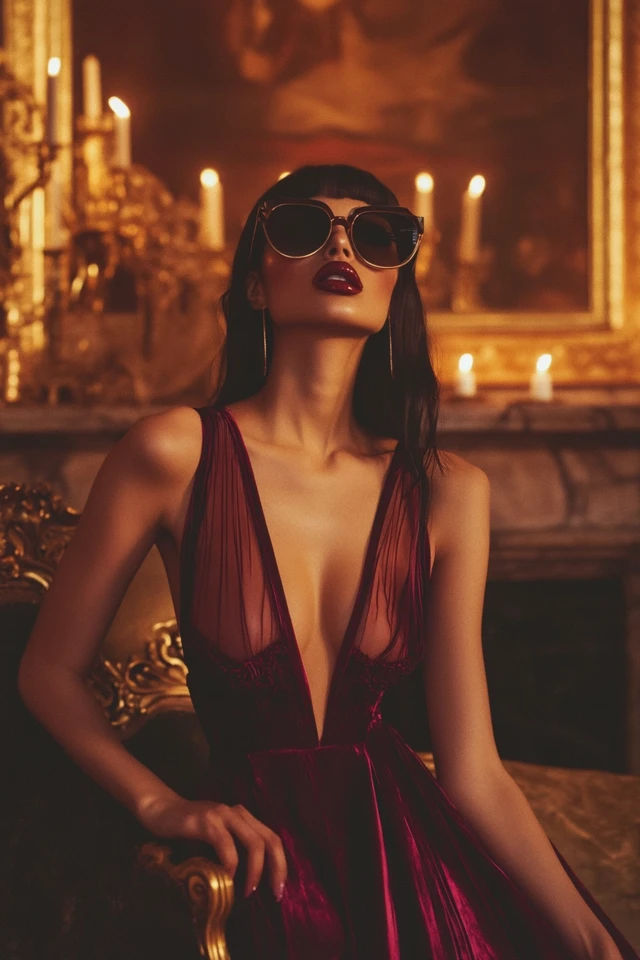
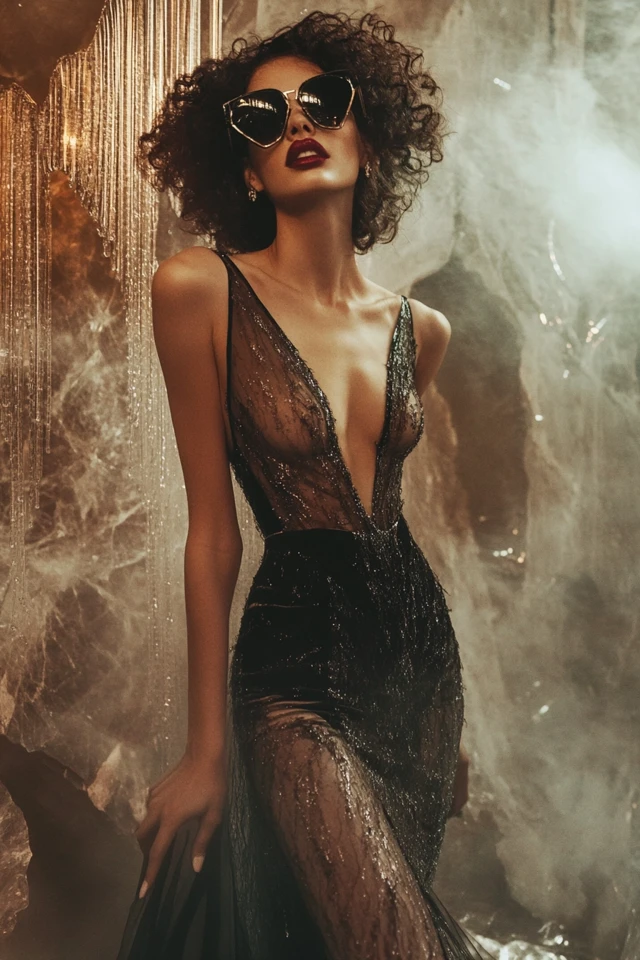
How do you choose the right silhouette?
Fit and cut matter more than any rule about body type, so try a few shapes and trust the mirror. As starting points:
- If you want to define the waist, a fitted velvet skirt with sheer at the midsection does it.
- If you want attention higher up, a velvet bodice with sheer sleeves and a flowing skirt shifts the focus there.
- If you are petite, vertical sheer panels and a lighter velvet weight avoid a heavy look.
- If you like volume, a velvet A-line skirt with a simple sheer top gives shape without bulk.
For more dramatic cuts, asymmetrical gowns and mermaid silhouettes both take sheer panels well.

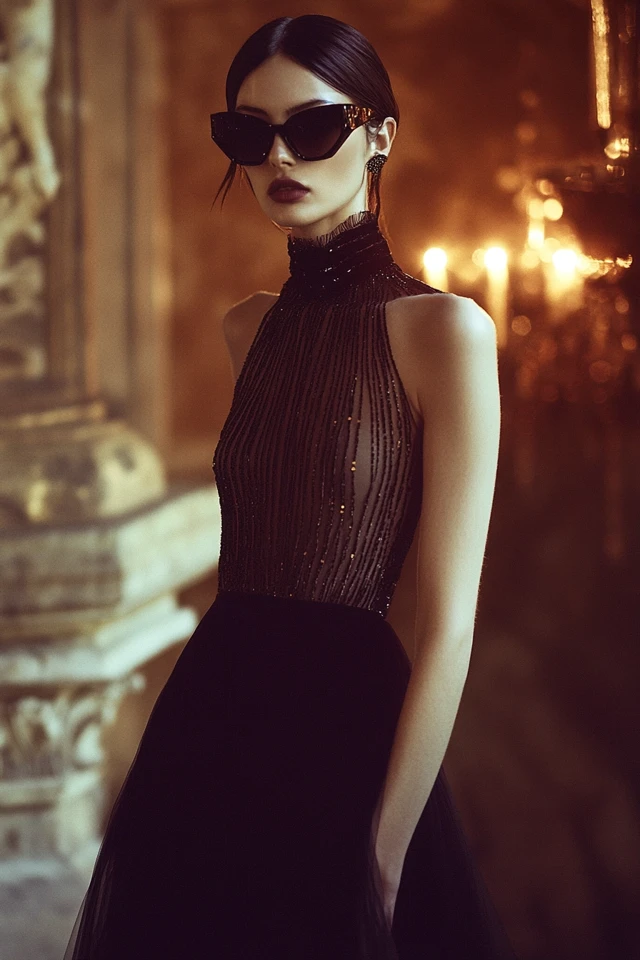
How do you keep the look balanced?
Let one fabric lead. If the velvet is crushed, embossed or strongly colored, keep the sheer plain. If the sheer has embroidery or beading, choose smooth velvet so the detail has room. Metallic shoes and jewelry in silver or gold suit the combination, and with a floor-length gown, minimal jewelry is usually enough.
For the satin version of this idea, read mixing velvet and satin for regal evening gowns, or satin and sheer panel combinations if you want less pile and more shine.
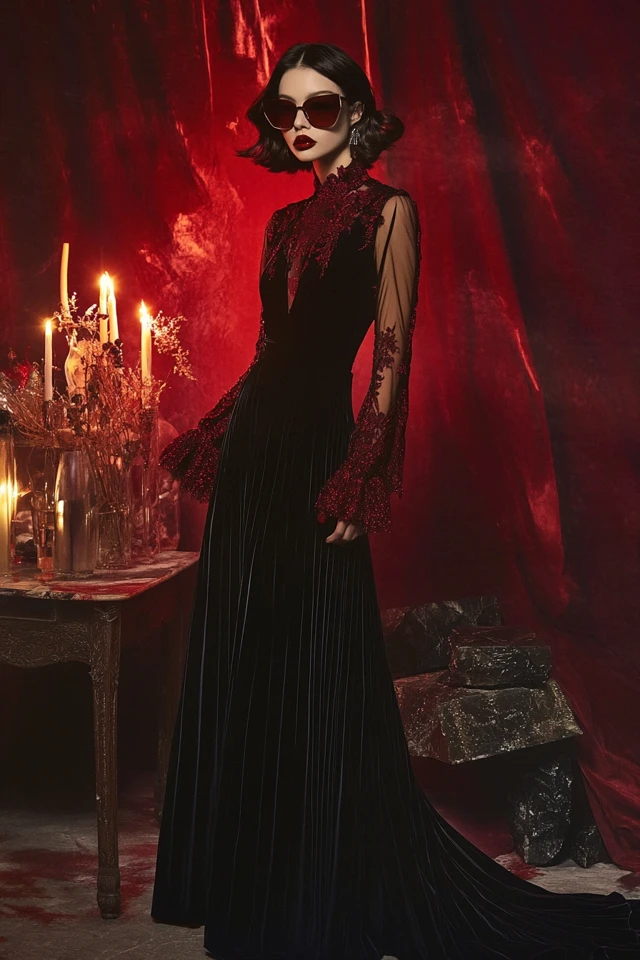
What should you check when shopping?
- Velvet should feel soft, with an even sheen and no bald patches when you brush it.
- Sheer fabric should hold its shape and not twist at the seams.
- Sit down and raise your arms in the fitting room. Sheer sleeves that pull or ride up are a fit problem, not a you problem.
- Check the lining. A sheer skirt over a velvet lining changes the opacity, so view it in daylight too.
How do you care for velvet and sheer fabrics?
Check the care label first, and dry clean velvet when the label says so, since washing can flatten the pile. Remove wrinkles from sheer panels with a steamer held at a distance, and store the dress hung, away from rough hooks that snag.
If you spill something, treat it quickly. Extension textile guidance says to treat immediately because stains set by heat are difficult to remove. The same page warns that ammonia damages silk and wool, and many sheers and velvets are silk, so test or leave stains to a professional cleaner.
Frequently asked questions
Can you wear a velvet and sheer dress during the day?
It suits evening best. For daytime, choose a lighter color, a shorter hem and more sheer than velvet.
How can you make a velvet and sheer dress less formal?
Add block-heeled boots or a leather jacket, and keep jewelry simple.
Are velvet and sheer gowns comfortable in warm weather?
Look for designs with small velvet areas and large airy sheer panels, which breathe better than a full velvet dress.
How do you know if sheer panels will suit you?
Try placements that you like seeing in the mirror, such as sheer sleeves or an illusion neckline, and check them in natural light.
Filed under Fabrics & Textures