Ribbed Tank Dress Styling for Casual Elegance
- Words by
- Julio Arco
- Published
- Reading
- 4 min
A ribbed tank dress looks elegant when three things are right: a rib that is fine enough to read as texture rather than stripes, a hem at the midi or maxi length, and one polished layer on top. Add clean shoes and one or two simple accessories, and it works from errands to dinner.
The dress is also forgiving. The stretch moves with you, the texture hides small creases, and the plain shape leaves room for whatever you want to put around it.
What makes a ribbed tank dress look dressy?
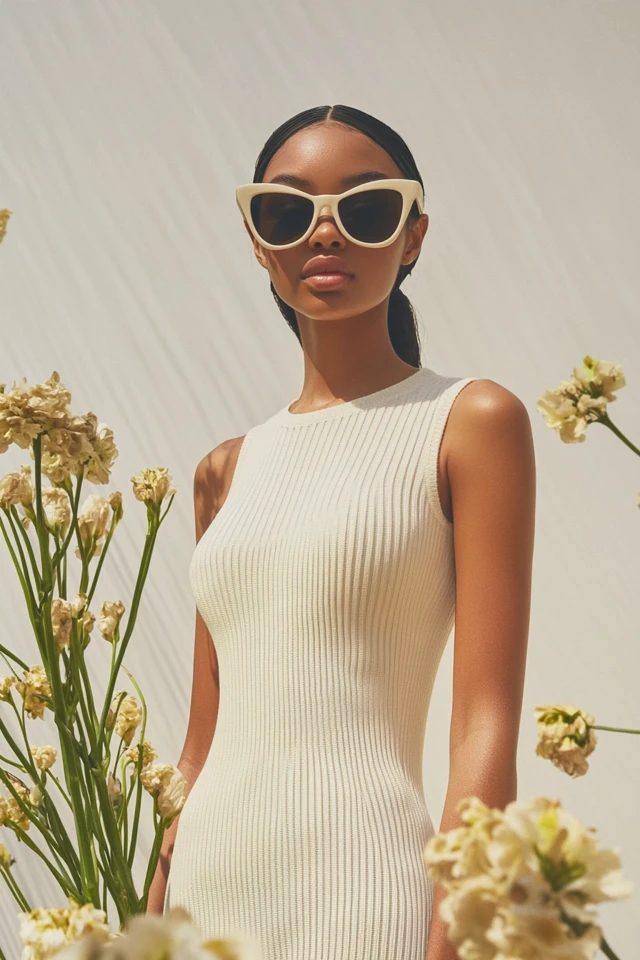
Texture does most of the work. The vertical ridges catch light unevenly, so the fabric looks more detailed than a flat jersey in the same shade. Through the lens of evidence-based design, I'd look at the rib before the color, because the surface changes how a color reads. A fine rib looks sleek, while a chunky rib looks casual and cozy.
Check the fabric weight too. A thin rib clings to every line, while a medium or heavier knit skims the body and keeps its shape through the day. If you can see your hand clearly through a single layer held up to the light, expect it to cling.

Is a ribbed tank dress a sheath or a pencil dress?
It can borrow from both, though it is a knit style of its own. The difference between sheath and pencil dress comes down to the hem. A sheath follows the body without being tight, usually from shoulder to knee. A pencil dress is narrower toward the hem, so it tapers like the tool it is named after.
A fitted ribbed tank in a midi length sits close to a pencil dress, but the stretch makes it easier to walk and sit in. If you want that sharper look from a knit, choose a style with a straight, even hem and a higher neckline. For more fitted knit options, see fitted knit dresses for casual elegance.

Which length works best?
Midi is the safest choice. A hem between mid-calf and just below the knee looks finished with sneakers, loafers, sandals or boots. A maxi lengthens the line and suits heels or flat strappy sandals, and a mini is better kept for weekends.
A side slit helps both lengths. It adds room for stride and breaks up a long, straight column of fabric.
Which color should you choose?
Start with a neutral you will wear weekly: black, charcoal, beige or cream. A single-color outfit with a texture like rib looks intentional, and it takes layers easily.
Earthy shades such as olive, rust and camel look warm next to gold jewelry and tan leather. Soft pastels read light and relaxed. Bold colors, like cobalt or mustard, need quieter shoes and bags so the dress stays the focus.

How do you style it for work?
Pencil dresses for work usually rely on structure, and you can get the same effect with a knit. Pick a high or square neckline, a midi hem and a neutral color. Then add a tailored blazer, loafers or low block heels, and a structured bag.
A belt gives shape to a straight dress. Think of it as a pencil dress with belt logic: a slim belt at the narrowest part of your waist defines the line, and a longline cardigan does something similar if you prefer a softer outline.

How do you dress it up for evening?
Change the shoes and the metal first. Strappy sandals or block heels, a small clutch and one statement earring lift the dress without extra effort. A maxi in a deep neutral or rust tone looks best here, and a tailored blazer or a light wrap handles cooler nights.
For a cooler season, add tights, ankle boots and a chunky cardigan. Fine tank dresses also layer well over a thin long-sleeve top, like the ones in ribbed long-sleeve tees.

How should it fit your frame?
Fit is more useful than any body-type rule, and a dress that pulls at the bust or hips is a fit problem, not a you problem. A few adjustments help:
- Petite frames: a knee or just-below-knee hem keeps the legs visible, and a slit prevents the fabric from swamping you.
- Tall frames: midi and ankle lengths suit your height, and a high neckline keeps the line clean.
- Curvy figures: choose a stretchy rib with some weight, and a defined waist or belt.
- Athletic builds: ruching, side ties or a scoop neckline soften straight lines.
As an architect trained in evidence-based design, I'd treat the neckline as the first thing the eye reads. A scoop opens the chest, a square neckline frames it, and a high neck draws the eye up toward the face. For a looser alternative, take a look at relaxed drape dresses.

How do you care for a ribbed dress?
Wash it on a gentle cycle in cold water, and check the care label first. Fold it rather than hanging it, since the weight of wet or even dry knit can pull the shoulders out of shape. Treat stains soon, before they set into the texture.
For a tank to wear under blazers or on its own, ribbed tank tops follow the same care rules.

Frequently asked questions
Can a ribbed tank dress work for formal events?
Yes, if you choose a sleek maxi in a neutral or deep tone and add heels, statement earrings and a tailored layer. Pick a medium-weight rib that does not cling.
How do I stop a ribbed dress from clinging?
Wear a smooth slip or seamless underlayer, and choose a heavier rib. A dress with a little room through the hips will also skim more than a thin, tight knit.
What body type looks good in a sheath dress?
A sheath suits most shapes when the shoulders, bust and hips fit without pulling. A defined waist, a belt or a bit of stretch can help balance the proportions.
Can I wear a ribbed tank dress in colder months?
Yes. Layer it over a thin long-sleeve top, or pair it with tights, ankle boots and a long cardigan or coat.
Filed under Wardrobe Basics