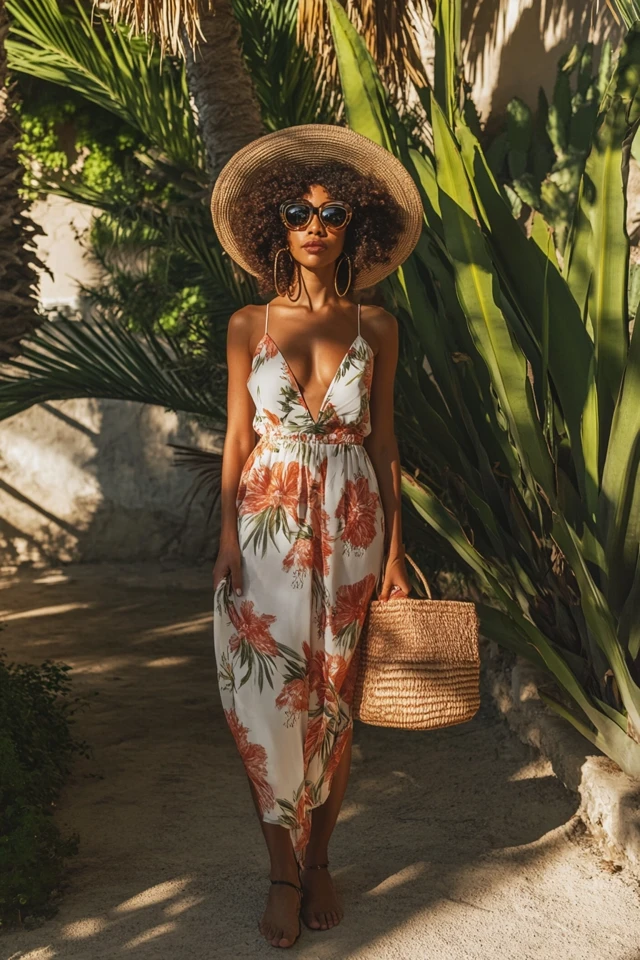
Tunic Dresses for Dry Heat: Sleeveless Styles and Outfits
- Words by
- Julio Arco
- Published
- Reading
- 4 min
For dry heat, pick a loose, sleeveless tunic dress in linen, light cotton or rayon, with a hem somewhere between knee and mid-calf. Air moves freely around it, the fabric doesn't cling, and you can dress it up or down with shoes and a layer.
Below: which cuts and colors work best, what to wear with a tunic dress, and outfit ideas for different days.
What makes a summer tunic dress work in dry heat?
Three things matter: the fabric, the fit and the length. Linen, cotton and rayon are light and breathable, and a loose cut keeps fabric off your skin so air can circulate. Sleeveless styles add more ventilation at the shoulders and underarms.
One caution about fabric advice you may see elsewhere. Guidance on cold-weather exercise from Texas A&M's Howdy Health notes that cotton absorbs moisture and can keep it next to your skin. That is about cold workouts, not a sundress. Still, it is a reminder that cotton holds sweat, so if you plan a long, active day outdoors, a lighter weave or a linen blend will feel drier than a heavy cotton jersey.
Fit is the other half. A tunic that skims the body without clinging is usually more comfortable than one that is simply large. If you feel swamped, add a thin belt rather than sizing down.
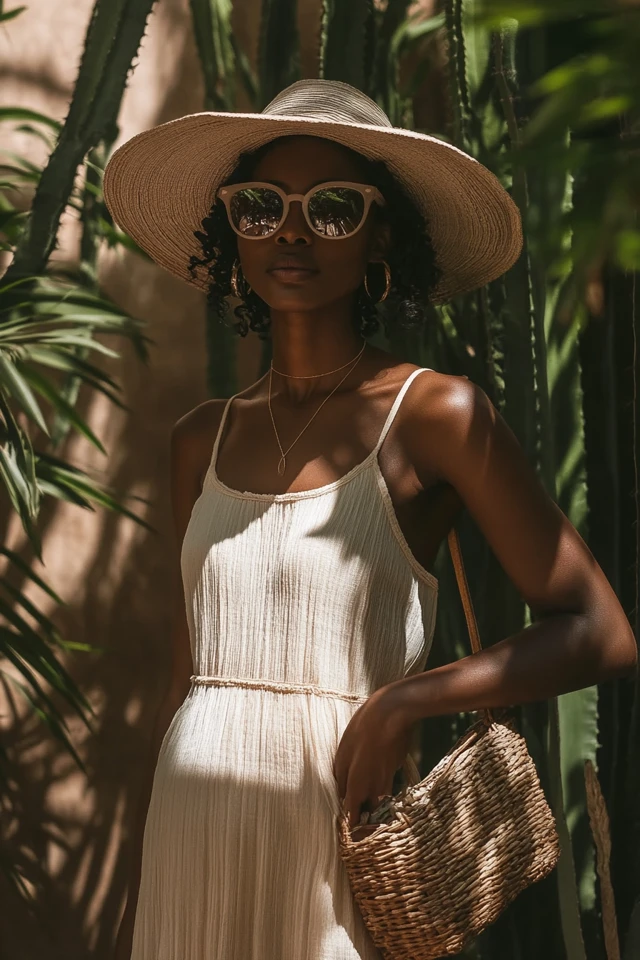
Which tunic styles are in style for summer?
If you are wondering what kind of summer dresses are in style, these shapes show up most often in warm-weather wardrobes:
- Tiered tunic dresses, which add movement and a little volume without weight.
- Shirred or smocked bodices, which stretch for a comfortable fit.
- Linen shirt dresses worn open or buttoned, with a more structured look.
- Wrap styles, which let you adjust the waist as the day goes on.
- Small cut-outs at the neckline or back for a slightly more modern shape.
A long tunic dress in a solid color is the easiest to keep wearing year after year. Trends in cut and print change, but a plain A-line or linen shift stays useful. For more shapes in the same spirit, see these relaxed swing dresses and the roundup of summer dresses that stay stylish in the heat.
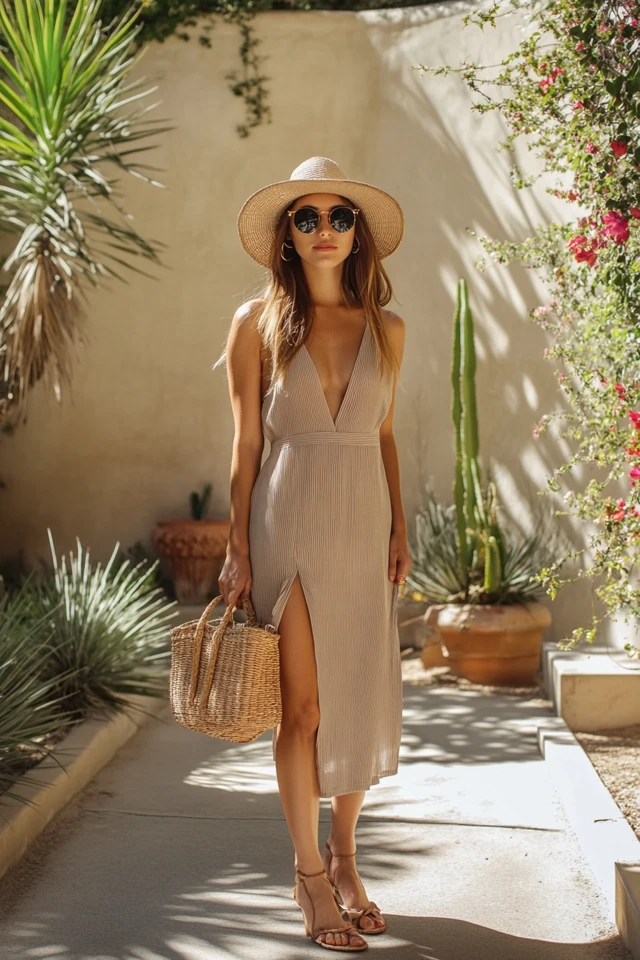
What color should you choose for hot, dry days?
Light colors generally feel cooler in strong sun because they absorb less heat than dark ones. White, sand, beige and taupe are the practical picks, and they read clean and quiet.
Earthy tones such as terracotta, olive and sand sit comfortably against dry landscapes. Through the lens of evidence-based design, I'd treat color as a mood decision as much as a temperature one: coral, turquoise or yellow look energetic against a neutral backdrop, while pastels and muted shades like sage or dusty rose read softer and calmer.

How do you pick a tunic for your frame?
A tunic is not automatically flattering or unflattering. The cut decides, and a few adjustments usually fix it.
- Petite: choose shorter hems or an A-line shape so the dress doesn't swallow your proportions.
- Curvy: look for a cinched waist, an empire seam or a wrap, so the shape is defined while air still moves.
- Athletic: tiers, ruffles or an asymmetrical hem add softness and movement.
- Tall: a flowing maxi shows off the length.
If a tunic hangs like a tent, a thin belt at the narrowest part of your torso changes the outline immediately.

What to wear with a tunic dress
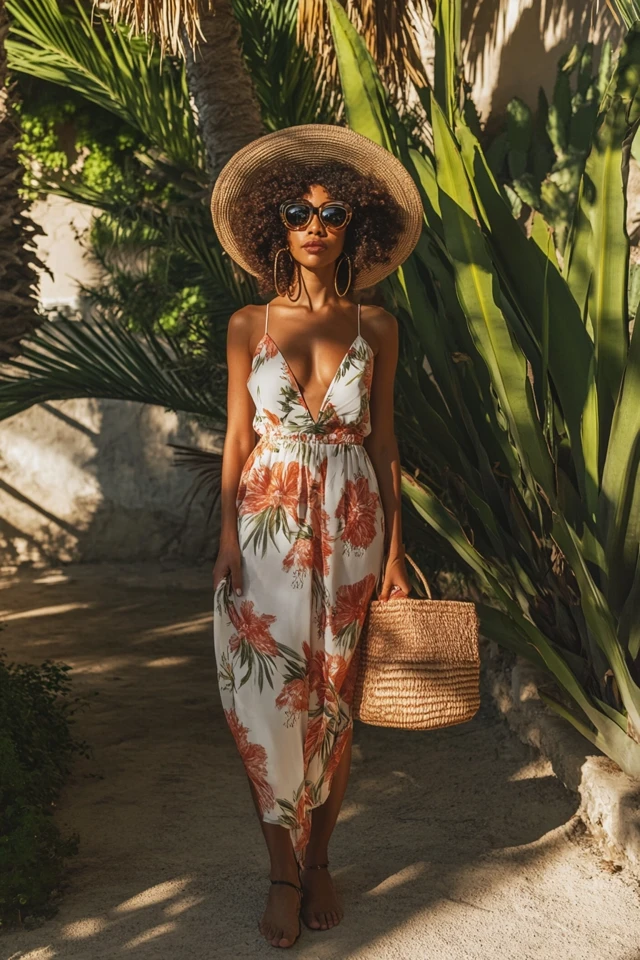
Keep the accessories light, since the dress is already doing the work. Flat sandals, espadrilles or lightweight sneakers suit most days. A wide-brim hat and sunglasses add shade without adding heat. For comfortable walking shoes, take a look at these adjustable sandals for walking in the heat.
For evenings, which can cool off quickly in dry climates, bring a thin shawl, kimono or cropped jacket. Layering a tunic over leggings is a different, cooler-season move. In real heat, bare legs or nothing under the hem will usually feel better, though a thin, breathable pair of cycling-length shorts underneath can stop chafing.
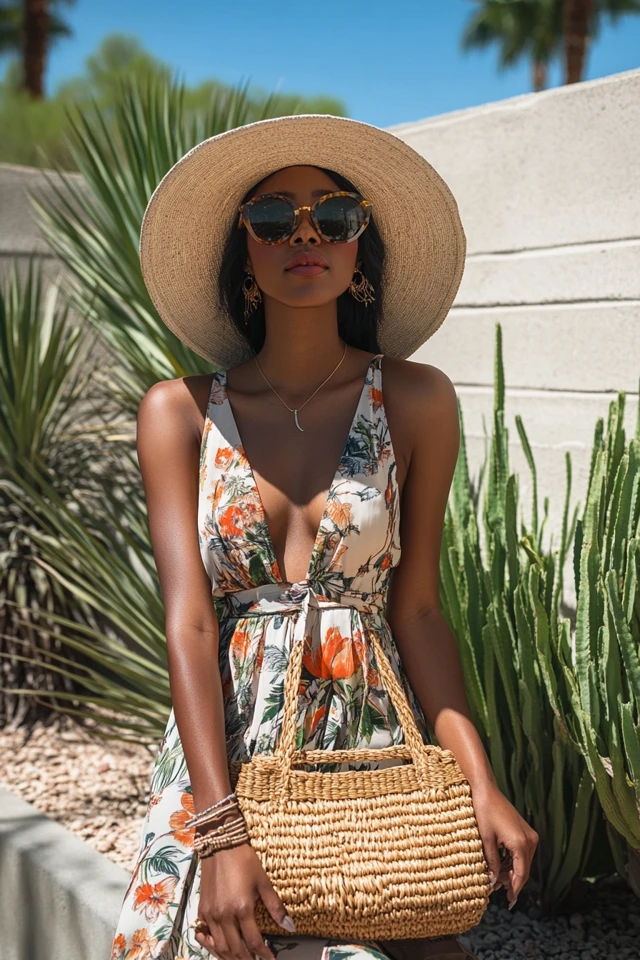
Sleeveless tunic outfit ideas from errands to dinner
Casual daytime
A relaxed cotton tunic, flat sandals, a canvas tote and a hat. Nothing needs ironing and nothing needs thinking about.
Outdoor dinner
A linen tunic with espadrille wedges, statement earrings and a light scarf for when the temperature drops.

Work
A structured sleeveless midi under a cropped blazer, with loafers. Take the blazer off outside and it is still a complete outfit.
Travel
A bold print, a straw bag, strappy sandals and beaded jewelry. Print hides creases from the suitcase, which helps. If you want a longer, looser option, the loose kaftans and linen tunics posts have more ideas.

How to care for lightweight tunic dresses
Wash linen and rayon on a gentle cycle or by hand, and check the care label first, since rayon can shrink. Air-dry to keep the fabric light and the shape intact. Hang the dresses to avoid creases, or fold them loosely if space is tight.
As an architect trained in evidence-based design, I'd also give weight to hand-feel when you shop: a fabric that feels soft and light against your arm in the store usually keeps feeling that way against your skin by midafternoon.
Frequently asked questions
What do you wear with a tunic dress?
Flat sandals or espadrilles, a hat and a light layer for the evening cover most days. Add a thin belt if you want shape.
Are tunic tops flattering?
They can be, depending on the cut. A defined waist, a V-neck or a hem that ends at a narrower point of your leg usually helps.
Can a sleeveless tunic dress work for formal occasions?
Yes, if it is structured, in a solid color and in a fabric like silk or satin. Add heels or dressy sandals and one statement accessory.
How do I wear a sleeveless dress on cooler evenings?
Layer a lightweight cardigan, kimono or denim jacket. Keep it thin so you can take it off when the day warms up.
Filed under Weather Style