Relaxed Camping Styles with Cozy Flannels: Effortless Comfort for Outdoor Adventures
- Words by
- Julio Arco
- Published
- Reading
- 4 min
The simplest answer to what to wear when hiking: a wicking base layer, an insulating mid layer you can take off, a weather shell, pants or shorts that move with you, and shoes with real grip. Skip cotton against your skin, and add a hat and a small pack with the basics.
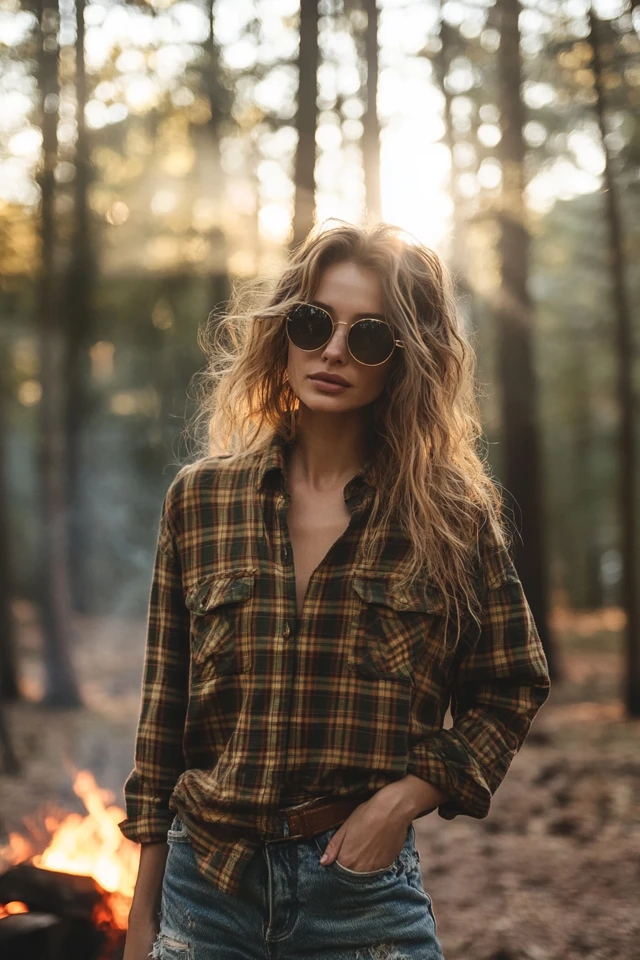
A flannel still has a place at camp or on an easy trail, and I'll show where it fits. For anything longer or colder, build the outfit in layers first.
What is the 3 layer rule for hiking?
Think base, middle, outer. The base layer sits on your skin and moves sweat away. The middle layer holds warmth. The outer layer blocks wind and rain. California State Parks recommends several light layers so you can shed or add pieces as your effort or the weather changes.
Layers matter because you heat up on climbs and cool down fast when you stop. Several thin pieces give you more control than one thick one.
Base layer
Choose a snug, thin top in a synthetic or wool knit. A university health service notes that the layer closest to your skin should be made of moisture-wicking materials that draw sweat away. The same page says to avoid cotton, undergarments included, because it holds moisture against you.
Mid layer
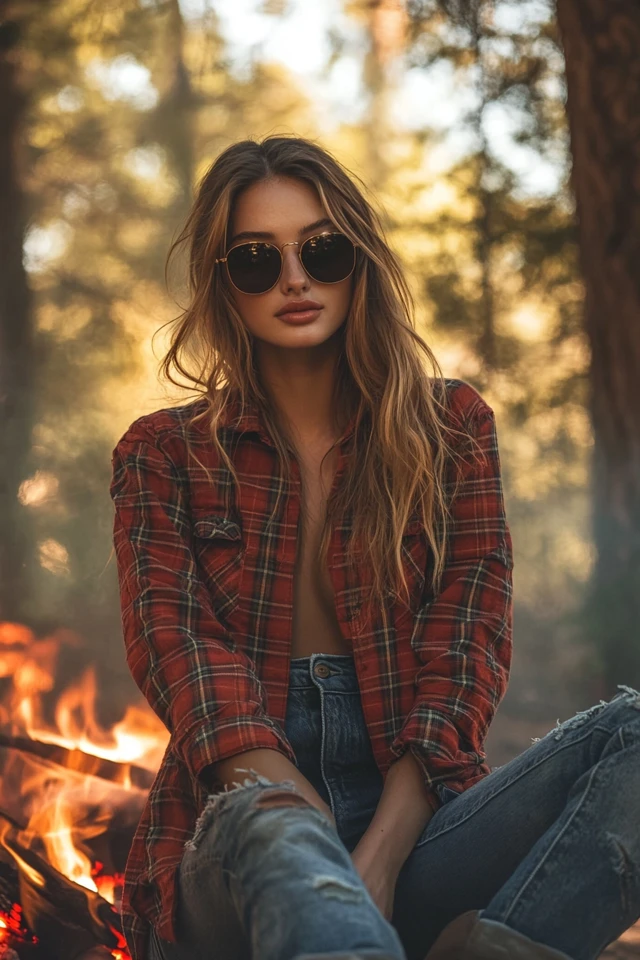
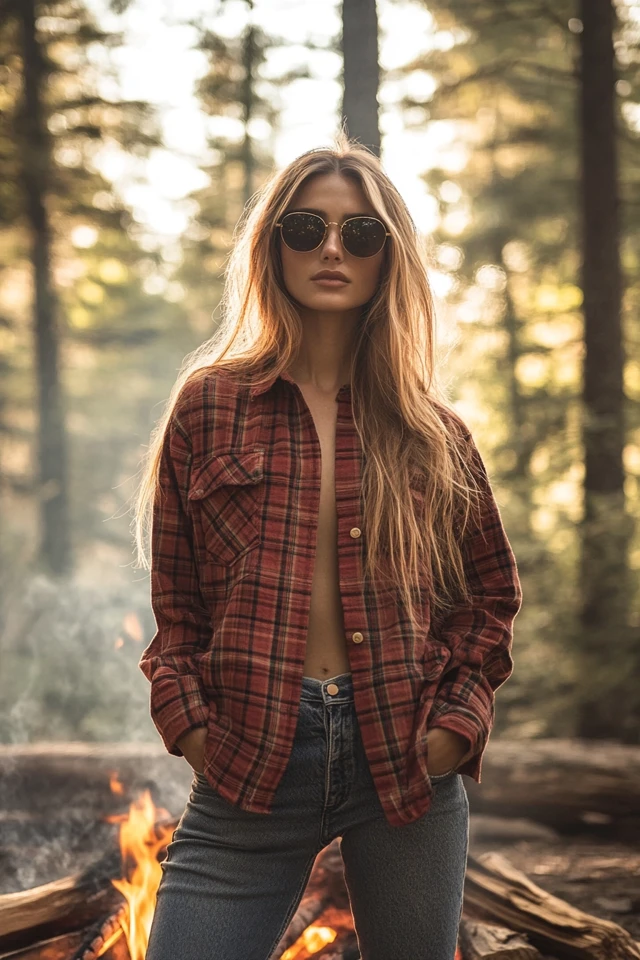
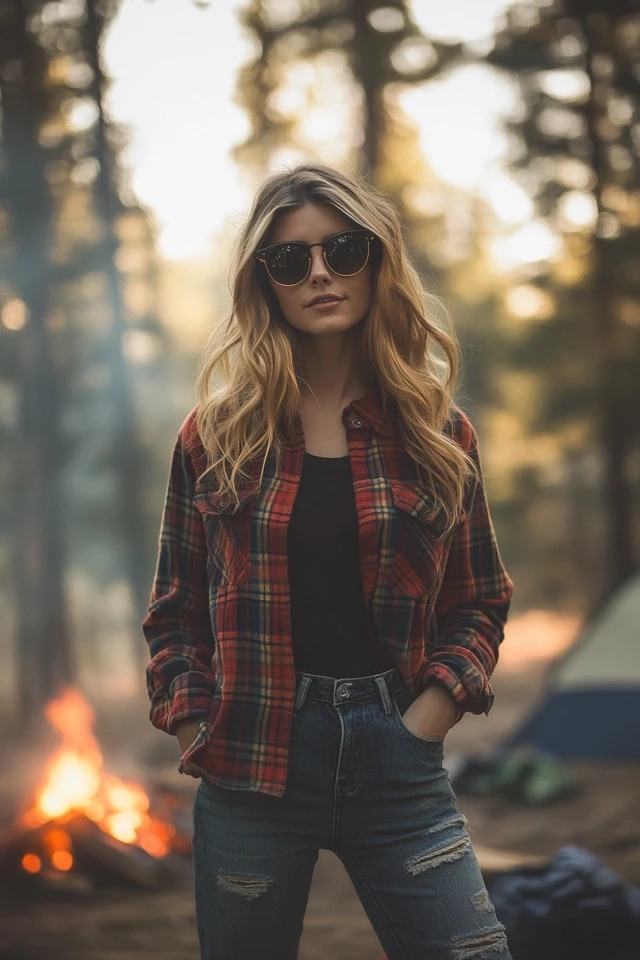
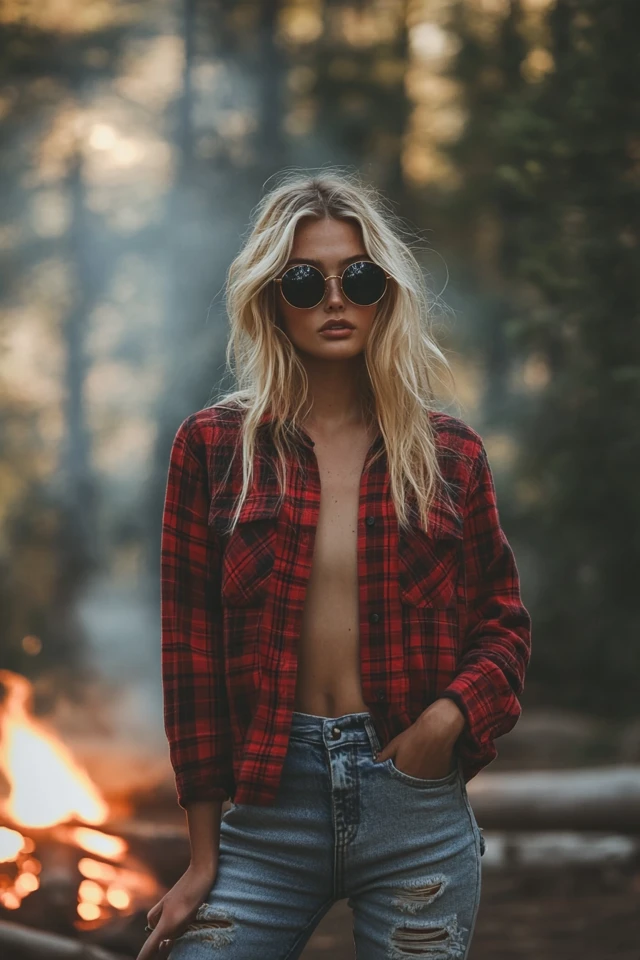
Fleece, a light wool sweater or a thin puffy jacket works. This is where a flannel shirt or shacket can sit on mild days: it adds warmth and looks good at the trailhead. Once it gets damp from sweat or rain, though, cotton flannel loses its charm, so treat it as a camp layer, not your only insulation.
Outer layer
A packable shell is enough for most day hikes. If you want a light option, see our guide to lightweight windbreakers for outdoor adventures.
Which fabrics work best?
New York's Department of Environmental Conservation lists moisture-wicking synthetic fabrics that keep your skin dry and advises avoiding cotton. The National Park Service says wool, polypropylene or polar fleece retain their insulation value even when wet, while cotton will keep you cold and wet.
Through the lens of evidence-based design, I'd also think about texture. A brushed fleece feels warm against the arm before it actually is, and that comfort is part of why people keep wearing it all day.
Hiking pants, shorts and tops
Pick stretchy, quick-drying pants or leggings with a waistband that stays put when you step up. Shorts suit warm, open trails, but check for brush and ticks first. The DEC suggests light-colored clothing, which makes ticks easier to see.
For a relaxed trail date look, our stretchy pants hiking outfits show the same principles styled more casually.
Hiking outfits for ladies by season
- Summer: a light tank or short-sleeve wicking top, breathable shorts or leggings, a brimmed hat, and a shell in your pack for afternoon storms.
- Fall: a long-sleeve base layer, leggings or hiking pants, a fleece or flannel shacket, a beanie, and a wind layer.
- Winter: a warmer base, fleece mid layer, insulated jacket and waterproof shell. For snow days, insulated overalls are an option.
Hiking shoes and boots
California State Parks says boots or trail shoes with thicker soles and good ankle support make rocky, uneven trails safer. Try them on with the socks you'll hike in, and leave a little room for your toes on descents.
Podiatrist Gina Hild, DPM, says "Footwear that offers cushioning plus heel and arch support can help you relieve and manage symptoms." If you have foot pain, check with your doctor or podiatrist before a long hike.
Hats, sun protection and accessories
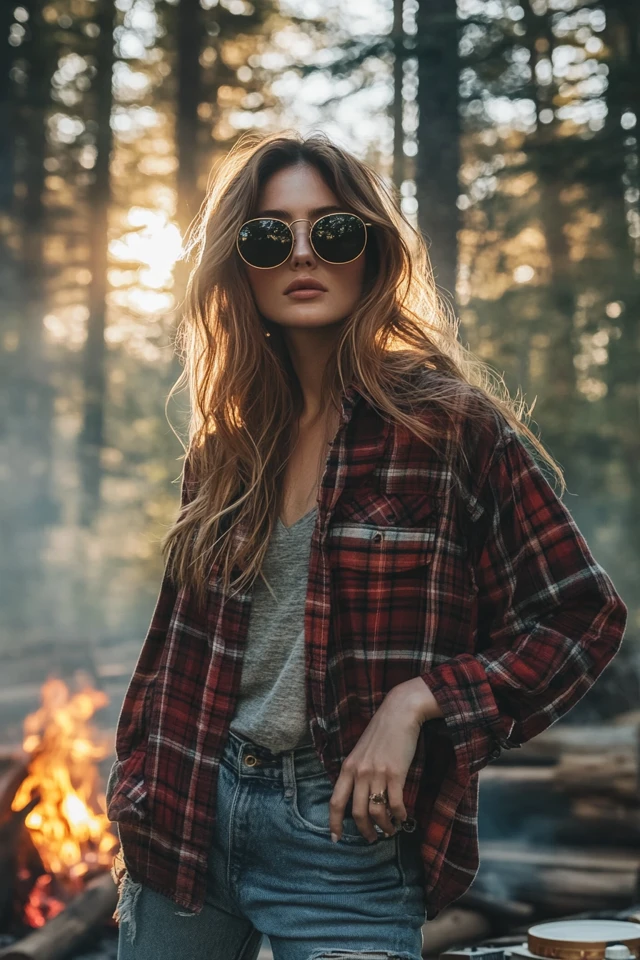
A brimmed hat does real work. Anna L. Chien, MD, of Johns Hopkins University School of Medicine, says "A hat with a 3-inch brim protects the top of your scalp, ears and face." Add sunglasses, and carry a beanie and light gloves for cool mornings.
What are the essential clothing and gear items for hiking?
- Base, mid and outer layers
- Trail shoes or boots and wool or synthetic socks
- Hat and sunglasses
- A small backpack with water and snacks
- A map or offline route, and a light for the end of the day
- First aid basics and a spare layer
Longer routes need more, so check the trail's official page before you go.
How should hiking clothes fit?
Base layers should be close but not tight. Mid layers need room over the base without bunching under a pack strap. If a top pulls across the shoulders when you raise your arms, that is a fit problem, not a you problem. Size up or choose a stretchier cut.
For petite frames, a hip-length flannel keeps proportions balanced. For taller frames, longer tunic cuts cover the lower back when you bend. As an architect trained in evidence-based design, I'd treat the neckline and hem as what the eye reads first, so keep them clean.
Budget-friendly choices
Spend first on shoes, then a shell, then the base layer. Fleece mid layers and basic synthetic tops are easy to find secondhand. A flannel you already own can serve as your camp layer. Wash in cold water and air dry to limit shrinkage.
If you're building a small kit, our capsule wardrobe for outdoor adventures shows how few pieces you need.
Frequently asked questions
What is the best attire to wear while hiking?
Wear a wicking base layer, an insulating layer you can remove, and a weather shell, with stretchy pants and sturdy trail shoes. Avoid cotton next to your skin.
Are flannels warm enough for cold-weather camping?
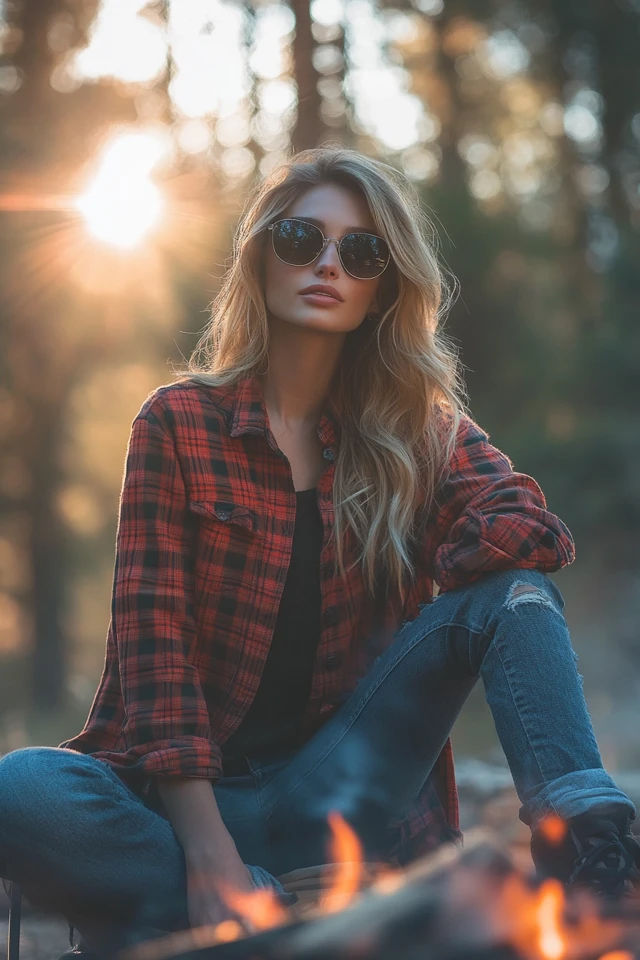
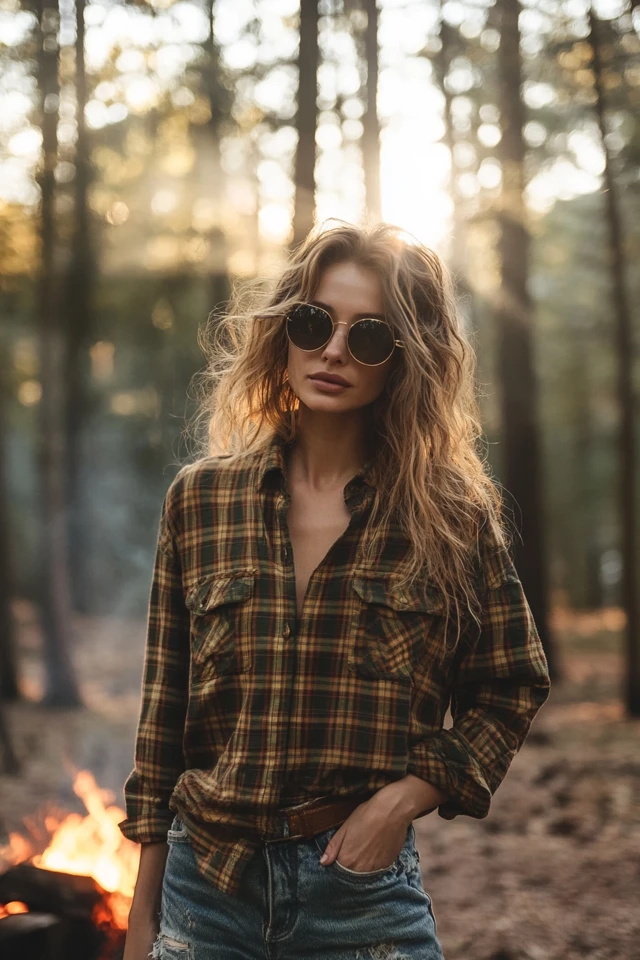
On their own, usually not. Wear a flannel over a base layer and under an insulated jacket, and keep it dry.
Can I wear a flannel hiking?
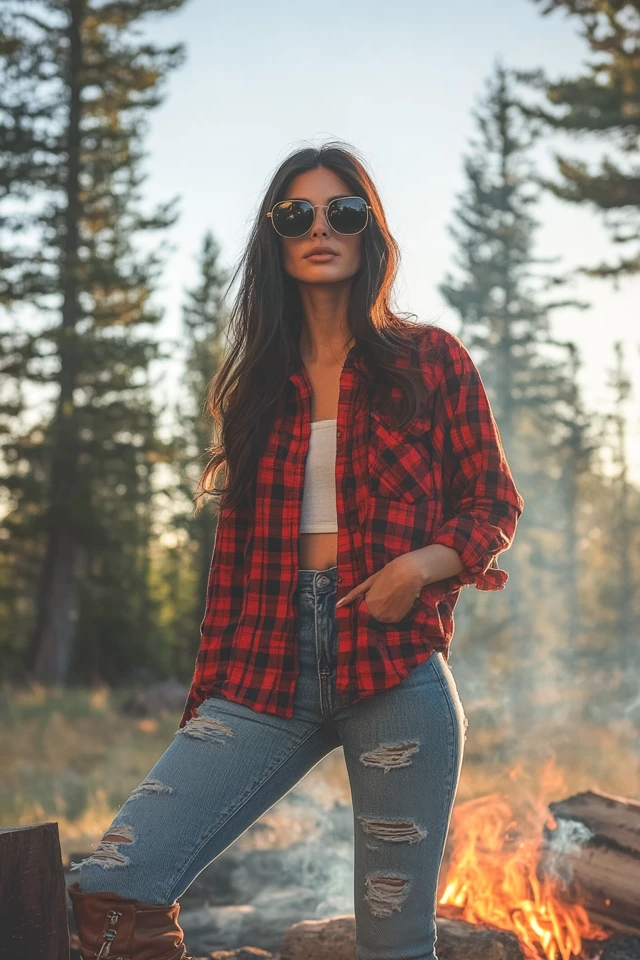
Yes, on mild, dry days or short trails. For long or wet hikes, choose fleece or wool for insulation instead.
Filed under Outfit Ideas