Hiking Outfits and Gear: What to Wear on a Date Hike
- Words by
- Julio Arco
- Published
- Reading
- 4 min
For a relaxed hiking date, wear stretchy, moisture-wicking pants (leggings or trail tights), a breathable top, a light layer you can add or remove, and shoes with real grip. Skip cotton, and you have the core of a comfortable outfit that still looks put together at the trailhead and the coffee stop afterward.
Here is what to wear when hiking on an easy date: the fabrics worth choosing, how to pick pants for your frame, how layers work, and what to carry.
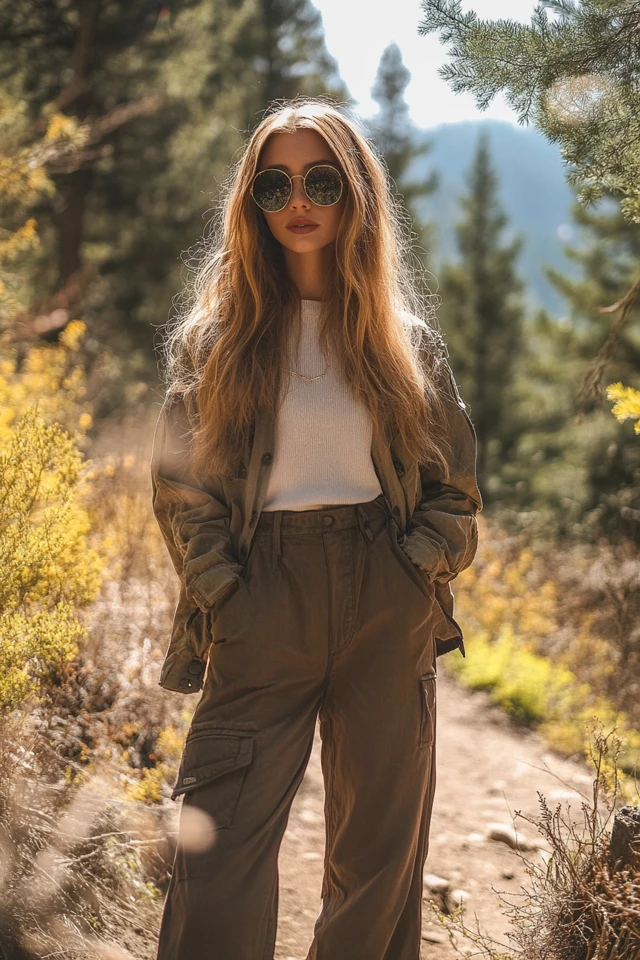
Why stretchy pants work for a hiking date
Leggings and performance tights move with you when you step up onto a rock, crouch for a photo or sit on a boulder. A good pair has four-way stretch, a waistband that stays put and fabric that dries quickly. Pockets for a phone and keys are a practical bonus.
On easy to moderate trails, that is often all the leg coverage you need. For wet weather or rougher terrain, look at waterproof hiking pants instead.
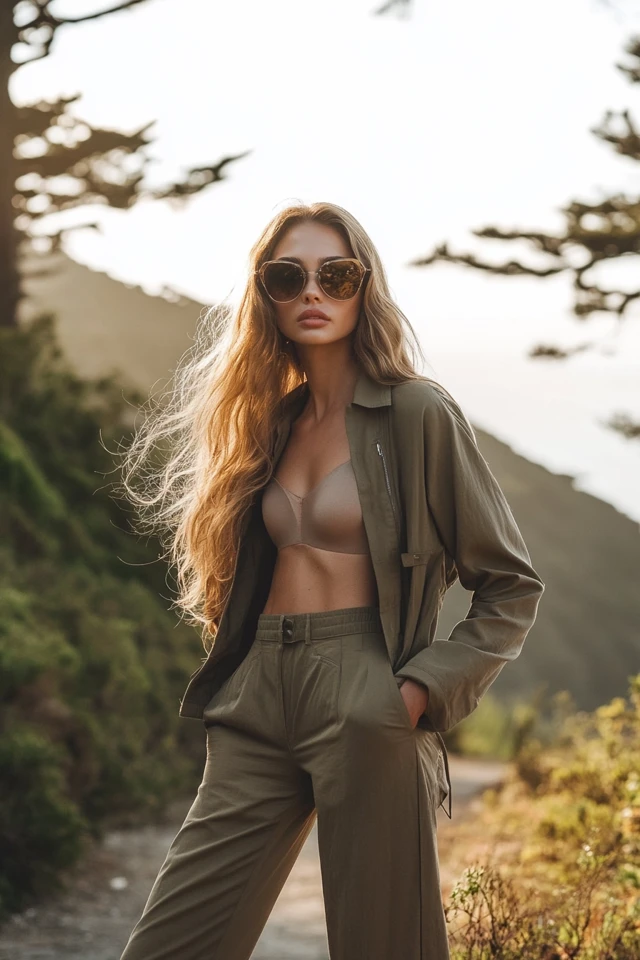
Which fabrics are best for hiking?
Choose synthetics or wool. The New York State DEC recommends moisture-wicking synthetic fabrics that keep your skin dry and help regulate body temperature, and advises avoiding cotton because it holds moisture. Olympic National Park adds that wool, polypropylene or polar fleece keep their insulation value even when wet, while cotton will keep you cold and wet.
Many leggings are a nylon or polyester blend with spandex, which is a good sign. Check the label, and remember that cotton underwear counts too.
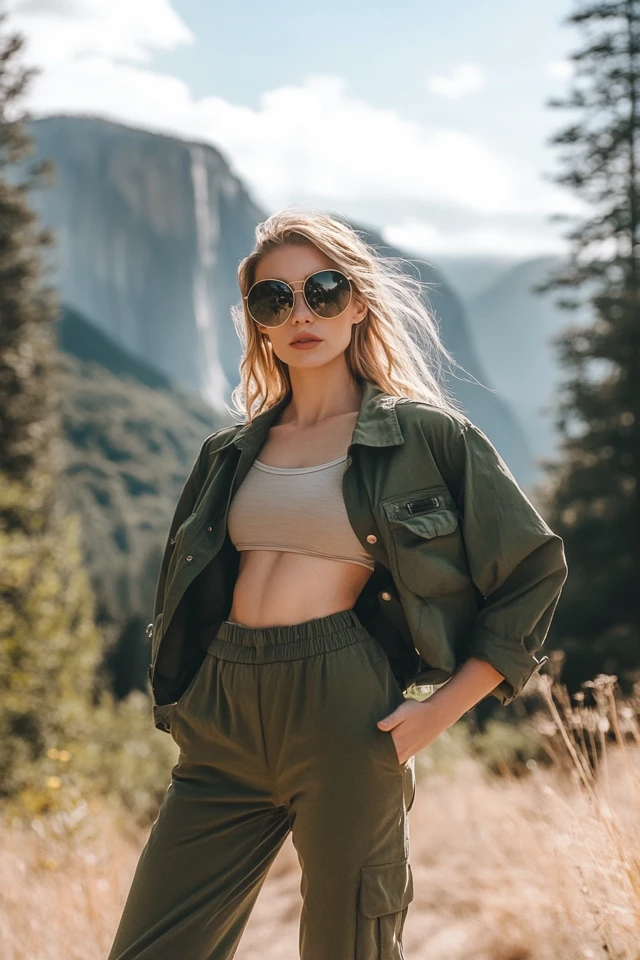
What is the 3 layer rule for hiking?
It is a way of dressing in three jobs: a base layer that wicks sweat, a middle layer that insulates, and an outer layer that blocks wind or rain. California State Parks puts the idea simply: dress in several light layers so you can shed or add items as activity or weather changes.
- Base: a fitted tank or long-sleeve top in a wicking fabric.
- Middle: a lightweight fleece or zip-up hoodie.
- Outer: a packable shell. A lightweight windbreaker is enough for most date hikes.
In colder weather, thermal tights under or instead of regular leggings help. For serious cold, see these stretchy base layers.
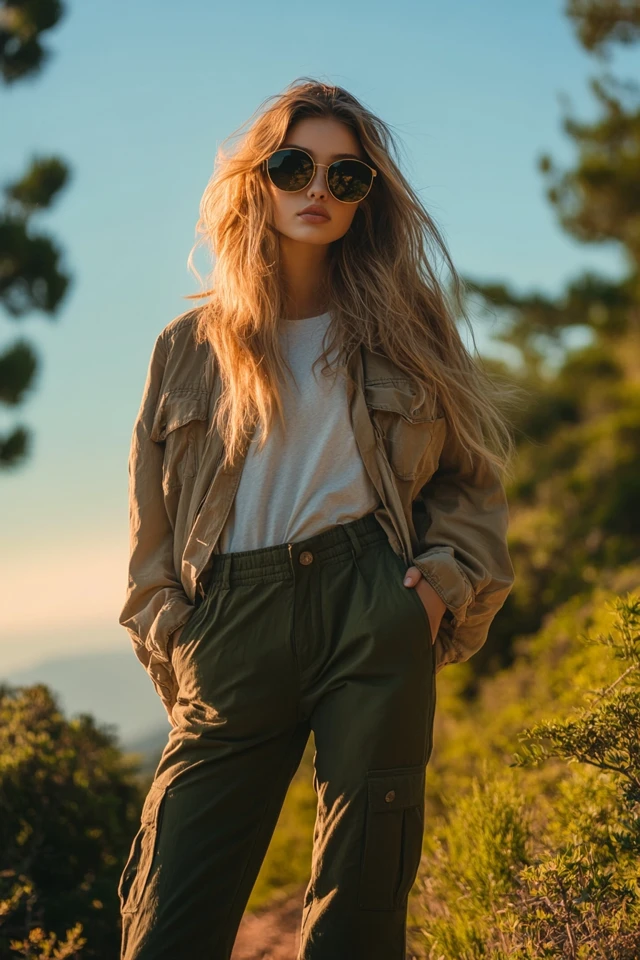
How to choose pants for your frame
A pant that slips or bunches is a fit problem, not a you problem. Fit details do most of the work.
- Petite: a cropped or 7/8 length avoids fabric pooling at the ankle, and a high waist lengthens the leg line.
- Curvy: a wide waistband stays flat when you bend, and seaming or a supportive panel adds comfort.
- Athletic: color blocking or mesh panels add visual interest, and a looser hoodie balances the fitted leg.
- Tall: look for extra inseam length so the hem does not ride up the shin on steps.
Do a squat and a high step in the fitting room. If the waistband rolls or the fabric turns sheer, move on.
What colors look good on the trail?
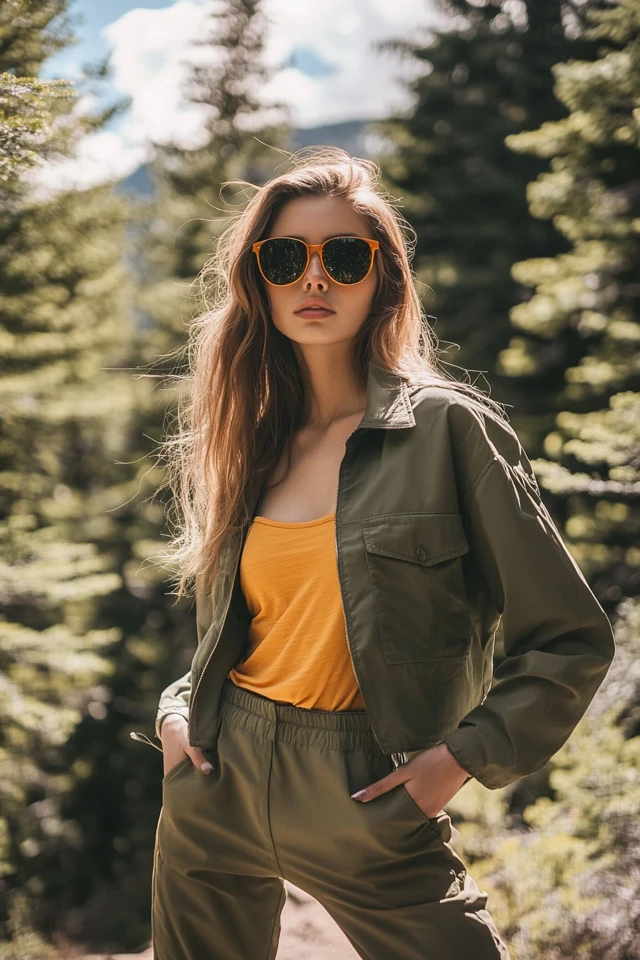
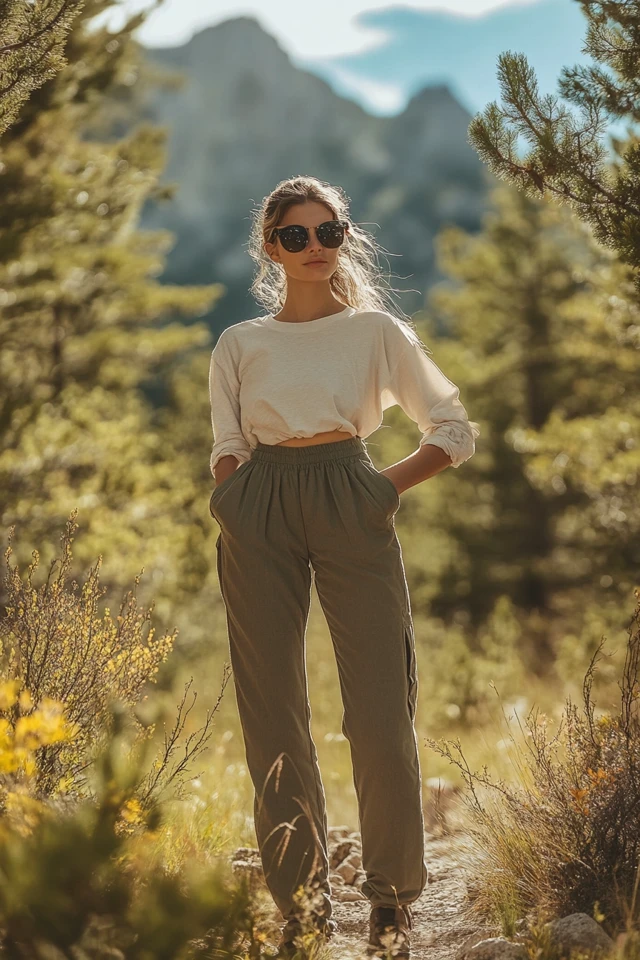
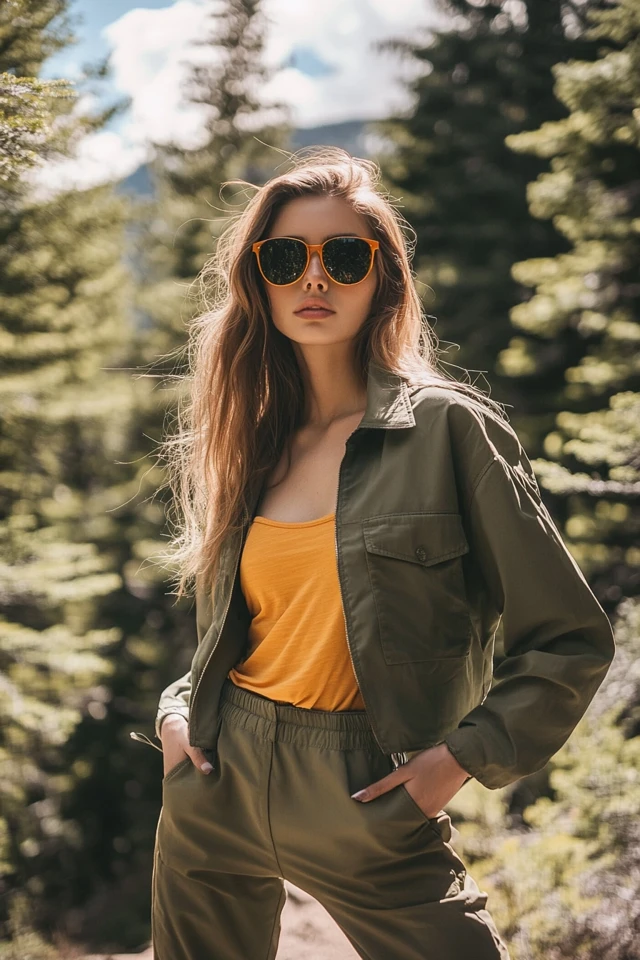
Earthy shades like olive, sage, rust and warm gray sit quietly against foliage and rock. Black and navy are easy to pair with anything. A bright top in coral or teal gives you contrast without changing the pants.
Through the lens of evidence-based design, I'd pick the finish before the color: a matte, slightly textured knit reads softer and richer outdoors than a shiny one in the same shade. One practical note from the New York DEC: light-colored clothing makes ticks easier to see, which matters on wooded trails in tick season.
Shoes: what to wear on your feet
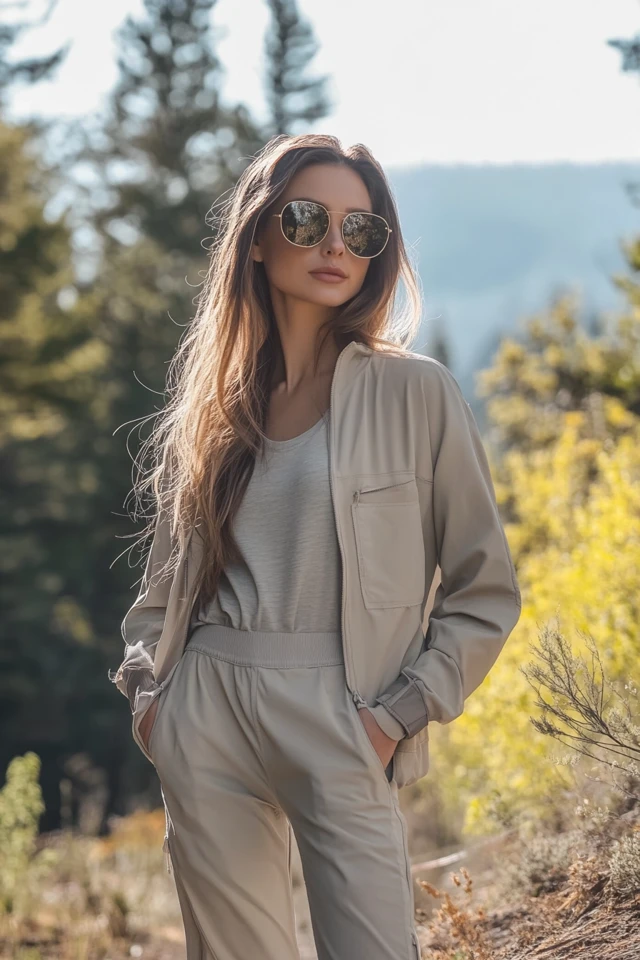
For rocky or uneven trails, California State Parks recommends hiking boots or trail shoes with thicker soles and good ankle support. Our guide to durable hiking boots covers what to look for. On a flat, beginner-friendly path, grippy trail runners or sneakers are fine.
Comfort matters more than looks here. Podiatrist Gina Hild, DPM, says that "Footwear that offers cushioning plus heel and arch support can help you relieve and manage symptoms". If you have foot pain, check with a podiatrist before choosing trail footwear.
Essential clothing and gear for hiking
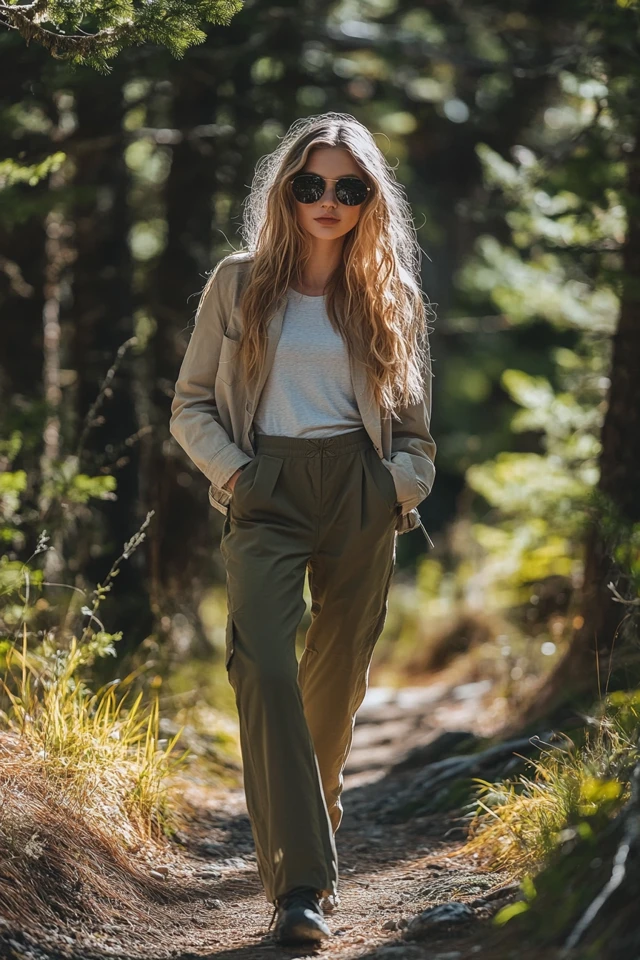
You do not need much for a short date hike, but a few things earn their space.
- A small backpack or belt bag with water and snacks.
- A hat. Dermatologist Anna L. Chien, MD, notes that "A hat with a 3-inch brim protects the top of your scalp, ears and face."
- Sunglasses, ideally polarized for bright trails.
- A packable rain or wind layer.
- A scarf or buff if it is a fall hike.
For fall hiking outfits for ladies, the formula is simple: black high-waisted leggings, a forest green cropped hoodie, trail shoes and a light puffer you can tie around your waist. Add a cardigan and sneakers in the car for the coffee stop. For more ideas, see relaxed hiking date outfits with functional pieces and comfortable hiking attire with activewear vibes.
Caring for your leggings
Wash in cold water and air-dry to protect the elastic. Skip fabric softener, which can coat synthetic fibers and reduce how well they wick. Fold rather than hang for storage.
Frequently asked questions
What is the best attire to wear while hiking?
Wear moisture-wicking synthetic or wool clothing in light layers, plus shoes with good grip. Avoid cotton, which holds moisture and leaves you cold.
What are the essential clothing and gear needed for hiking?
Start with a wicking base layer, stretchy pants, a light insulating layer, a packable rain or wind shell and sturdy shoes. Add water, snacks, a hat and sunglasses.
How do I keep stretchy pants from slipping during a hike?
Choose a high-rise style with a wide waistband or an internal drawstring. Test it with a squat and a high step before you buy.
Can I wear leggings on a cool-weather hike?
Yes. Wear thermal or fleece-lined tights, or add a thermal layer underneath, and pair them with a fleece and a windproof shell.
Filed under Outfit Ideas