Opulent Soft Petal Geometry Nails
- Words by
- Julio Arco
- Published
- Reading
- 4 min
The best nail shape is the one that suits your nail bed, your daily routine and the length you can live with. Round and oval are the easiest to wear, square and squoval are sturdy, and almond, coffin and stiletto are the dramatic ones that need more care.
Below are the types of nail shapes and names you will hear at the salon, what each one does to the look of your fingers, and how to choose. I'll also use a soft petal pastel with fine geometric lines as the example design, since that mix shows clearly how shape changes a manicure.
What are the main types of nail shapes?
Most guides count between five and nine. The common ones are round, oval, square, squoval, almond, coffin (also called ballerina), stiletto and lipstick. The differences come down to two things: how the tip is cut (straight, curved or pointed) and how the sides taper toward it.
Through the lens of evidence-based design, I'd treat the tip as the first thing the eye reads. A curved edge reads soft, a straight edge reads tidy and structured, and a point reads sharp.
Round and oval nails
Round nails follow the fingertip. They are short, practical and hard to snag, which makes them a good start if you type a lot or work with your hands.
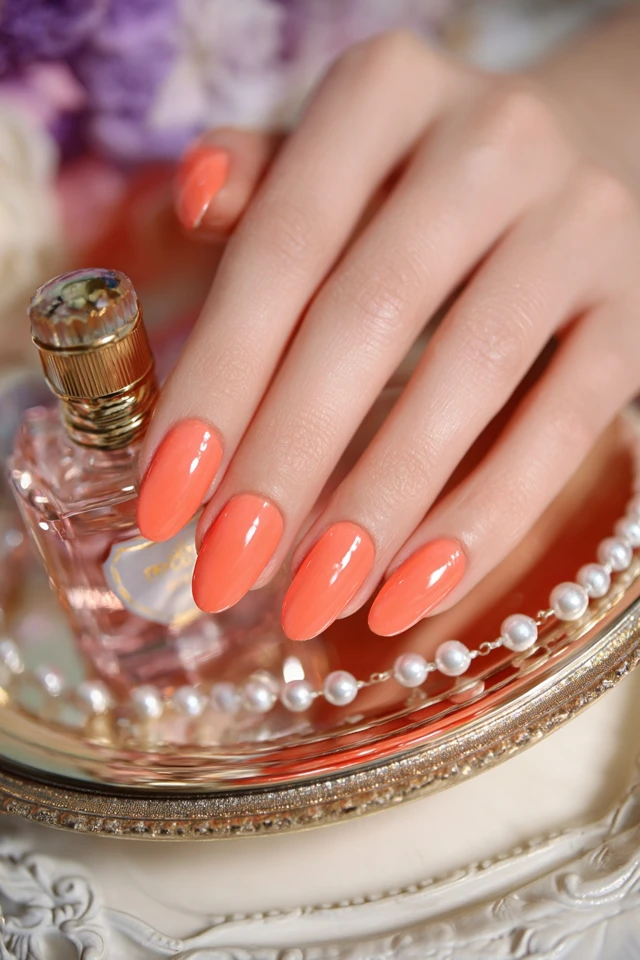
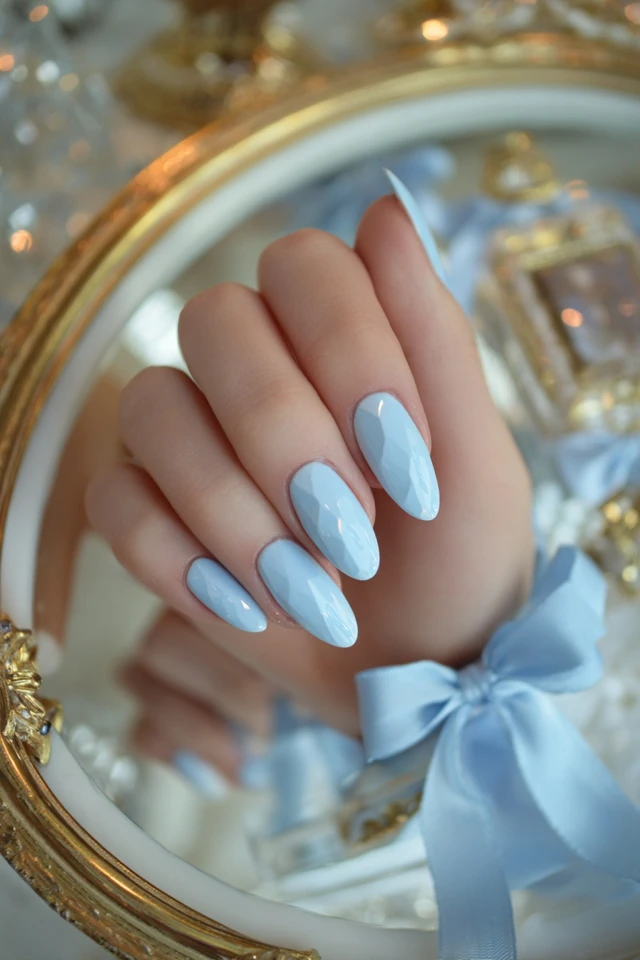
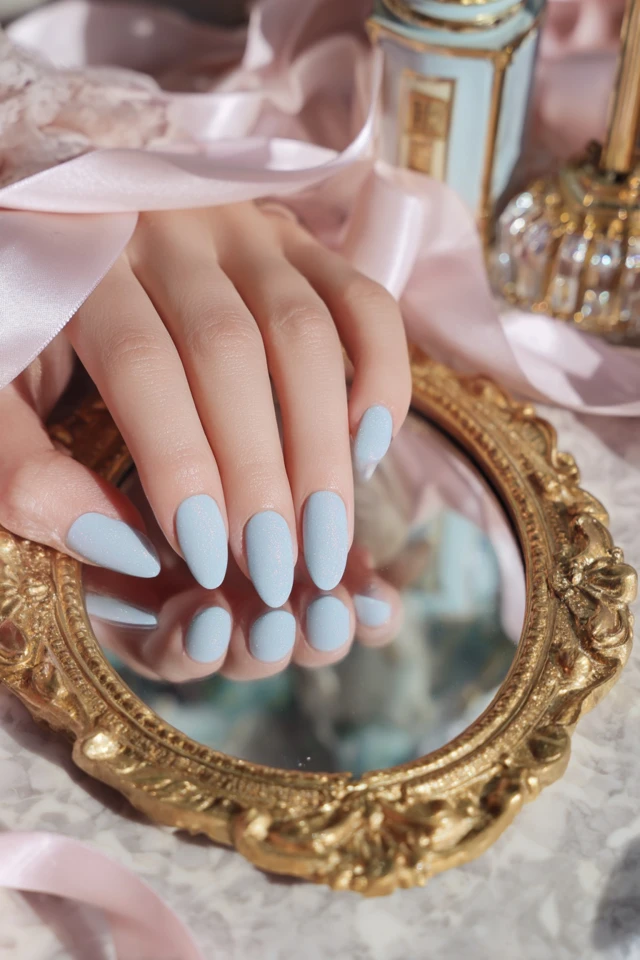
Oval nails are slightly longer with a gentle taper. They lengthen the finger without looking severe, and they are a safe choice for pale pastels because the curve keeps the color looking soft.
Square and squoval nails
Square nails have a flat tip and sharp corners. They show off straight lines well, so a thin geometric stripe or triangle looks crisp on them. The corners can catch on knitwear and hair, though.
Squoval is square with the corners rounded off. It keeps the clean tip but is far less likely to snag or split, so it is often the most practical shape for everyday wear.
Almond nails
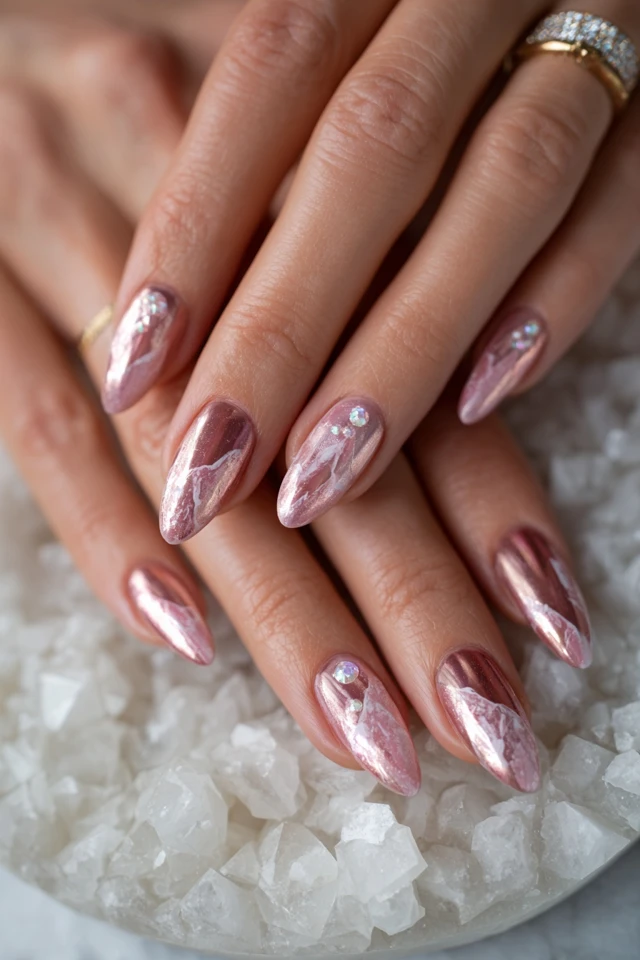
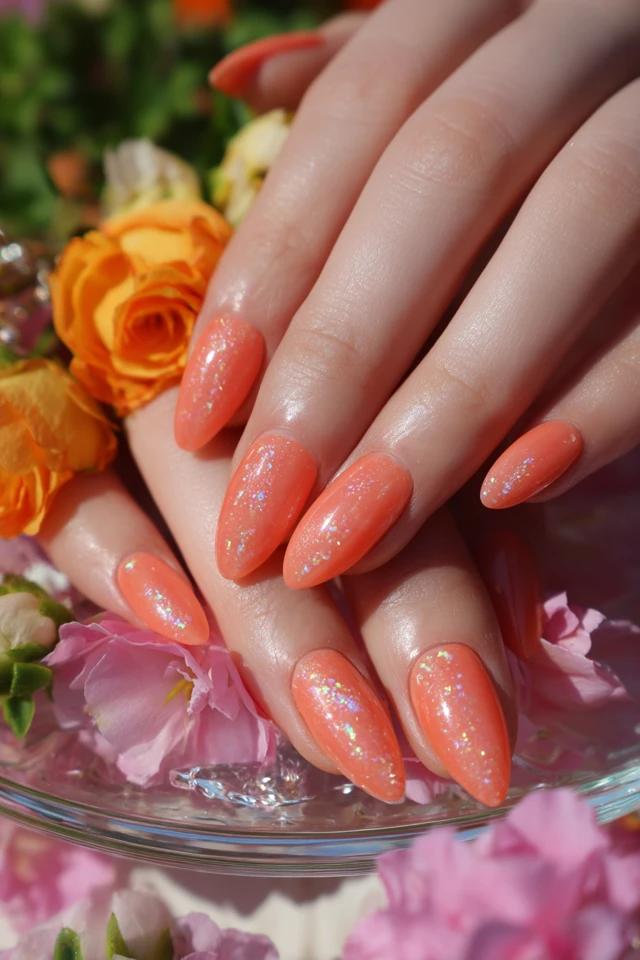
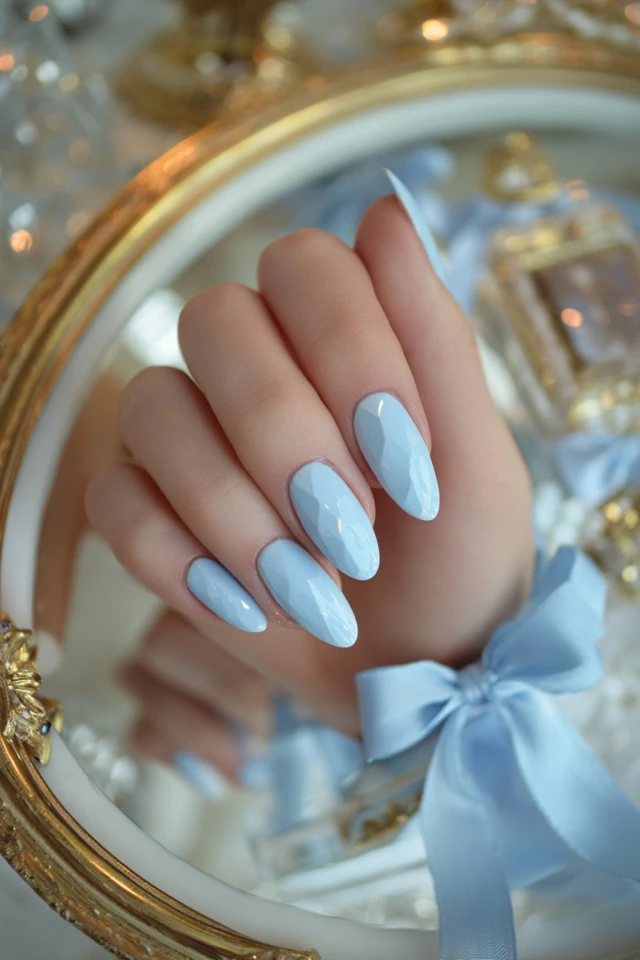
Almond nails narrow from the sides to a soft, rounded point. The taper makes fingers look longer and slimmer, and the shape suits sheer blush and lavender tones. They need a little length to work, and the narrowed tip is more vulnerable to breaks than a squoval.
Coffin and ballerina nails
The coffin nail shape tapers like almond but ends in a flat, squared tip. Ballerina is the same idea, and the two names are used interchangeably. The flat tip gives a wide canvas for geometric designs, so it is a natural fit for a petal base with sharp lines on top. For a mini take on this shape, see these mini coffin geometry nails.
The catch is length. Coffin nails usually look best long, and long nails are harder to keep intact during daily tasks.
Stiletto and lipstick nails
Stiletto nails taper to a true point. They are the most dramatic option and the least forgiving for typing, buttoning and picking things up.
Lipstick nails have a slanted tip, like the angle of a lipstick bullet. They are an editorial choice that suits bold, graphic color blocking more than soft pastels.
How do you choose the best nail shape for your hands?
- Short or wide fingers: oval, almond or a tapered shape visually lengthens them.
- Long, slim fingers: squoval or square keeps proportions balanced, and round works well too.
- Short nail beds: leave a thin line of skin visible at the sides so the nail looks longer.
- Hands-on jobs: keep nails short and rounded or squoval.
As an architect trained in evidence-based design, I'd also match the shape to the design. Curved tips soften a pattern, and straight tips make geometry look deliberate. If you like the pastel-and-line look, try soft petal designs on oval first, then move to a squared tip when you want sharper lines.
What is the best nail shape for older hands?
A nail shape for older hands should be sturdy and gentle. Nails often become thinner or more brittle with age, so a short to medium oval or squoval is less likely to split than a long point. Soft, sheer colors tend to look fresher than very dark shades. If your nails are fragile or ridged, ask a dermatologist or nail professional before adding enhancements.
Care notes for longer shapes
Long almond, coffin and stiletto shapes often rely on acrylic or gel. The American Academy of Dermatology notes that to make acrylics stick, the surface of your natural nails must be filed until they feel rough, which thins them and makes them weaker. The same page says artificial nails need touch-ups every 2 to 3 weeks as they grow.
Removal matters too. The AAD says acetone is the most effective way to remove gel polish at home, and the Cleveland Clinic warns that careless removal can temporarily damage nails, with cracking and peeling the most common issues. Dermatologist Chris Adigun, MD, FAAD, advises that looking closely at your nails after removing the color helps you spot a problem early.
For more shape-and-design pairings, browse soft petal silhouette nails and prism designs.
Frequently asked questions
What are the 7 different nail shapes?
A common list is round, oval, square, squoval, almond, coffin (ballerina) and stiletto. Some guides add lipstick as an eighth.
What is the most attractive fingernail shape?
It depends on your hands, but oval and almond are often chosen because they make fingers look longer. Pick the one that fits your nail bed and lifestyle.
What are the 5 basic nail shapes?
The five usually named are round, oval, square, almond and stiletto. Coffin and squoval are popular variations of these.
What nail shape is most flattering for older hands?
A short to medium oval or squoval is usually the most comfortable and least likely to split. Sheer, soft colors keep the look light.
Filed under Nail Design