Coffin Nails: Shape, Mini Length and Geometric Designs
- Words by
- Julio Arco
- Published
- Reading
- 5 min
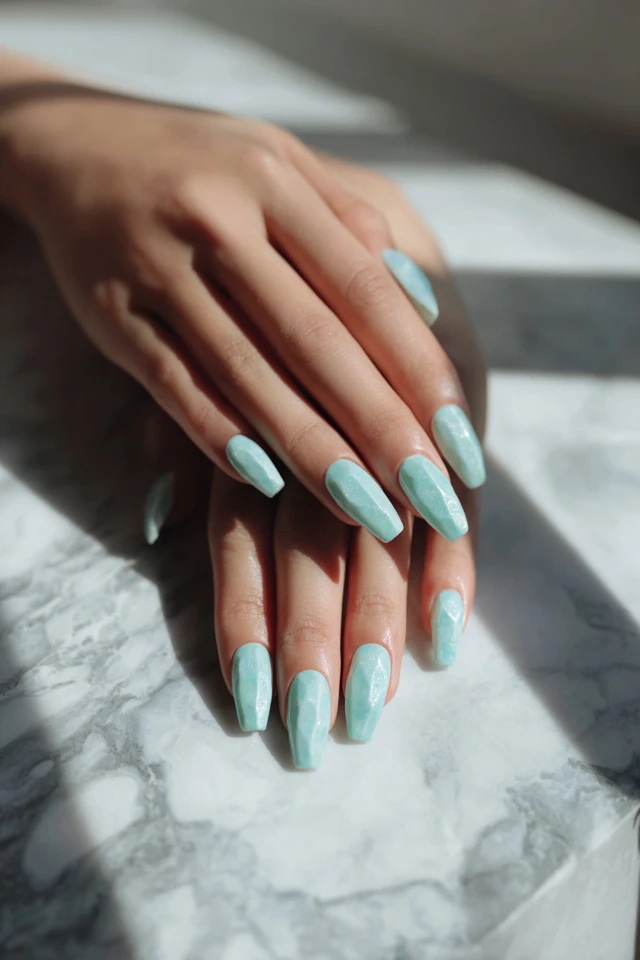
Coffin nails are long or medium nails that taper toward the tip and finish in a flat, squared-off edge. Mini coffin nails keep that silhouette at a shorter length, which makes them easier to wear every day and a good canvas for sharp geometric art.
If you like clean lines, a short coffin shape with triangles, grids or negative space is one of the easiest ways to get a polished look without long, high-maintenance tips.
What makes a nail a coffin nail?
Two features define the shape: sides that narrow in a straight line toward the tip, and a tip that is cut flat rather than rounded or pointed. The flat tip is what separates it from almond and stiletto. Because the sides taper, the nail reads as longer and more slender than the finger really is.
It is also called a ballerina nail, since the tapered shape resembles a pointe shoe. Some nail artists use the two names for the same shape, others call ballerina the slightly more tapered version. Ask for a photo reference when you book so you both mean the same thing.
Coffin nails vs almond, square and ballerina
- Coffin: tapered sides, flat tip. Sharp and graphic.
- Almond: tapered sides, rounded or softly pointed tip. Softer and usually more forgiving on short nails.
- Square: straight sides, flat tip. The sturdiest of the group.
- Ballerina: another name for coffin, or a slightly more tapered coffin.
When choosing between coffin nails vs almond, think about the lines in your design. Geometric patterns with hard edges echo the flat tip of a coffin, while almond suits flowing or floral work. In the coffin nails vs square comparison, the coffin looks slimmer, but the square has no narrow point to catch and snap, so it is the better choice if you type, lift and carry all day.
Through the lens of evidence-based design, I'd say the shape matters as much as the color, because tapered lines lead the eye along the finger and make it look longer, while a wide flat edge reads as sturdy and compact.
How to cut and file coffin nails
Whether you are shaping natural nails or a set, the steps are the same. Go slowly; you can always remove more, but you cannot put it back.
- Start with the length. Trim the nail straight across to the length you want.
- Mark the tip. Decide how wide the flat edge will be. For mini coffin nails, about a third of the nail width keeps things balanced.
- File each side diagonally toward that tip, one side at a time, with the file held at the same angle on both.
- Check symmetry by looking at the nail straight on, then compare it with the finger next to it.
- Soften the corners slightly. Razor-sharp corners snag on clothes and break first.
Those steps are the whole answer to how to cut coffin nails: straight cut, taper both sides, flatten the tip, ease the corners. Short nails give you less to taper, so the angle is gentler than on a long set.
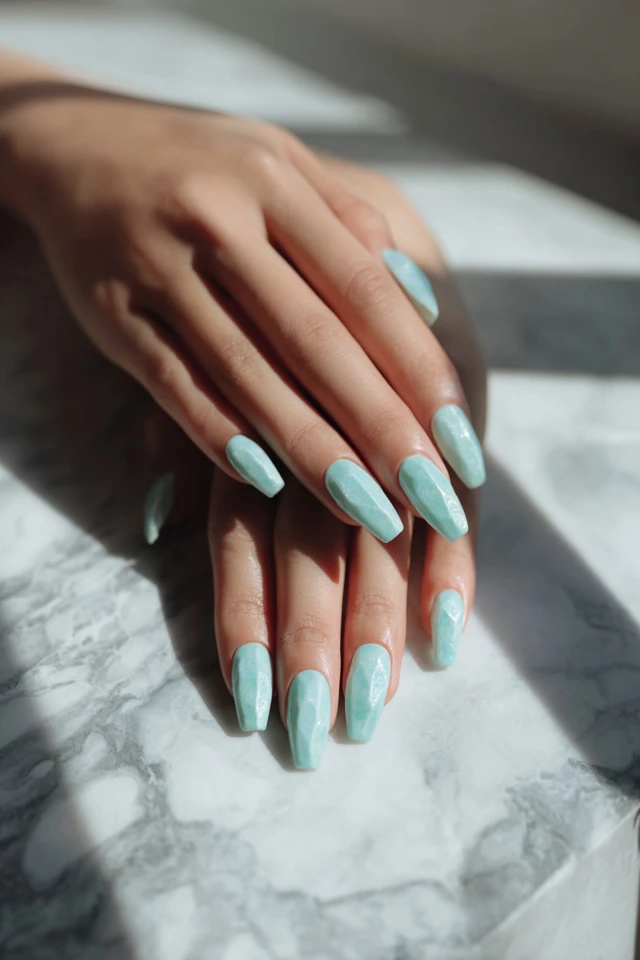
Why short coffin nails work for geometry
Short coffin nails have less surface than long ones, so simple graphic ideas look cleaner: one diagonal line, a single triangle, a thin grid in a contrasting color. Busy layered patterns tend to get cramped at this size.
Keep the lines parallel to the sides of the nail, since the tapered edges already set the angle. A design that follows the taper looks deliberate; one that fights it can look crooked even when it is not.
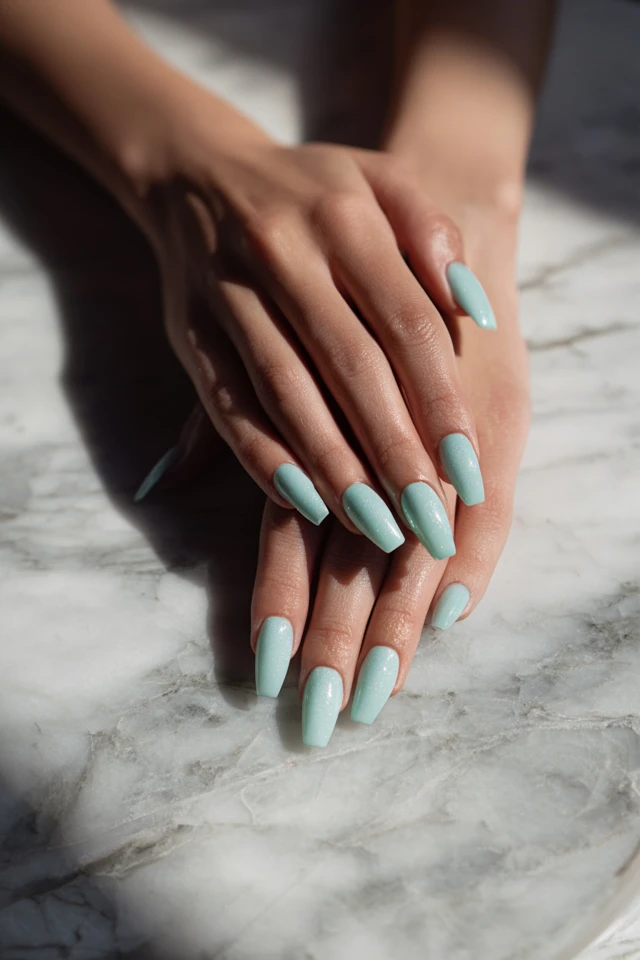
Coffin nail designs to try
These coffin nail designs suit a shorter length well:
- Black base with thin gold lines, good for evenings.
- Nude base with white geometric outlines for daytime.
- Dusty rose with matte brown triangles.
- Emerald with silver lines.
- Pastel purple with negative space.
For a classic option, a coffin nails french tip uses a thin white or colored band that follows the flat edge. On a mini length keep the band narrow so it does not swallow the nail.
Finish changes color as much as the shade does. Through the lens of evidence-based design, I'd pick a matte finish for a deep color like charcoal, because a matte surface scatters light and reads softer, while a gloss top coat makes the same color look sharper. Pair the finish with your clothes: matte with wool and velvet, gloss with satin.
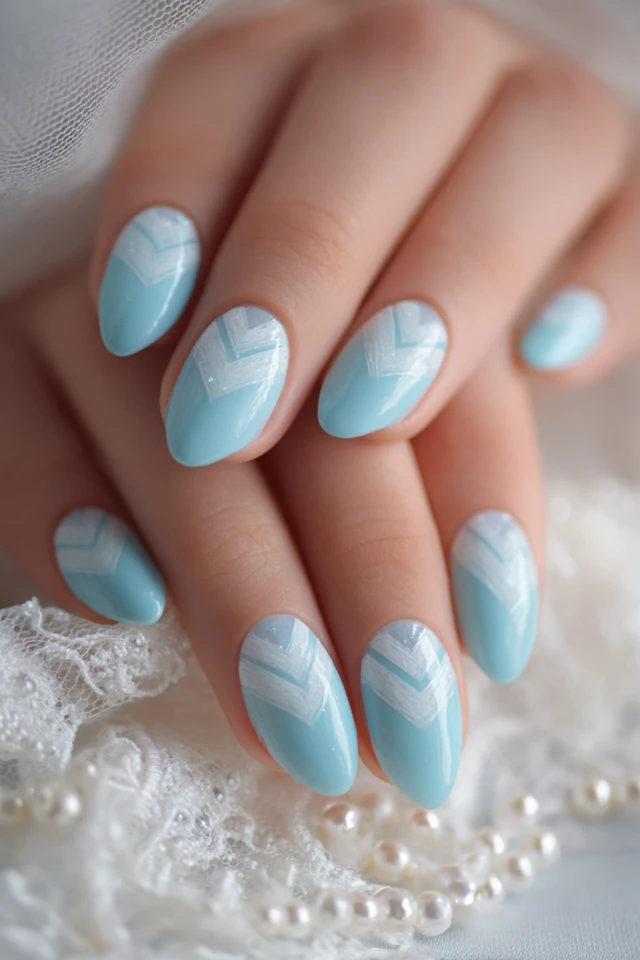
For more shape and pattern ideas, see signature mini coffin artistry, sharp slim coffin nails and chevron designs. If you prefer something rounder, luxe round geometry nails carry the same ideas on a softer tip.
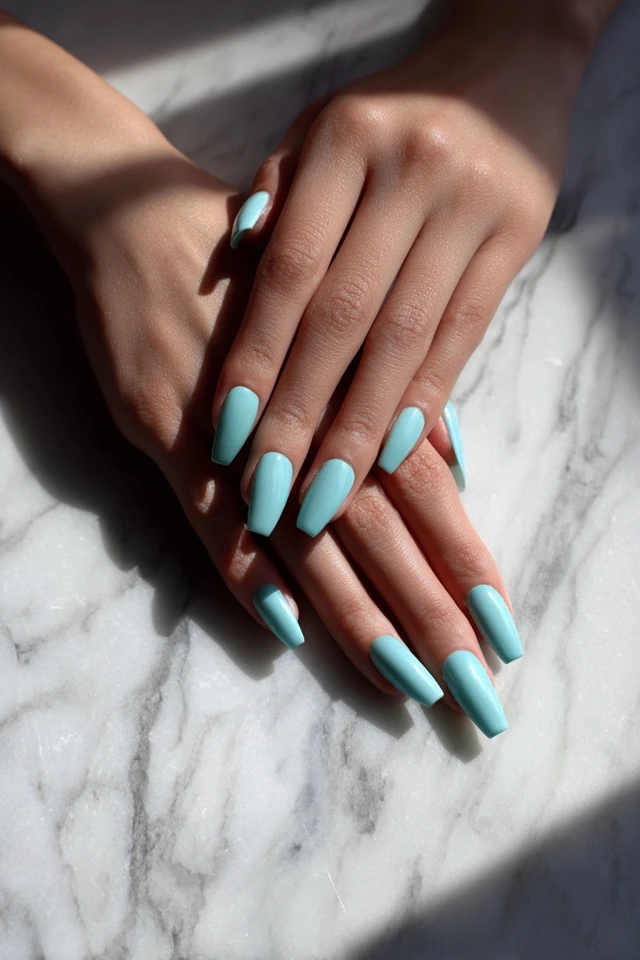
Choosing colors for your skin tone and wardrobe
Warm undertones usually look good with burnt orange, golden yellow and olive. Cool undertones tend to suit sapphire, emerald and amethyst. Neutral undertones can wear almost anything. A quick check: if gold jewelry flatters you more than silver, you likely lean warm.
Metallic accents echo rings and watches, so match the metal on your nails to the metal you wear most.
Wear and removal
Acrylic extensions need the natural nail surface roughened first. The American Academy of Dermatology notes that this thins your natural nails, making them weaker. The same page says artificial nails worn for more than a few weeks need touch-ups every 2 to 3 weeks as your nails grow.
For gel color, the AAD says acetone is the most effective way to remove it at home. If your nails look weak or damaged afterward, check with a dermatologist or nail professional.
Frequently asked questions
Why are they called coffin nails?
The name comes from the outline: the sides taper in and the tip is flat, which looks like the shape of a coffin. Ballerina is the alternative name, from the resemblance to a pointe shoe.
Should I do almond or coffin?
Choose almond for a softer, rounded tip that is less likely to catch. Choose coffin if you want a graphic, flat-tipped edge that suits geometric designs.
What nail shape is most attractive?
It depends on your hands and habits. Tapered shapes like coffin and almond tend to make fingers look longer, while square and rounded shapes look neat and are more durable.
Filed under Nail Design