Midsize Winter Inspiration
- Words by
- Julio Arco
- Published
- Reading
- 5 min
The simplest rule for winter outfits by body type: let the coat and the waist do the shaping, and keep the layers underneath thin enough that they don't fight the silhouette. Belted or tailored coats define a waist, straight coats keep long lines, and fabric weight decides how much volume you add.
Below is a short winter style guide for body types, built around the pieces that change proportion most: the coat, the pants or skirt, and the sweater layer. These are starting points, not rules. Bodies are mixed, and a favorite coat that fits well beats any category.
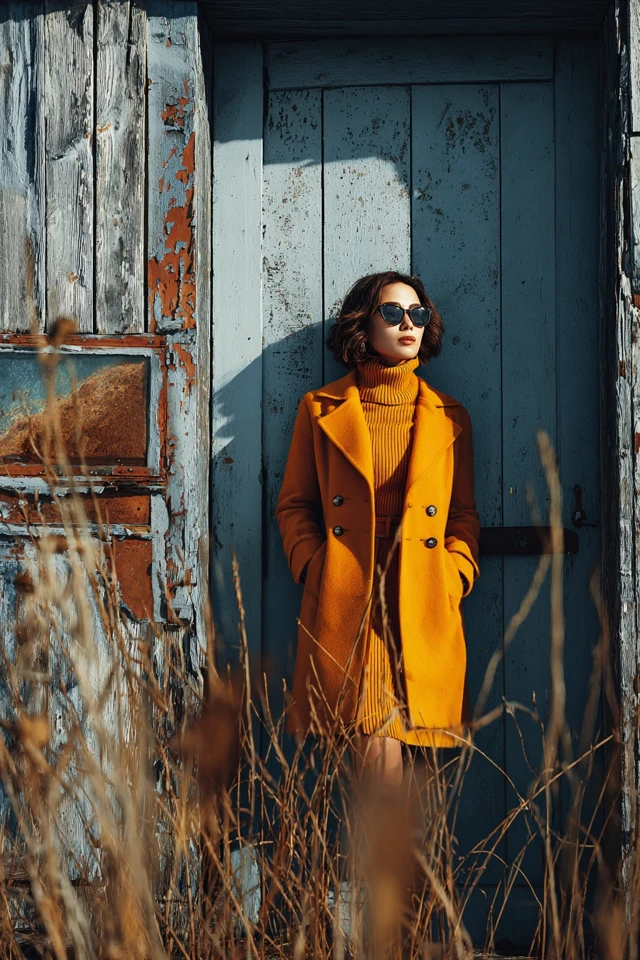
How do you choose a winter coat for your body type?
Start with the shoulder seam, which should sit where your shoulder ends, then check that you can button the coat over your thickest sweater. A coat that pulls across the back is a fit problem, not a you problem. Size up in the coat rather than squeezing in.
- Hourglass: a belted wrap coat or a tailored wool coat that follows the waist.
- Pear: a coat with some structure at the shoulders and a hem that ends at the hip or well past the widest point of the hips, not right at it.
- Apple: an open-front or waterfall coat that falls straight from the bust, in a fabric with drape rather than stiffness.
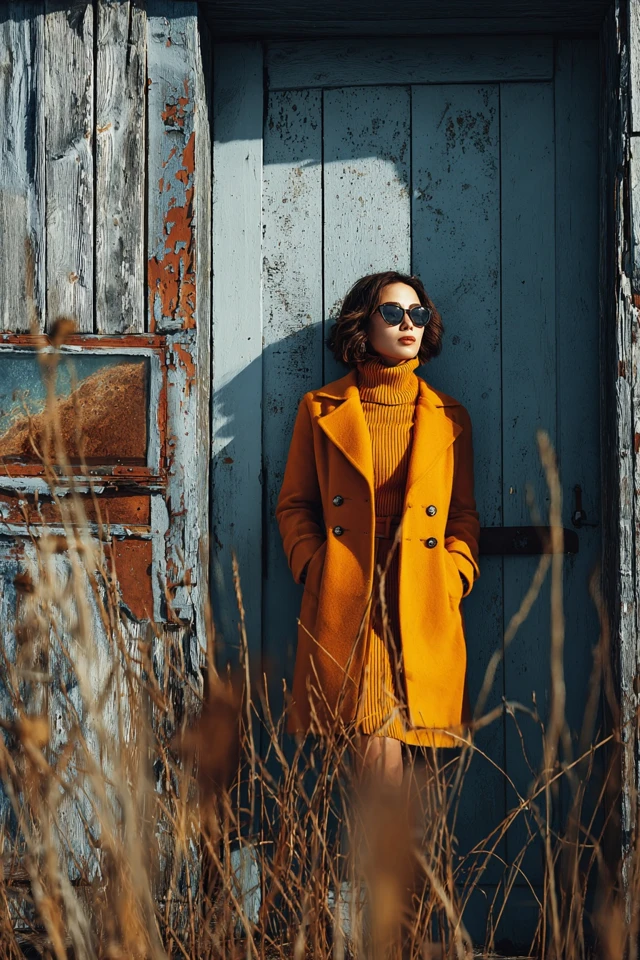
- Rectangle (straight): a belted coat or a cropped puffer with a defined waist creates shape; a double-breasted style adds width at the chest.
- Inverted triangle: a softer shoulder, raglan sleeves and a slightly flared or A-line coat to balance broad shoulders.
Through the lens of evidence-based design, I'd treat the coat's outline as the first thing the eye reads in winter, because it covers most of the body. Get that line right and the rest is easier.
Winter outfits for each body type
Hourglass
Fitted knits tucked into high-waisted trousers, then a belted coat. Keep the waist visible and avoid boxy, shapeless layers that hide it.
Pear
Put interest on top: a cowl neck, a textured sweater or a scarf worn loose. Straight or slightly bootcut dark trousers keep the lower half streamlined, and a longer sweater that skims the hip works well.
Apple
V-necks and open cardigans create a vertical line. Pair them with straight-leg or tapered pants and a fabric with some drape. Darker tops with lighter bottoms move the eye downward.
Rectangle
For winter outfits for a rectangle body shape, build curves with layers: a cropped jacket over a longer knit, a belt over a cardigan, or a pleated midi skirt with a fitted turtleneck. Texture on the hips, such as cord or tweed, adds shape.
Inverted triangle
Keep the neckline open and simple, and add volume below: wide-leg pants, a full midi skirt or lighter boots. Chunky shoulder detail makes the top half read wider.
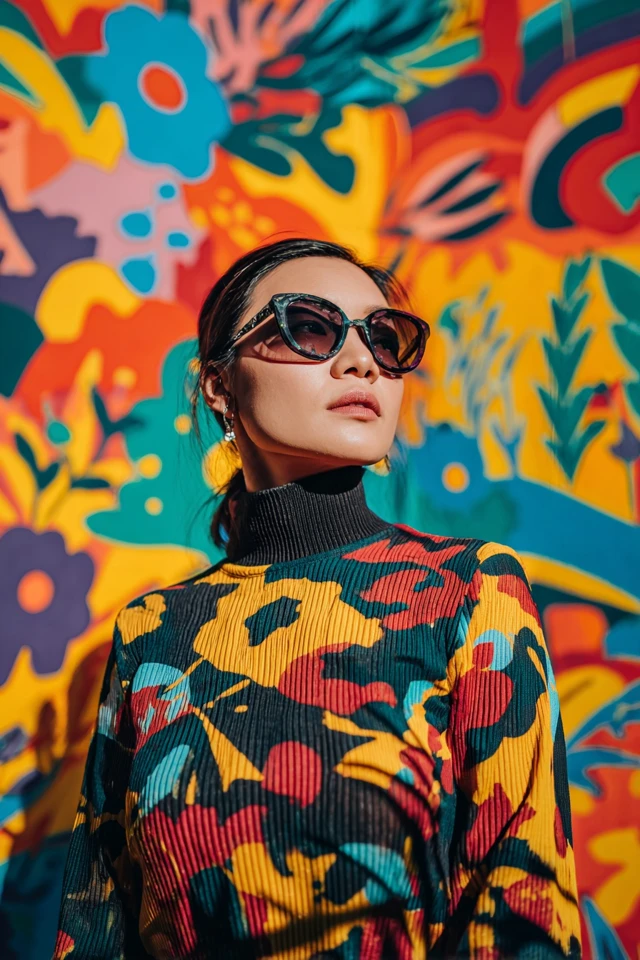
What is the 3 layer rule for winter?
It is a base layer, an insulating mid-layer and an outer shell. The U.S. National Park Service puts it this way: "the most basic rule in dressing for winter is layering as it helps with 3 important outcomes: 1) Keeping moisture away from the skin 2) Creating insulation to help keep the body core warm 3) Protecting against the "elements" - wind, snow, rain, etc."
For everyday outfits, that translates to a thin base, a sweater or fleece, and a coat. If you are active outdoors, the layer closest to your skin should be moisture wicking materials that draw sweat away from your skin. For a commute or a day in town, a fine merino tee does the same job with less bulk, which matters on any frame.
Which fabrics flatter and keep you warm?
Fine knits in merino or wool blends hold warmth without adding bulk. Chunky knits add volume, so put them where you want it: on the top half for a pear shape, on the lower half for an inverted triangle.
Texture changes how a color reads. A matte wool and a brushed one in the same charcoal do not look identical, because the surface scatters light differently. As an architect trained in evidence-based design, I'd choose matte, fine-gauge fabrics for the layer closest to the body and save the heavy texture for one outer piece.
Skip cotton as a base when you will be outside for long. The University of Alaska Fairbanks notes that cotton is not effective in most winter clothing because it absorbs moisture and holds it against the skin instead of transferring it outward.
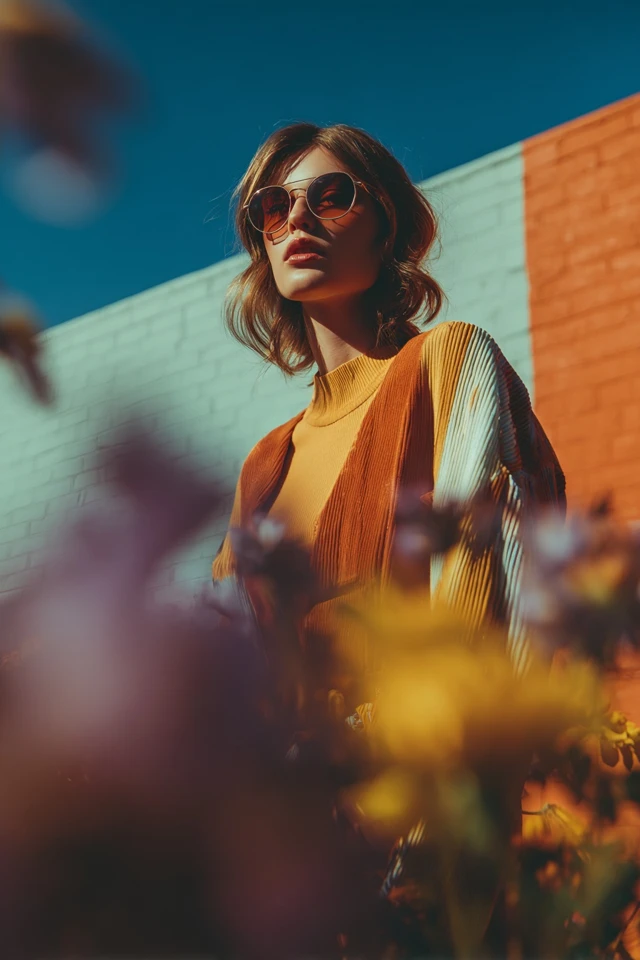
Which colors work for winter outfits?
Winter wardrobes drift toward black and gray, and a single color can lift them. Burgundy, plum, emerald and camel pair easily with navy, charcoal and cream. Navy with mustard, or plum with camel, are combinations that are simple to repeat.
Color can also shape proportion. A single tone from collar to boot lengthens the line, while a contrast at the waist marks it. Next to the face, choose the shade you feel good in; undertone charts are a guide, not a verdict.
Small pieces that finish the outfit
- Boots: a slim or slightly pointed shape lengthens the leg; a chunky sole balances wide pants or a full skirt.
- Belts: wear one over a coat or long cardigan to create a waist in rectangle and apple shapes.
- Scarves: a long, thin scarf lengthens the line, while a big one adds volume near the face.
- Gloves: mittens are warmer than gloves, so switch if your hands get cold.
For more cold-weather ideas, try modern winter outfit ideas, a closer look at winter fabrics, or the more tailored preppy winter looks.
Frequently asked questions
What is the hardest body type to dress?
There isn't one. Difficulty usually comes from fit, such as shoulders and hips needing different sizes, and tailoring or choosing stretch fabrics solves most of it.
What is the 3-3-3 rule for outfits?
It usually means building an outfit from three tops, three bottoms and three pairs of shoes that all mix together. It is a capsule wardrobe idea and not tied to a body shape.
What is the 3 layer rule for winter?
Wear a base layer that moves moisture away from skin, a mid-layer for insulation and an outer layer against wind and wet.
Should midsize women avoid oversized coats?
No. An oversized coat works if the shoulders are not swallowing you and something defines the line, such as a belt, a visible waist underneath or a hem that skims the leg.
Filed under Outfit Ideas