Lightweight Spring Cardigans for Sunny but Cool Days
- Words by
- Julio Arco
- Published
- Reading
- 5 min
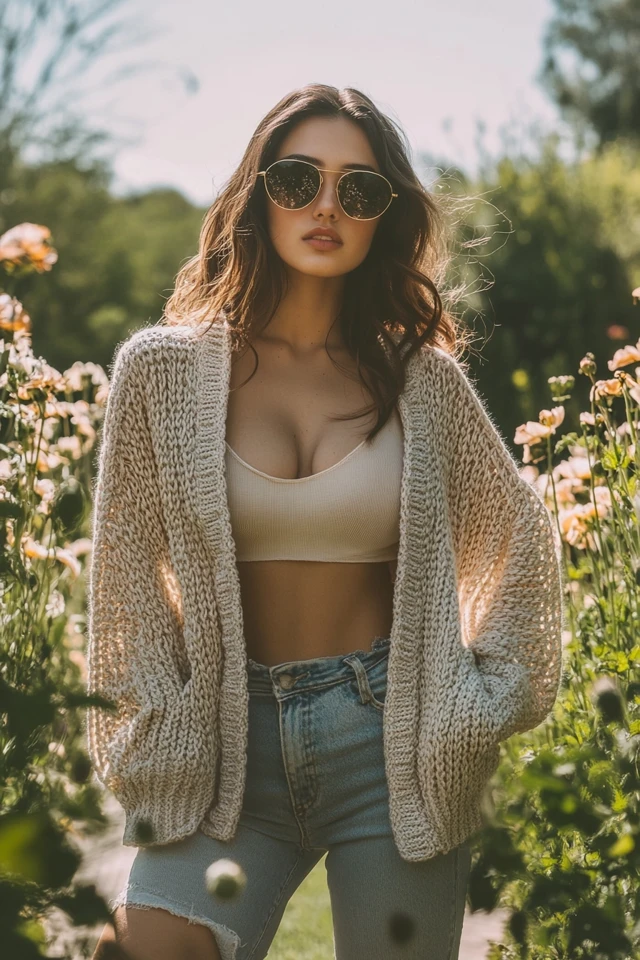
For a day that is warm in the sun and cool in the shade, choose a thin knit in a breathable fiber, in an open-front or button-front cut you can drop into a bag in seconds. A lightweight cotton or fine merino cardigan covers the chill without making you overheated the moment you step into the sun.
Below: which fabrics and cuts work, how to wear a cardigan over dresses and tees, and what to check before you buy.
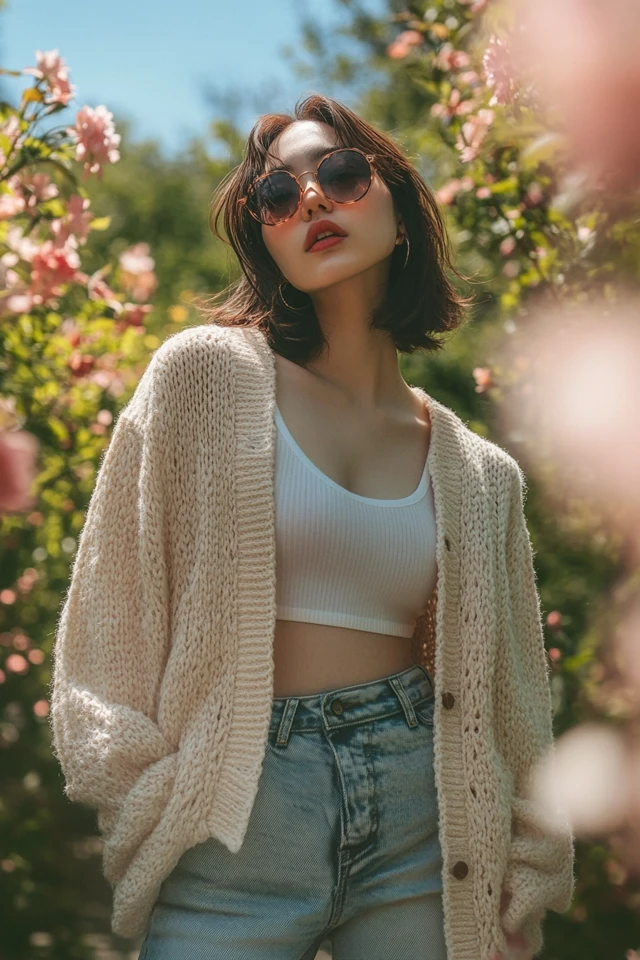
Which fabric is best for a lightweight cardigan?
Fabric decides whether a cardigan feels comfortable at noon and still useful at 5 p.m. Here is how the common options behave.
- Cotton: soft, breathable and easy to wash. A lightweight cotton cardigan is the simplest everyday pick for mild weather.
- Linen or linen-cotton blends: lighter and a bit crisp, with a visible texture. Good for breezy days and the warmer end of spring.
- Fine merino wool: thin merino is usually breathable and warm for its weight, which suits cool mornings and evenings.
- Silk or modal blends: drapey and smooth, so they look more polished with trousers or a skirt.
- Viscose or rayon blends: soft with some stretch, often used for fitted or more structured cardigans.
One caution if you plan to exercise outdoors in the cold: Texas A&M's Howdy Health says to avoid cotton because it absorbs moisture and can keep it next to your skin, which makes you cold. For a walk or a picnic that is not a concern. For a run or hike, pick a different layer.
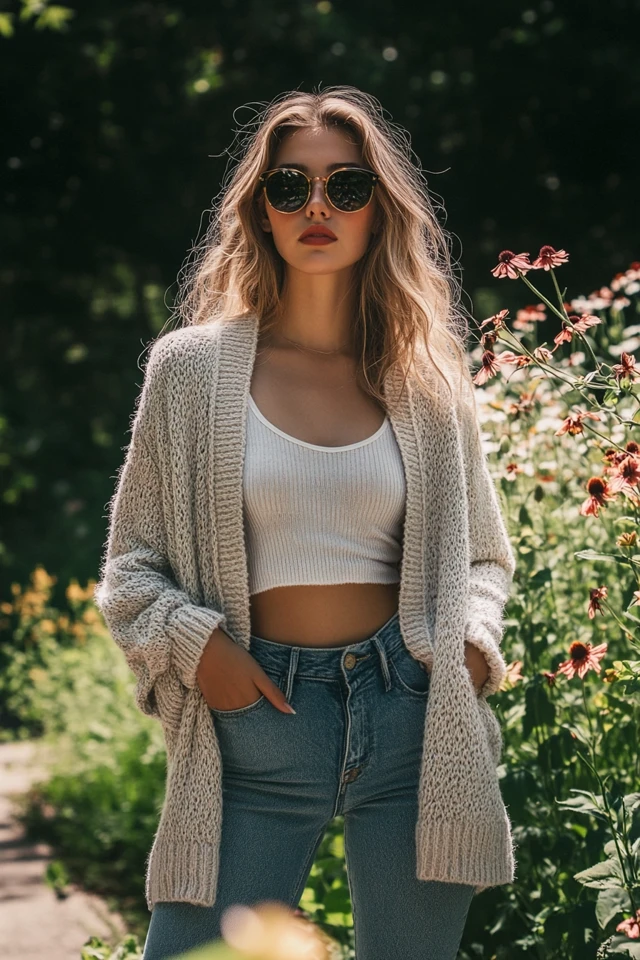
Which cardigan styles should you know?
Open front
A lightweight open front cardigan is the easiest to live in. With no buttons to line up, it hangs straight and works over a tank, a tee or a blouse. It also adds a vertical line down the front, which reads as longer and slimmer.
Button front
Buttoned, it looks neat enough for an office; open, it relaxes into a casual layer. If you want one cardigan that changes mood, this is it.
Cropped
Cropped cardigans stop at or above the waist. They suit high-waisted skirts and trousers, because the hem sits right where the bottom half begins.
Long
Long lightweight cardigans fall below the hip or to the knee. They add coverage and a flowing line, and they look best over slim bottoms or a fitted dress so the outfit does not turn shapeless.
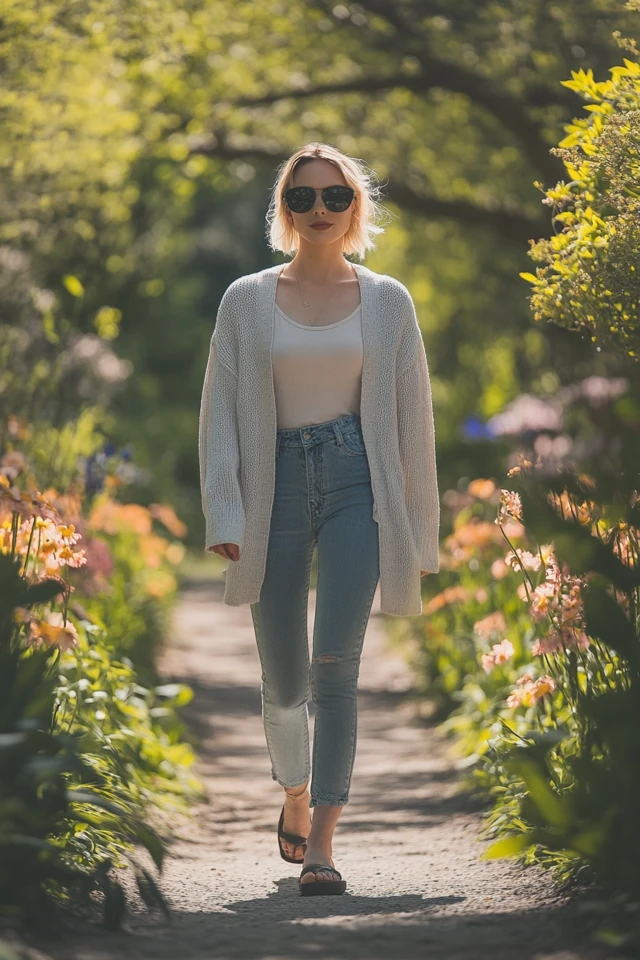
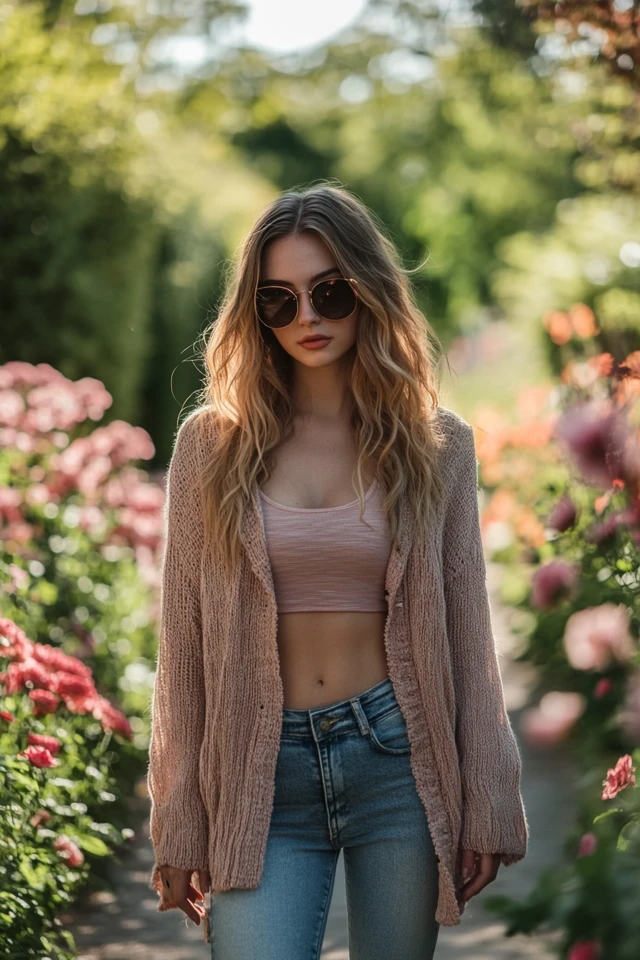
How do you wear a lightweight cardigan over a dress?
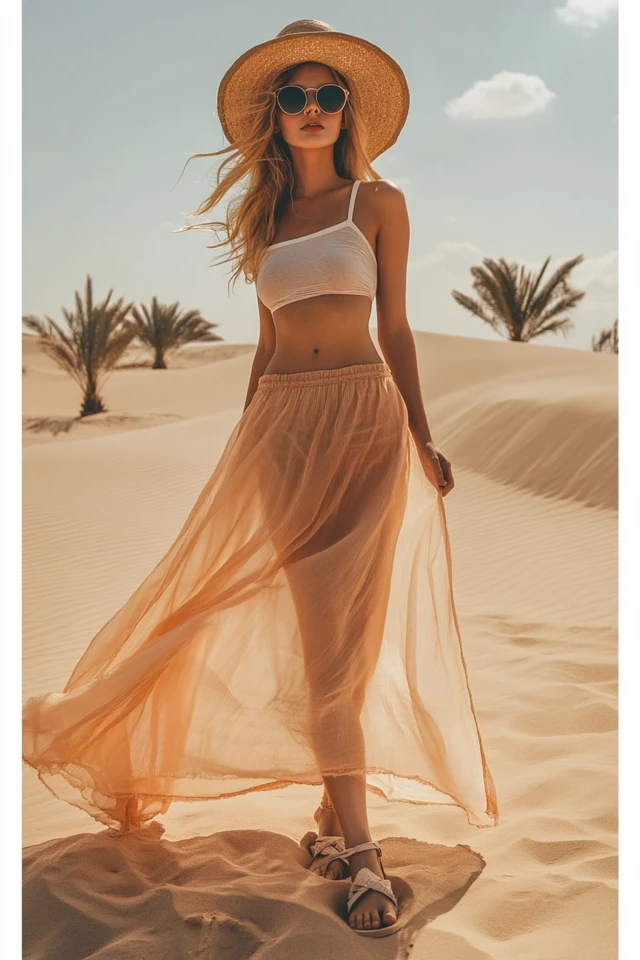
A lightweight cardigan for dresses works best when it respects the dress's proportions. Over a midi or flowy dress, choose a cropped cardigan that ends at the waist, so the skirt keeps its movement. Over a fitted or slip dress, a longer open cardigan adds a second line without bulk.
Keep the weight of the knit close to the weight of the dress. A chunky knit over a thin fabric will pull and bunch at the shoulders, while a fine knit sits flat. Through the lens of evidence-based design, I'd also match texture before color: a fine, matte knit next to a shiny satin reads as two separate pieces, while a matching finish looks deliberate.
For more dress ideas, see lightweight bohemian dresses for warm, sunny days.
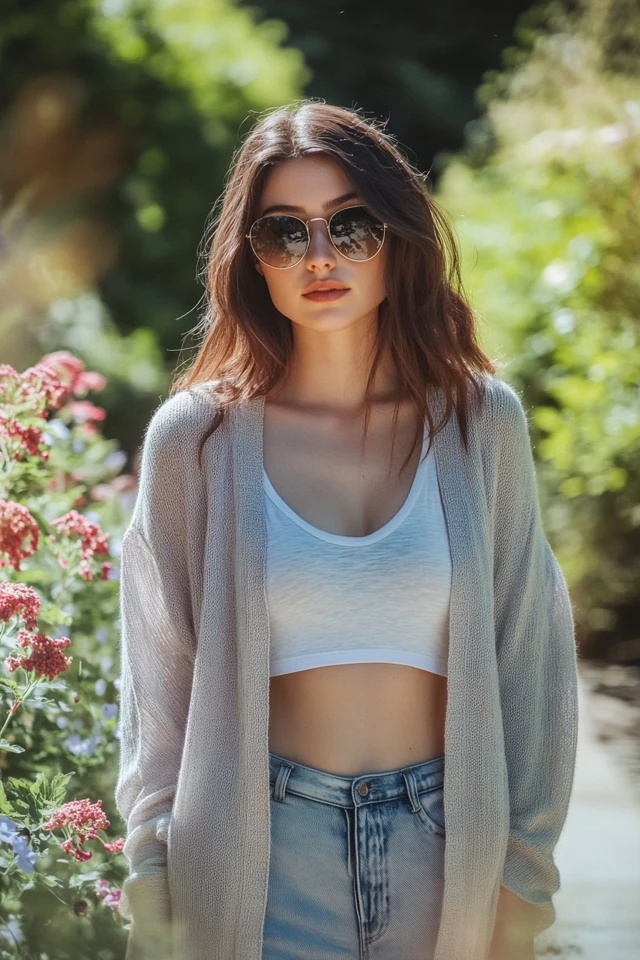
Outfit formulas for sunny but cool days
- Casual: open-front cotton cardigan, fitted tank, high-waisted jeans, sneakers.
- Office: button-front cardigan over a blouse, tailored trousers or a pencil skirt, loafers.
- Brunch: cropped cardigan over a midi dress, sandals.
- Evening: long cardigan over a fitted tee and slim pants, ankle boots.
- Coast: linen-blend cardigan over a tank and shorts, or over a sundress.
If the temperature swings further, a sleeveless layer can pair with a cardigan; compare lightweight vests for sunny yet chilly spring days.
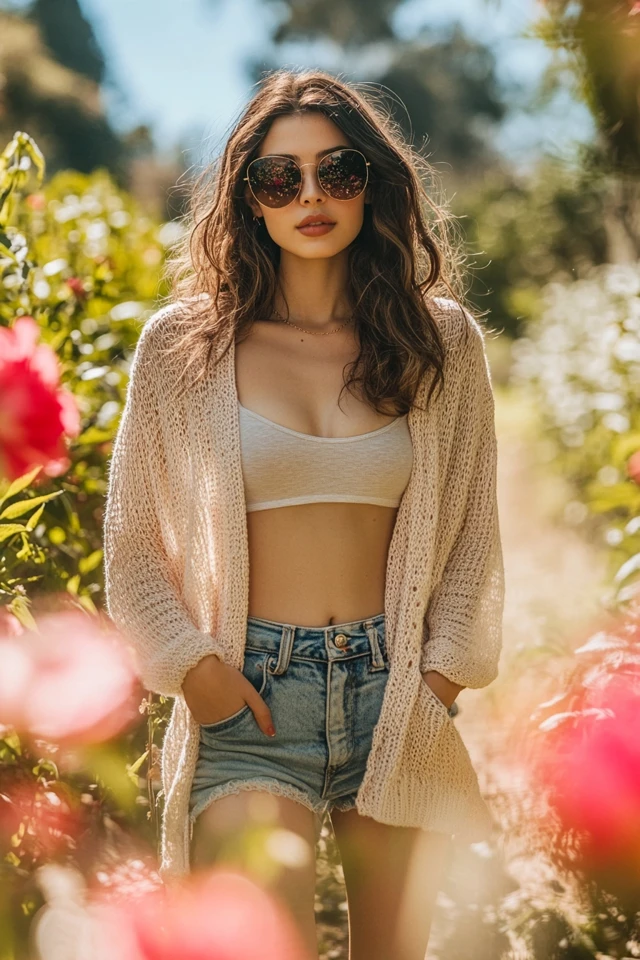
Can you wear a cardigan in hot weather?
Yes, if the knit is open and thin. For cardigans for hot weather, look for linen, fine cotton or crochet-style knits with visible airiness, and short or elbow-length sleeves. Carry it for air-conditioned rooms and evenings, and tie it at the waist or drape it over your shoulders when you warm up. Dark, dense knits hold more heat than pale, open ones.
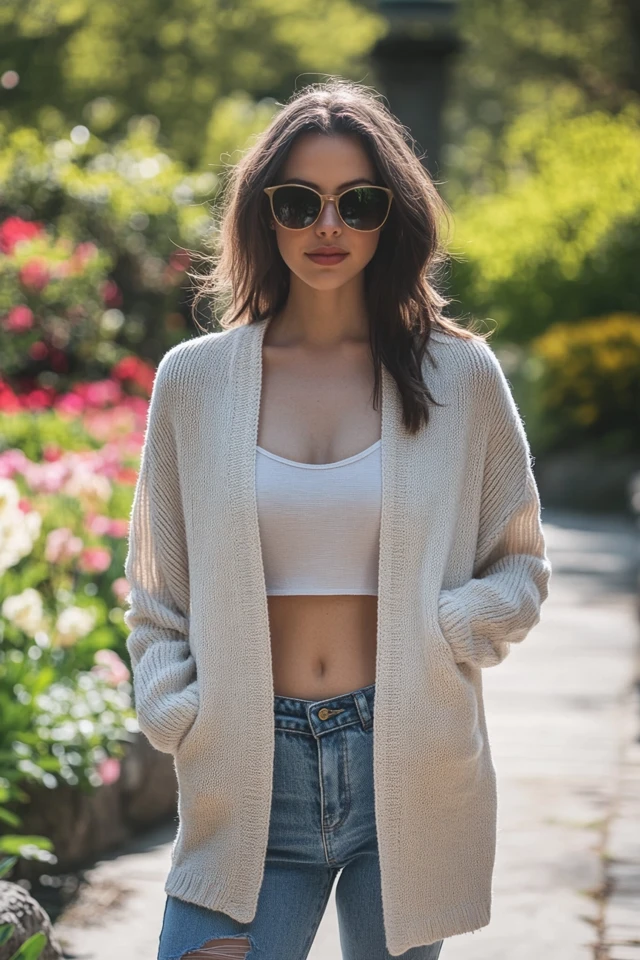
What to check before you buy
- Shoulders: the seam should sit where your shoulder ends. A cardigan that pulls there is a fit problem, not a you problem.
- Length: cropped suits shorter torsos and high waists; long suits slim bottoms. Pick based on what you wear underneath most often.
- Color: beige, gray and navy go with almost everything. Soft pastels and earthy tones work if most of your wardrobe is neutral.
- Details: ribbed hems and fine textured knits add interest without weight.
- Layering: try it over your usual tops. If it bunches at the sleeves or underarms, the knit is too thick.
If you want a print, there is lightweight floral cardigans for a spring breeze, and for wear beyond spring see lightweight cardigans for year-round comfort.
How do you care for a lightweight cardigan?
Check the label first. Many cotton cardigans take a gentle machine cycle, while silk blends and fine wool often prefer hand washing. Dry flat on a clean towel, because hanging stretches wet knits. Store folded in a drawer or on a shelf, away from direct sun.
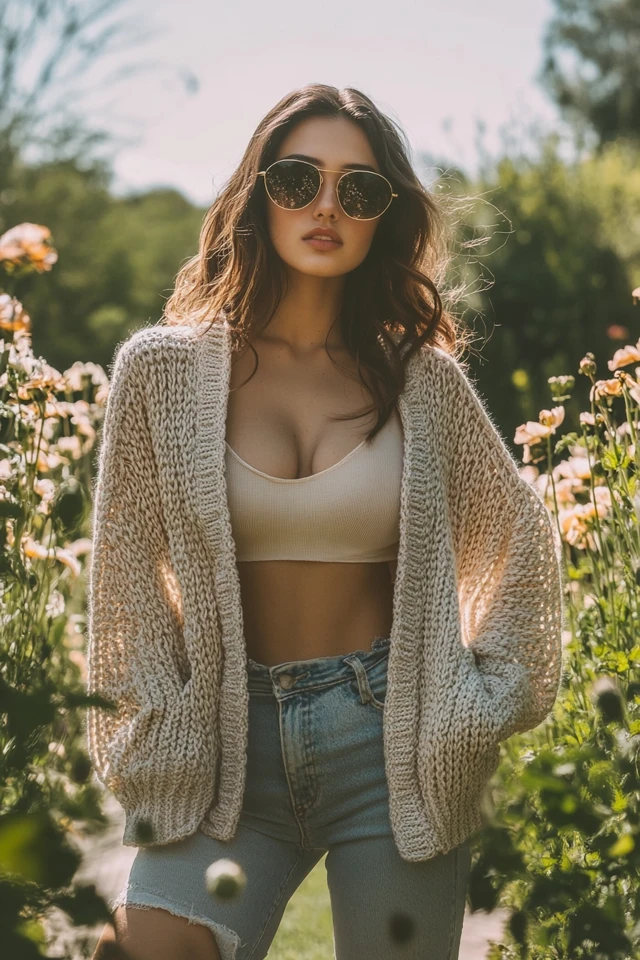
Frequently asked questions
What is the best lightweight cardigan?
The best one is the thin knit you will actually layer: for most people a cotton or fine merino open-front cardigan that fits at the shoulders and skims the hip. Choose the fiber by climate and the length by what you wear underneath.
What is a lightweight cardigan called?
Shops often label them as thin-knit, fine-gauge or summer cardigans. Open-front versions are sometimes called drape-front cardigans, and very short ones are called cropped cardigans or shrugs.
What are some good cardigans for hot weather?
Look for airy linen, thin cotton or open crochet knits in light colors with short or three-quarter sleeves. They add a layer for air-conditioning and evenings without trapping heat.
What are some good long lightweight summer cardigans?
Long, open-front styles in linen blends or fine cotton hold up best in warm weather, because they drape without clinging. Pair them with slim bottoms or a fitted dress to keep the shape balanced.
Filed under Weather Style