Peasant and Boho Tops for Warm Early Fall Afternoons
- Words by
- Julio Arco
- Published
- Reading
- 4 min
For warm early fall afternoons, pick a loose, lightweight top in cotton, linen or a soft viscose, with sleeves that stop at the elbow or three-quarter length. Peasant and boho tops do this well: the gathered neckline and relaxed body let air move, and the sleeve gives you coverage when the breeze turns.
Below: what these tops are called, how to choose sleeve length and fabric, how to make them flattering, and what to wear them with as the weather shifts.
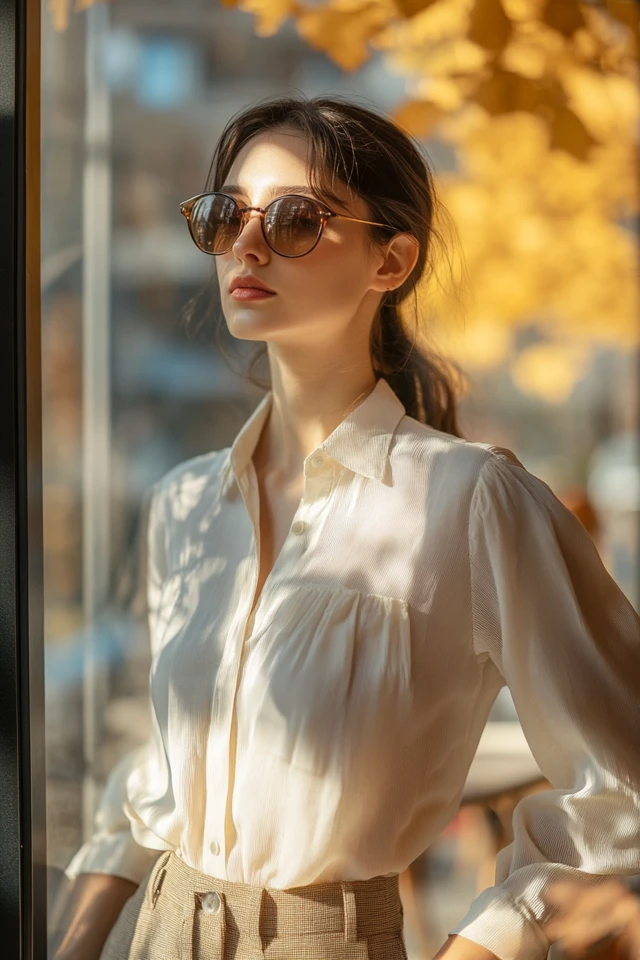
What are peasant tops called?
The classic peasant top is also called a peasant blouse. Related names include bohemian blouse, gypsy top, smocked top and tunic, depending on length. What they share is a loose cut, gathered or elasticized neckline, and fuller sleeves, often with embroidery, lace or smocking.
The style has a documented fashion history. The FIT exhibition blog on Yves Saint Laurent notes that his exotic essentials included peasant blouses, tunics, pajama sets and harem pants, which places the look firmly in the 1970s mix of folk-inspired dressing.
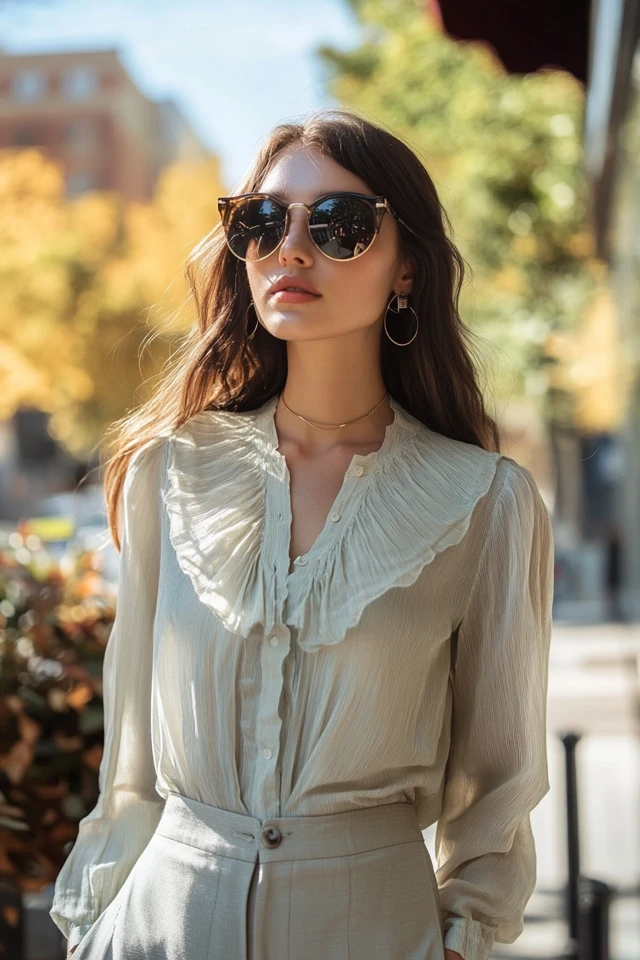
Which sleeve length works for early fall?
Short sleeve peasant and boho tops
Short sleeve peasant and boho tops are the easiest choice for the warmest afternoons. A puffed or flutter sleeve keeps the arm free, and you can add a cardigan once the sun drops. They suit anyone who runs warm.
Long sleeve peasant and boho tops
Long sleeve peasant and boho tops make sense for mornings and evenings that start cool. Look for sleeves that gather at the wrist or flare gently, and choose a thin weave so the top stays breathable. Pushing the sleeves up to the elbow is an easy fix when the afternoon heats up.
Three-quarter sleeves
These are the middle option and, for early fall, probably the most useful. They cover the forearm lightly and show the wrist, which keeps the look open rather than heavy.
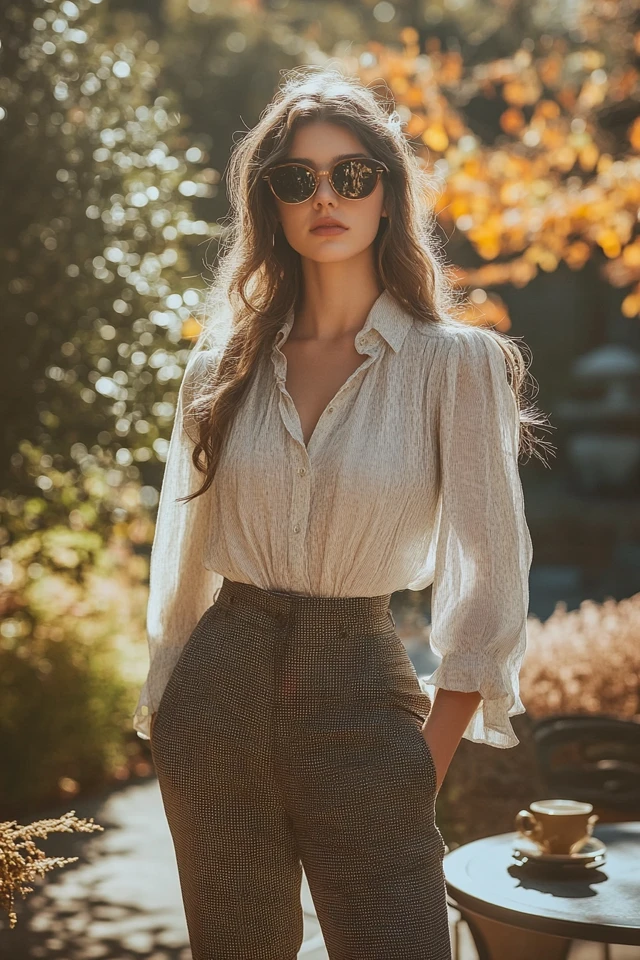
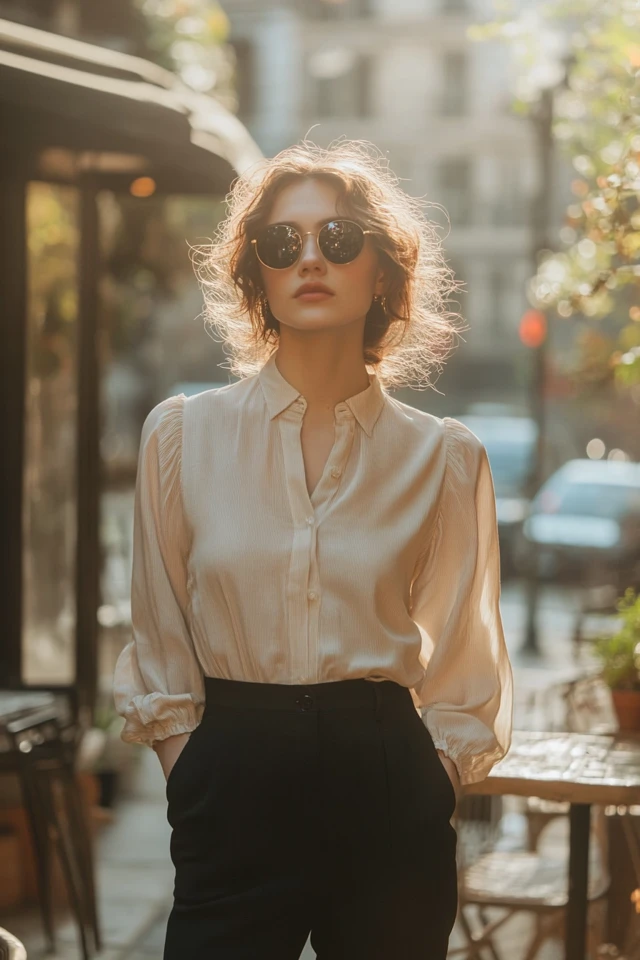
Which fabrics feel best?
Cotton, linen and cotton gauze are breathable and soften with washing. Viscose and rayon drape more, which gives the sleeve a fluid fall. Through the lens of evidence-based design, I'd pick the softer, slightly textured weave over a shiny one for daytime, because texture changes how a color reads: a matte cotton in rust looks warmer and calmer than a glossy satin in the same shade.
Check the neckline fabric too. Smocking and elastic should feel snug without digging in, and a thin weave benefits from a camisole underneath if it turns sheer in sunlight.
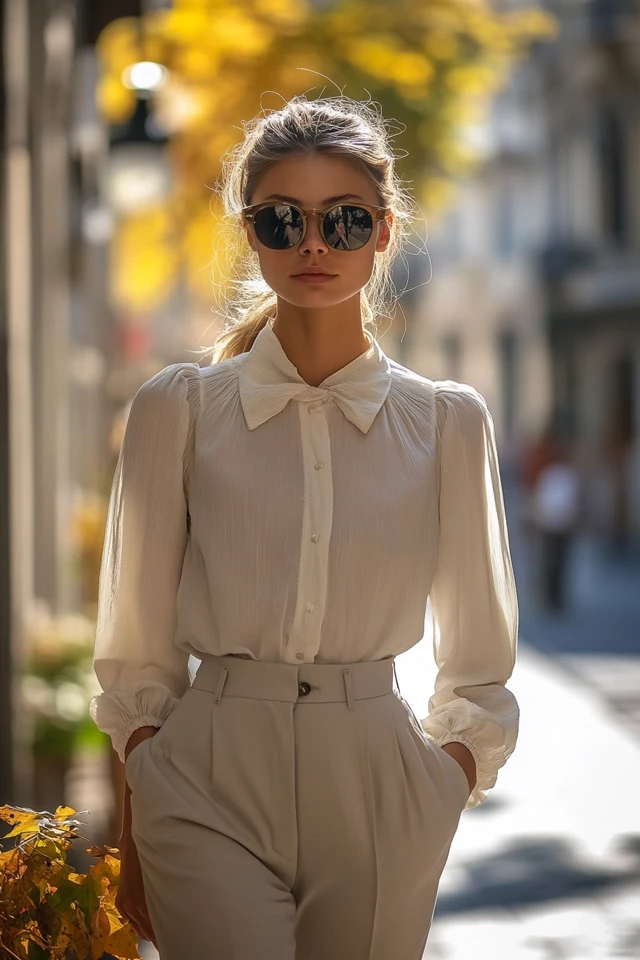
Are peasant tops flattering?
Usually yes, if you pay attention to where the fullness sits. The volume is concentrated at the sleeve and neckline, so the eye goes to the shoulders and collarbone. A top that pulls at the shoulders or gapes at the neck is a fit problem, not a you problem.
- Petite frames: choose a shorter hem or tuck the top into high-waisted pants so the fabric does not swallow your height.
- Curvy figures: a smocked or tie waist, or a slight A-line, defines the middle without clinging.
- If you want less volume on top, pick a narrower sleeve and keep the fullness in the body, or the reverse.
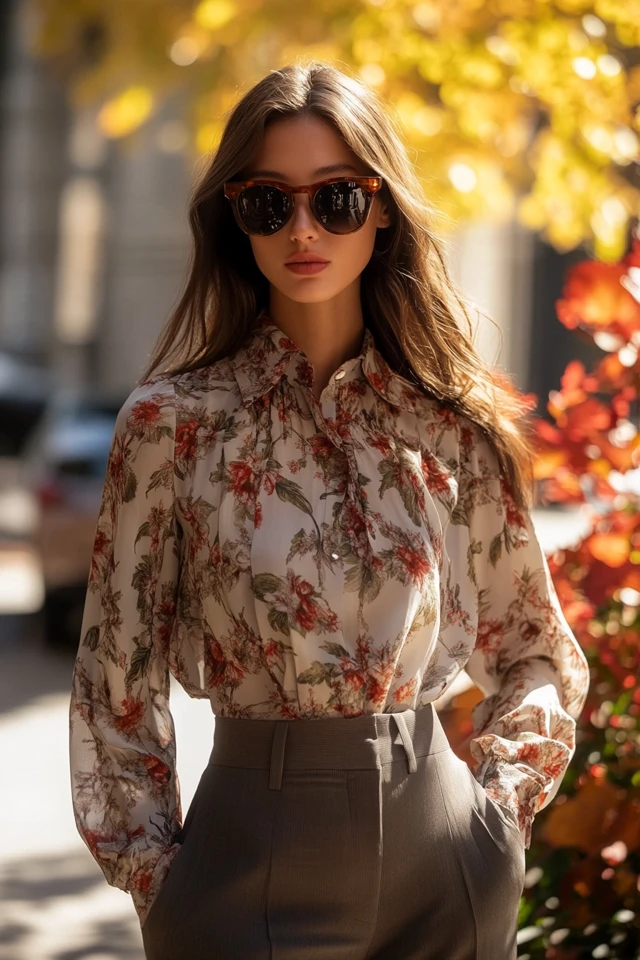
Lace, crochet, floral and ruffle details
Details decide whether a top reads casual or dressy. Crochet and lace insets feel romantic and lightweight. Historically, lace had a budget alternative: the FIT fashion timeline notes that Irish crochet was a good alternative for those who couldn't afford lace.
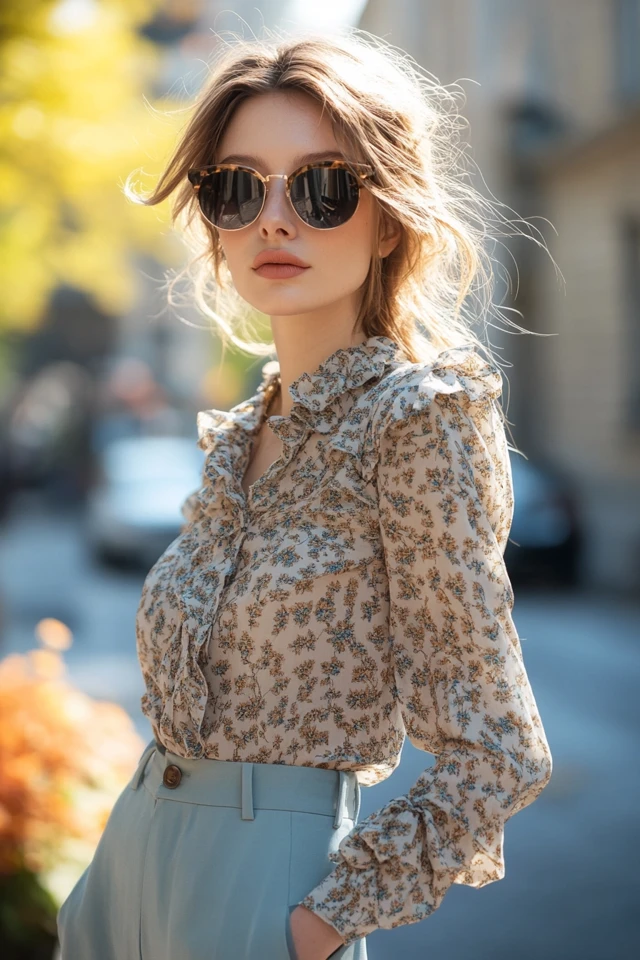
Ditsy florals and small embroidery work well in earthy colors such as rust, olive, cream and caramel, which suit the light of early fall. Ruffles near the neckline are best kept to one per top. If the sleeve is busy, keep the rest of the outfit plain.
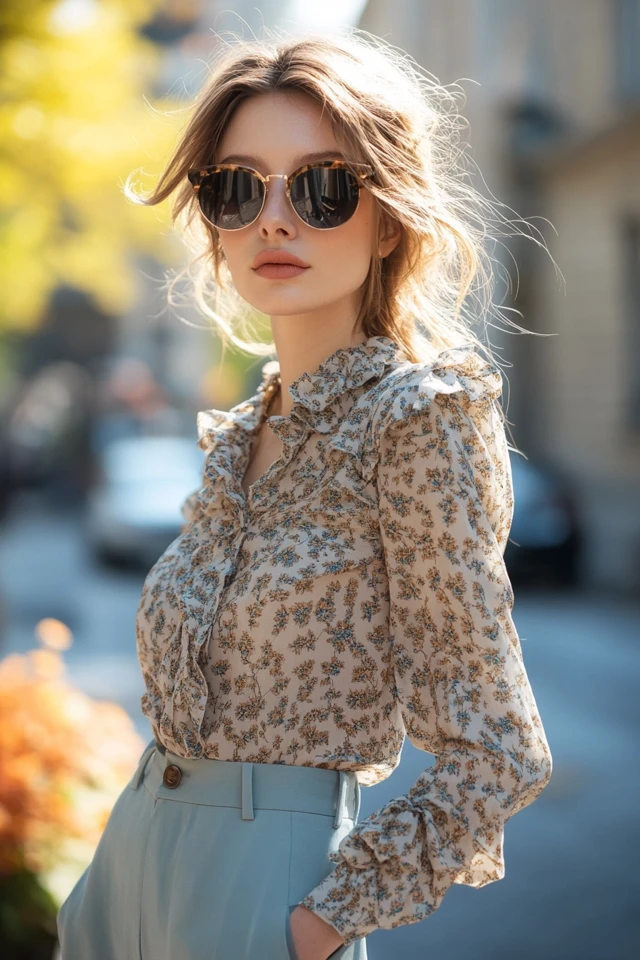
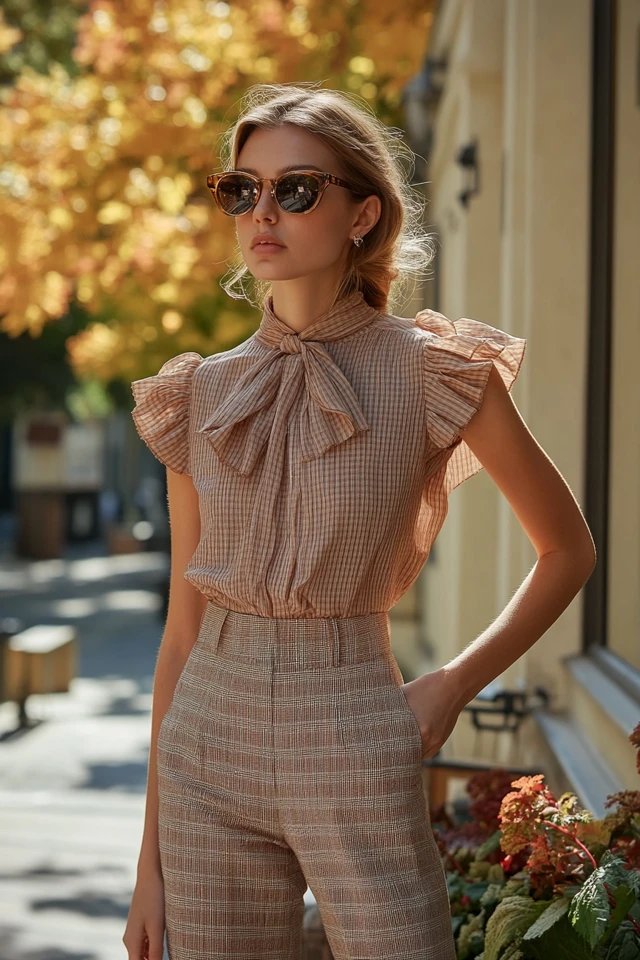
Plus size peasant and boho tops
Plus size peasant and boho tops work well because the cut is relaxed by design. Look for a sleeve opening with enough room that it does not squeeze the upper arm, a neckline with some stretch, and a hem that falls past the hip or can be tucked. Check the size chart for bust and sleeve measurements rather than relying on the label, since cuts vary by brand.
How to style them as the weather shifts
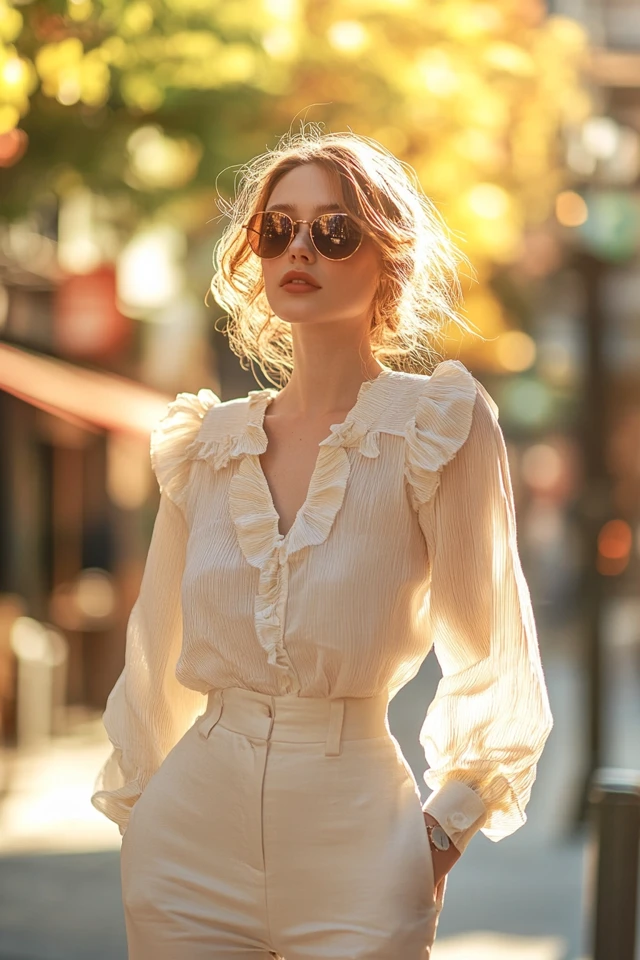
Pair a peasant top with straight or wide-leg jeans and ankle boots for weekends, or with high-waisted trousers and a lightweight blazer for the office. For a dressier evening, try a midi skirt and a small heel. When the breeze picks up, a denim jacket or cardigan covers the sleeves without crushing them.
For more ideas, see these breezy cotton blouses for warm, dry weather, this guide to lightweight bohemian dresses, and these lightweight linen shirts. Once nights cool down, lightweight sweaters layer well over a fitted top, though a voluminous sleeve needs a roomy armhole.
Where to find bohemian peasant blouses
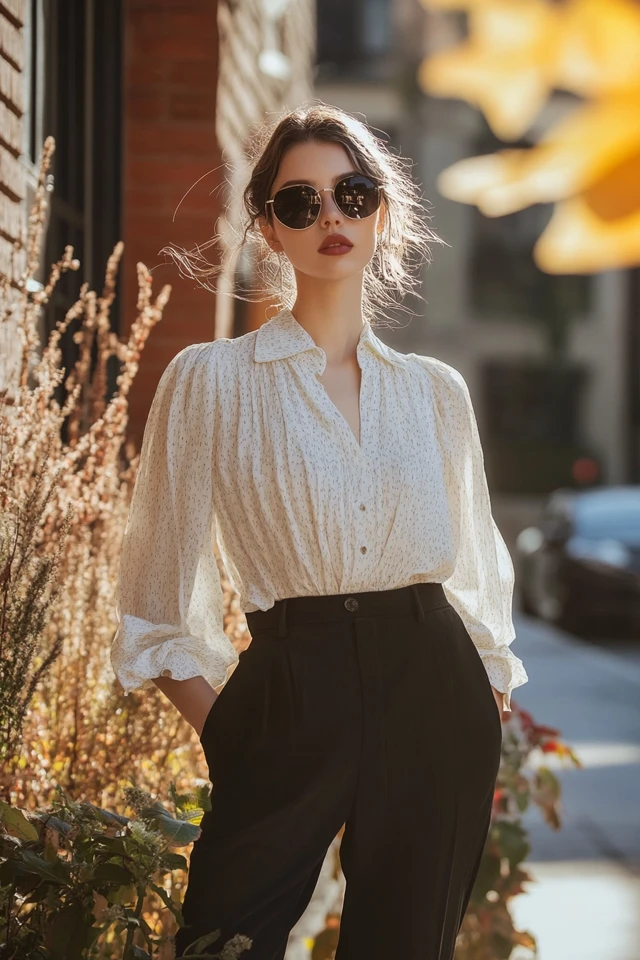
Department stores, boutiques, vintage and resale shops and independent makers all carry them. Resale shops are good for vintage boho tops with sleeves, since older cotton and embroidery often hold up well. Before buying, check fabric content, sleeve width and whether the top is lined.
Care so the fabric lasts
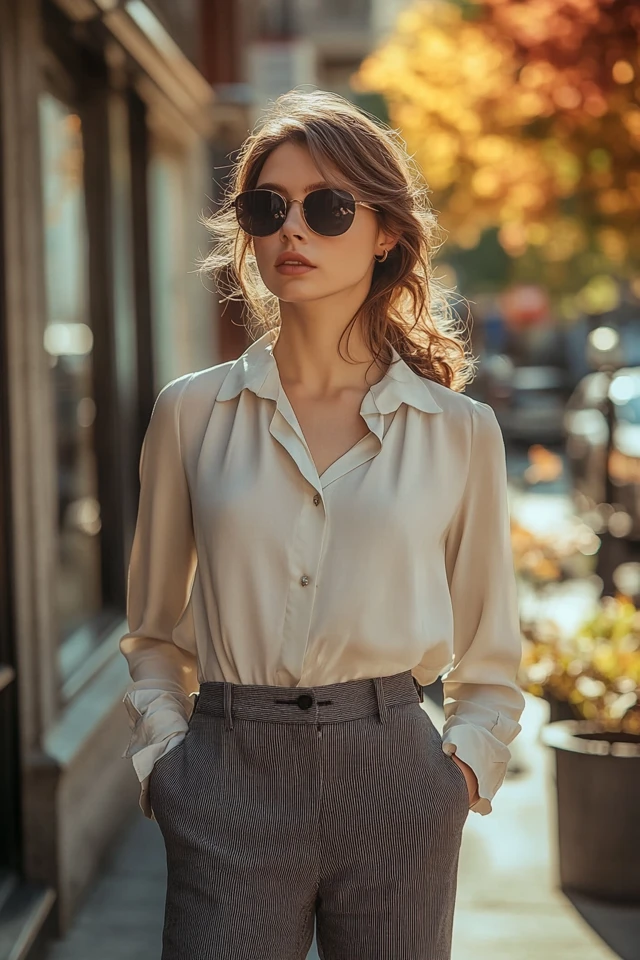
- Wash on a gentle cycle or by hand, and check the care label first.
- Use low heat on cotton and linen, and steam embroidered or smocked areas instead of pressing them flat.
- Store on padded hangers or folded, and spot clean small marks with mild soap.
Frequently asked questions
Where can I find bohemian peasant blouses?
Boutiques, department stores, resale and vintage shops and independent makers all sell them. Check the fabric content and sleeve width before buying.
What are peasant tops called?
They are usually called peasant blouses, and sometimes bohemian blouses, smocked tops or tunics when longer. The common features are a gathered neckline and fuller sleeves.
Are peasant tops flattering?
Often, yes, because the volume sits at the sleeve and neckline. Choose a fit that sits right on the shoulders and add a waist tie or tuck if you want more shape.
Can peasant tops work for cooler evenings?
Yes. Layer a long sleeve version under a cardigan or denim jacket, and choose a roomy armhole so the sleeves do not bunch.
Filed under Weather Style