Classic Knit Sweater Styles for Lightweight Fall Wear
- Words by
- Julio Arco
- Published
- Reading
- 4 min
For fall, the classic knit sweater styles worth owning are a crewneck, a V-neck or cardigan, a mock or turtleneck, and one textured knit such as a cable. In a fine gauge (a thin, close knit), each one layers easily and keeps you comfortable when mornings are cool and afternoons are mild.
Below are the main types of knit sweaters, what each does for your proportions, and how to choose among them.
Which classic knit sweater styles should you know?
Crewneck
A classic crewneck sweater is the easiest place to start. The round, close neckline works under a jacket, over a collared shirt, or alone with jeans. In a thin merino or cotton knit it stays slim enough to layer without bulk.
Check the shoulder seam: it should sit where your shoulder ends. A crewneck that pulls across the upper back is a fit problem, not a you problem.
V-neck
A V-neck opens the chest and lengthens the line of the neck, which is why it suits petite frames and anyone wearing a shirt collar underneath. Keep the V shallow if you want a tidy office look.
Cardigan
A cardigan is a sweater and a light jacket in one. Buttoned, it reads like a V-neck. Open, it adds a vertical line that slims the torso. Fine-gauge versions are the best fall layer for indoor spaces that run warm.
Turtleneck and mock neck
A turtleneck folds high at the neck, and a mock neck sits lower and flatter. Both replace a scarf on breezy days. If a full turtleneck feels tight, a mock neck gives most of the warmth with less fuss.
Cable knit and fisherman
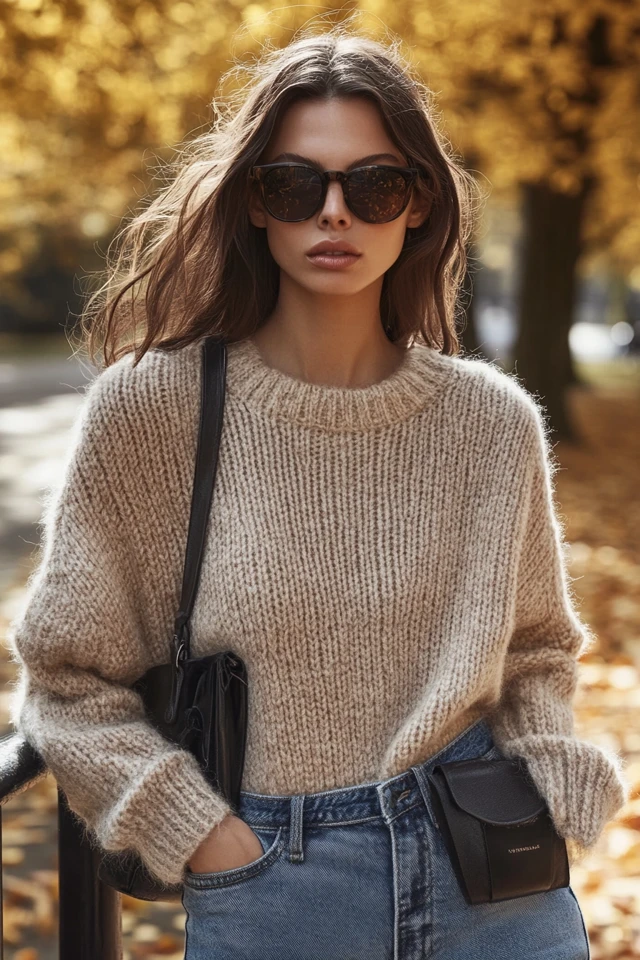
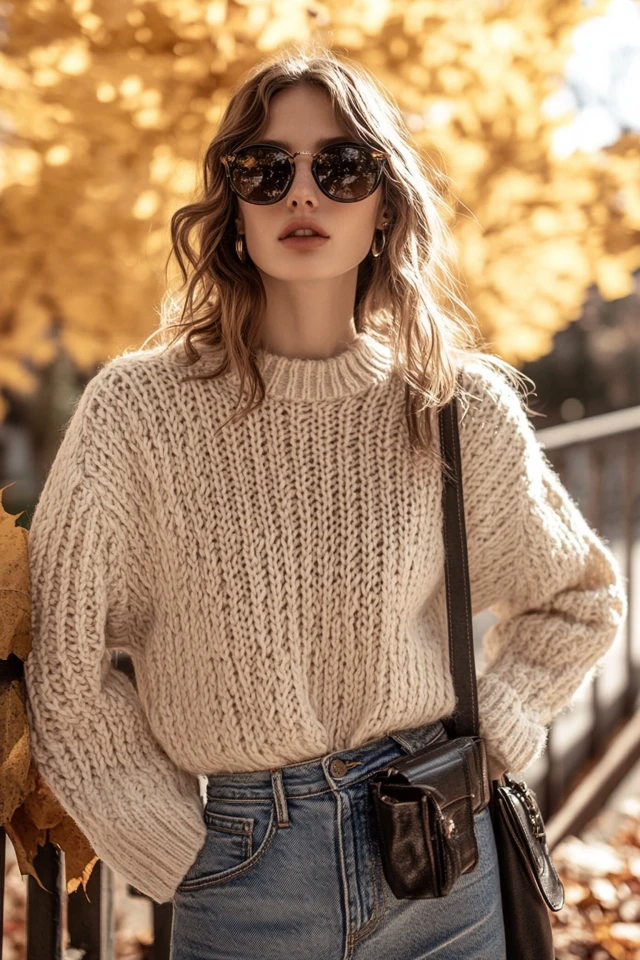
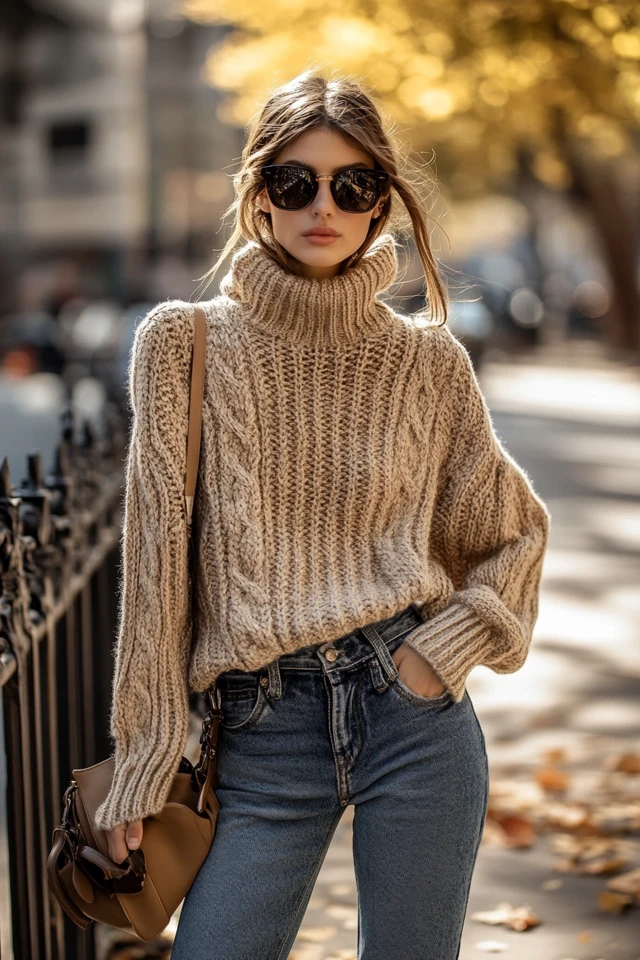
A cable knit sweater has raised, twisted ropes of yarn that create shadow and depth. Through the lens of evidence-based design, I'd say texture changes how a color reads: the same cream looks softer and deeper in a cable than in a flat knit, because the ridges break up the light. Cables add visual weight, so choose a thinner yarn if you want a lightweight result.
How do you choose a fabric for lightweight fall sweaters?
Merino wool, cotton and cashmere blends are the usual choices. Merino is smooth and holds warmth without heft, cotton is breathable and good for warm early fall days, and cashmere blends feel softest against the skin.
Hold the sweater up before buying. If you can see light through the knit, it is very fine and will layer well. If it feels stiff or scratchy at the neck, you will probably stop wearing it.
Which colors work best?
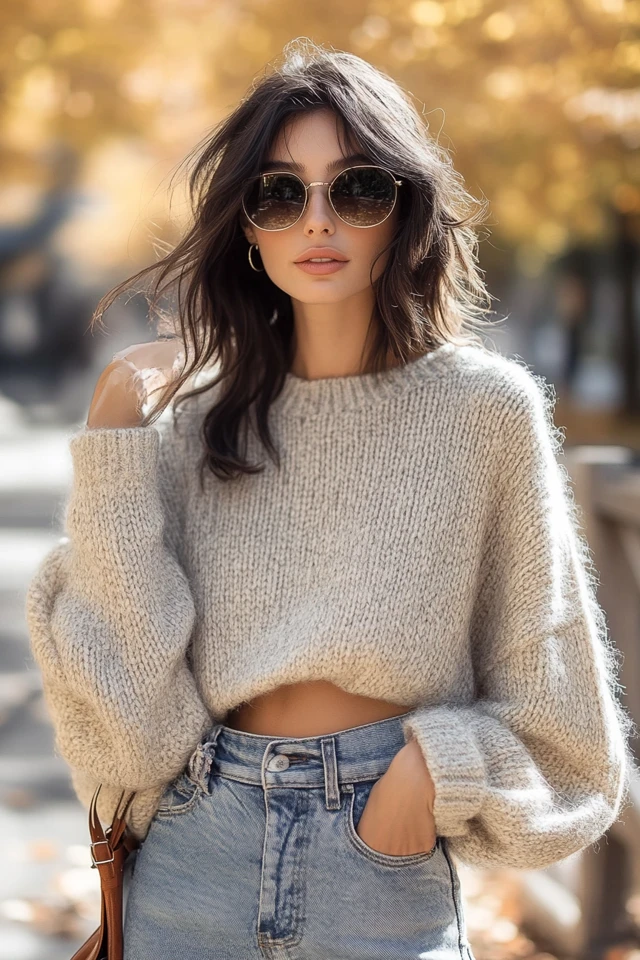
Neutrals such as cream, beige, gray, navy and charcoal are the base of the essential sweaters every wardrobe needs, since they pair with almost everything. Earthy shades like olive, camel and rust suit the season and sit well next to denim.
For something brighter, try jewel tones such as emerald or burgundy for evenings. Pastels give a lighter contrast to the usual fall palette. Hold a color near your face in daylight: if your skin looks tired next to it, move it to the lower half of the outfit.
Classic knit sweater styles for women and men
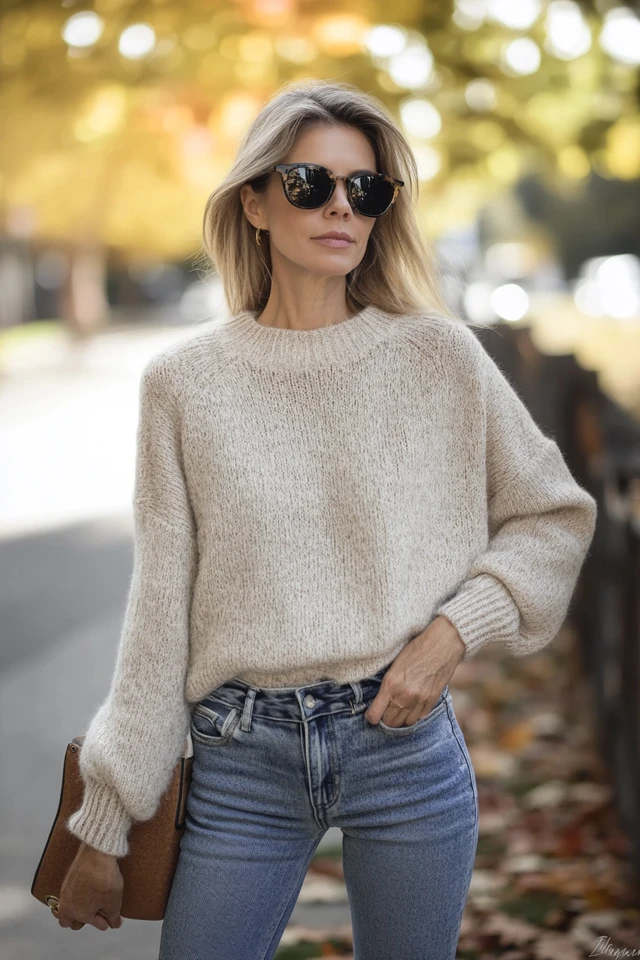
The same shapes work for everyone, so choose by proportion rather than gender label.
- Petite frames: cropped or fitted knits and V-necks keep the line long.
- Curvy figures: a slight waist shape, side slits or a tunic length gives definition.
- Athletic builds: ribbing or cables add softness through the shoulders, and a looser fit helps.
- Tall frames: longline sweaters and slightly longer hems use the extra height well.
For a first purchase, a navy or gray crewneck works for both men and women and goes from weekend to office.
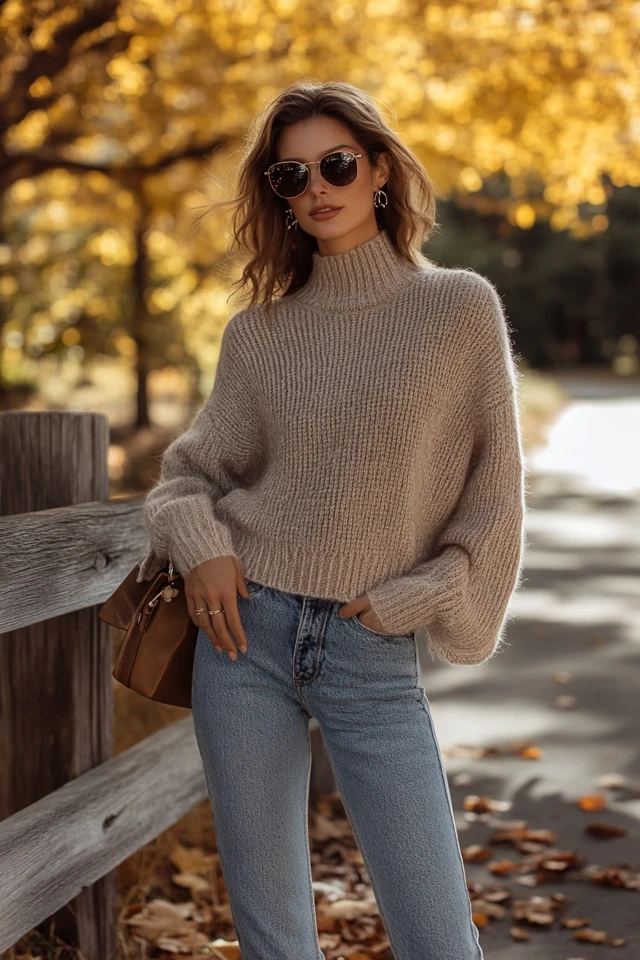
How to style a lightweight sweater
- Layer a crewneck or V-neck over a button-down shirt, with the collar and cuffs showing.
- Put a cardigan over a thin turtleneck for a tonal, two-layer look.
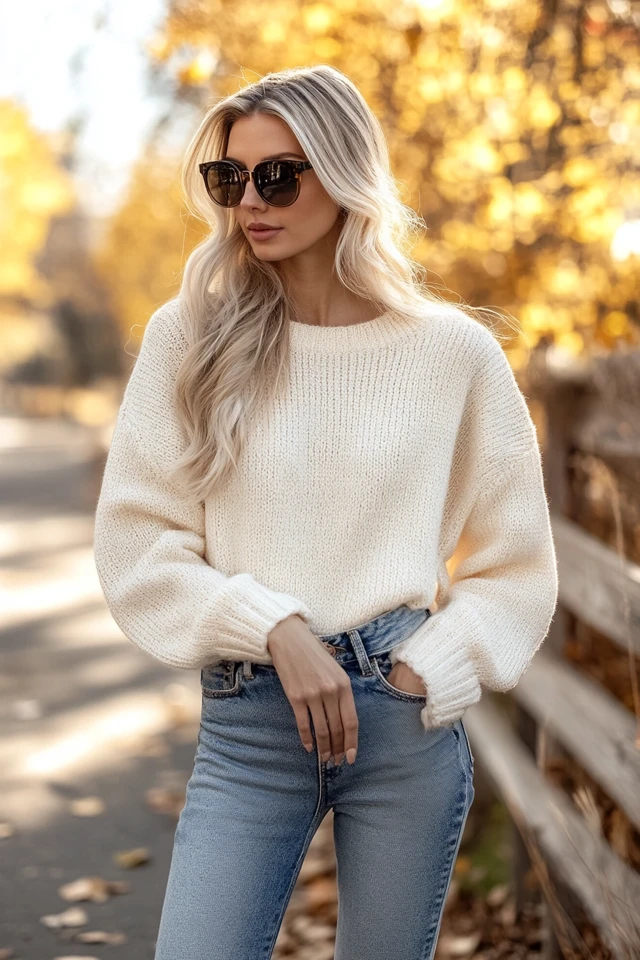
- Balance an oversized knit with slim trousers or straight jeans.
- Pair ribbed or cable knits with smoother fabrics like corduroy or leather for contrast.
For more ideas, see casual knit sweater looks, velvet sweater outfits or crochet sweater styling. A soft henley is a good thin layer under any of them.
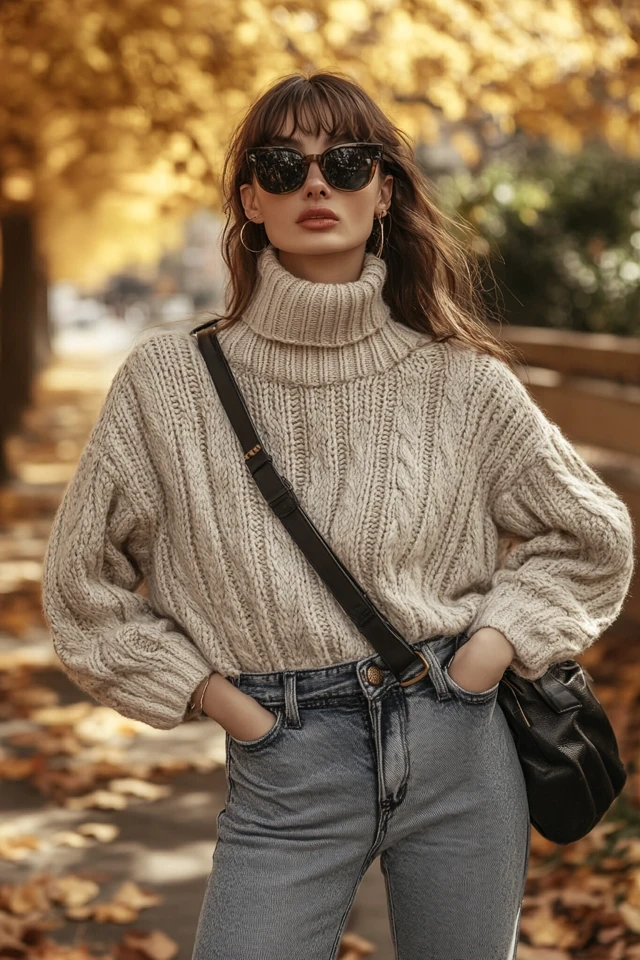
Trendy knits versus classics
Ribbed knits, oversized fits and colorblock panels come and go. A neutral crewneck or V-neck stays useful for years, so spend more there and experiment with trends in cheaper pieces.
How should you care for knit sweaters?
Hand wash or use a gentle cycle in cold water, then dry flat to avoid stretching. Fold sweaters in a drawer instead of hanging them, since hangers distort the shoulders.
If you get a stain, treat it quickly. The University of Georgia Extension notes that stains set by heat will be difficult to remove, so avoid the dryer until the mark is gone. The same page warns that ammonia damages silk and wool, so keep it away from wool knits.
Frequently asked questions
What are some popular styles of knitted sweaters?
Crewneck, V-neck, cardigan, turtleneck, mock neck and cable knit are the most common. Fisherman sweaters are a heavier, textured relative of the cable.
What are the different types of knit styles?
Sweaters are often grouped by neckline (crew, V, turtleneck), by front opening (pullover or cardigan) and by texture (plain, ribbed, cable). Gauge, meaning how fine the knit is, also changes how a sweater wears.
Are lightweight sweaters warm enough for fall?
Usually yes for mild days. On colder ones, add a jacket or scarf over the knit.
How do I keep a sweater from looking bulky?
Choose a fine gauge, a fit that follows your shoulders, and slimmer bottoms to balance the volume.
Filed under Weather Style