Seasonal Capsule Wardrobe Transition: A Practical System
- Words by
- Julio Arco
- Published
- Reading
- 5 min
The simplest way to handle a seasonal capsule wardrobe transition is to keep a year-round core, add a few layers that bridge the temperature gap, and swap only a handful of pieces at each change. You do not need to start over, and you do not need a second closet full of new clothes.
Below is the system: what stays, what bridges, what rotates, and how to store what you put away.
Are capsule wardrobes seasonal?
Most are built around the seasons, but not rebuilt each time. A common approach is a core of pieces you wear in every month, plus a small seasonal group that changes. The core does the heavy lifting, which is why the swap takes an afternoon instead of a shopping trip.
Transitional pieces are the ones that sit in the middle: a medium-weight sweater, a trench, a long-sleeve tee. They keep you comfortable on a 50-degree morning and a 70-degree afternoon, and they work in the core and the seasonal group alike.

Start with year-round basics
Before you change anything, check that the core is solid. These pieces stay out in every season:
- Two or three long-sleeve tees and two button-up shirts
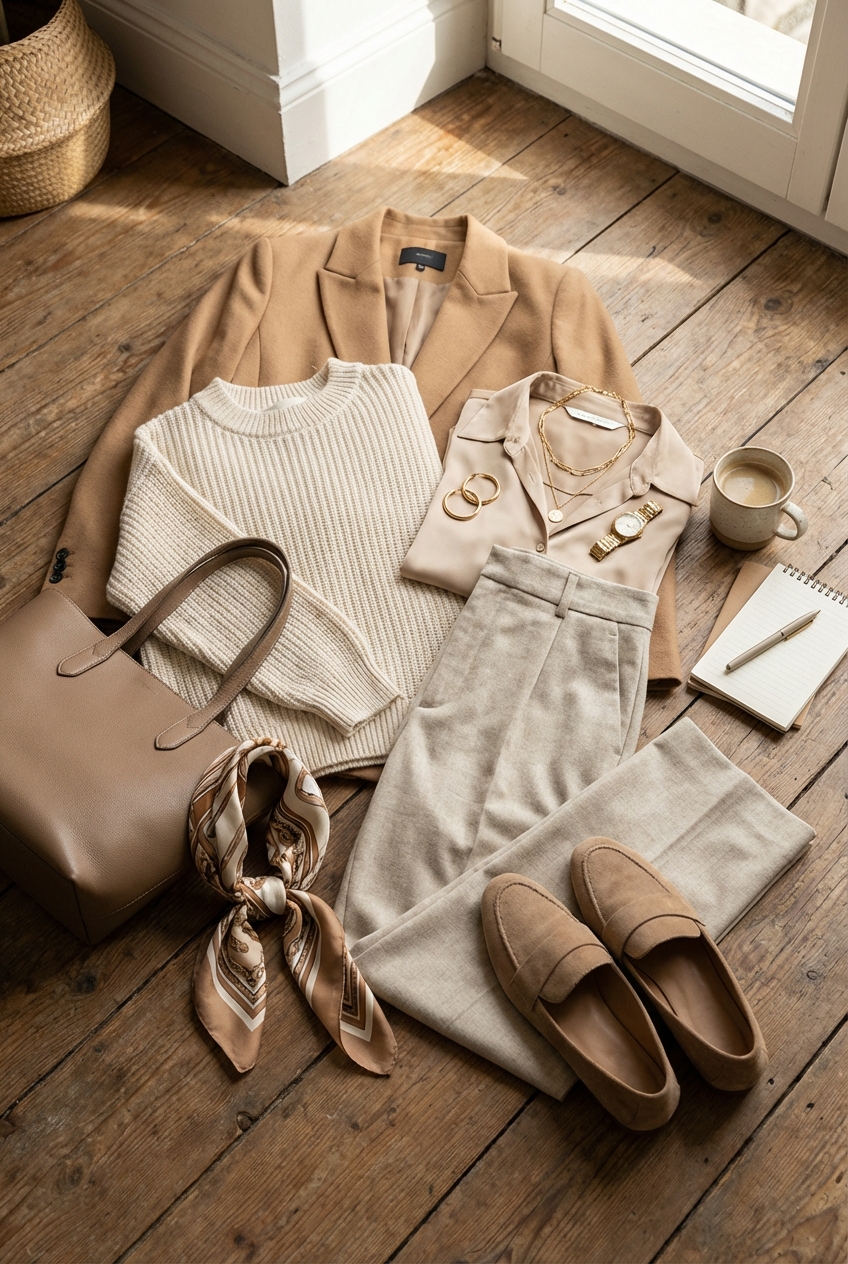
- Dark-wash jeans and tailored trousers in a medium-weight fabric
- A midi skirt or day dress in jersey or lightweight wool
- A blazer, a denim jacket and a trench coat
- White sneakers, loafers or flats, and ankle boots
Keep these in a tight palette, such as black, navy, gray, beige and white. When everything shares a base, any top works with any bottom, and a seasonal accent color slots in through a scarf or a sweater.

How do you transition a capsule wardrobe between seasons?
Work in four short steps. These capsule wardrobe transition tips apply whether you are moving into fall or into spring.
- Pull everything seasonal and try it on. Anything that no longer fits or feels right leaves the pile.
- Decide what to keep with a simple test. MSU Extension instructor Jasmine Harris-Speight suggests: "When deciding what to keep, ask yourself: Does this item hold a sentimental place in my heart? Will I miss this item if I get rid of it?"
- Name the gaps. Usually it is one or two items, such as a mid-weight layer or a closed shoe.
- Swap in the incoming season's pieces and store the outgoing ones.
If you want a deeper look at weather in between, see capsule wardrobe ideas for transitional weather.

Layer to cover the temperature swing
Layering lets one outfit run from cool morning to warm afternoon. Start with a thin base, add a mid layer you can remove, and finish with a light outer layer.
Fabric matters at the base. Howdy Health at Texas A&M notes that the layer closest to your skin should be moisture-wicking, and that cotton absorbs moisture and can keep it next to your skin. That advice is written for cold-weather exercise, so for everyday outfits treat it as a guide for very cold or active days, and use cotton or fine merino as your taste and comfort suggest.
Through the lens of evidence-based design, I'd vary texture as well as thickness. A smooth tee under a knit under a cotton-twill jacket reads as one outfit with depth, because each surface catches light differently. For more combinations, see building a capsule wardrobe for layered looks.

Choose transitional fabrics and pieces
Mid-weight fabrics are the most useful: cotton blends, jersey, fine knits, lightweight wool and denim. Very heavy knits and sheer linens belong to the seasonal group.
Good transitional pieces include:
- A trench coat for wind and light rain
- A lightweight sweater or cardigan you can tie or drop in a bag
- A fitted turtleneck, which works as a base layer or alone in mild weather
- Cropped pants that suit both boots and sandals
- A scarf in a light fabric for a pop of color without bulk

Rotate only a few seasonal pieces
Aim to rotate a small group, not the whole closet. Heavy wool coats, chunky knits and boots go out for warm months. Slide sandals, tank tops and breezy dresses go out for cold ones.
Summer to fall capsule wardrobe
Keep the day dress, add a denim jacket and white sneakers while it is warm, then swap in a blazer and ankle boots as it cools. Bring a lightweight sweater to the front and move the sandals back.
Winter to spring
Pair a lightweight sweater with tailored trousers, a trench and loafers. Move the wool coat and heaviest knits to storage once the mornings stop dipping low.

How to store seasonal clothes
Wash or clean everything before it goes away, and make sure it is fully dry. Fold knits so they do not stretch on hangers, and hang coats and blazers. Use breathable containers or cotton bags, and keep them somewhere cool and dry. Label each box by season so the next swap takes minutes.
If the sorting turns up items you will not wear again, donate or recycle them. The EPA estimated that the recycling rate for all textiles was 14.7 percent in 2018, so passing along clothes in good condition is worth the extra step.

Sample transitional capsule
A working size is roughly 20-30 pieces for the core and the current season combined, though you can go smaller or larger depending on your routine. A starting list:
- Tops: 3 long-sleeve tees, 2 button-ups, 2 lightweight sweaters, 1 turtleneck
- Bottoms: 1-2 jeans, 1-2 trousers, 1 midi skirt, 1 cropped pair
- Dresses: 1-2 day-to-night dresses, 1 long-sleeve dress
- Outerwear: denim jacket, trench, blazer, and a wool coat in cold months
- Shoes: ankle boots, white sneakers, loafers, and slides in warm months
For a related approach, see building a capsule wardrobe with seasonal versatility.

Frequently asked questions
How many pieces should a transitional capsule wardrobe have?
Many people land between 20 and 30 pieces including outerwear and shoes. Adjust the number to how often you do laundry and how varied your week is.
What colors work best for transitional dressing?
Neutrals such as navy, gray, beige and black mix with everything. Muted olive or rust through a scarf or sweater adds a seasonal note.
How do I transition shoes between seasons?
Keep ankle boots, loafers and white sneakers in the core, then add sandals in warm months. Tights or socks extend how long each pair stays useful.
Can transitional dressing work for formal settings?
Yes. A blazer, tailored trousers and polished shoes layer well with a thin knit or shirt underneath.
Filed under Capsule Wardrobe