Spring Dresses: Lengths, Fabrics and Occasion Picks
- Words by
- Julio Arco
- Published
- Reading
- 5 min
The easiest spring dress to wear well is a midi in a light, fluid fabric with a defined waist or a soft drape, in a color that sits comfortably next to your skin. From there, the occasion decides the details: sleeves and a quiet print for a wedding, a clean shape and richer color for a cocktail party, a relaxed cut for everyday.
Below you'll find how to choose length, fabric, print and color, and how to adjust each for the event on your calendar.
Which length works best: mini, midi or maxi?
Mini midi and maxi spring dresses each change your proportions differently, so pick by the occasion and by what you like to move in.
- Mini: easiest for casual days, daytime parties and warm afternoons. Pair with flats or low sandals to keep it relaxed.
- Midi: the most flexible. A hem between mid-calf and just below the knee works for work, weddings and dinners, and it suits almost any shoe.
- Maxi: the most dramatic and the best for formal garden events. Check the hem with the shoes you plan to wear, since a hem that grazes the floor in flats can drag in heels' absence.
If a dress hits you at an awkward spot, such as the widest part of the calf, a small hem change usually fixes it. That is a length problem, not a you problem.
What fabrics feel right in spring?
Spring weather swings, so look for fabrics that breathe but still hold some shape. Cotton poplin and lawn, linen blends, viscose, chiffon and light crepe all behave differently. Cotton and linen feel crisp and cool but crease. Chiffon and viscose move and drape, which softens a silhouette. Crepe gives more structure and suits cooler days or indoor events.
One caution if the day is chilly and you will be outdoors for a long time. Texas A&M's Howdy Health advises that cotton absorbs moisture and can keep it next to your skin, making you cold. That advice is written for exercise, but it is a useful reminder to put a warmer layer over a cotton dress rather than relying on the dress alone.
How do you wear floral spring dresses without looking costume-like?
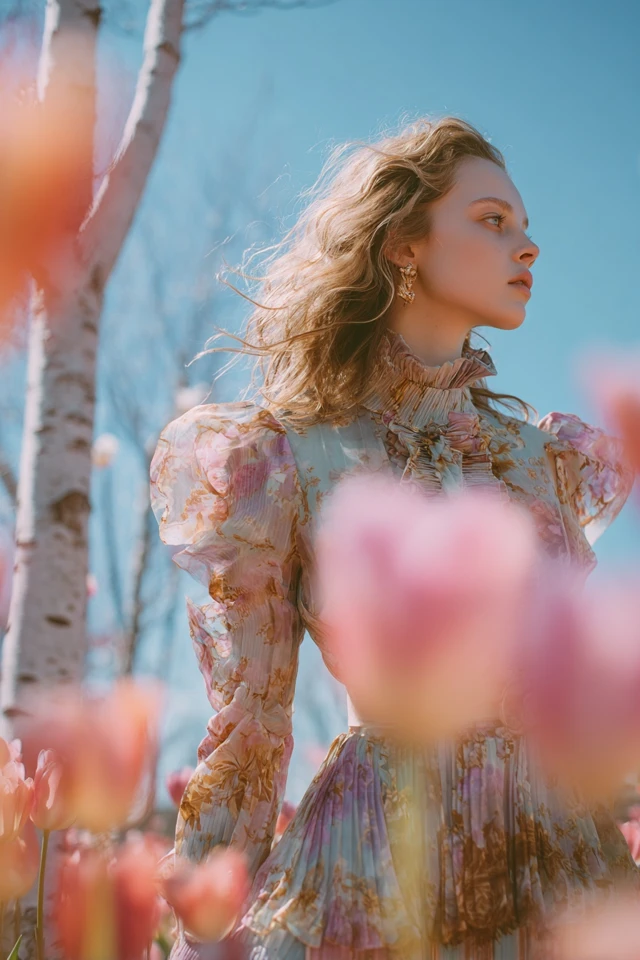
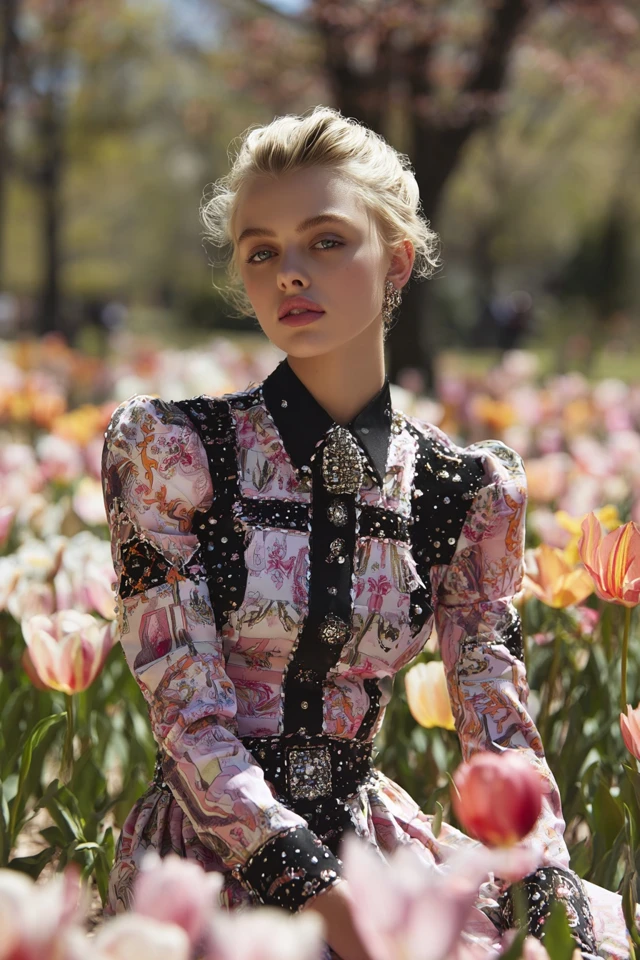
Scale and contrast do most of the work. Through the lens of evidence-based design, I'd look at print size first: small, close-together flowers read as a soft texture from a distance, while large blooms on a plain ground read as a bold pattern. Low contrast between flower and background feels calmer and more formal. High contrast feels playful.
Keep everything else quiet. Choose one accessory color pulled from the print, simple shoes and minimal jewelry. If the print is busy, a plain cardigan or blazer helps it sit better on the body.
For more print-led ideas, see spring cottagecore occasionwear and spring romantic occasionwear.
What to wear as spring dresses for a wedding
Spring dresses for wedding guests should respect the invitation first. Read the dress code, then work backward.
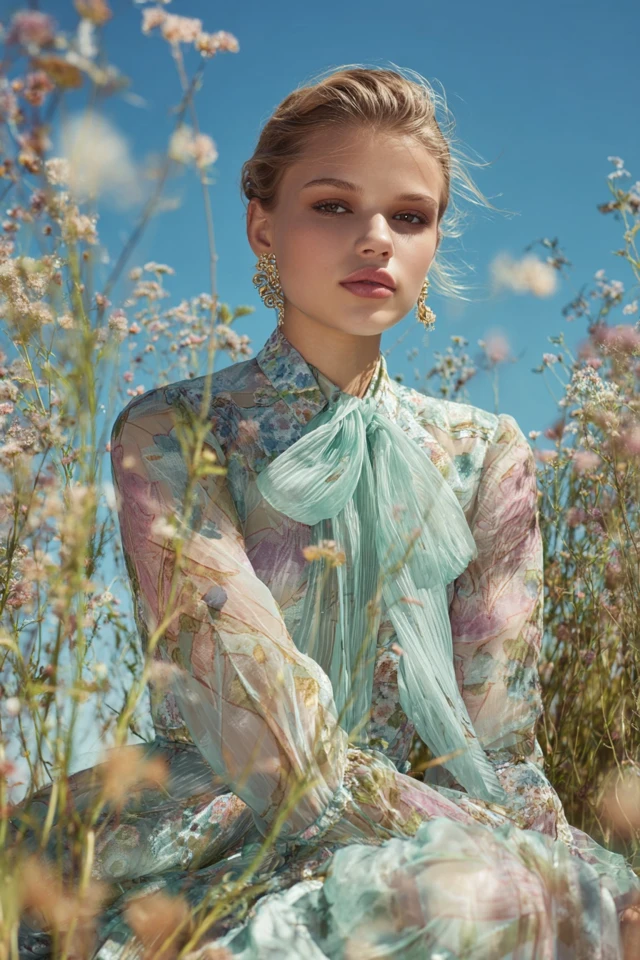
- Garden or daytime: a midi or maxi in a soft print or pastel, with sleeves or a light wrap for shade and breeze.
- Formal evening: a longer hem, a heavier drape and deeper color.
- Beach or coastal: lighter fabrics, flat or wedge shoes that will not sink into sand or grass.
Avoid white, ivory and anything close to a bridal shade. Spring dresses with sleeves are a practical choice here, since they cover your shoulders for a ceremony and keep you comfortable when the temperature drops. Flutter, bishop and three-quarter sleeves all keep the look light.
For a coastal ceremony, coastal spring inspiration has more ideas.
Spring cocktail dresses: how dressy should you go?
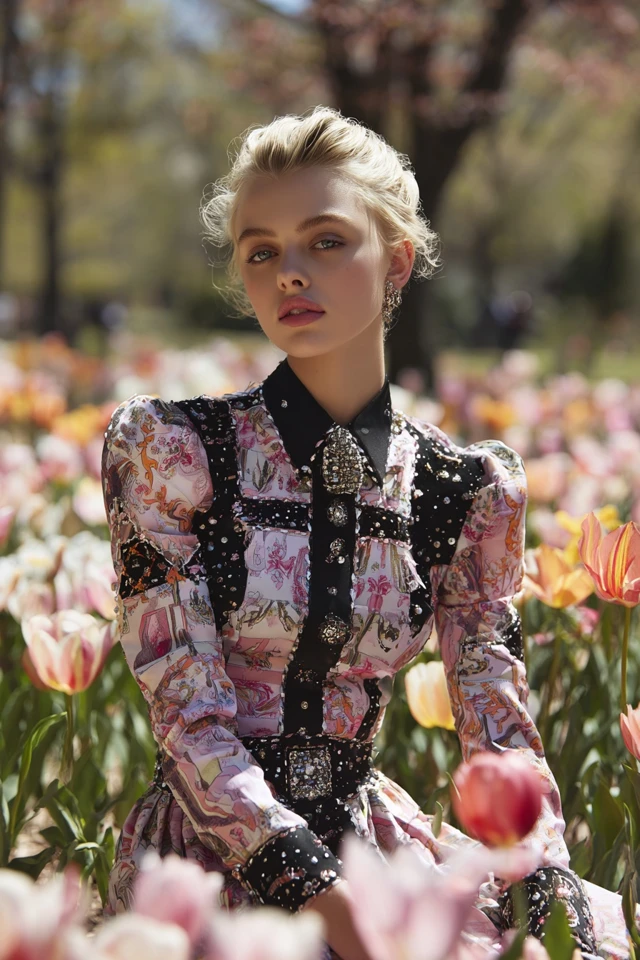
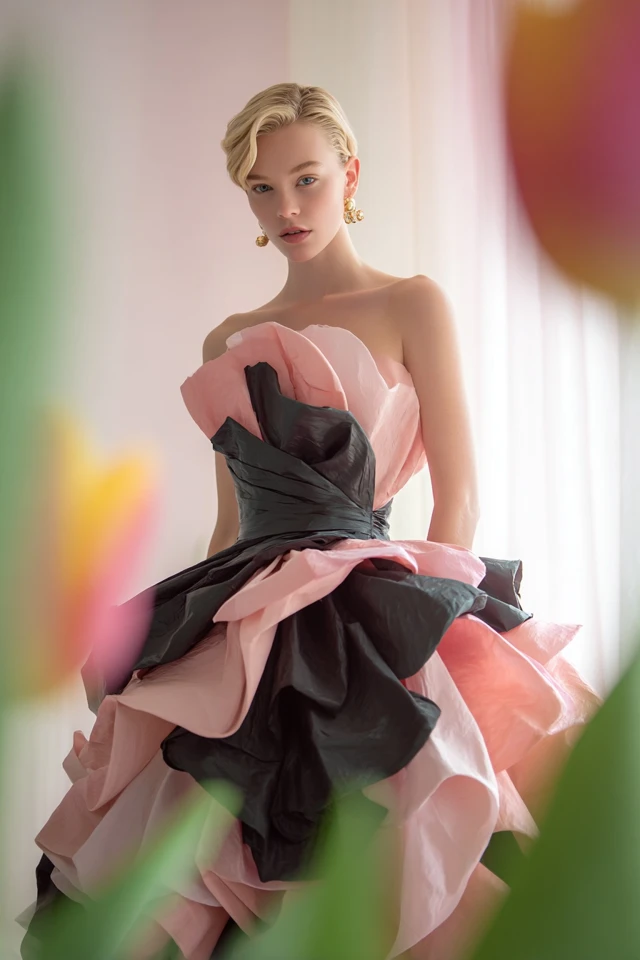
Spring cocktail dresses sit between daytime and black tie. Knee-length or midi is the classic range. Look for a cleaner line and a fabric with a little sheen or structure, such as satin-finish crepe, jacquard or taffeta, and let the color carry the season. Lilac, green, coral and deep blue all read clearly as spring without being heavy.
As an architect trained in evidence-based design, I'd treat the neckline as the first thing the eye reads. Keep the neckline simple and add interest elsewhere, with earrings or a belt, instead of everywhere at once.
You can also browse spring chic occasionwear and elegant spring outfits for more polished combinations.
How do you style casual spring dresses for women?
Casual spring dresses for women work best with relaxed layers. A shirt dress or a cotton midi pairs well with a denim jacket, a light knit or a trench. Add sneakers, loafers or flat sandals, and a simple bag.
Keep a spare layer in your bag, because spring afternoons often cool quickly. A scarf or thin cardigan adds warmth and changes the look without changing the dress.
Which colors suit spring dresses?
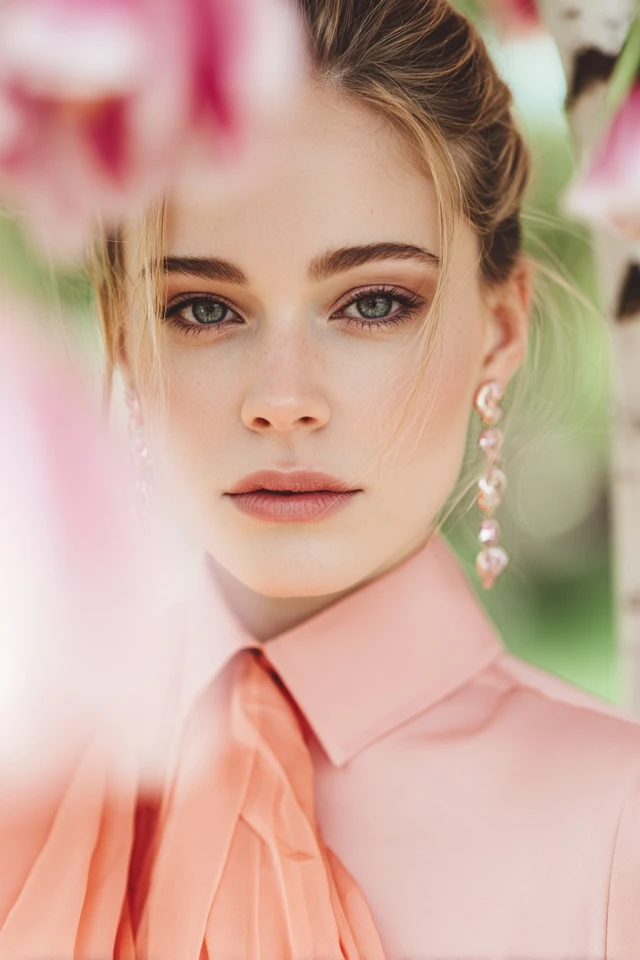
Pastels such as blush, mint and lilac feel soft and low contrast. Brighter shades such as coral, cobalt and emerald feel more energetic. Colors read differently next to skin, so hold a dress up near your face in daylight before you decide. If it makes your skin look tired, try a shade a step lighter, warmer or cooler.
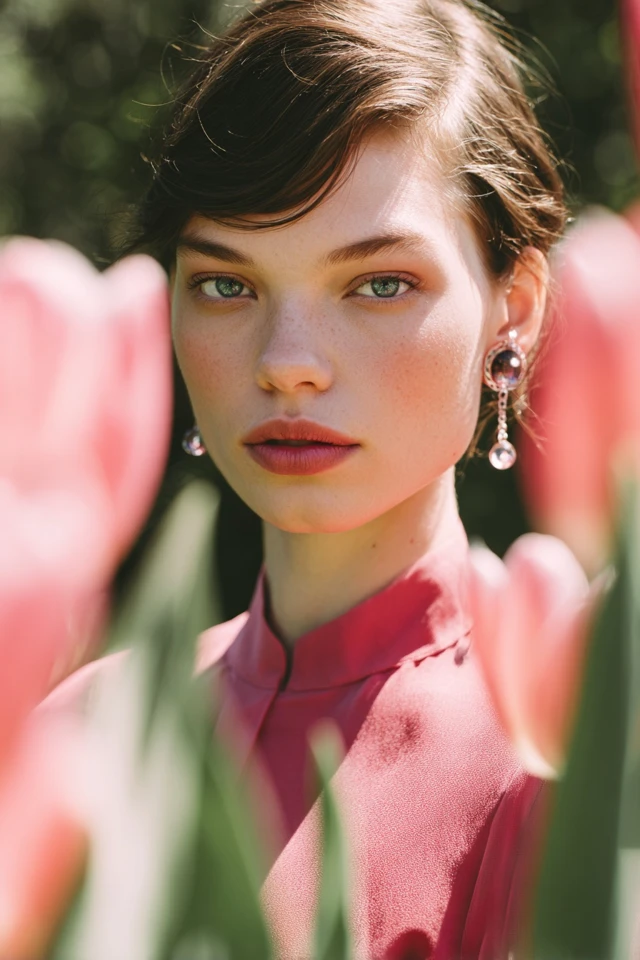
A few pairings that work: mint with ivory, coral with navy, lavender with pale yellow, and white with gold jewelry.
How do you choose a shape for your body?
Fit matters more than any rule about body types. Check that the shoulder seam sits where your shoulder ends, that you can lift your arms and sit comfortably, and that the waist falls where you want it to.
- A-line and fit-and-flare skirts add shape through the hip and are easy to move in.
- Wrap dresses adjust to your waist and suit most figures.
- Empire and flowing cuts skim the midsection and are comfortable for long events.
- Straight and sheath shapes look best with some structure in the fabric.
For vintage-inspired shapes, try spring vintage occasionwear. Bring your own shoes when you try on any dress, since they change how the hem falls.
Frequently asked questions
What are the best spring dresses for a wedding guest?
A midi or maxi in a soft print or pastel, with sleeves or a light wrap, works for most daytime weddings. Avoid white and ivory, and check the invitation's dress code first.
What length of spring dress is most versatile?
A midi, with a hem between mid-calf and just below the knee, works for the widest range of events and shoes.
Can you wear a floral dress to a formal event?
Yes, if the print is small or low in contrast and the fabric has some drape or structure. Keep accessories simple.
Filed under Outfit Ideas