Asymmetrical Draped Dresses: How to Pick and Style Them
- Words by
- Julio Arco
- Published
- Reading
- 5 min
Asymmetrical draped dresses work because the fabric creates a diagonal line across the body, and the eye follows it. A one-shoulder drape, a gathered cowl or an angled hem gives a simple dress its shape, so you need very little else.
The easiest pick is a fluid fabric (satin, crepe or jersey) in a midi length, with the drape landing at the neckline or waist. From there, choose the length, sleeves and fabric weight for your occasion.
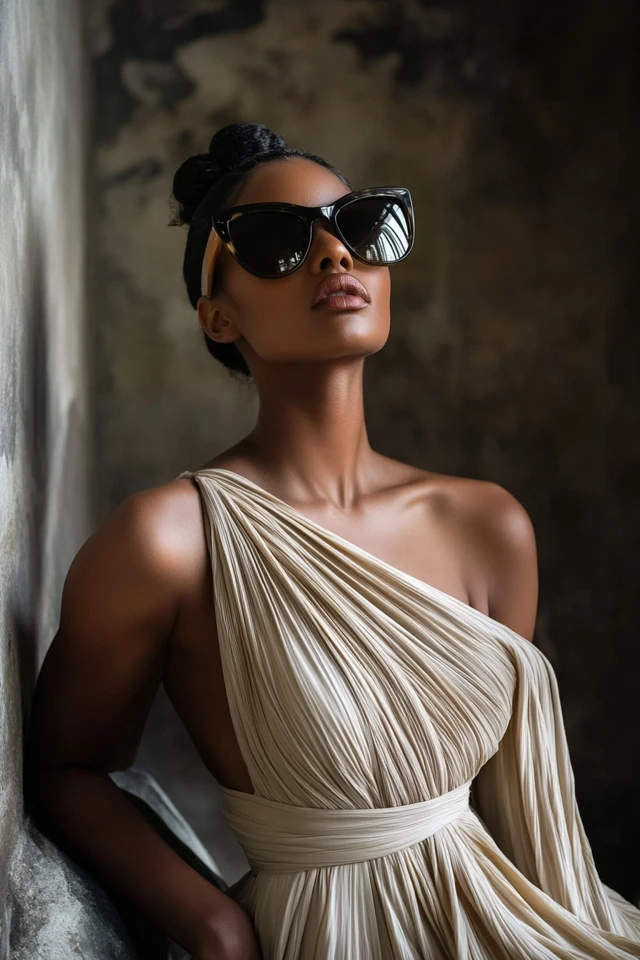
What makes a dress asymmetrical and draped?
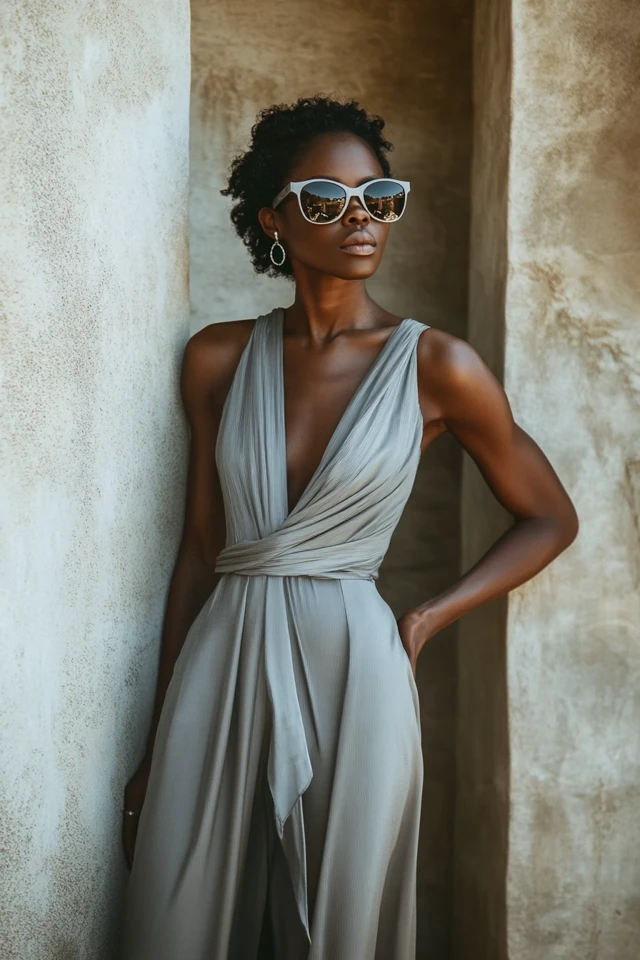
Asymmetry means the two sides of the dress do not mirror each other. It can sit at the neckline (one shoulder, a side-swept cowl), at the waist (a gathered knot or ruched side) or at the hem (higher on one leg). Draping is the soft folding of fabric that creates those lines without hard seams.
An asymmetric drape dress often combines two of these. A cowl neckline that falls to one side, for example, also pulls the gathers toward the opposite hip.
Are asymmetrical dresses flattering?
Usually, yes, because diagonal lines break up a straight silhouette and give the eye somewhere to travel. The result depends on where the line falls and how the fabric hangs.
- A diagonal drape across the torso adds shape without clinging, which many people like around the midsection.
- A one-shoulder neckline shows off the collarbone and shoulder line and leaves the other side clean.
- A high-low or angled hem lengthens the leg at the short side and adds movement at the long side.
Through the lens of evidence-based design, I'd look at the fabric before the cut. A heavier crepe holds a drape in a clean line, while a thin satin follows every curve and shows seams and underlayers. If a dress pulls across the shoulders or bunches at the waist, that is a fit problem, not a you problem. Try the next size or a stretchier fabric.
What type of dress is most flattering for hiding a tummy?
Look for ruching or gathers placed at the side, a wrap or faux-wrap front, and a fabric with some weight. Gathers break up the surface, and a skirt that skims instead of clings keeps the line smooth. A defined waist or a belt is optional, not required.
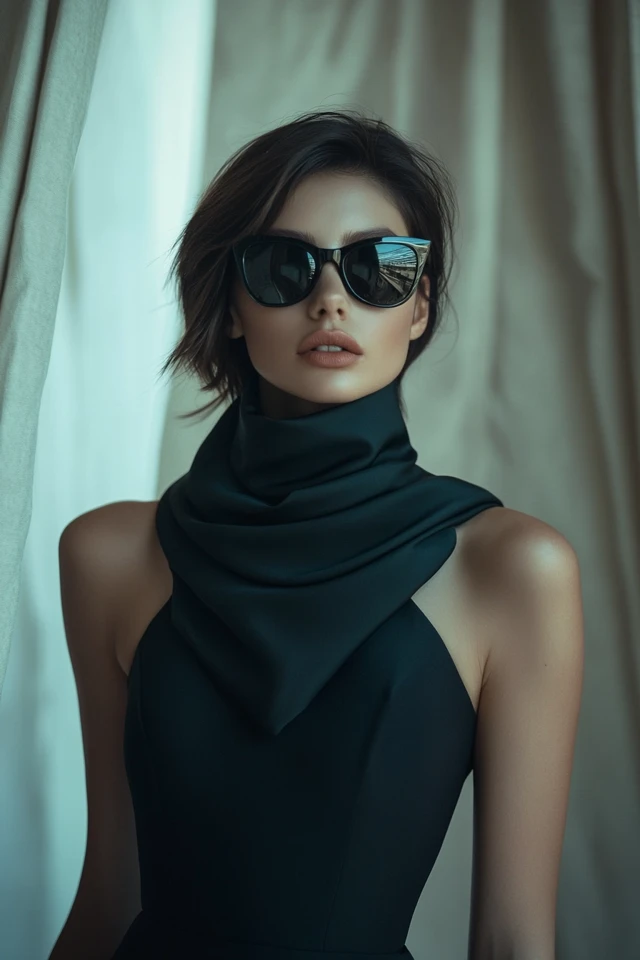
Midi, maxi and mini: which length suits you?
Midi
An asymmetrical draped midi dress is the most flexible option. It works for the office with a blazer, for a wedding with heels, and for daytime with flat sandals. A hem that ends mid-calf looks best with a shoe that has a little height or a pointed toe, which keeps the leg line long.
Maxi
A maxi asymmetrical draped dress suits formal events and evening weddings. The long fabric makes the drape more dramatic, so keep the rest simple. If you are petite, choose a hem that just clears the floor in your heels, and avoid heavy layers of gathered fabric at the hip.
Mini
Minis with a draped or knotted side work for cocktail parties and nights out. Choose a lined fabric so the drape does not cling in the wrong places.
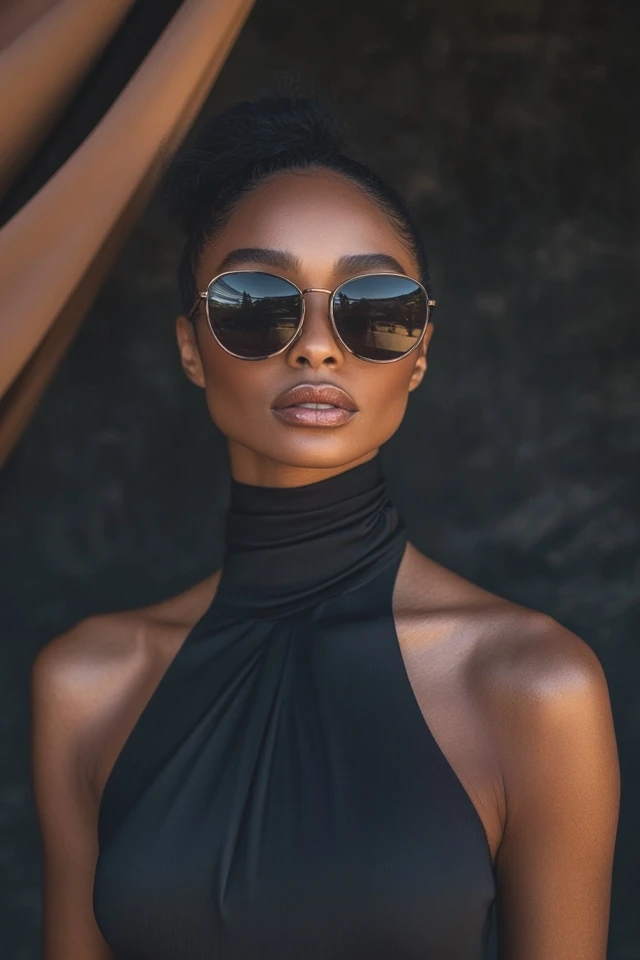
Sleeves and necklines
An asymmetrical dress with sleeves is easy to wear for cooler seasons or more formal rooms. A single long sleeve with a bare shoulder on the other side keeps the asymmetry and adds coverage. Cap or flutter sleeves soften a strong shoulder line.
Cowl necklines add texture at the chest. Because a cowl is built from extra fabric, it reads softer in jersey and more sculptural in satin. If you like the neckline idea, my guide to Grecian-inspired draped dresses covers related shapes, and halter neck dresses are another way to frame the neck and shoulders.
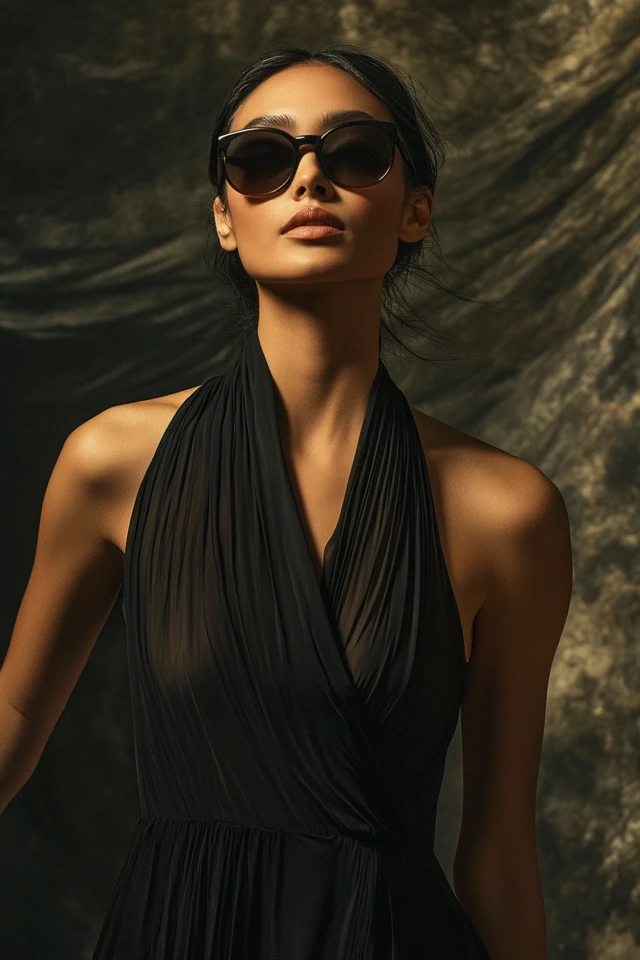
Fabric: how drape changes the look
Fabric decides how the whole dress behaves, so it deserves as much attention as the shape.
- Satin and silk-like weaves catch light along each fold, which makes the drape look bold. They suit evenings.
- Matte crepe hides lines and holds shape, a good choice for work or long days.
- Jersey and knit move with you and feel the most relaxed. They show the body more, so check the lining and the thickness.
- Velvet adds depth and warmth for winter events. See tweed and velvet winter dresses for more on cold-weather fabrics.
A matte fabric and a glossy one in the same color do not read as the same color, because the surface changes how light reaches the eye. If you want the drape to be the focus, I'd pick a solid color and let the folds do the work. Busy prints can hide the draping entirely.
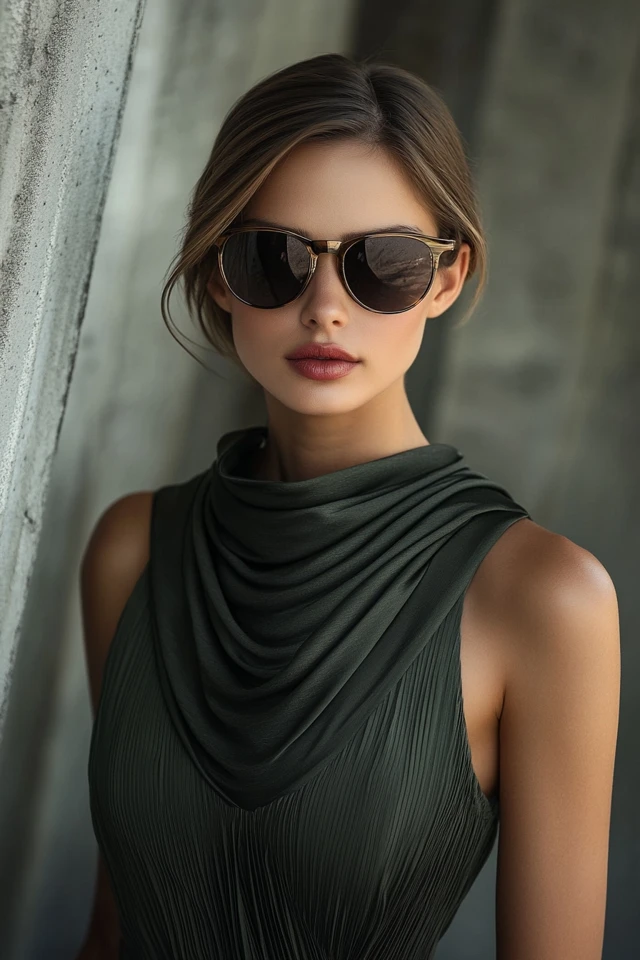
How to style asymmetrical draped dresses
The dress already has a strong line, so the styling job is to support it, not compete with it.
- Match jewelry to the open area. With a one-shoulder neckline, skip a necklace and wear earrings or a cuff. With a cowl, a thin chain or nothing at all works.
- Keep the hair simple. An updo or sleek ponytail shows the neckline and shoulder line.
- Choose shoes by occasion: strappy heels for formal, block heels or pointed flats for work, white sneakers or flat sandals for daytime.
- Add a third piece with a clean shape, such as a tailored blazer, a cropped jacket or a wrap, when the weather or dress code calls for it. Keep outerwear short enough not to hide the hem.
- Pick one accent. A bold earring, a metallic clutch or a bright shoe is enough.
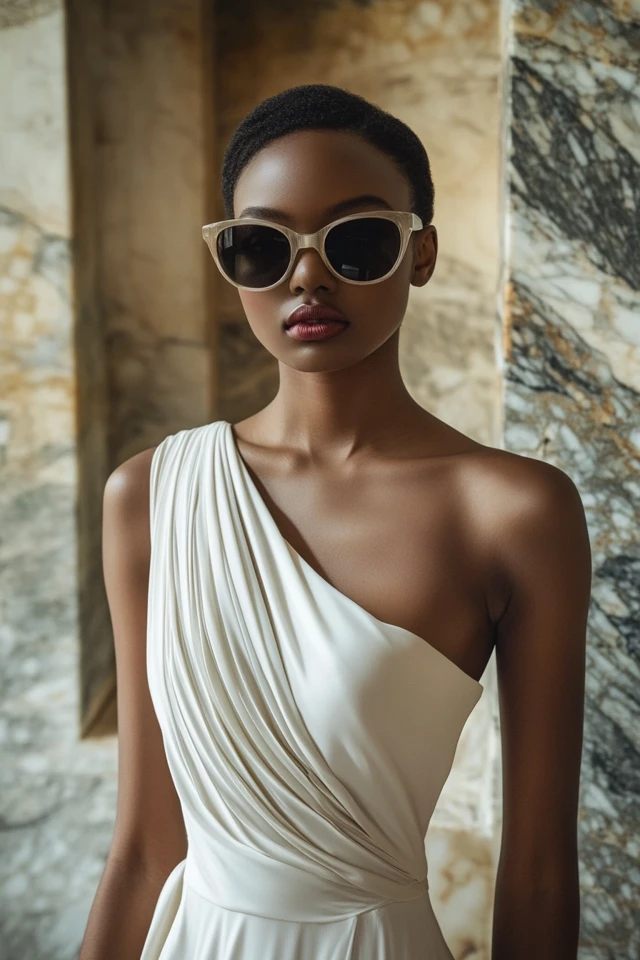
Formal and occasion ideas
For a formal gown, an asymmetrical dress in a heavier satin or crepe photographs well and needs few accessories. A floor-length cut with a single shoulder works for black-tie dress codes. For inspiration beyond this shape, see award ceremony gowns and evening dresses for opera nights.
For weddings as a guest, a midi in a soft color with a side drape suits most dress codes. For brunch or daytime events, a lighter jersey or a printed fabric with a small amount of drape feels more relaxed, and ruffled brunch outfits are worth a look.
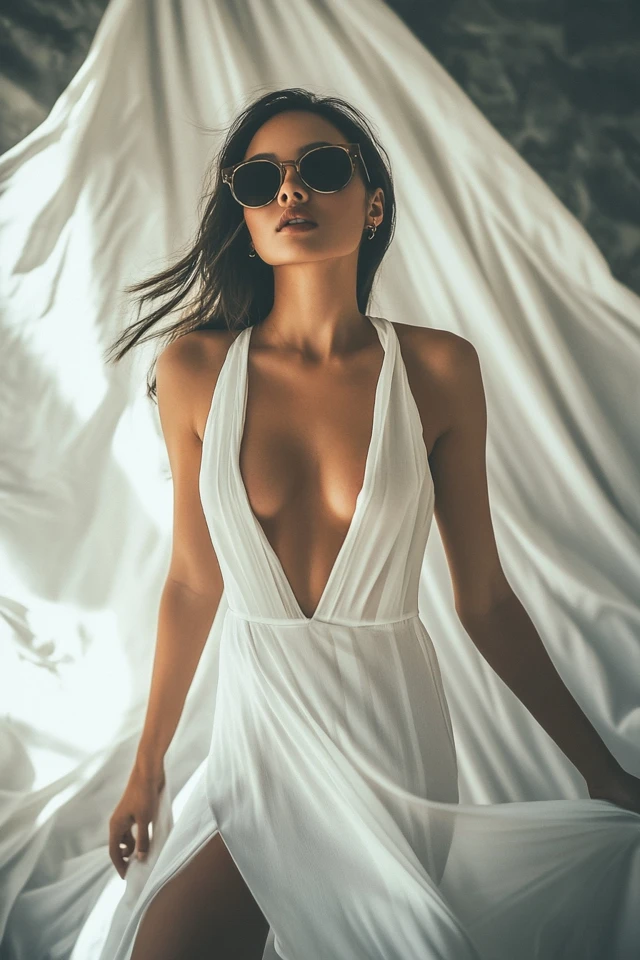
Plus size and petite considerations
For plus size asymmetrical draped dresses, look for ruching along the side seam, a wrap-style bodice and fabric with enough weight to skim instead of cling. A side gather works as a built-in guide for the eye. Check that the shoulder seam sits at the edge of your shoulder, and that any one-shoulder strap is wide enough to stay put comfortably.
If you are petite, keep the drape proportional: smaller gathers, a hem that ends at or just above mid-calf, and a defined waist or a slim belt. Very voluminous drape can overwhelm a shorter frame.
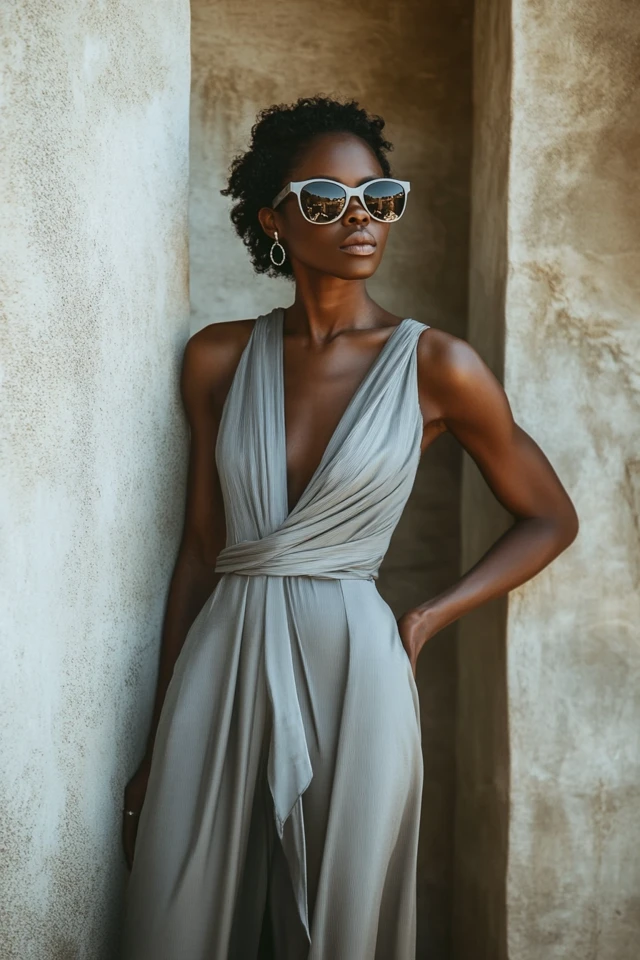
Frequently asked questions
Are asymmetrical dresses flattering?
They can be, because the diagonal lines add shape and draw the eye along a path. Fabric weight and a good shoulder fit matter more than the exact cut.
What type of dress is most flattering for hiding a tummy?
A wrap or faux-wrap front, side ruching and a fabric with some weight tend to work well. These skim the midsection and avoid cling.
Are draped dresses in style?
Draped dresses have returned regularly in fashion because the shape is simple and adaptable. Choose a cut and fabric you like and will wear repeatedly, instead of chasing a season.
Can I wear an asymmetrical draped dress casually?
Yes. A jersey or matte version with white sneakers or flat sandals and a denim or cropped jacket gives a relaxed look.
Filed under Style & Fit