Classic Knit Sweater Styles: 7 Types Worth Knowing
- Words by
- Julio Arco
- Published
- Reading
- 4 min
The classic knit sweater styles worth knowing are the crewneck, the cable knit, the fisherman, the turtleneck, the cardigan, the V-neck and the sweater vest. Own two or three in neutral tones (cream, oatmeal, gray, camel) and most fall outfits are covered.
Below is a quick guide to the main types of knit sweaters, what each does for your proportions, and how to wear them. Most of it applies equally to classic knit sweater styles for women and for men.
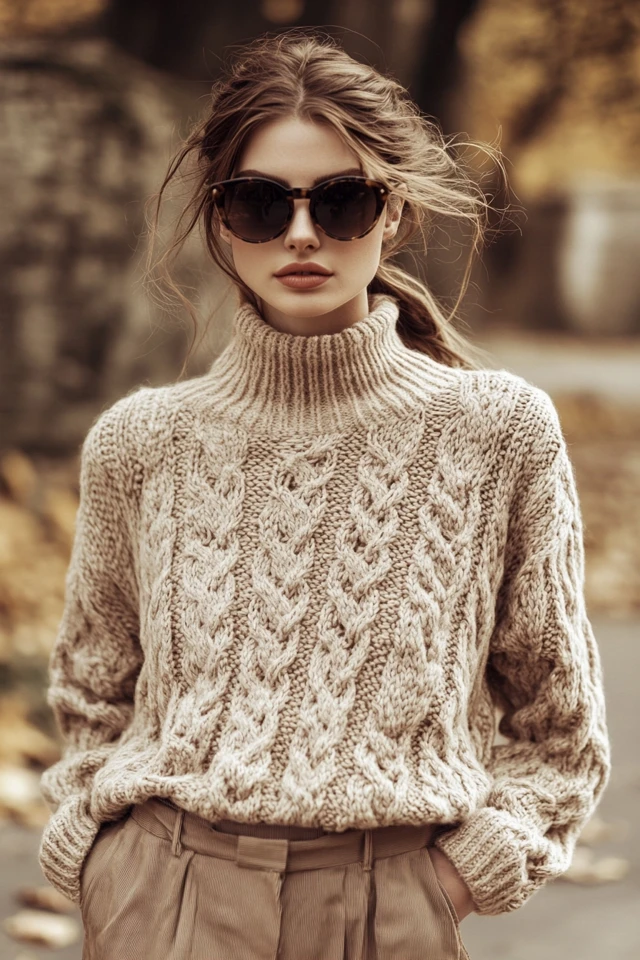
What are the main types of knit sweaters?
Sweaters are usually sorted by neckline and silhouette (crewneck, V-neck, turtleneck, cardigan) and by stitch pattern (plain, ribbed, cable). A single sweater can be both: a crewneck in a cable stitch, for example.
- Crewneck: round neckline, the easiest to layer.
- V-neck: opens the chest and works over a collared shirt.
- Turtleneck: high, folded neck for warmth and a clean vertical line.
- Cardigan: open front with buttons or a belt, built for layering.
- Cable knit: raised, twisted ropes of yarn that add texture.
- Fisherman: a thick, often ribbed or cabled knit with a roomy fit.
- Sweater vest: sleeveless, good for adding a layer without bulk in the arms.
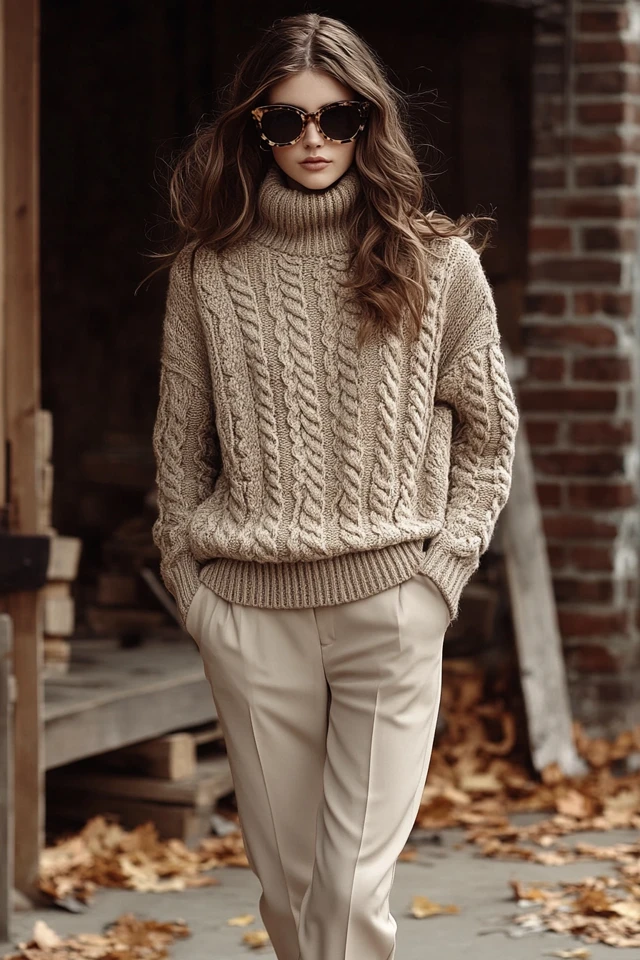
Why a classic crewneck sweater is the first one to own
A classic crewneck sweater in a smooth, mid-weight knit goes under a blazer or coat, over a shirt collar, or on its own with jeans. The round neckline is neutral, so the color and fit do the talking.
Check the shoulder seam first. It should sit at the edge of your shoulder, and the hem should land around the belt line or just below. A sweater that pulls across the shoulders is a fit problem, not a you problem.
How to wear a cable knit sweater
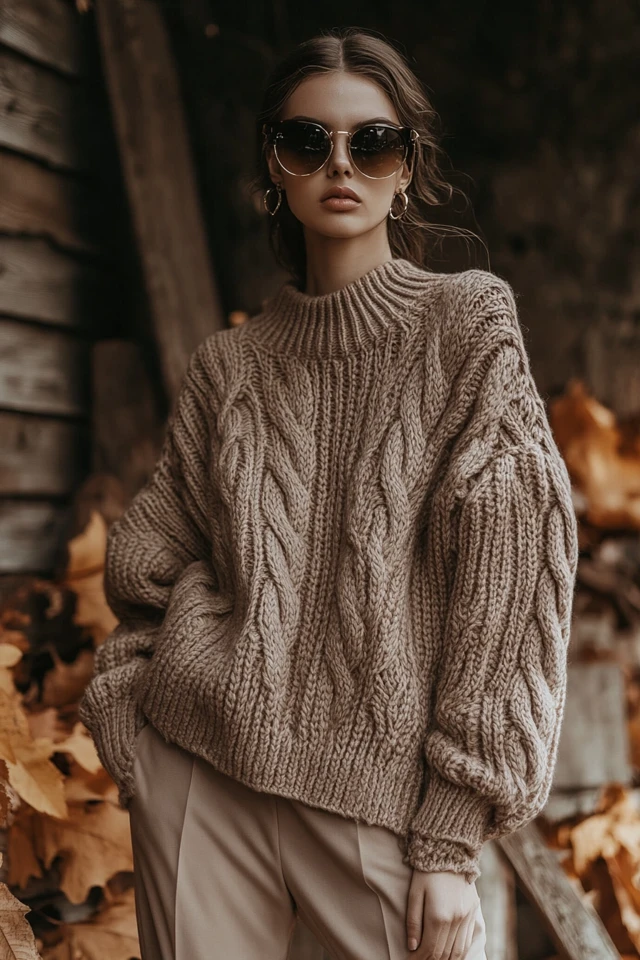
The cable knit sweater is the one most people picture for fall. The twisted pattern traditionally comes from Aran knitting, and it adds visible depth, so the rest of the outfit can stay simple.
Through the lens of evidence-based design, I'd pick a cable knit in a single neutral rather than a loud color. Raised texture throws small shadows, which gives a cream or oatmeal sweater plenty of interest without adding another hue.
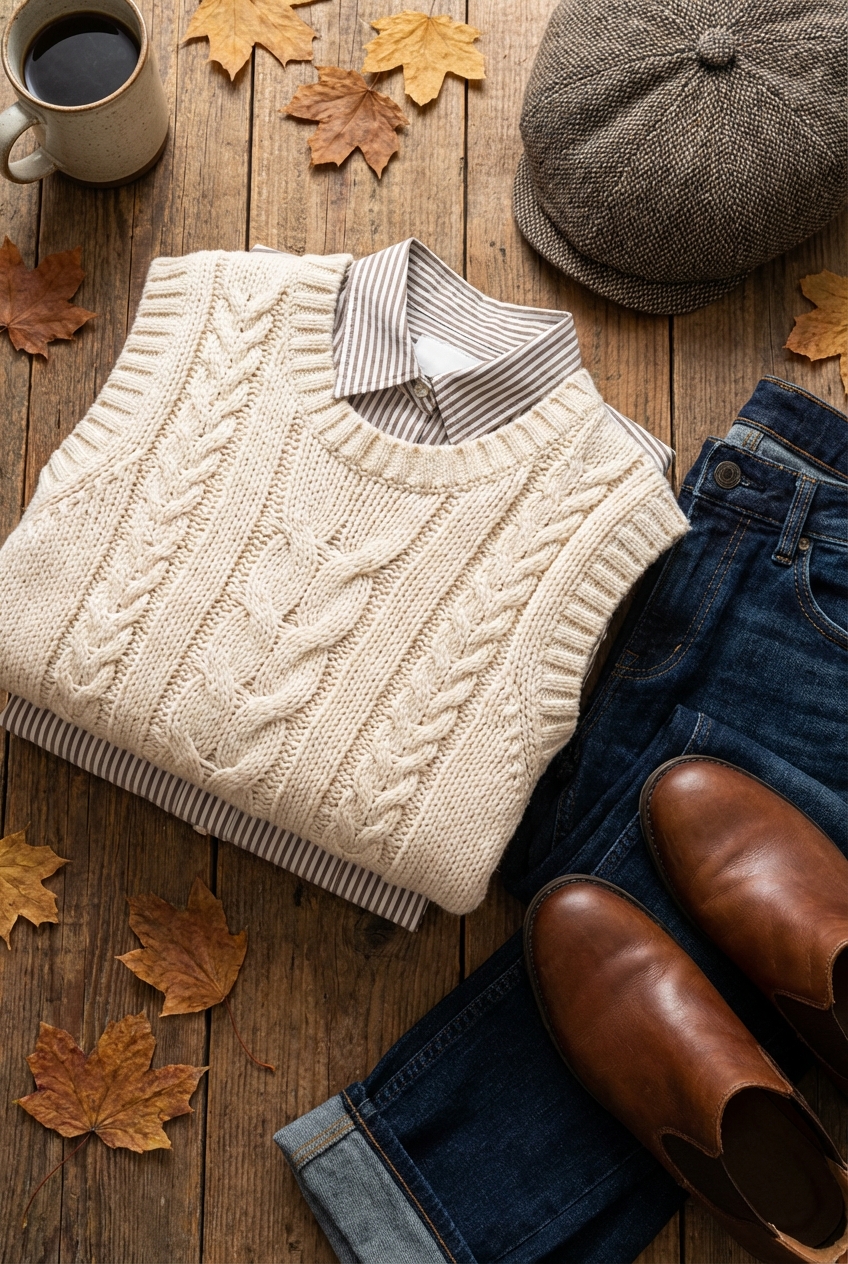
- With dark denim and ankle boots for an easy weekend outfit.
- Tucked into a midi skirt, front only, to define the waist.
- Over a crisp white collared shirt for an office-friendly layer.
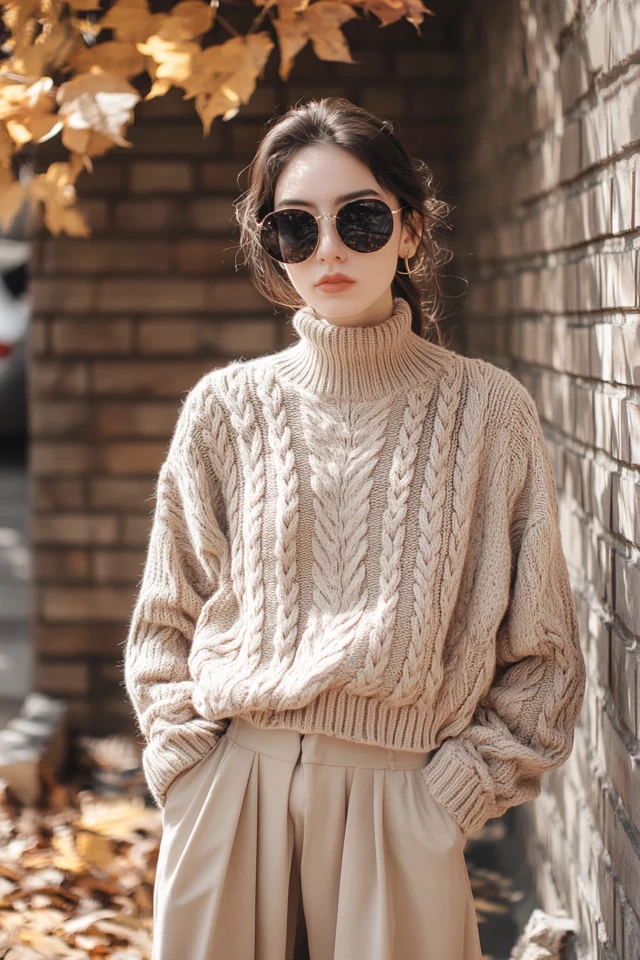
If you like the look of a thick knit worn over skirts or dresses, the casual knit sweater weather ideas are a good next read, and chunky knit sweater vests are the lighter way to get the same texture.
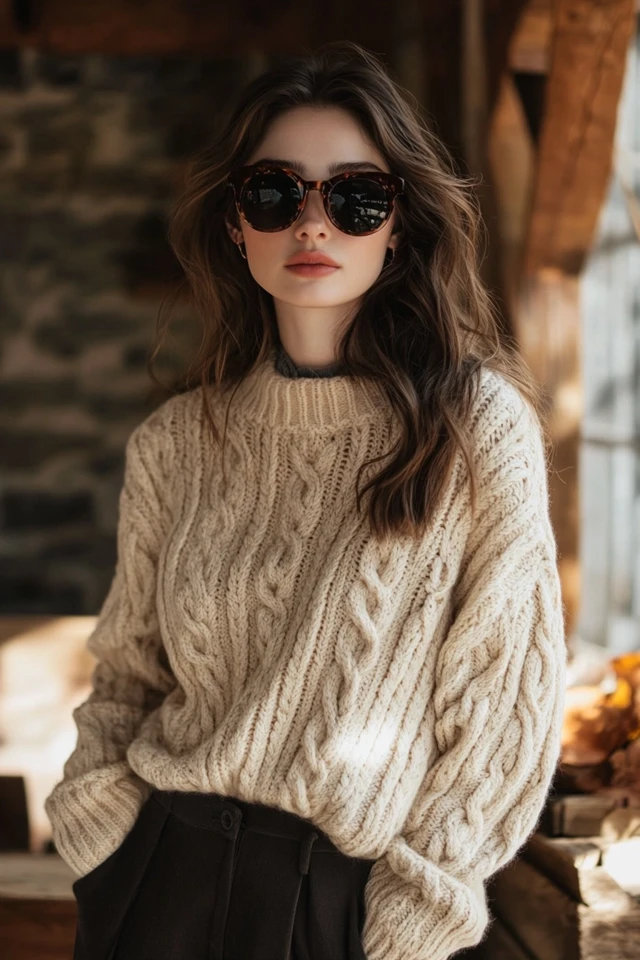
Fisherman, turtleneck and cardigan: the layering styles
A fisherman sweater is heavier and boxier than a standard cable knit. Wear it with slimmer trousers or jeans so the volume sits in one place only.
A turtleneck gives you a continuous line from chin to hem, which tends to look streamlined under a coat. Under a blazer, pick a fine knit so the collar does not bunch.
A cardigan is the flexible one: buttoned as a sweater, open as a light jacket. For colder days, put it under an oversized parka in a neutral tone.
Which neutral color should you choose?
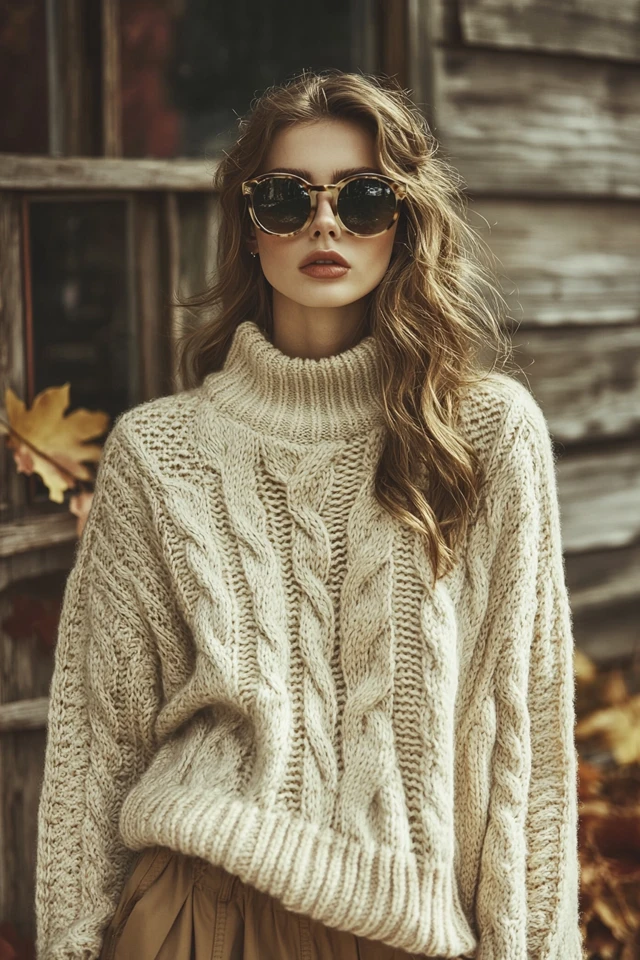
Neutrals are not all the same temperature. Cream and ivory read bright and soft near the face. Beige, taupe and camel look warmer. Gray is cooler and more minimal. Brown sits in between and pairs well with rust or mustard.
Hold the sweater up near your face in daylight. If your skin looks tired next to it, try the next shade over, or put a different color closer to your neckline.
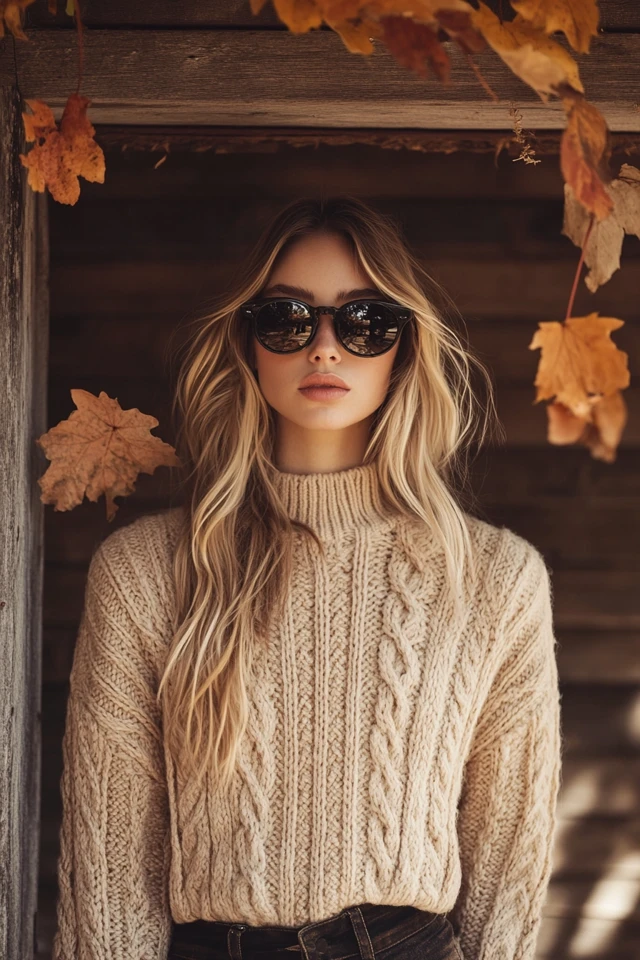
For outfit combinations built around these shades, see casual neutral tones looks and sophisticated neutral tones looks.
Choosing a fit for your frame
- Petite: a fitted or cropped knit with high-waisted bottoms keeps the proportions balanced. Very chunky knits can swallow a small frame.
- Tall: longline or oversized styles work well, with slimmer bottoms.
- Curvy: a slightly tailored cut or side slits keeps the sweater from boxing out at the hip.
- Athletic: ribbed cuffs and a little softness in the knit add shape; a turtleneck or cowl neck also works.
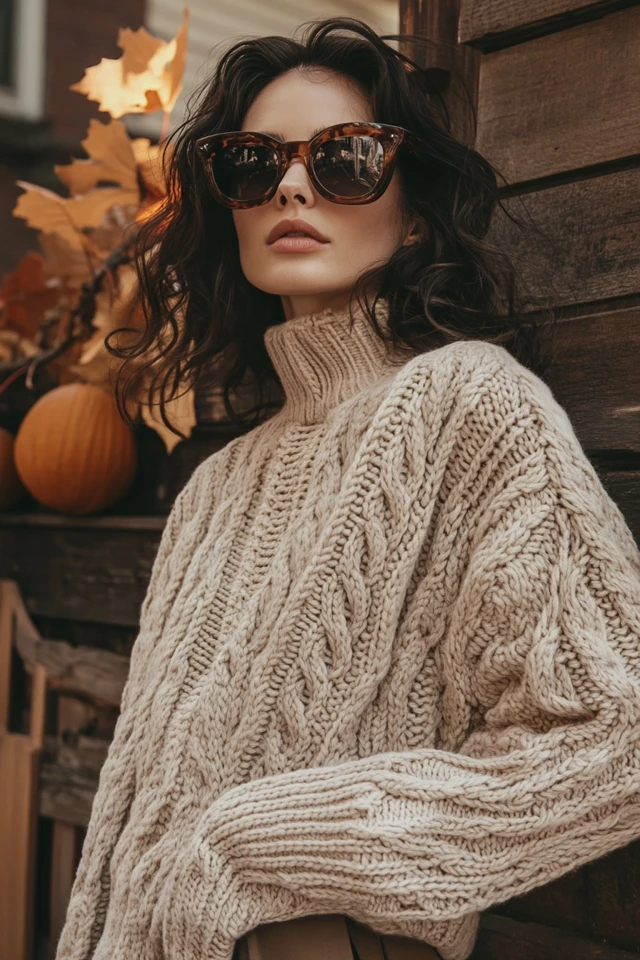
For men, the same logic applies: crewneck and shawl-collar knits in oatmeal, gray or navy are the easiest starting points, and the shoulder seam rule still holds.
Which sweaters does every wardrobe need?
For essential sweaters every wardrobe needs, I'd start with a fine-gauge crewneck, one cable knit and one cardigan. Add a turtleneck if you live somewhere cold. That small set handles work, weekends and layering.
Caring for knits
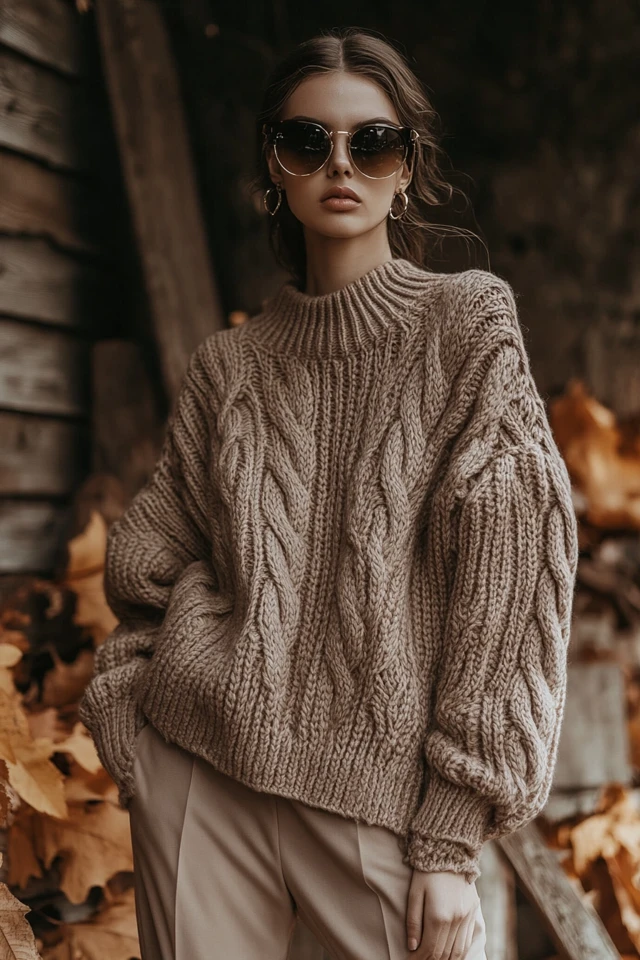
- Follow the label. Hand washing or a delicate cycle suits most knits.
- Dry flat to keep the shape and the cable texture.
- Fold in a drawer rather than hanging, which stretches the shoulders.
Treat spills quickly. University of Georgia Extension notes that stains set by heat will be difficult to remove, so skip hot water and the dryer on a stained knit. The same page warns that ammonia damages silk and wool, so avoid it on wool sweaters.
Frequently asked questions
What are some popular styles of knitted sweaters?
The most common are the crewneck, V-neck, turtleneck, cardigan, cable knit and fisherman. Sweater vests are also popular as a lighter layer.
What are the different types of knit styles?
Knit styles include plain stockinette, ribbed, cable and textured stitches such as popcorn or moss. Each changes how thick the sweater looks and how it holds its shape.
How do I avoid looking bulky in a cable knit sweater?
Pair it with fitted or straight bottoms so the volume stays in one place. Tucking in the front can also define your waist.
Can a cable knit sweater work for formal occasions?
A fine, fitted cable knit in a solid neutral can work in a smart-casual setting with tailored trousers or a skirt. For strictly formal dress codes, a plain fine knit is safer.
Filed under Seasonal Trends