Breezy Maxi Dresses: How to Pick, Style and Wear Them
- Words by
- Julio Arco
- Published
- Reading
- 4 min
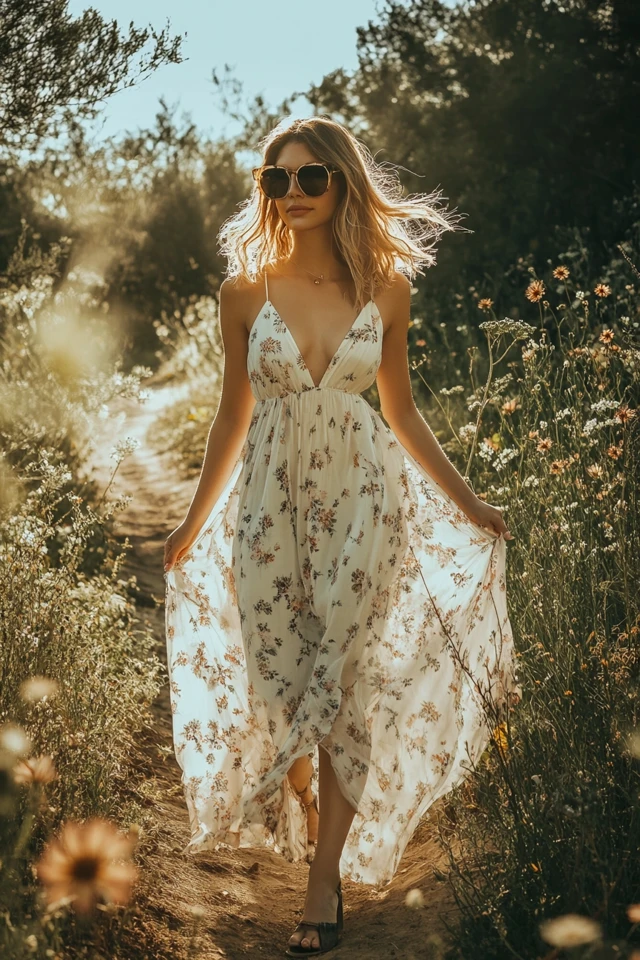
A breezy maxi dress comes down to three things: a light fabric that moves, a waist you can adjust, and a hem that skims your ankle in the shoes you plan to wear. Get those right and the dress works for a beach day, a brunch or a garden wedding.
Below you'll find how to choose by fabric and frame, where pleated styles fit in, and outfit formulas for different occasions.
What makes a maxi dress feel breezy?
Breezy comes from fabric weight and cut, not from length alone. A dress that falls loosely from the shoulders or waist lets air move and doesn't cling when you walk or sit.
Look for a skirt with some sweep (A-line, tiered or gathered) and a bodice that fits without pulling. If a dress grips at the bust or hips, that's a sizing or cut problem, not a you problem. Try the next size or a different silhouette.
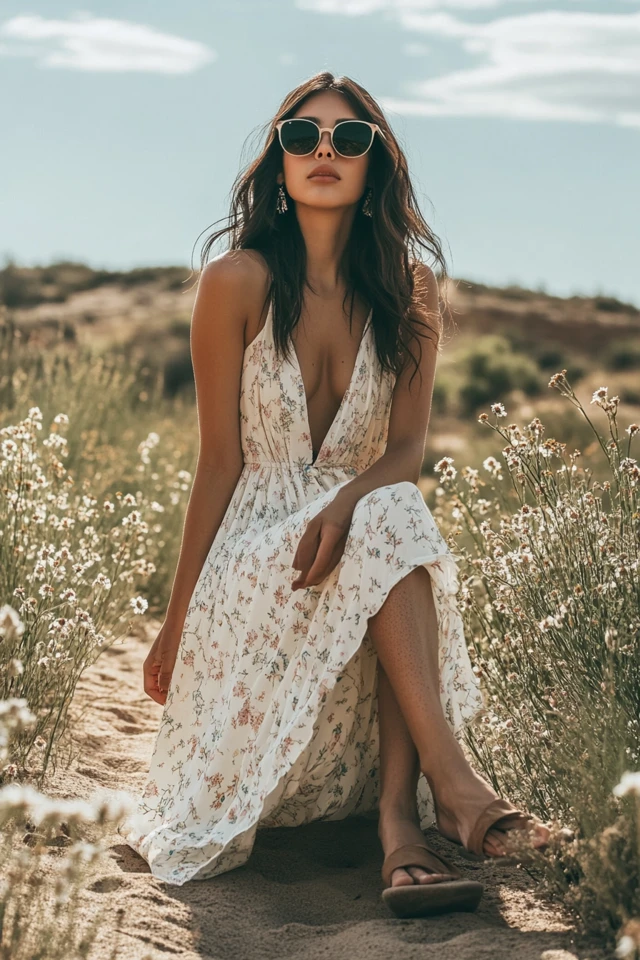
Which fabric should you choose?
Fabric decides how the dress drapes, how it breathes and how it reads in photos. Here is a quick comparison.
| Fabric | Feels like | Best for |
|---|---|---|
| Cotton or linen | Dry, light, a little textured | Hot days, casual outings, travel |
| Chiffon | Sheer, floaty, soft | Weddings, evenings, layered skirts |
| Silk or satin | Smooth, fluid, glossy | Dressier events |
| Jersey knit | Stretchy, easy | Flights, long days, lounging |
Through the lens of evidence-based design, I'd think about texture before print. A matte cotton and a glossy satin in the same shade don't read as the same color, because the surface changes how light reaches your eye.
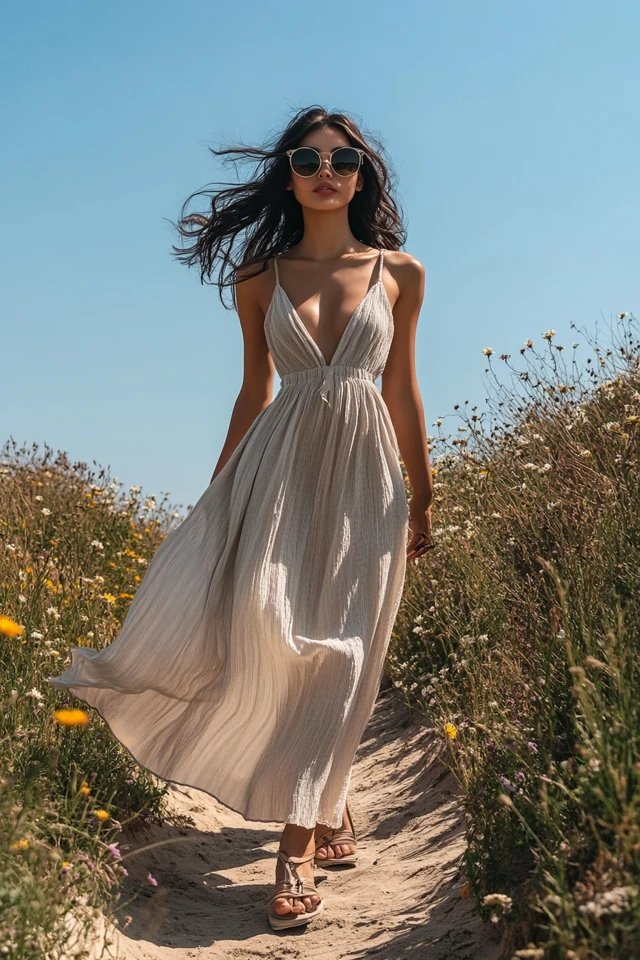
How do you choose a maxi dress for your frame?
These are starting points, not rules. Try a few cuts and trust the mirror.
- Petite: a defined waist and straps that adjust keep the fabric from swamping you. A hem that just clears the ankle shows a little leg.
- Curvy: wrap and A-line shapes follow the waist and skim the hips.
- Tall: floor-length hems, tiers and fuller skirts balance your height.
- Athletic: ruching, ruffles or an empire waist add softness at the bodice.
As an architect trained in evidence-based design, I'd treat the waistline as the first thing the eye reads. Whatever your build, a dress with an adjustable tie or elastic panel gives you control over where it sits.
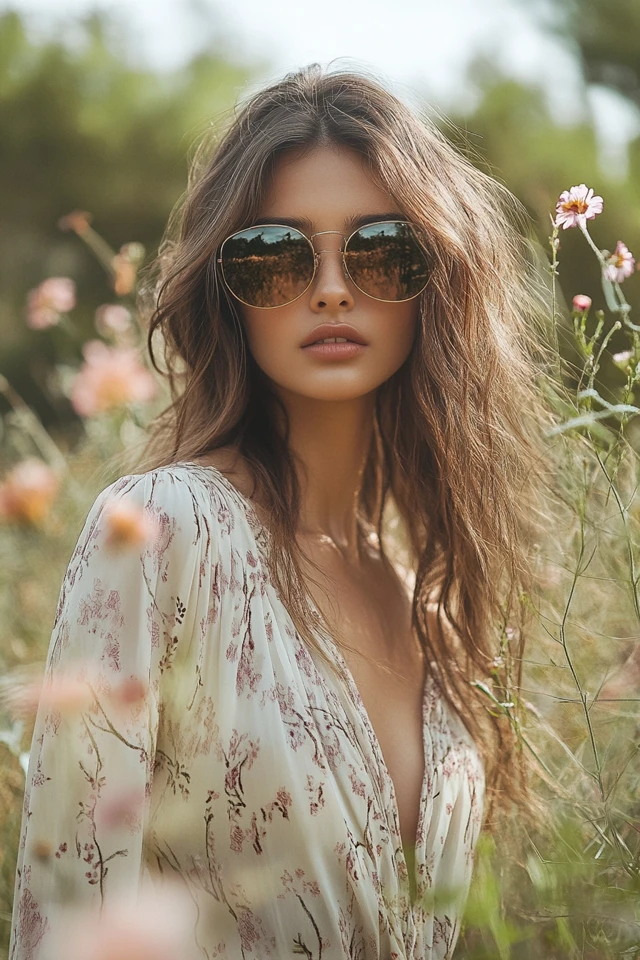
Where do pleated styles fit in?
Pleats add movement. The folds open as you walk and fall straight when you stand, so a pleated skirt looks light without extra volume. A pleated maxi dress with sleeves covers shoulders and arms and still feels airy, which suits cooler evenings, offices and weddings with dress codes.
If a full-length hem feels like too much, a pleated midi dress ends around the calf and works well with flat sandals or ankle boots. A long sleeve pleated dress is an easy base for cooler months, and a black pleated dress is the simplest option to dress up or down with shoes and jewelry.
Size range matters when shopping. A plus size pleated dress should have pleats that lie flat over the hip rather than puff, so check that the pleating starts at or below the waist, and look for a stretch or adjustable bodice.
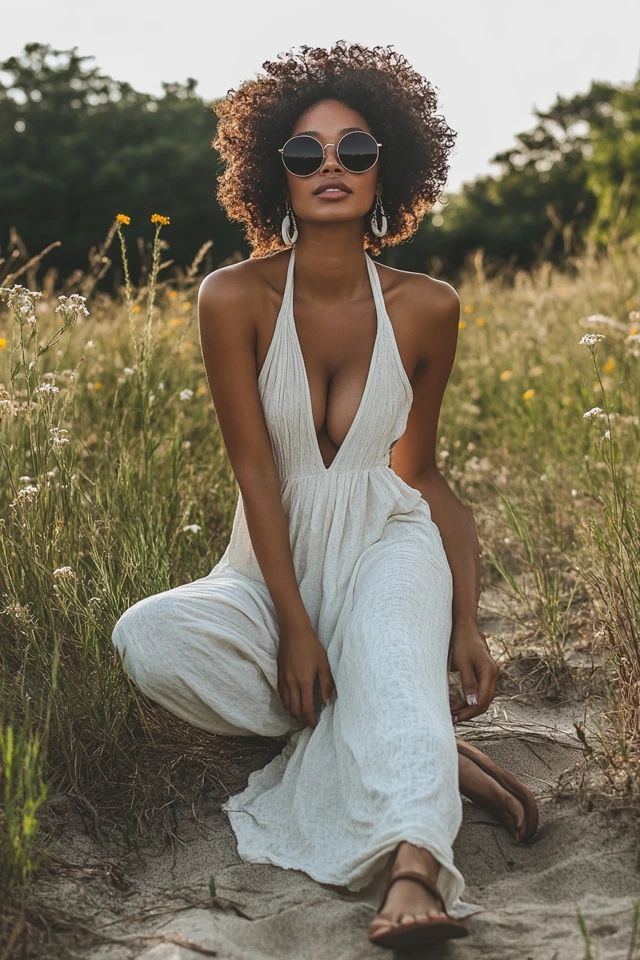
Which neckline and sleeve work best?
- V-neck: opens up the neck and chest area and suits most frames.
- Off the shoulder: soft and a bit romantic. Check that the elastic stays put when you lift your arms.
- Halter: shows the shoulders and works well with hair up.
- Flutter or long sleeves: add coverage without weight when the fabric is light.
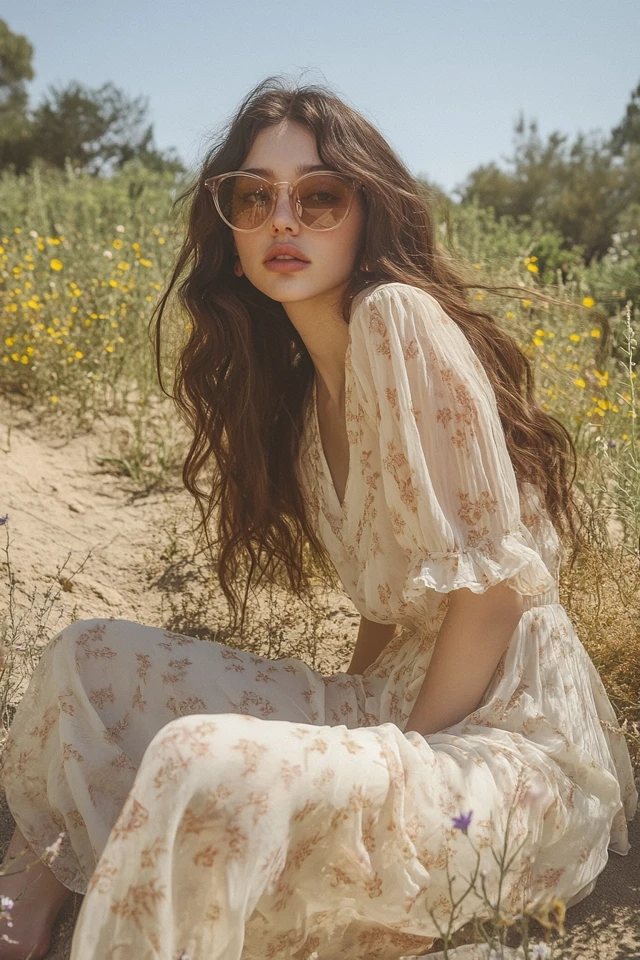
How should you style a maxi dress?
Casual day
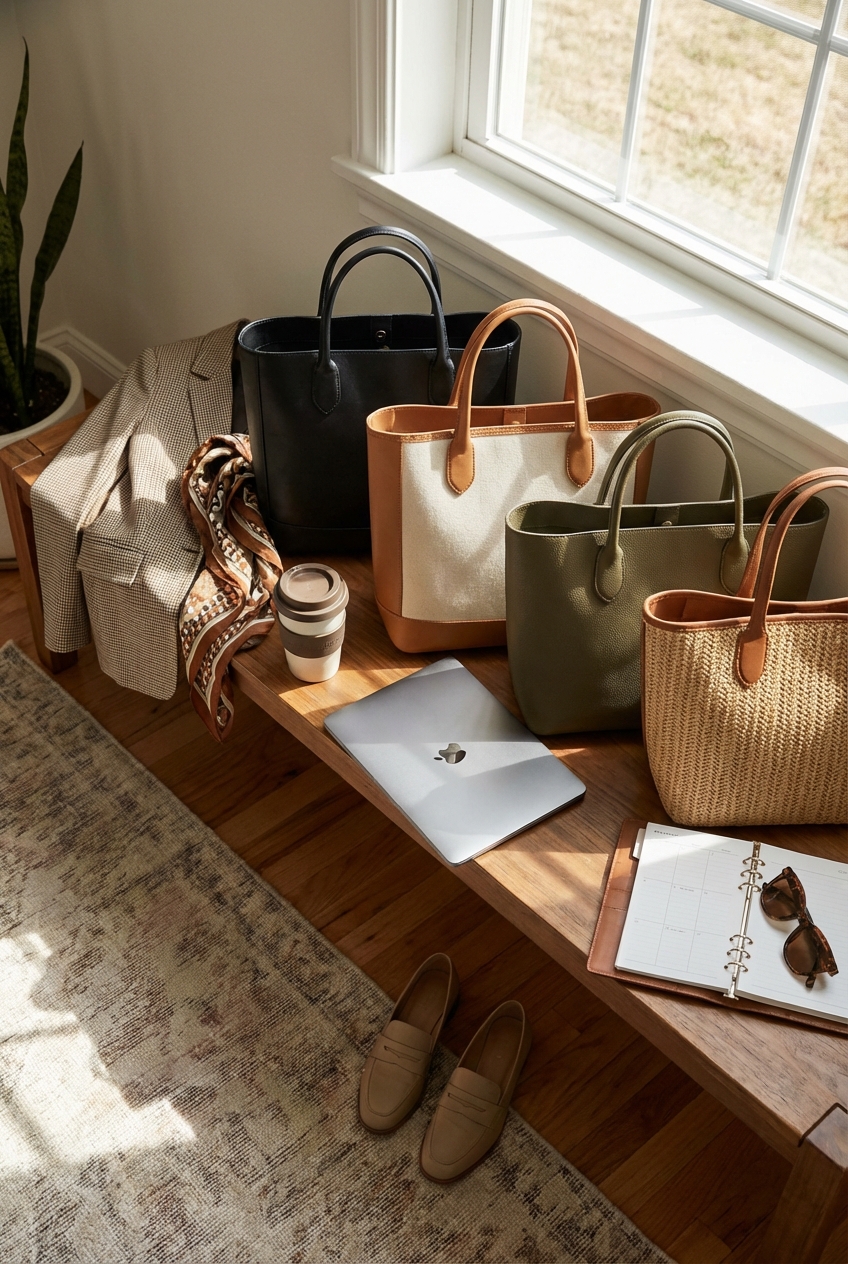
Cotton maxi, flat sandals, a woven tote and sunglasses. Add a denim jacket and white sneakers for errands or lunch.
Office
Pick a solid, structured maxi and add a tailored blazer or cardigan. Block heels or loafers keep it grounded.
Beach or vacation
A printed maxi with espadrille wedges or flat sandals. For more ideas, see glamorous vacation maxi dresses and tropical brunch looks.
Weddings and evenings
Chiffon or silk, strappy heels, a clutch and one statement earring. Outdoor ceremonies by the water are covered in breezy maxi dresses for beach weddings.
Cooler weather
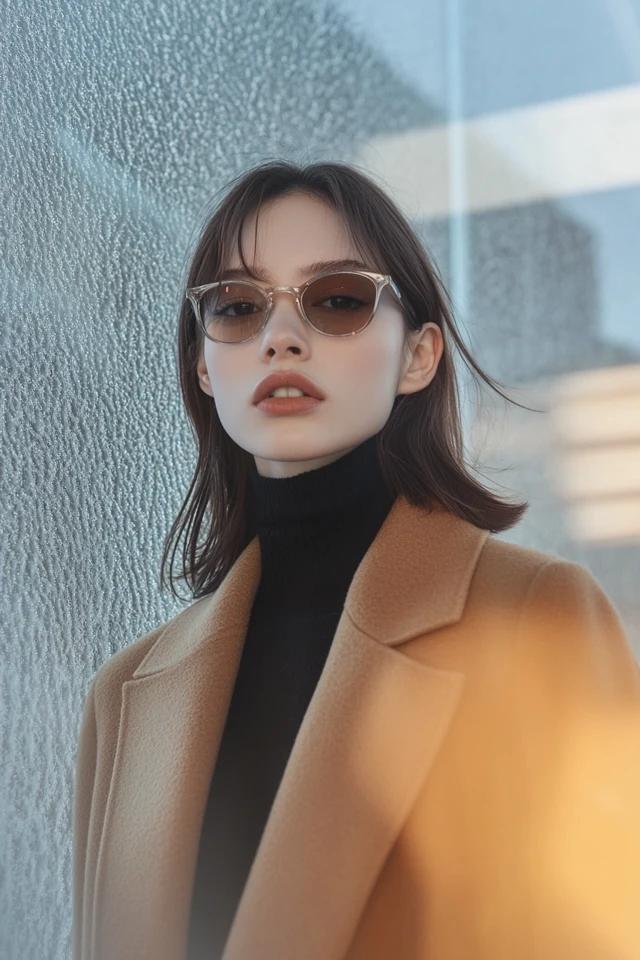
Layer a chunky knit or turtleneck under or over the dress, then add ankle boots and a longline coat.
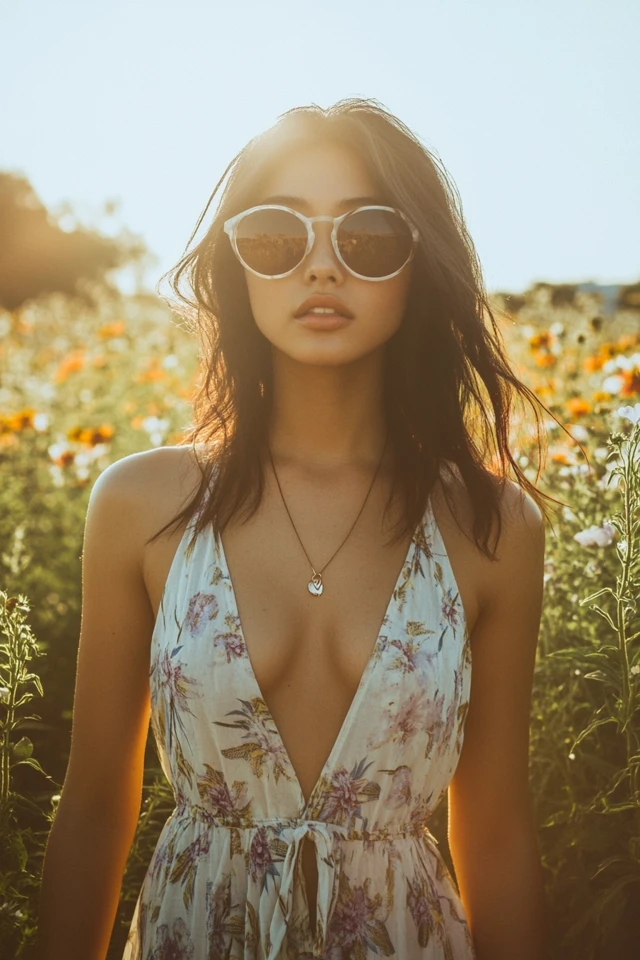
How do color and pattern change the look?
Solids such as white, black and earthy tones are easy to restyle. Florals, dots and geometrics carry the outfit on their own, so keep accessories quiet. If maxi dresses are new to you, start with a muted shade and branch out once you know the shape works. For a color pairing to try, there's coral and sage in romantic maxi dresses.
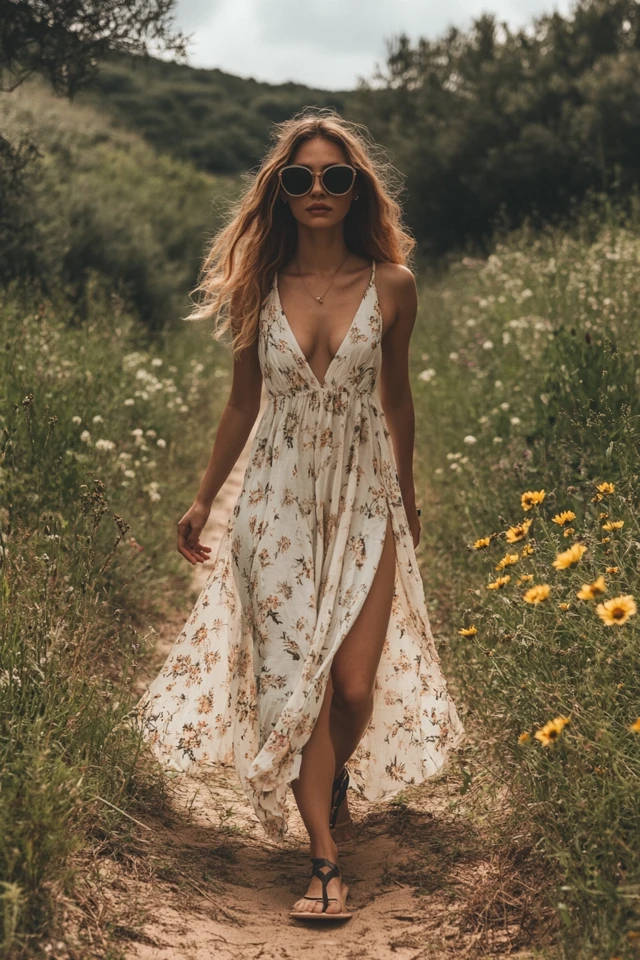
How do you care for a maxi dress?
- Follow the care label. Delicate fabrics usually do best on a gentle cycle in cold water or by hand.
- Air dry on a hanger instead of using a dryer, which can shrink or stress the fabric.
- Steam or use a low-heat iron. Pleated and silk pieces should be checked against the label first.
- Store on padded hangers so the shoulders and straps don't stretch.
If you prefer separates, flowy maxi skirts follow many of the same fabric and length rules.
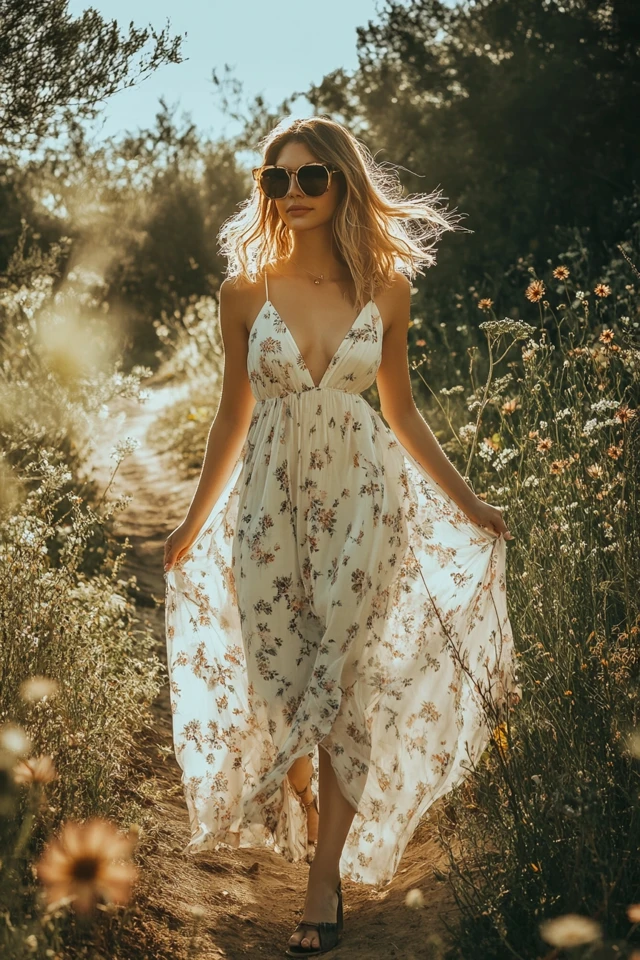
Frequently asked questions
Can maxi dresses be worn year-round?
Yes. In cold months, layer with knit sweaters, tights, boots and a coat. Choose heavier fabrics or sleeves for winter and keep chiffon and linen for warm days.
What shoes go best with maxi dresses?
Flat sandals, wedges, sneakers and ankle boots all work. Match the shoe to the dress's formality, and check the hem length while wearing them.
Are maxi dresses flattering on petite frames?
They can be. Choose a defined waist, adjustable straps and a hem that clears the ankle, and avoid very voluminous skirts. A tailor can shorten the hem.
How do I dress up a casual maxi dress?
Swap flat sandals for heels, add statement earrings and carry a small clutch. A belt at the waist also gives a plainer dress more shape.
Filed under Wardrobe Basics