Traditional Festive Outfits: What to Wear and Why
- Words by
- Julio Arco
- Published
- Reading
- 5 min
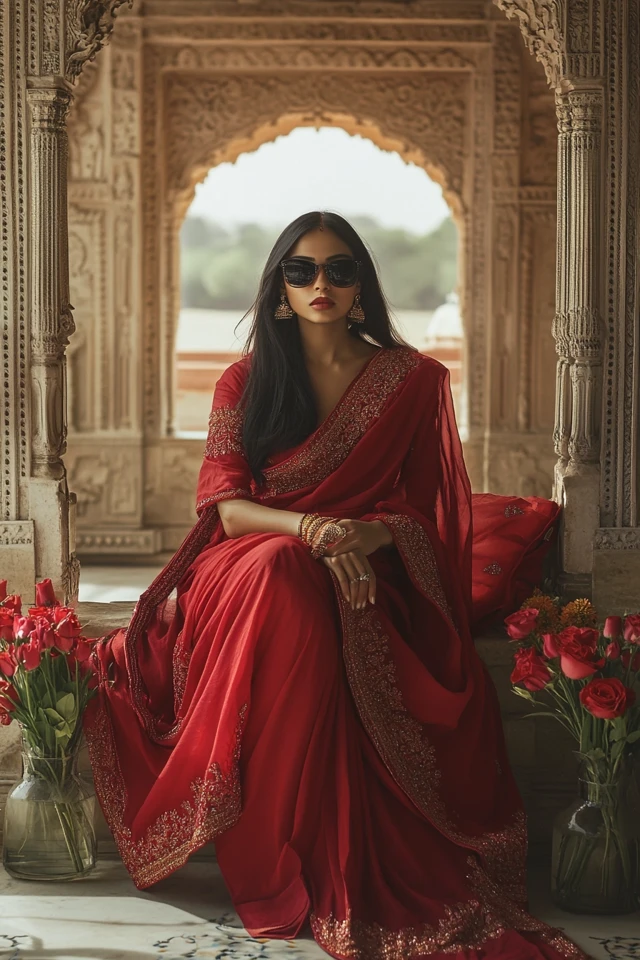
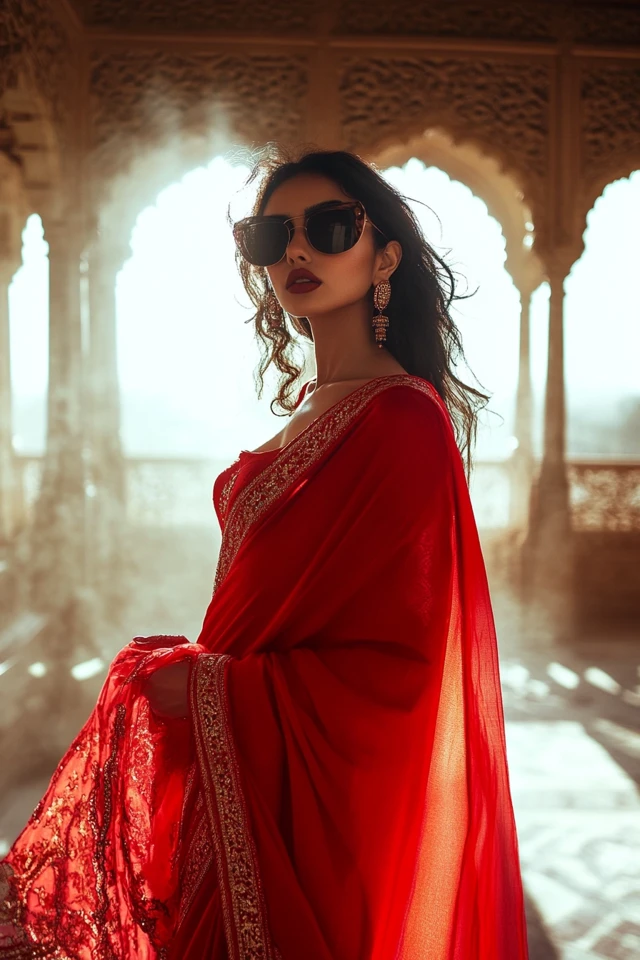
Festive attire is clothing worn to mark a celebration, usually dressier, more colorful and more textured than what you wear day to day. Traditional festive outfits go a step further: they follow the dress customs of a culture or occasion. For a cultural wedding, a bold red saree is one of the clearest examples.
Below you'll find how to read a dress code, how to choose a red saree for a wedding, and how to style it so it feels celebratory and not costume-like.
What is considered festive attire?
It depends on the celebration, but a few things hold almost everywhere. Festive attire usually means richer fabrics, more color than your everyday wardrobe, and some kind of embellishment such as embroidery, metallic thread or sequins. Comfort still counts, because most celebrations involve hours of standing, eating and dancing.
History shows this is an old pattern. A fashion timeline from FIT quotes Kathryn Hennessy, editor of Fashion: The Ultimate Book of Fashion and Style, describing early 1900s dress: "Sumptuous fabrics such as silk satin, damask, and chiffon, usually in light, soft colours, were decorated with lace, rhinestones, and spangles, often highlighting a part of the body or the face". Different era and place, same idea: fabric and decoration signal that the day is special.
If an invitation names a culture or tradition, follow it. If it only says "festive," ask the hosts or a friend what people usually wear.
Why red works for cultural weddings
In many South Asian traditions, red is tied to marriage, prosperity and good fortune, which is why it is so common for brides. Through the lens of evidence-based design, I'd add a perception point: red is a warm, high-contrast color that the eye finds quickly, so it reads clearly in a crowded room and in photographs.
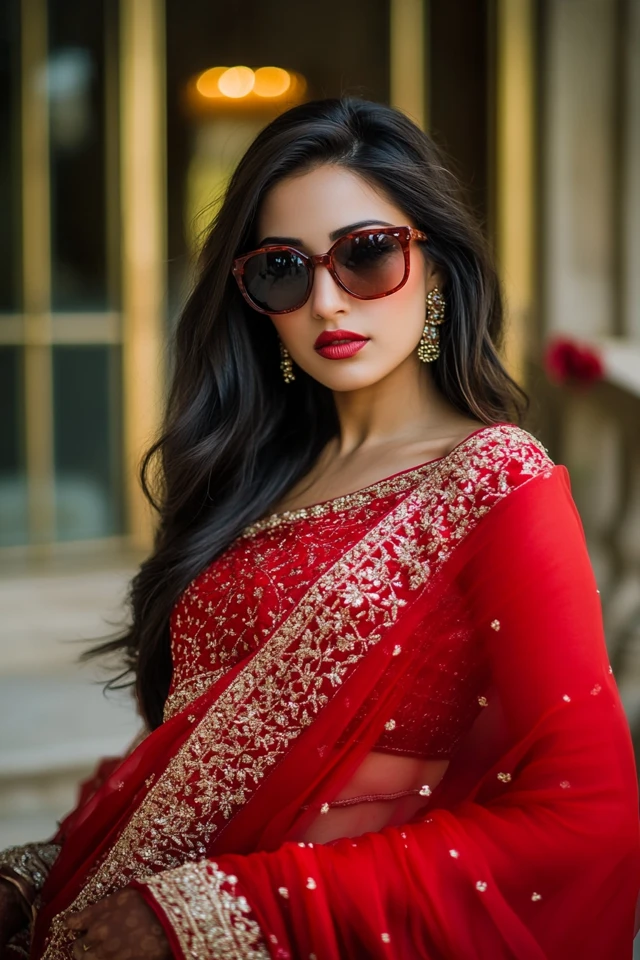
Gold zari next to red adds a second effect. Metallic thread catches light and moves as you walk, so the same red looks deeper in shadow and brighter in motion. That is a large part of why red and gold feel ceremonial.
Choosing a red saree for your body and the event
Fabric and border choices change proportion more than the color does. A few starting points:
- Fluid fabrics such as georgette or soft silk drape closely and suit people who like a defined waist. Put the heavier embroidery on the borders.
- If you'd like to draw the eye upward, choose a lighter fabric such as chiffon or crepe below and a richly worked pallu (the draped end) above.
- Vertical patterns and slim borders lengthen the line. A tailored blouse with sleeves adds structure.
- Bold patterns, thick borders or a peplum-style blouse add shape if you want more curve.
- On a petite frame, lighter fabric and smaller motifs keep the drape from overwhelming you. On a taller frame, large motifs and heavy embroidery sit comfortably.
These are starting points, not rules. A saree that you can walk, sit and dance in will always look better than one you keep adjusting.
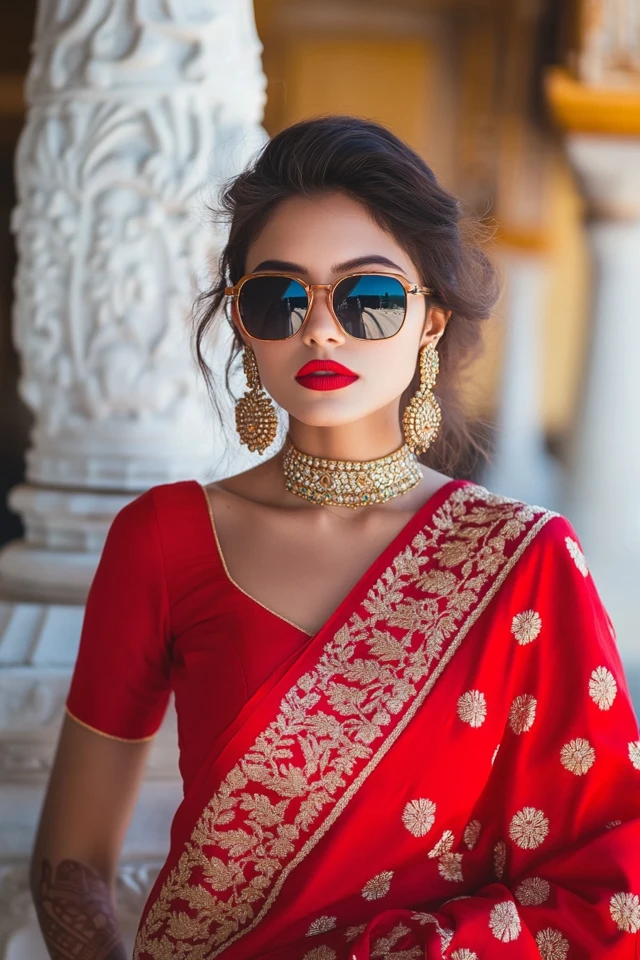
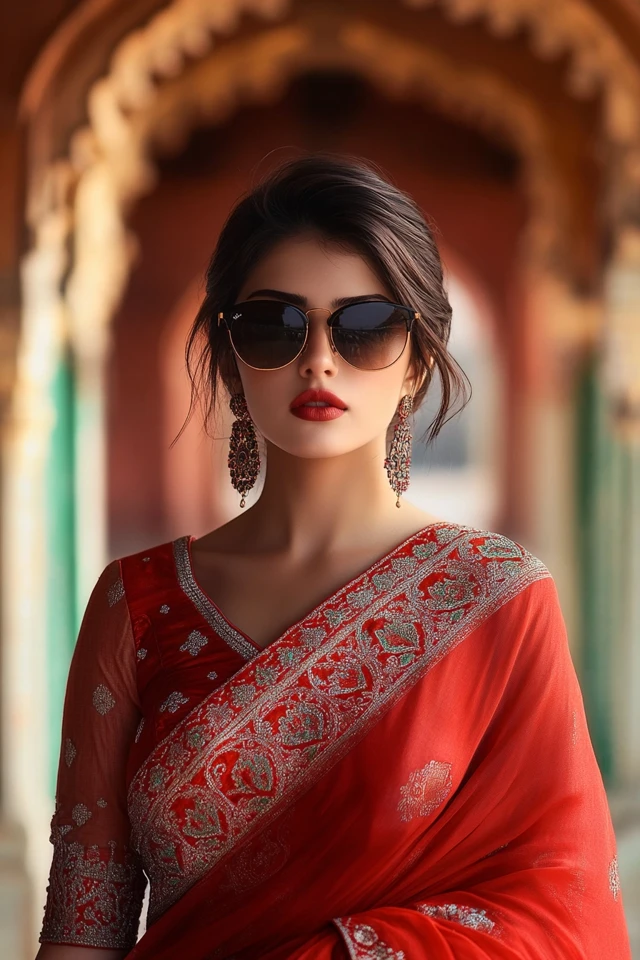
Traditional fabrics and styles for Indian festive wear for women
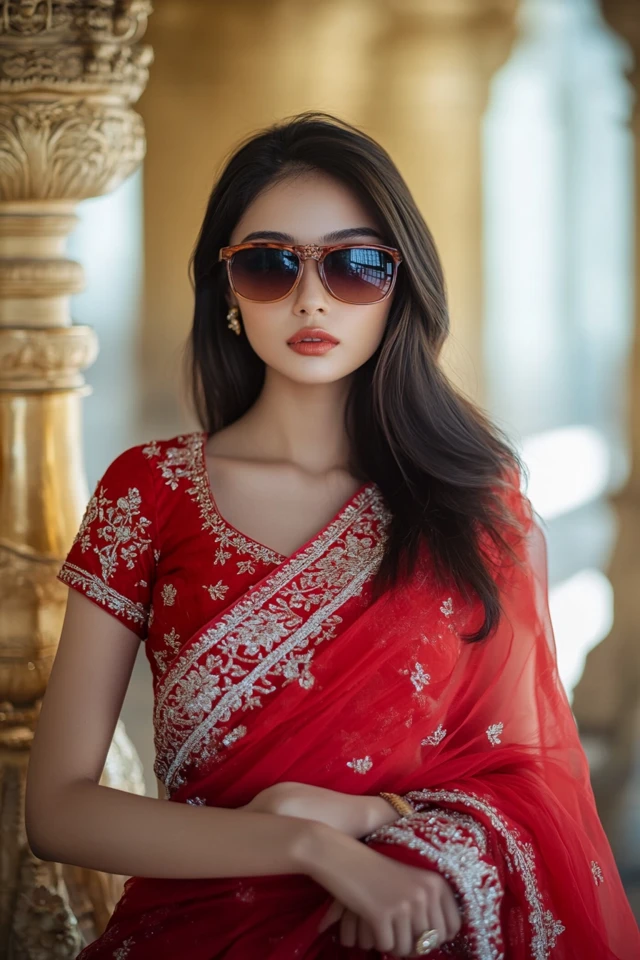
For a large wedding, heavier weaves are the classic choice: a Banarasi silk with gold motifs, or a Kanjeevaram with wide golden borders and a matching blouse. For a daytime or warmer-weather event, a red chiffon or georgette with subtle sequins is lighter and easier to wear for hours.
If you're a guest, the usual courtesy is to keep your saree a little less elaborate than the bride's. A simpler weave, or a red saree paired with a contrasting blouse, does that well. For more occasions, see our picks of sarees for Indian wedding receptions and embellished sarees for Diwali.
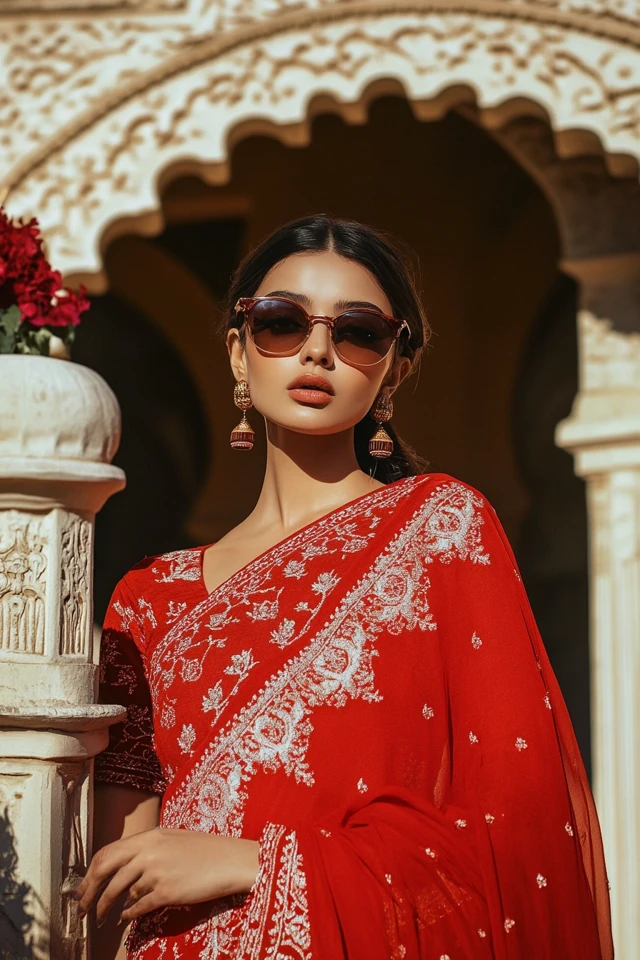
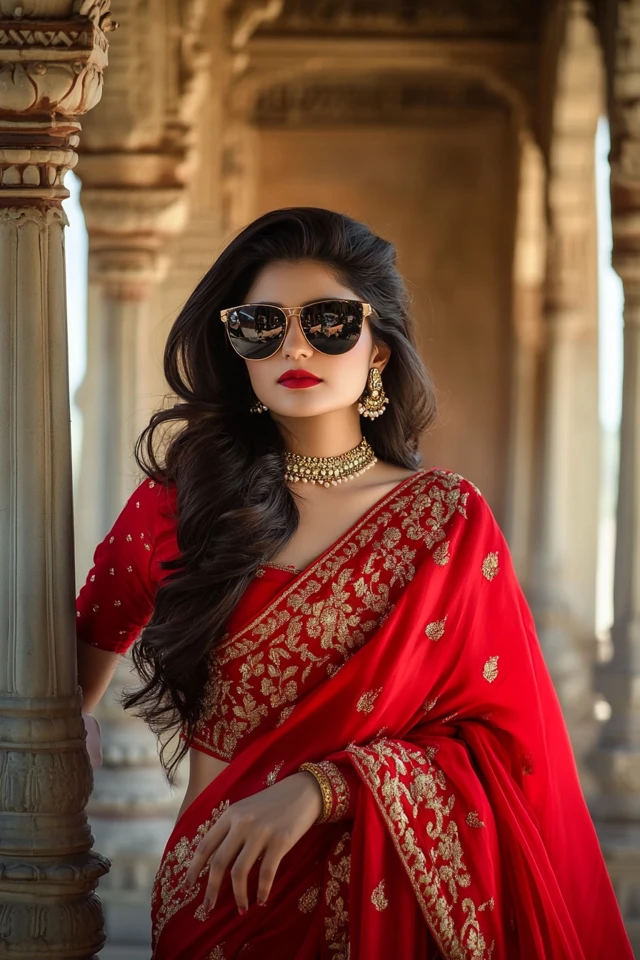
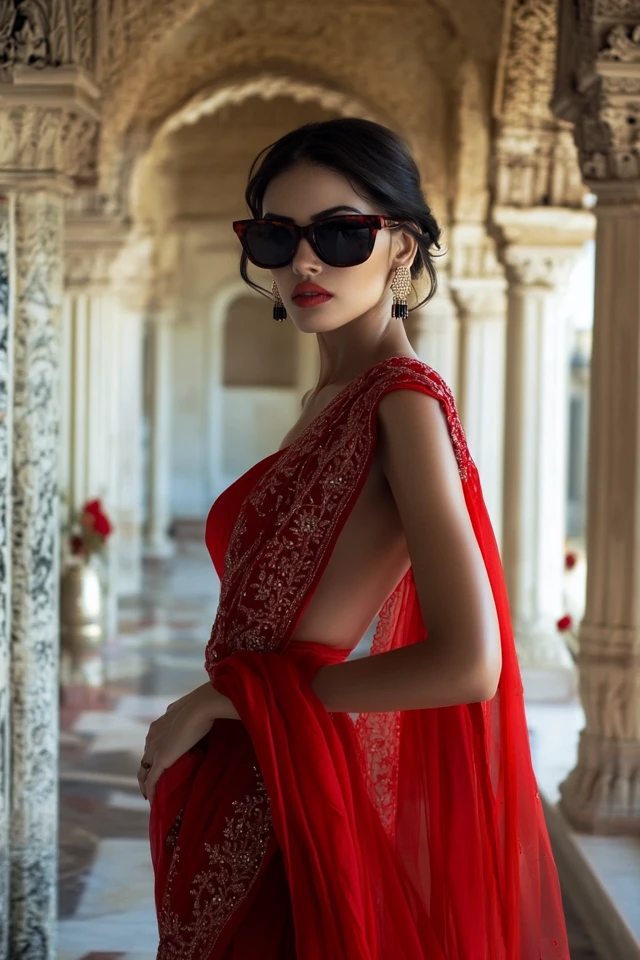
Modern twists that still respect the tradition
Contemporary versions keep the silhouette and change the details.
- A contrasting blouse in emerald green, navy or gold gives a red saree a fresher look.
- Sheer or net overlays soften the color and add a lighter texture.
- Silver or rose-gold threadwork replaces the usual gold for a cooler finish.
- A halter, backless or cropped-jacket blouse updates the top half while the drape stays traditional.
As an architect trained in evidence-based design, I'd choose the blouse first, since it frames the face and neckline, which is where the eye settles. Texture there matters as much as color: a velvet or matte blouse makes a glossy silk saree look richer by contrast.
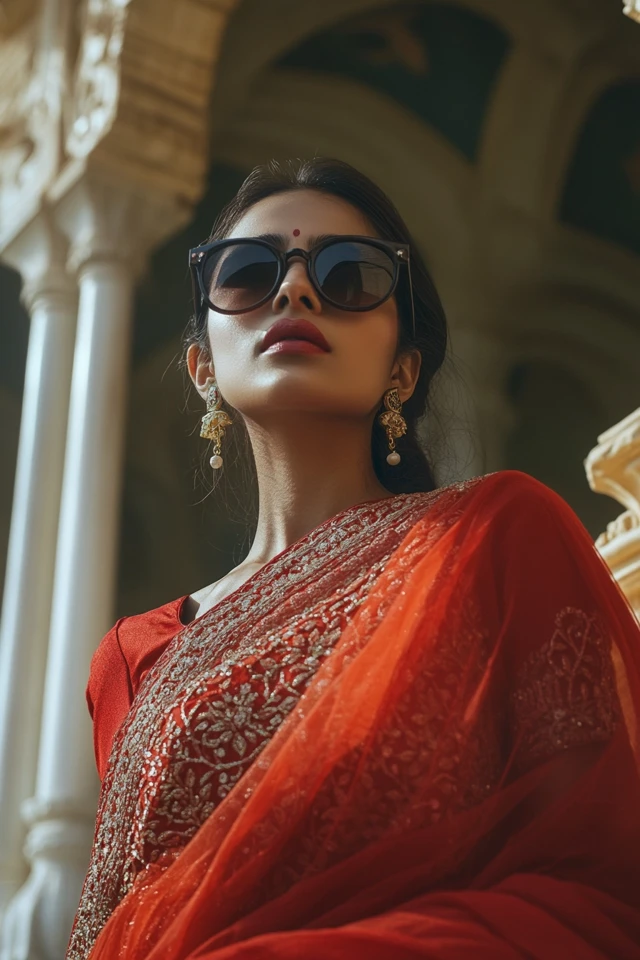
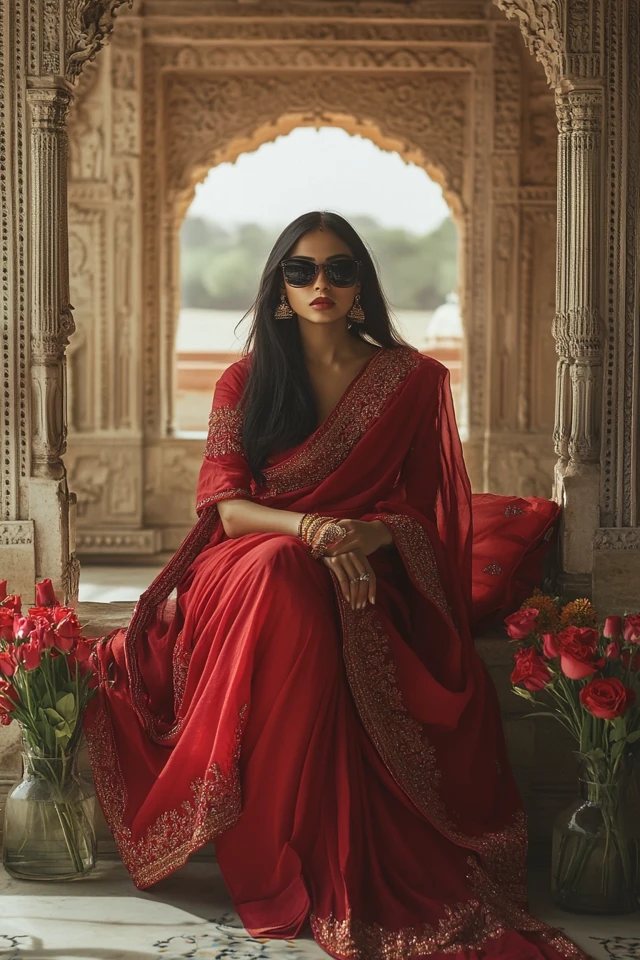
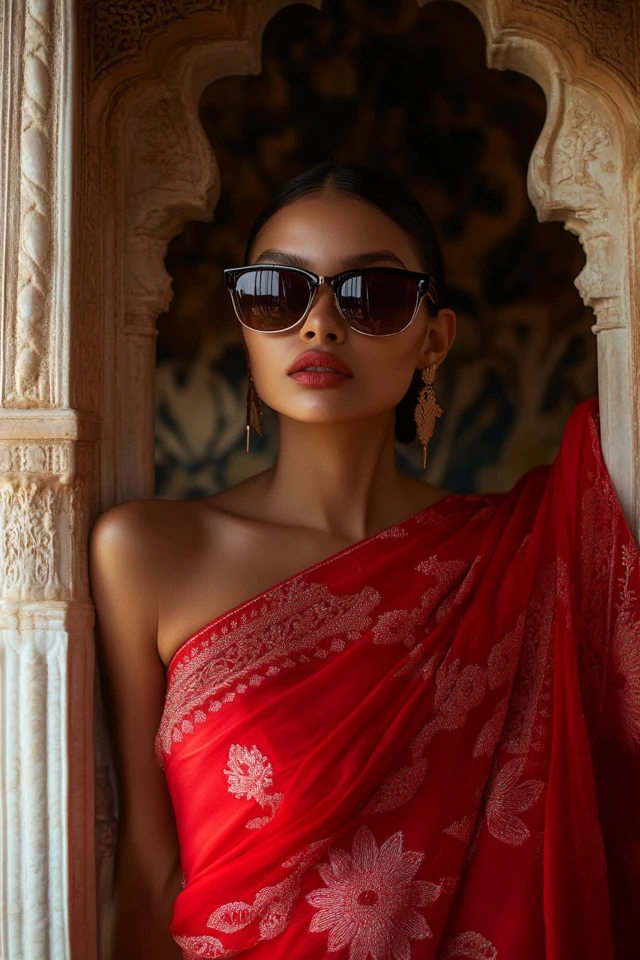
What to wear for festive attire: styling tips
- Start with gold jewelry, the classic partner for red. Diamonds or polki with a touch of color give a more modern look.
- Choose two or three focal accessories, such as bangles, a maang tikka or a statement necklace. More than that competes with the saree.
- Wear block heels or wedges if you'll be walking or dancing.
- For winter weddings, a long-sleeved velvet blouse adds warmth and a good contrast of textures.
- Finish with a hairstyle that suits the drape: a braided bun with flowers, a sleek ponytail or loose waves all work.
For the classic drape at a formal wedding, the Nivi style is the most familiar and polished. Regional drapes such as Bengali or Gujarati styles add a distinct look if you know how to wear them comfortably.
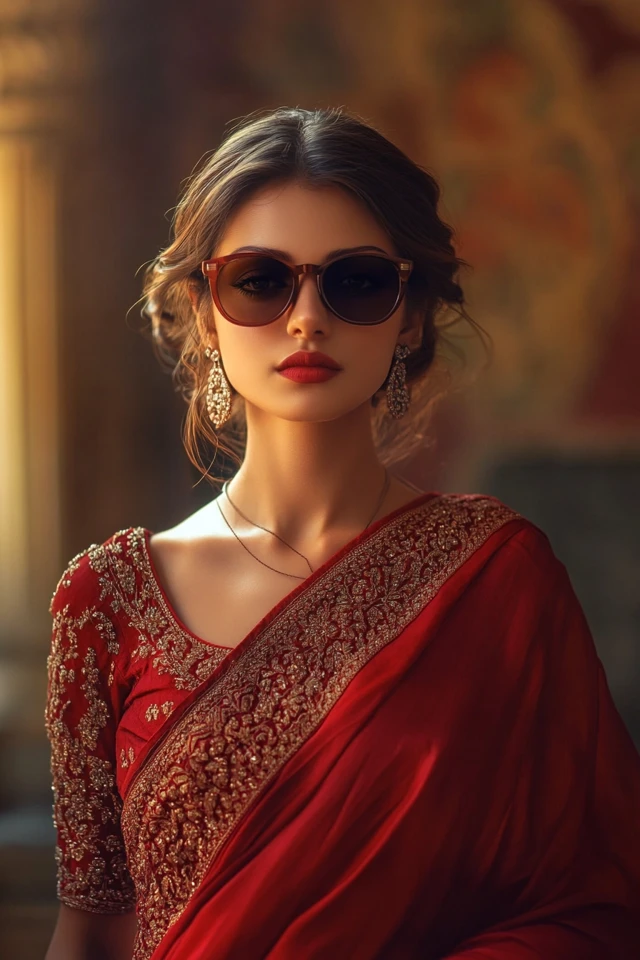
Other traditional clothes for festivals
A saree is one option among many. Embroidered dresses and tunics are common festival choices in other cultures, and both pair well with the same principles: rich fabric, deliberate embellishment, color you enjoy wearing. Browse embroidered dresses for cultural festivals and cultural tunics for multicultural holidays for ideas.
If you're wearing another culture's dress as a guest, ask the hosts what is appropriate and choose a style that is worn for that occasion, not a costume version.
Caring for a red silk saree
Store silk in a breathable cotton bag and keep it out of direct light, which can fade strong colors. Refold it along different lines from time to time so the creases do not set in one place. For cleaning, a specialist dry cleaner is the safer choice for heavy zari work.
Frequently asked questions
What is considered festive attire?
Clothing worn to mark a celebration, usually in richer fabrics, brighter color and with some embellishment. Traditional versions follow the dress customs of a specific culture or occasion.
What are some traditional clothes for festivals?
Sarees, lehengas and kurtas are common in South Asian celebrations, while embroidered dresses and tunics appear in many other cultural festivals. The right choice depends on the festival and the region.
Can guests wear a red saree to a wedding?
Yes, in many traditions guests wear red. A good courtesy is to keep the design simpler than the bride's, for example with a plainer weave or a contrasting blouse.
Can I wear a red saree to a multicultural wedding?
Usually yes, as long as the hosts are comfortable with it. If you're unsure, ask them, and choose a style suited to the formality of the event.
Filed under Occasionwear