Cultural Tunics for Multicultural Holiday Celebrations
- Words by
- Julio Arco
- Published
- Reading
- 4 min
A cultural tunic works for a multicultural holiday party when it fits comfortably, suits the dress level of the event, and comes from a tradition you have taken a minute to understand. Pair it with simple, modern pieces and let the garment do the talking.
Below: which tunics suit which gatherings, how to choose a silhouette, how fabric changes the mood, and how to wear something from another culture with respect.
What counts as a cultural tunic?
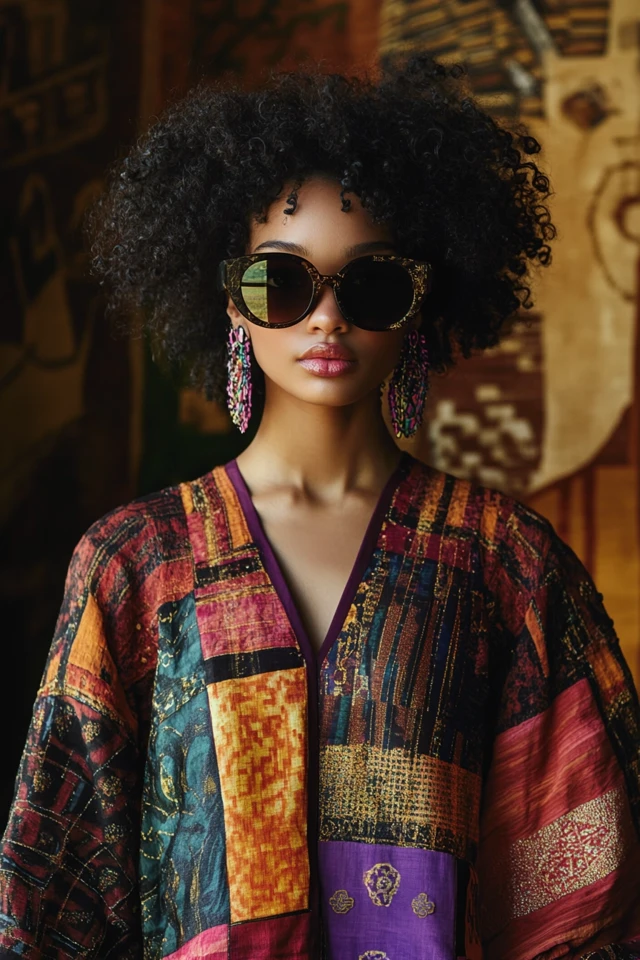
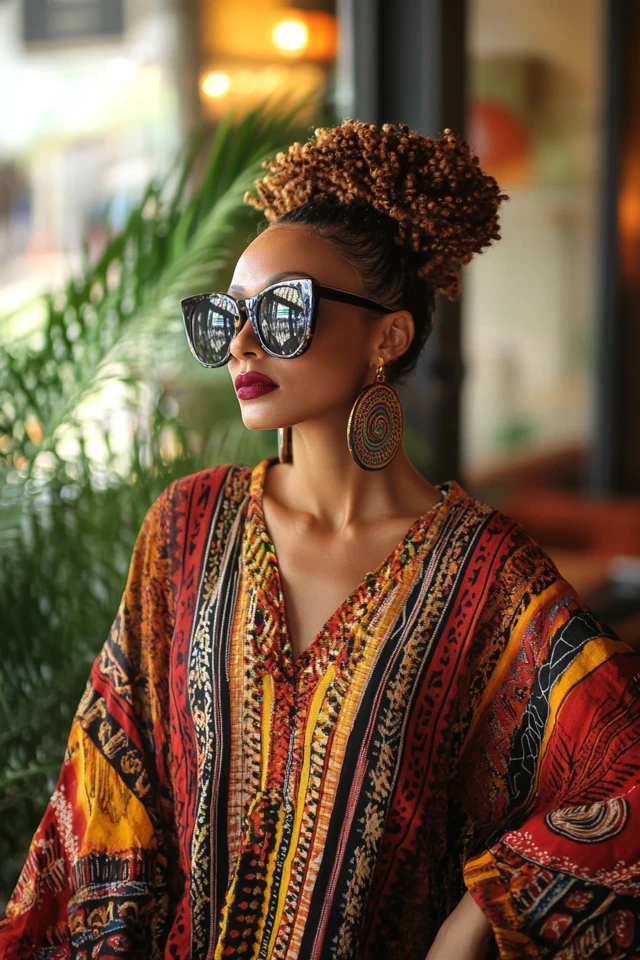
A tunic is a long top, usually hip to thigh length, and many cultures have their own version. Common examples are the Mexican and Central American huipil, the West African dashiki, and the South Asian kurta and kurti. Each has its own cut, textile and decoration, so they are not interchangeable even though they share a shape.
That range is useful at the holidays. One tunic can be relaxed enough for a family dinner, while another, in a heavier fabric with embroidery, is dressy enough for an evening party.
How do you choose the right silhouette?
Start with how the tunic hangs, because that decides how you pair it. If a tunic pulls at the shoulders or the sleeves feel tight, it is a fit problem, not a you problem. Try the next size or a looser cut.
- Straight cuts give a clean, narrow line and look sharp over slim trousers.
- A-line cuts skim the hips and move well when you are sitting at a long table.
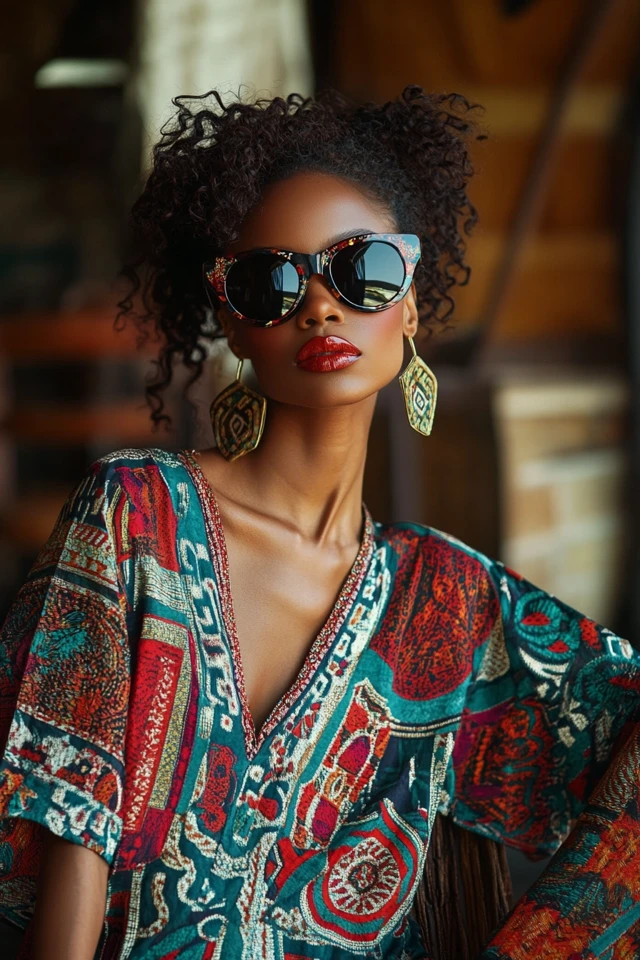
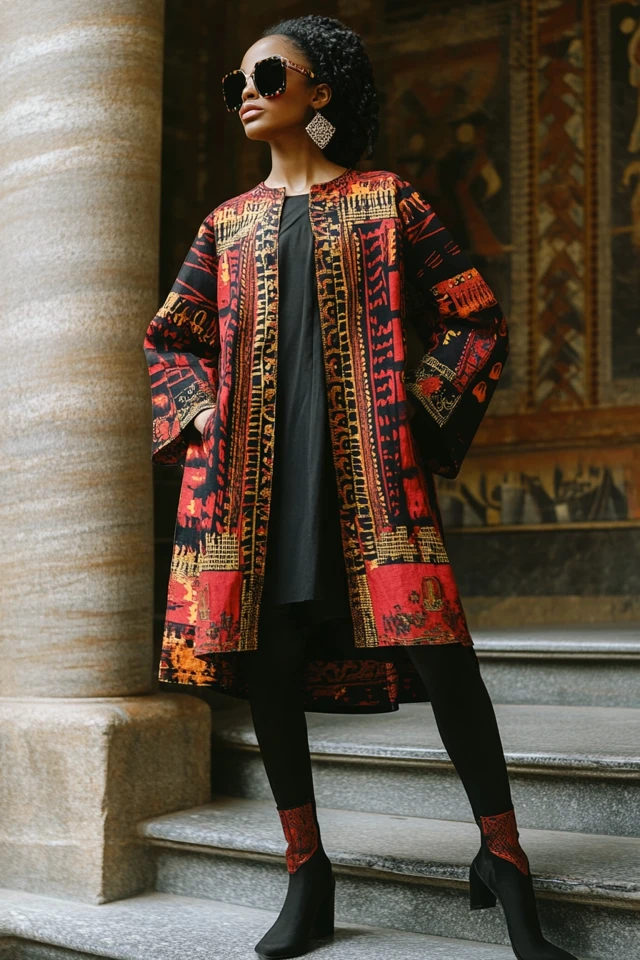
- Embellished necklines pull the eye up toward your face, so you need very little jewelry.
Through the lens of evidence-based design, I'd treat the neckline as the first thing the eye reads. If the neckline is busy, keep the rest of the outfit quiet.
Which fabrics suit holiday evenings?
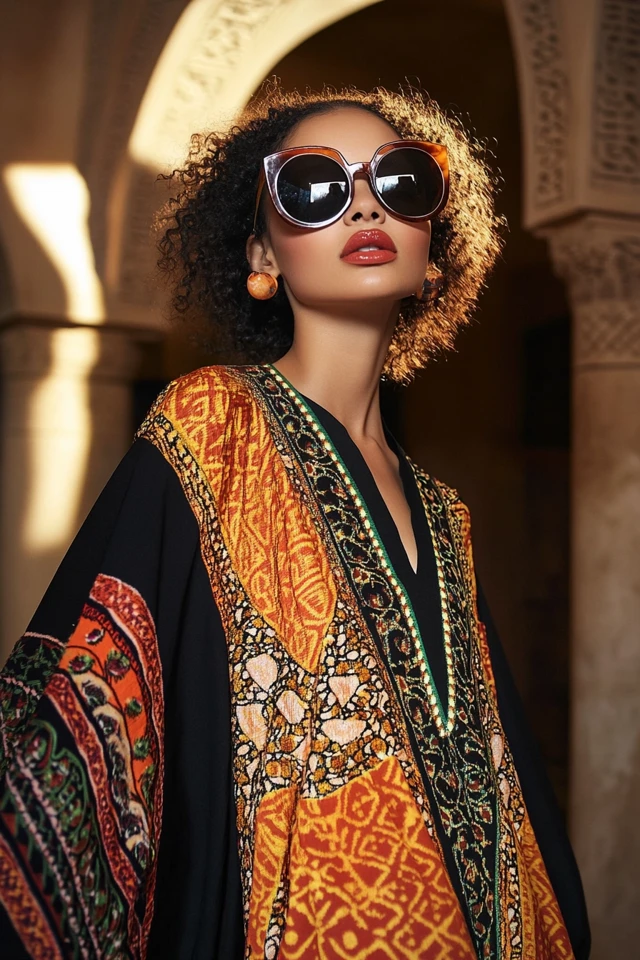
Cotton and linen tunics are breathable and good for daytime or crowded rooms. For an evening party, a heavier or glossier fabric reads as dressier. Velvet absorbs light and looks deep and soft, while satin reflects it and looks brighter and smoother.
If you usually reach for dressy blouses for special occasions, a velvet or satin tunic is a longer, more relaxed alternative that does the same job. The same goes for velvet evening tops for women: a velvet tunic gives you that texture with more coverage and an easy drape. I'd choose the matte surface if you are unsure, because it is more forgiving on camera and in warm indoor light.
How do you style a tunic with modern pieces?
Let the tunic be the focus and keep everything else plain. A few reliable pairings:
- An embroidered tunic with slim dark trousers and ankle boots.
- A kurti over wide-leg pants, which keeps the outline long and fluid.
- A dashiki with a tailored blazer on top for a dressier room.
- A longer tunic over leggings and flats for a daytime gathering.
If you would normally wear dressy blouses for women with trousers and a blazer, the same formula works here. Swap the blouse for a tunic and the proportions stay familiar.
How do you wear a tunic from another culture respectfully?
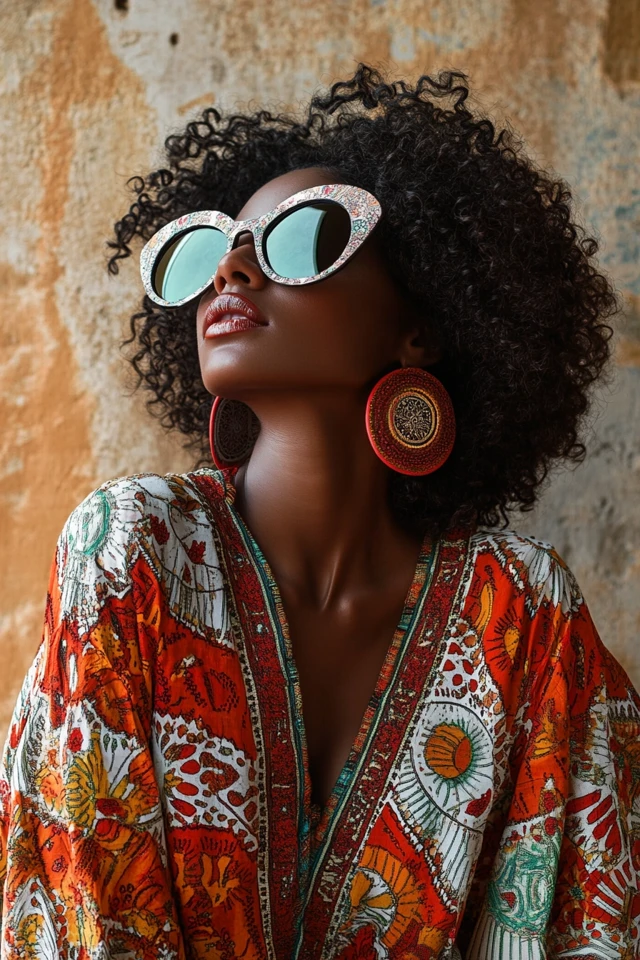
Wearing a garment because the host invited you to share their tradition is different from wearing it as a costume. A few habits help:
- Learn what the garment is called, where it comes from, and when it is traditionally worn.
- Ask the host, if you know them, whether they would enjoy seeing you wear something from their culture.
- Buy from artisans or makers connected to the tradition when you can.
- Wear it as it is meant to be worn, not as a novelty with mismatched pieces.
If you are unsure whether something is appropriate for a religious or ceremonial occasion, choose a different outfit.
What colors and details work for the holidays?
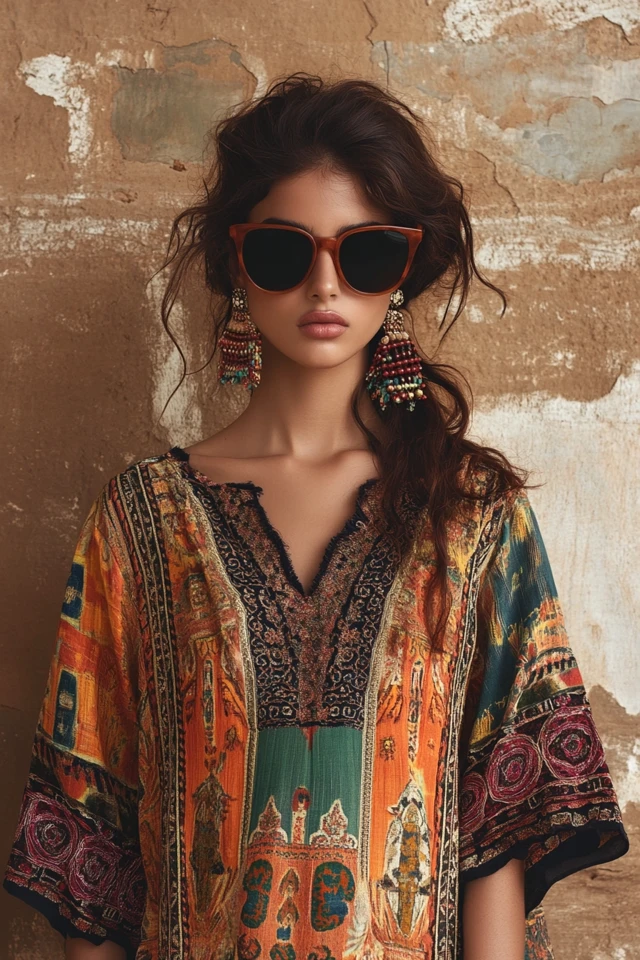
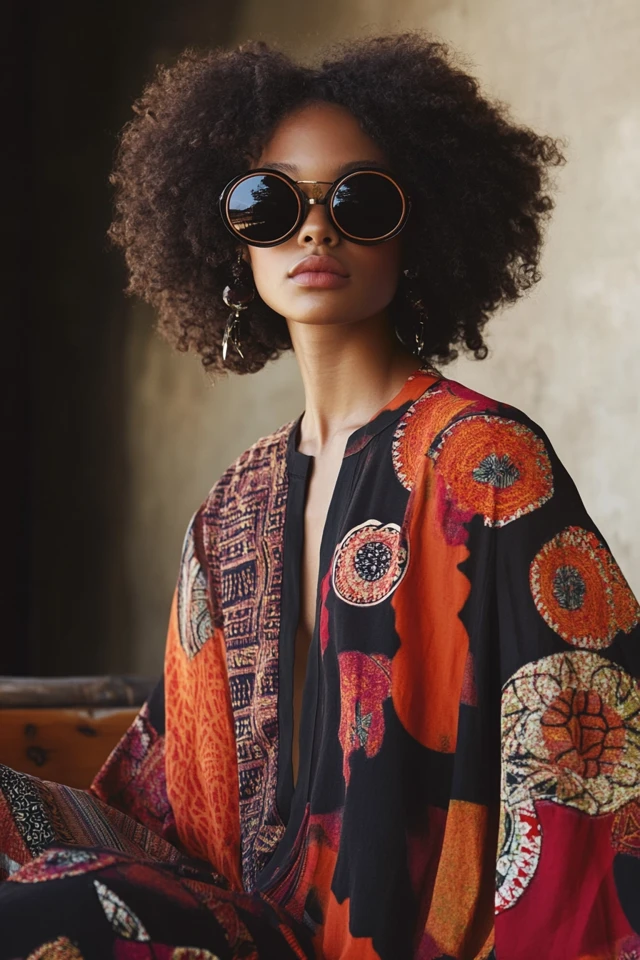
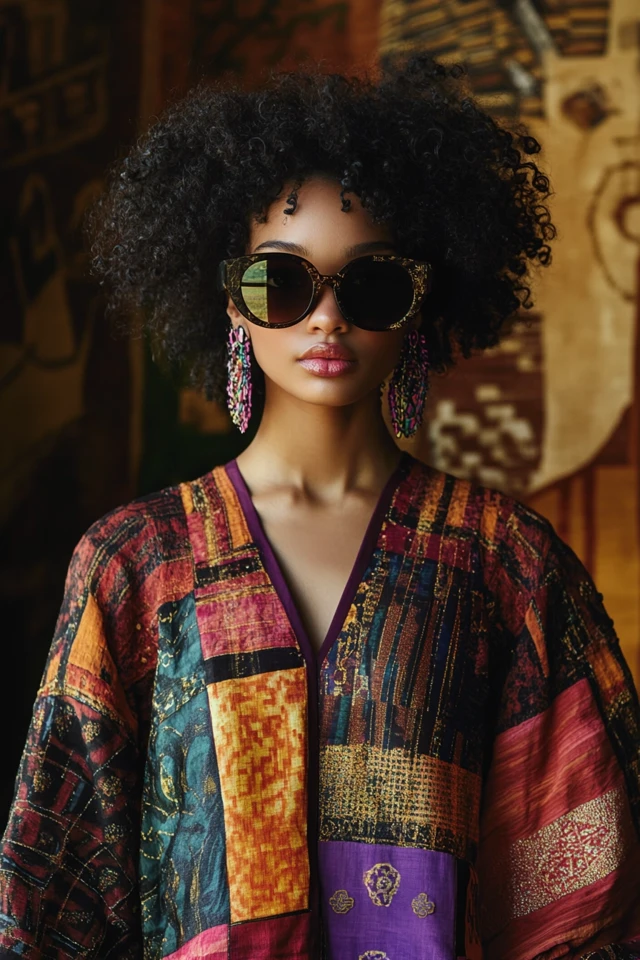
Deep jewel tones, gold thread, metallic embroidery and beadwork all suit the season, because they hold up in low, warm light. Colors in these garments can carry specific meanings that differ by region and community, so check the meaning before you assume one.
If you are wearing a busy pattern, keep the trousers or skirt in one solid shade. If the tunic is a solid, you can add a patterned scarf or a bolder earring.
How do you layer a tunic in cold weather?
A thin turtleneck under a tunic with a wide neckline adds warmth without hiding the embroidery. A shawl or long scarf over the shoulders works for outdoor arrivals, and a structured coat in a quiet color keeps the line clean. Belts are optional: add one when the tunic is loose enough that you want a defined waist.
For more ideas on comfortable layers, see oversized tunics for comfortable layers.
Where to go next
If your gathering is a specific celebration, these posts go deeper: bright tunics for Eid, kaftans for cultural holiday gatherings, and embroidered dresses for cultural festivals. For a more Western party look, try Christmas party attire or silk and velvet holiday dresses.
Frequently asked questions
How can I wear a cultural tunic without appropriating?
Learn what the garment is and when it is worn, and choose pieces made by artisans or brands tied to that culture. Wear it as intended and skip it for ceremonies where outsiders are not expected to wear it.
Can cultural tunics be dressed down?
Yes. A tunic over leggings or slim trousers with flats suits a daytime gathering. Lighter cotton or linen versions work best for this.
Are tunics only for women?
No. Garments such as the kurta and the dashiki are worn by men, and the same fit advice applies: check the shoulders first, then the length.
Where can I find authentic cultural tunics?
Look to cultural markets, specialty boutiques and shops that name the artisans or workshops they buy from. A seller who can tell you where and how a piece was made is usually a good sign.
Filed under Occasionwear