Mixing Prints and Patterns: Leopard for Parties
- Words by
- Julio Arco
- Published
- Reading
- 4 min
Yes, you can put two different prints together. The easiest way to start is to let leopard be your anchor: it behaves like a neutral, so it sits comfortably next to stripes, polka dots or a small floral as long as the scale and colors are managed.
Below are the rules I'd follow for mixing prints and patterns, with leopard at the center and an anniversary party as the setting. Each rule is followed by an outfit you can copy.
How to mix prints and patterns: the basic rules
Most successful pattern mixing comes down to three decisions: scale, color and how much solid you leave around the prints. Get those right and the result looks planned instead of messy.
Keep the color palette cohesive
Pick one or two colors that appear in both prints. With classic leopard that is usually tan, brown and black, so a black-and-white stripe or a tan check will share enough with it to feel related. If the colors have nothing in common, the eye reads two separate outfits stacked together.
Mix patterns of different scales
Two prints of the same size compete. Pair a large leopard with something much finer, like a thin pinstripe or small dots, and the eye has a clear lead and a quiet supporting pattern. This is the single most reliable fix if you worry about looking like a clown.
Pair a loud print with a subtle one
Let one print do the talking. If your leopard is bold, make the second pattern low-contrast: a tone-on-tone stripe, a faint tweed or a fine knit texture. Through the lens of evidence-based design, I'd treat texture as a quiet pattern, because a surface that catches light softly adds interest without adding noise.
Add a solid piece to balance
A black blazer, a tan trench or a plain turtleneck gives the eye somewhere to rest. Solids between two prints work like white space on a page.
Which patterns go together, and which don't?
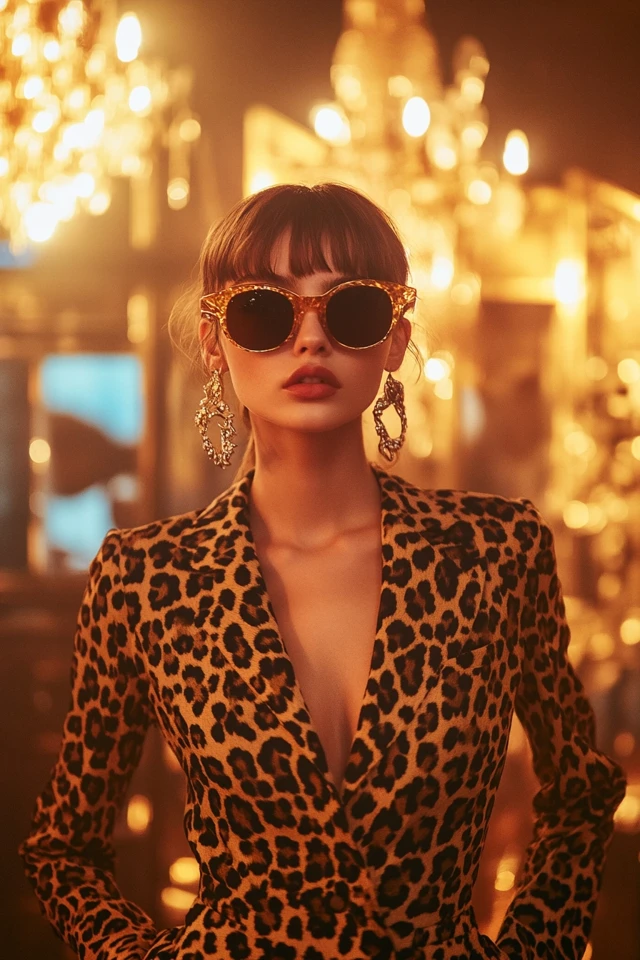
Patterns that go together usually share a color and differ in scale: leopard with stripes, leopard with small polka dots, or leopard with a tonal houndstooth. Leopard also pairs easily with plain textures such as satin, velvet or leather.
The pairings that tend to fail are two prints of equal size and strong contrast, such as large leopard with large bold florals, or two busy prints in unrelated colors. Breaking the rule is not forbidden, but it takes a very deliberate palette to work.
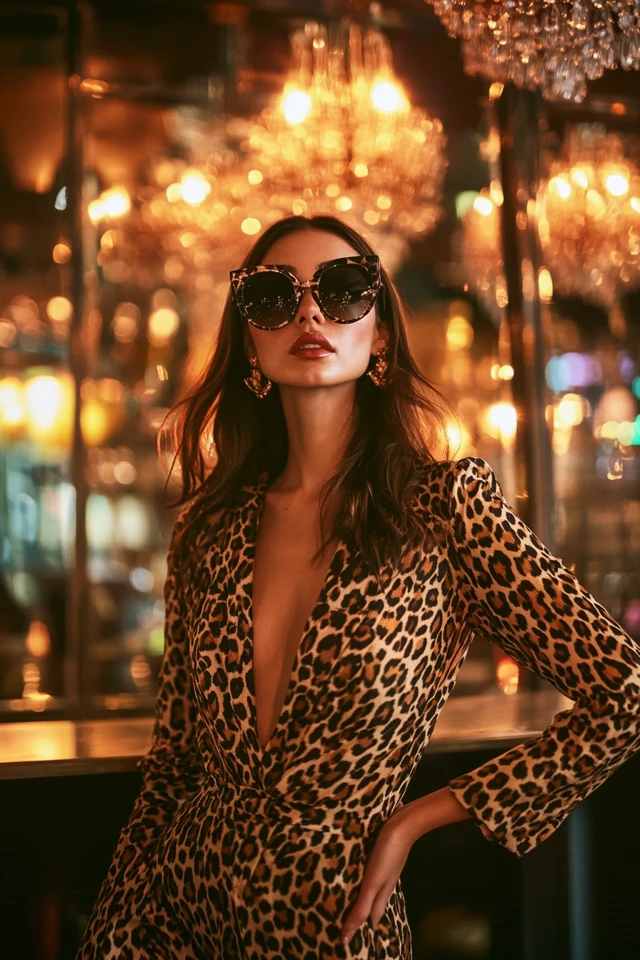
Choosing the leopard piece
For a party, the piece you choose sets the mood before any mixing happens.
Dresses
- Wrap dresses define the waist and suit most shapes.
- Slip dresses are sleek and evening-ready.
- Fit-and-flare dresses add movement.
- Maxi dresses feel dramatic at formal celebrations.
- Bodycon dresses are the most fitted option.
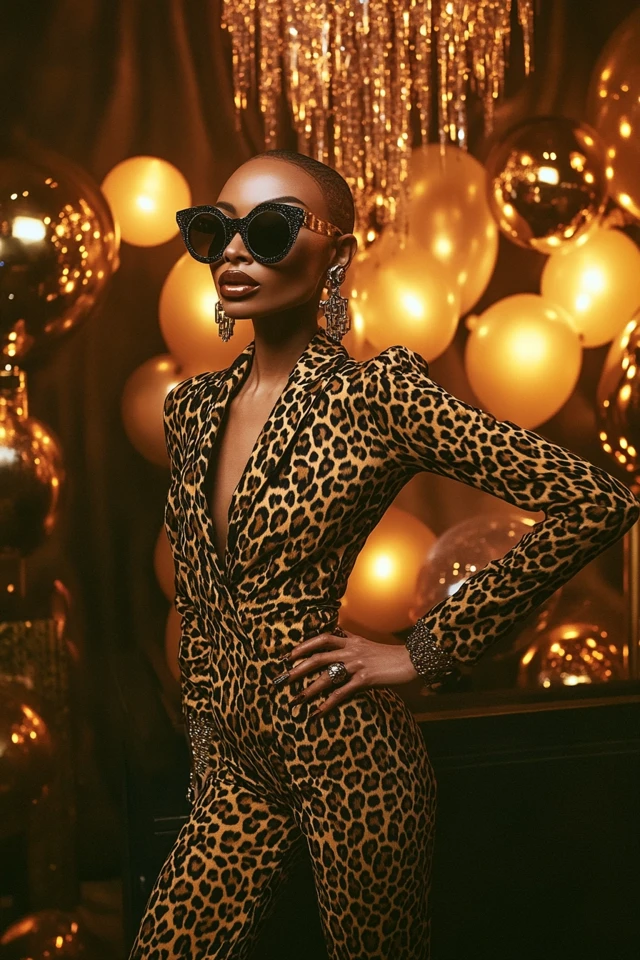
Separates and accessories
A leopard blouse with tailored trousers or a pencil skirt is polished and semi-formal. A midi skirt works with neutral tops. If you are new to the print, start with shoes, a clutch or a scarf. Accessories are the gentlest way to try pattern mixing outfits, since a leopard shoe under a striped sleeve already counts.
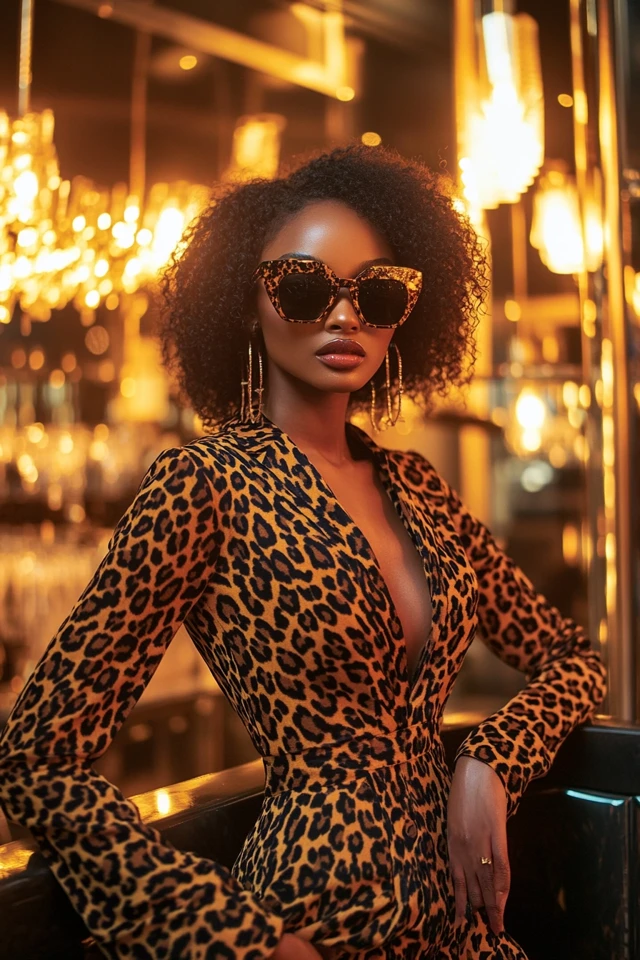
Fabric and color
Fabric changes how the same print reads. Silk and satin look polished in evening light, velvet feels deeper and softer, chiffon looks romantic, and faux leather adds an edge. Classic tan-and-black leopard is the most versatile. Black-and-white leopard looks more graphic and mixes well with stripes. Colorful leopard in red, blue or pink suits a playful party, though it narrows your pairing options.
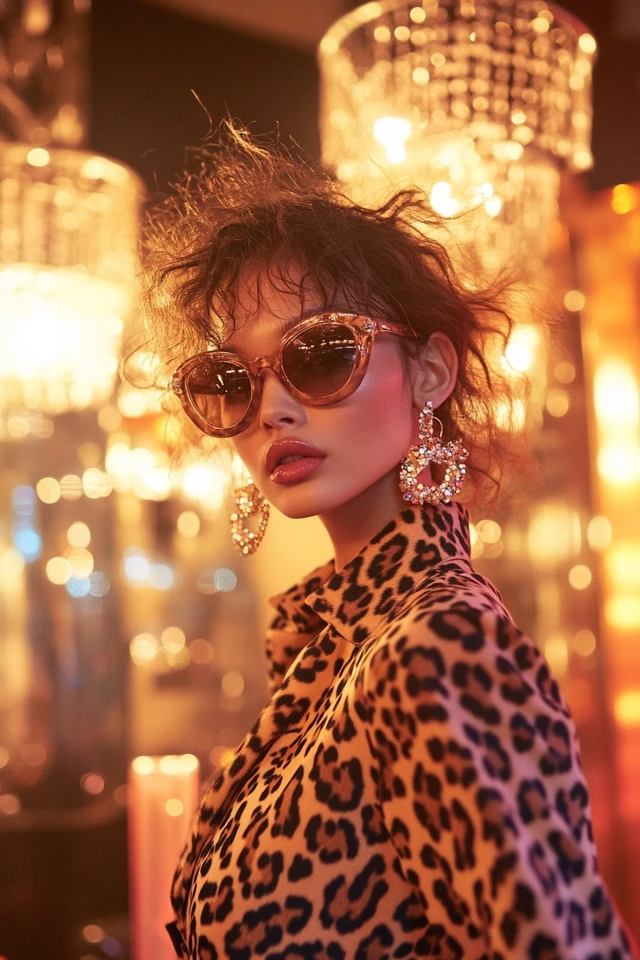
Accessories that keep the look cohesive
Gold jewelry sits naturally with warm leopard tones. If your outfit already carries two prints, keep earrings and necklaces simple so they do not add a third voice. Black, nude or metallic heels and a sleek clutch keep the focus where you want it. Leopard shoes work best with a solid or monochrome dress.
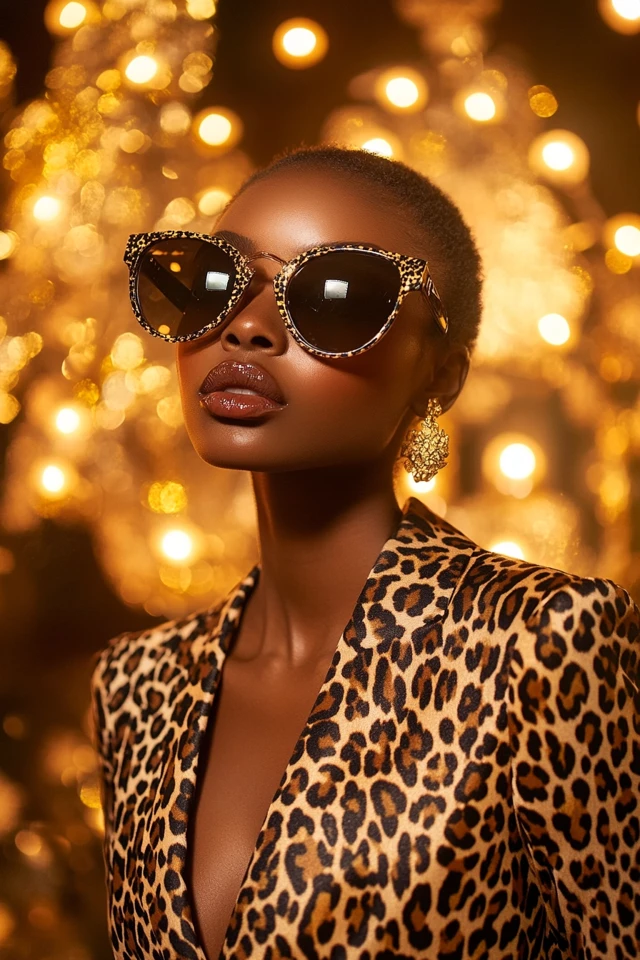
Hair and makeup follow the same logic. A sleek ponytail or updo shows off earrings and neckline, while soft waves warm up an edgy print. A red lip is a classic match, and a bronze or gold smoky eye picks up the print's warm tones.
Four outfit ideas to copy
Classic elegance
Silk leopard wrap dress, gold drop earrings, black strappy heels and a metallic clutch. Add a fine black belt if you want a hint of a second texture.
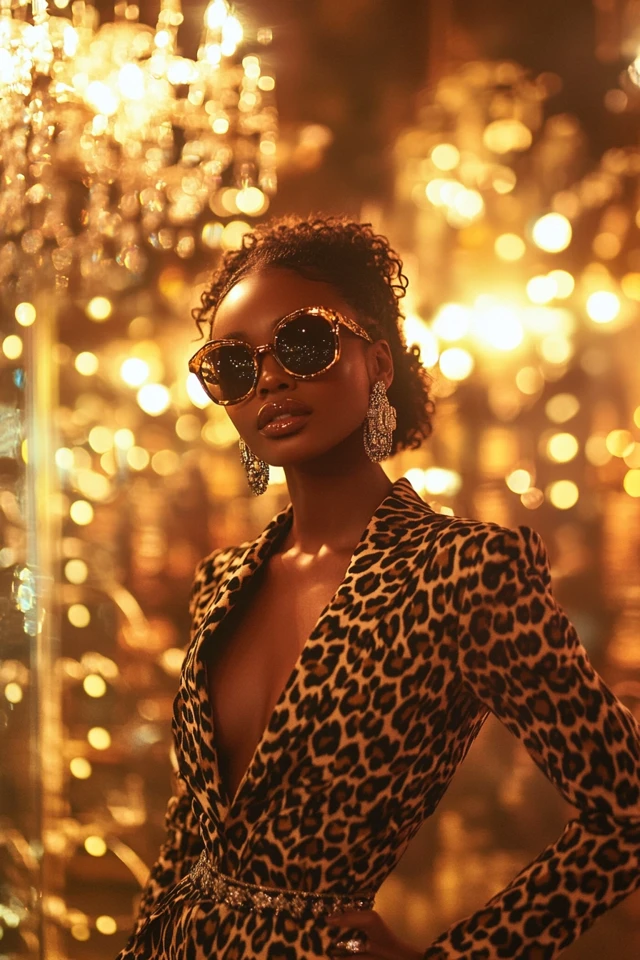
Modern minimalism
Leopard satin blouse with black trousers, nude pumps, a tan clutch and a thin gold necklace. For a first try at mixing, swap the trousers for a fine black-and-white pinstripe.
Edgy glamour
Velvet leopard bodycon midi dress under a black leather jacket, with ankle boots and hoop earrings. The leather is the second texture, and it keeps the print from feeling too sweet.
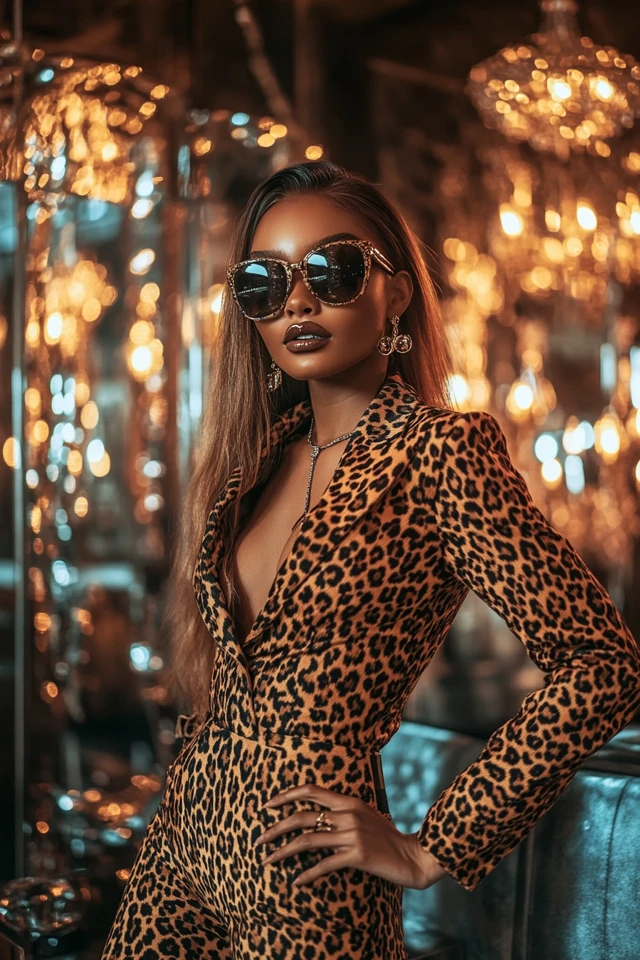
Playful and festive
Colorful leopard midi skirt, fitted black turtleneck, black heeled sandals and a gold cuff. The solid top does the balancing.
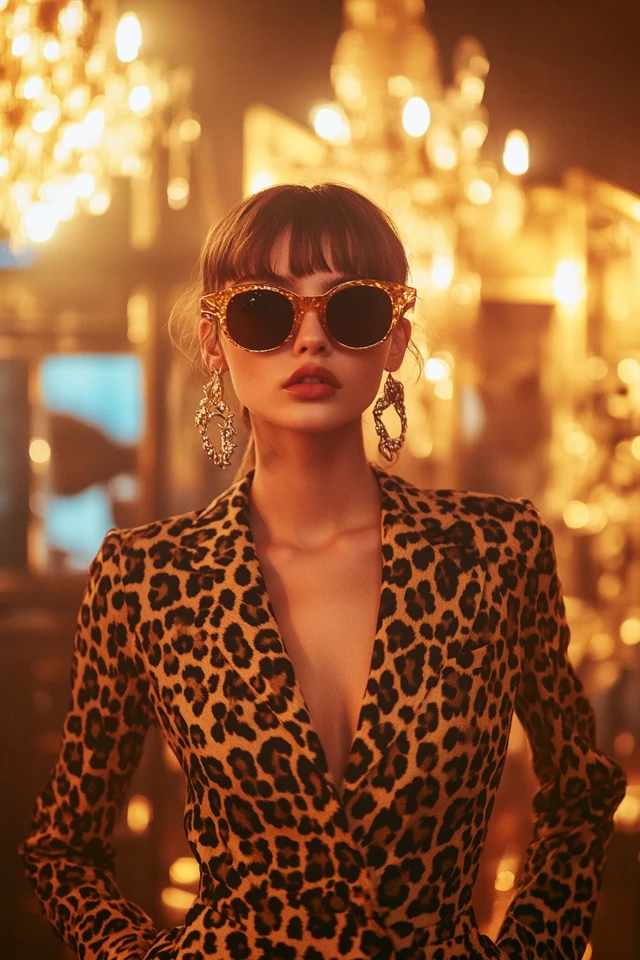
Try it on and trust your eye
Stand a few steps back from a mirror. If your eye lands on one print first and the other supports it, the mix works. If both pull equally, change the scale of one or add a solid layer. Want more ideas for the occasion? See the best cocktail dresses for anniversary parties, bold animal print tops and grunge bold prints styling tips. For a leopard detail on your hands, there is also leopard nails inspiration.
Frequently asked questions
How to mix prints and patterns?
Share at least one color between the prints, vary the scale so one is large and one is small, and add a solid piece to break them up. Start with two prints before trying more.
Can you put two different prints together?
Yes. Leopard with stripes or small dots is an easy start, since animal print reads close to a neutral.
What patterns do not go together?
Two prints of the same scale and strong contrast usually fight, especially when their colors are unrelated. Changing the size of one often fixes it.
How can I tone down a bold leopard outfit?
Layer a neutral piece over it, such as a black blazer or a tan trench, and keep jewelry and bag simple.
Filed under Occasionwear