Floral Summer Dresses: Styles, Lengths and Palettes
- Words by
- Julio Arco
- Published
- Reading
- 4 min
The easiest floral summer dress to wear is a midi or maxi in a soft, medium-scale print on a fabric that drapes: cotton, linen blends or viscose. Pick the background color first, then the flowers, because the background decides how the whole dress reads next to your skin.
Below: how to choose by length, print size and palette, what suits a casual day versus a wedding, and what to put on your feet.
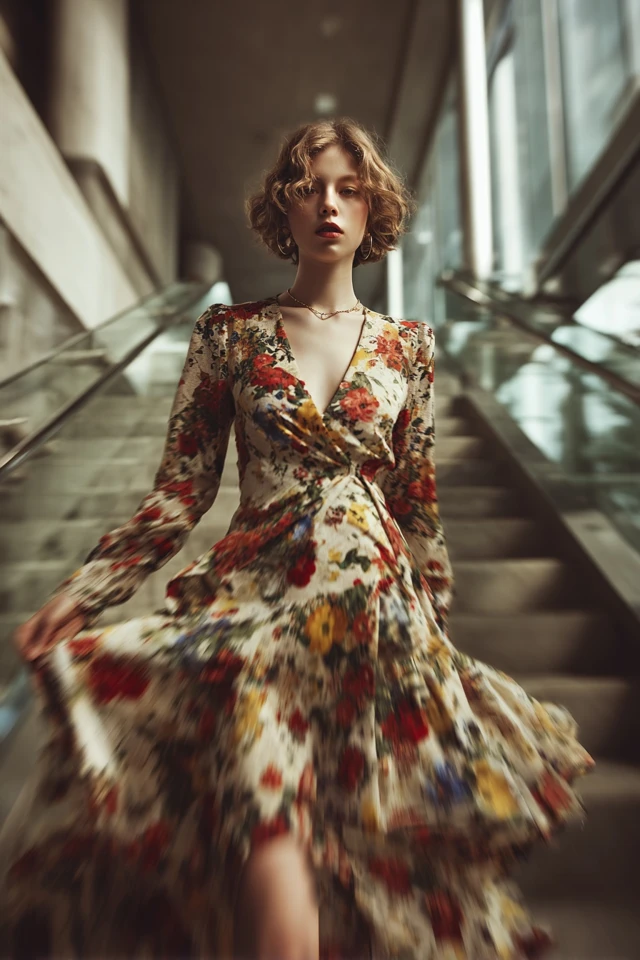
Which floral dress length suits you?
Midi floral summer dresses
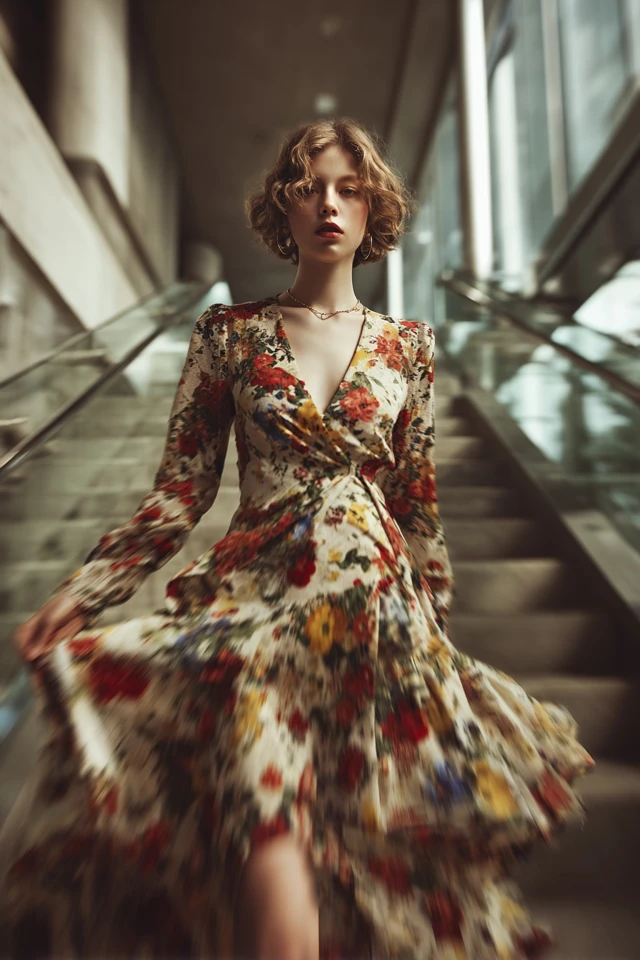
A midi ends somewhere between the knee and mid-calf. It is the most flexible length: it works with flat sandals, with block heels and with a denim jacket. Watch where the hem lands. A hem that cuts across the widest part of your calf can look abrupt, so try a slightly longer or shorter version before deciding it is not for you.
Maxi floral summer dresses
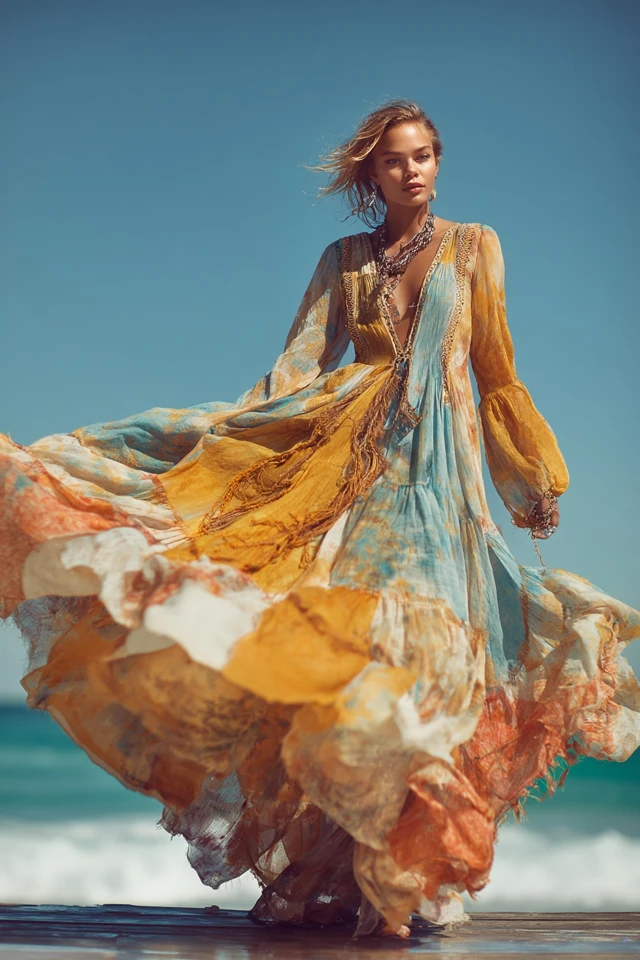
Maxis skim the ankle or the floor and make a long, uninterrupted line. They suit tall frames well, and petite wearers can get the same effect with a defined waist and a hem that just clears the ankle bones. If the dress is very full, choose a smaller print so the volume does not double up with a busy pattern.
Mini and knee-length styles
Shorter hems are the easiest for heat and for walking. A tiered or A-line cut keeps them relaxed rather than tight, and a smaller print keeps the proportions neat.
How do you choose print size and color?
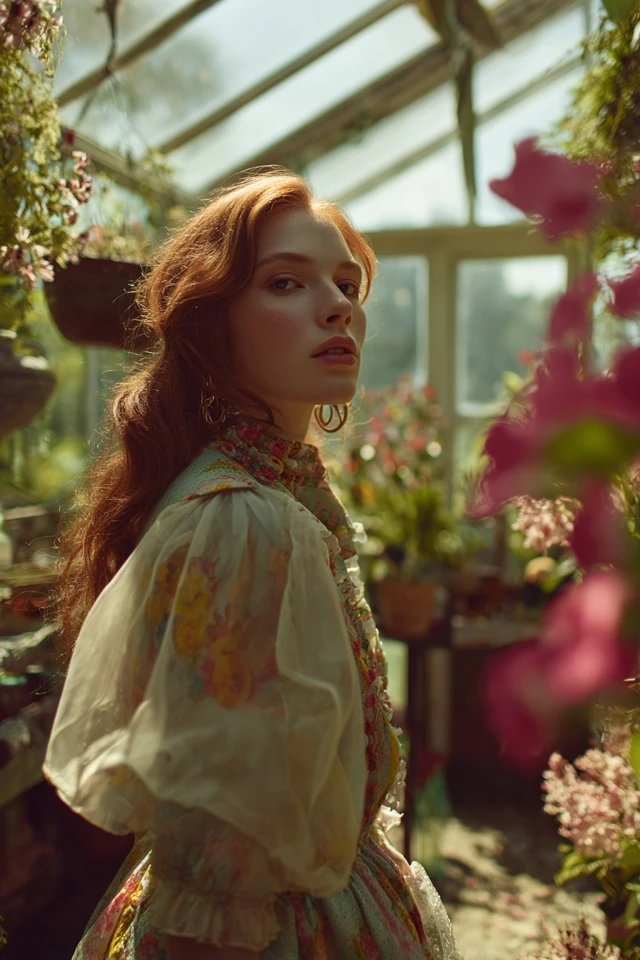
Print scale works like proportion in a room: large motifs on a small frame can feel crowded, while tiny ditsy prints on a tall frame can fade into a texture from a distance. Medium scale is the safe middle. Beyond that, trust what you see in the mirror.
Background color does most of the work. Dark grounds such as navy, deep green or burgundy make flowers look crisp and read as more formal. Cream and pale grounds feel airy and casual. Through the lens of evidence-based design, I'd check the dress in daylight before buying, because a print shifts noticeably between store lighting and sun.
For undertones, a simple starting point: warm skin often looks good with coral, peach, gold and olive tones, while cool skin tends to suit blues, mauves and violet-leaning florals. Neutral undertones can try both. Treat this as a first filter, not a rule.
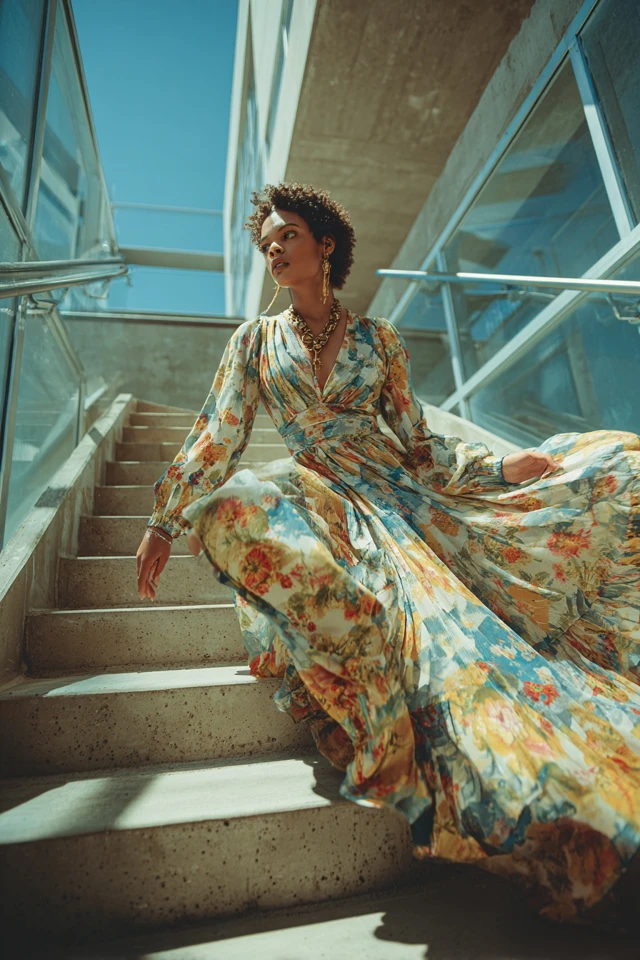
Palettes that work every summer
- Navy with rose and cream flowers
- Cream with lavender or sage sprigs
- Terracotta and ochre on an earthy ground
- Dusty blue with white blossoms
These combinations pair easily with neutral accessories, so one dress can be dressed several ways. For more palette ideas, see summer floral dress wardrobe basics and the spring floral dress color palette. If you prefer one-color looks, the monochrome floral palette is worth a look.
What fabric should you pick for hot days?
Cotton, linen blends and light viscose breathe and drape instead of clinging. As an architect trained in evidence-based design, I'd pick the softer, matte weave over a shiny one for daytime, because gloss makes a print look sharper and more dressed up.
Check the lining too. A thin lining that sticks to the skin makes a dress feel warmer than the fabric alone suggests.
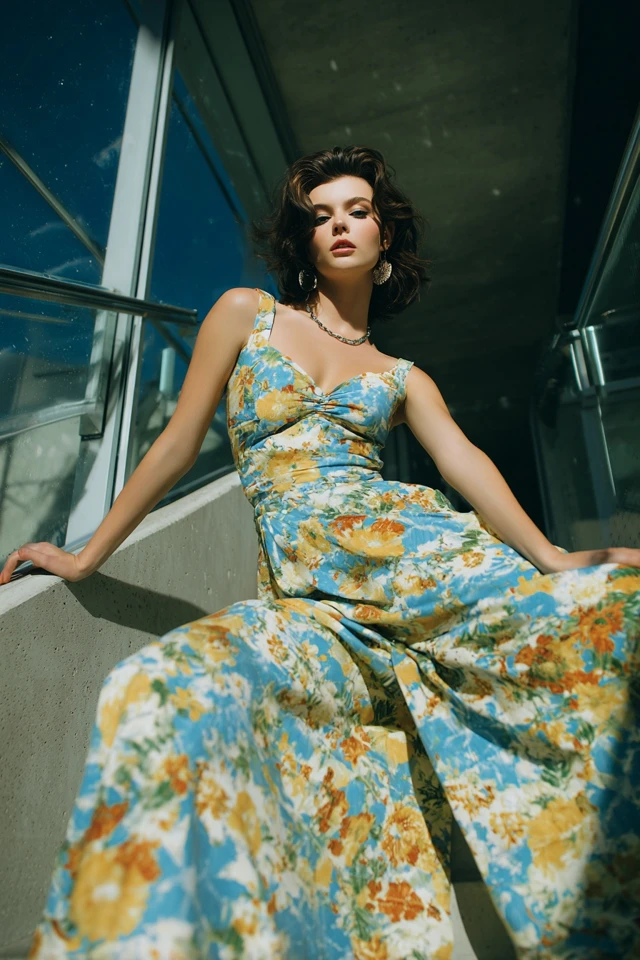
How do you style casual floral summer dresses?
Keep everything else simple. Flat sandals or clean white sneakers, a denim or linen jacket, a straw or canvas bag. Pick one color from the print and repeat it in a single accessory, such as a belt or a bag, so the outfit looks planned without being matched.
For cooler evenings, a camel or navy cardigan works with most palettes. More ideas for easy summer pieces are in the chic summer basics palette.
Can you wear floral dresses to a wedding?
Yes, and they are a common guest choice for daytime and garden weddings. Choose a midi or maxi hem, a fabric that drapes, and a print that is not too bright. Dark or muted grounds read as more formal than white or very pale ones. Avoid anything close to white as a base, since that color is usually left to the couple, and check the dress code on the invitation.
For floral dresses for wedding guests, dress the look up with heeled sandals or block heels, a clutch and simple jewelry. Wrap or bias-cut styles move well on a dance floor.
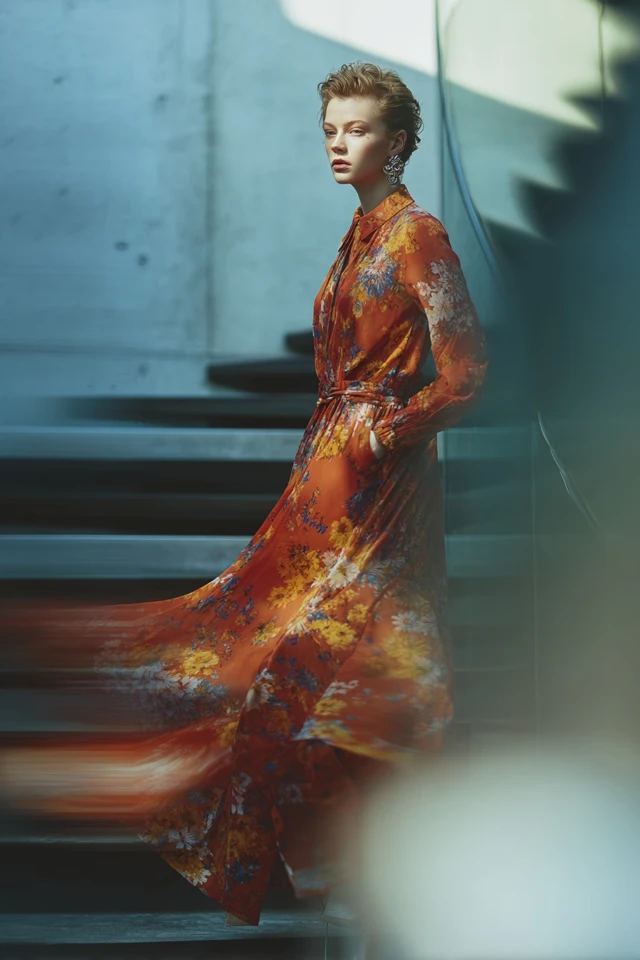
Can an older woman wear a floral dress?
Of course. Age does not change the rules, fit does. Look for a clean neckline, a waist that sits where you want it, sleeves if you prefer more coverage, and a fabric with some weight so it falls smoothly. Muted or mid-scale prints often feel polished, though bold ones are fine if you like them.
Which shoes go with floral dresses?
- Flat leather sandals for daytime and travel
- White or cream sneakers for a casual look
- Block heels or low wedges for weddings and dinners
- Espadrilles for beach towns and long days on your feet
Tan, cream and navy shoes go with almost every floral palette, and they rarely compete with the print.
Frequently asked questions
Can an older woman wear a floral dress?
Yes. Focus on fit, a flattering neckline and a fabric that drapes, then choose a print scale and palette you enjoy.
Are floral dresses in for summer 2026?
Florals return every summer, and midi and maxi shapes in soft palettes are easy to keep wearing year after year. Buy the print you like rather than chasing a forecast.
What color floral dress is best for a daytime wedding?
Muted or mid-tone grounds such as dusty blue, sage, navy or terracotta are reliable. Skip white and near-white bases.
How do I make a floral dress look less casual?
Choose a darker background, add heels or dressy flats, and keep accessories minimal and polished.
Filed under Outfit Ideas