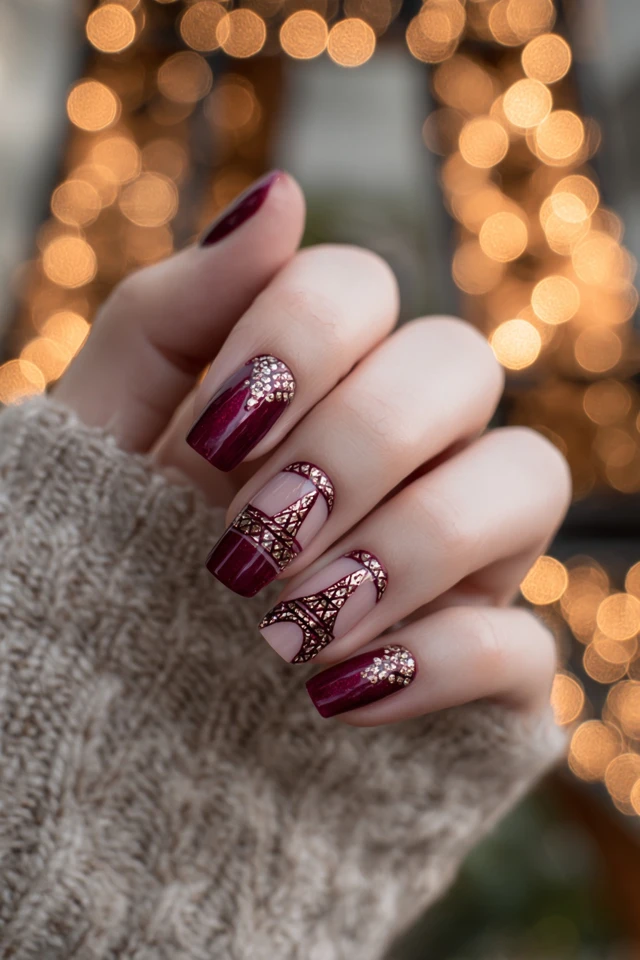
Artful Squoval Silhouette Nails
- Words by
- Julio Arco
- Published
- Reading
- 4 min
Choose squoval if you like a neat, structured fingertip with soft corners. Choose round if you want the gentlest outline and the lowest chance of snagging. Both are short-friendly, easy to maintain and suit most hands.
A squoval nail is a square with the corners rounded off: the free edge stays fairly flat, the sides run straight, and nothing is sharp. A round nail follows the curve of your fingertip with no flat edge at all.
Round or squoval nails: what is the difference?
The difference is the tip. Round nails curve from side to side in one continuous arc. Squoval nails keep a short, flat edge across the top and soften only the corners.
Squoval reads a little more tailored and deliberate. Round reads softer and more natural. If you are deciding between round or squoval nails, think about how much structure you want at the fingertip, and how much you type, lift and carry with your hands.
Which nail shape suits my hands?
Look at your fingers and nail beds, not at a trend.
- Short or wide nail beds: a slim squoval or a round shape with sides filed slightly in makes the nail look a bit longer.
- Long, narrow nail beds: either shape works. Squoval adds a little width at the tip.
- Broad fingertips: keep the free edge short and the sides straight, so the nail does not echo the width of the finger.
Through the lens of evidence-based design, I'd treat the nail as a small shape the eye reads in one glance. Straight sides lead the eye along the finger, while a wide, blunt curve stops it. That is why a slightly narrowed squoval tends to look longer than a very wide round.
What is the best nail shape for short nails?
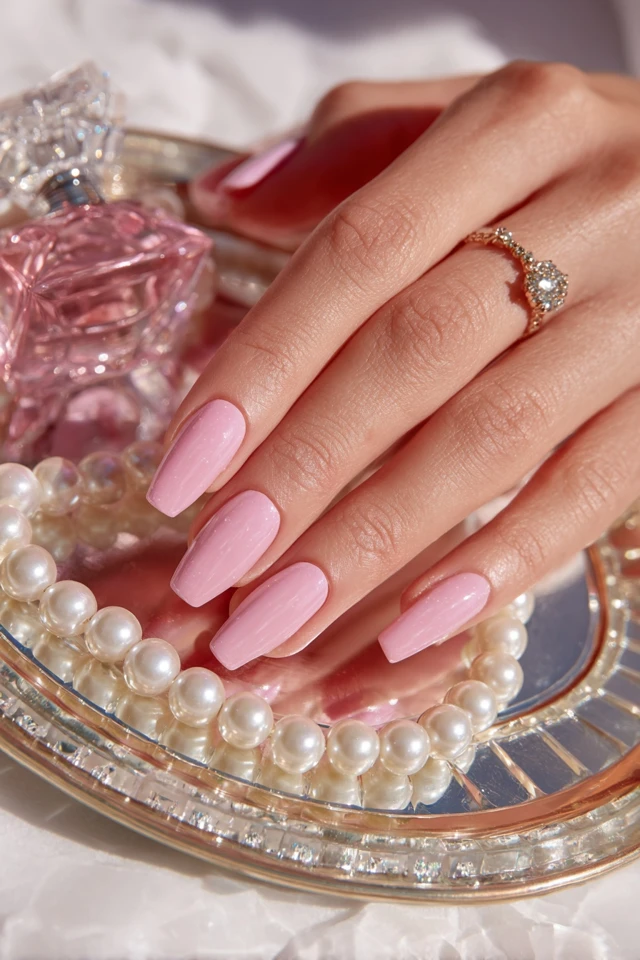
Squoval nails short are a safe pick: the straight sides keep the nail from looking stubby, and the rounded corners stop it from catching on fabric. Leave a thin sliver of white at the tip or file to the fingertip, and keep the sides parallel.
Round also works well on short nails, especially if you prefer a bare, clean look. If you want more length illusion, choose a sheer nude or milky pink close to your skin tone and avoid heavy contrast at the cuticle.
Is squoval good for fragile nails?
Yes, usually. Squoval nails for fragile nails make sense because rounded corners have no sharp point to split or catch. Round is similar. The shape that tends to break most easily is a sharp square corner.
Keep the length modest and file in one direction with a fine file. Be careful with what you put on top, too. The American Academy of Dermatology notes that to get acrylic nails to stick, the natural nail is filed until it feels rough, which thins it and makes it weaker. Gel removal matters as well: Cleveland Clinic says careless removal can temporarily damage nails, with cracking and peeling the most common issues. If your nails are already brittle or painful, check with a dermatologist.
How to shape squoval or round nails at home
- Trim to your target length first, a little at a time.
- Use a fine-grit file and stroke from the side toward the center, never sawing back and forth.
- For squoval, file the tip flat, then ease each corner into a soft curve.
- For round, follow the curve of your fingertip from one side to the other.
- Check from the front: both sides should look like mirror images.
File before polish, not after, and wash off dust so the color goes on evenly.
Round and squoval nails vs square
Square nails have crisp corners and a wide, flat tip. They look graphic, but the corners catch on sleeves and hair and are more likely to chip. Squoval keeps the look of a flat edge with much less risk. If you like square but your nails keep snapping, soften the corners and you are in squoval territory.
Simple polish and design ideas for each shape
Round and squoval nails simple styles work best: the shape already does the talking, so the finish can be quiet.
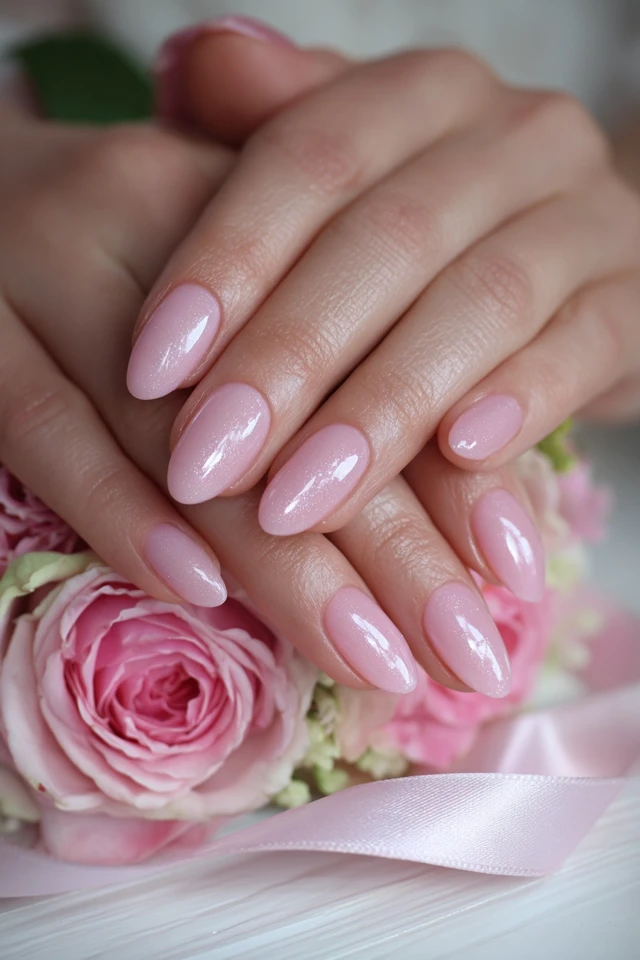
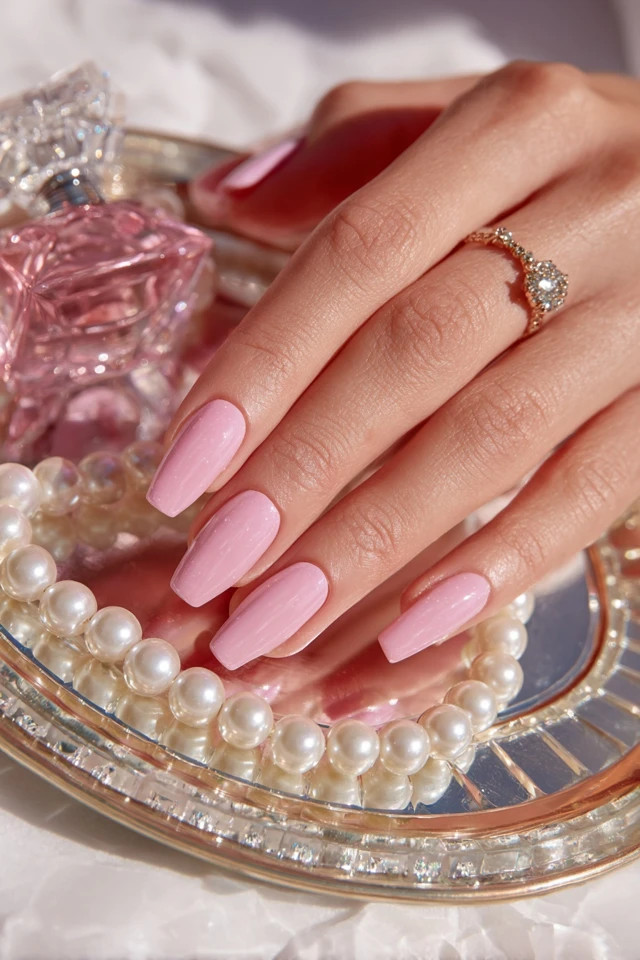
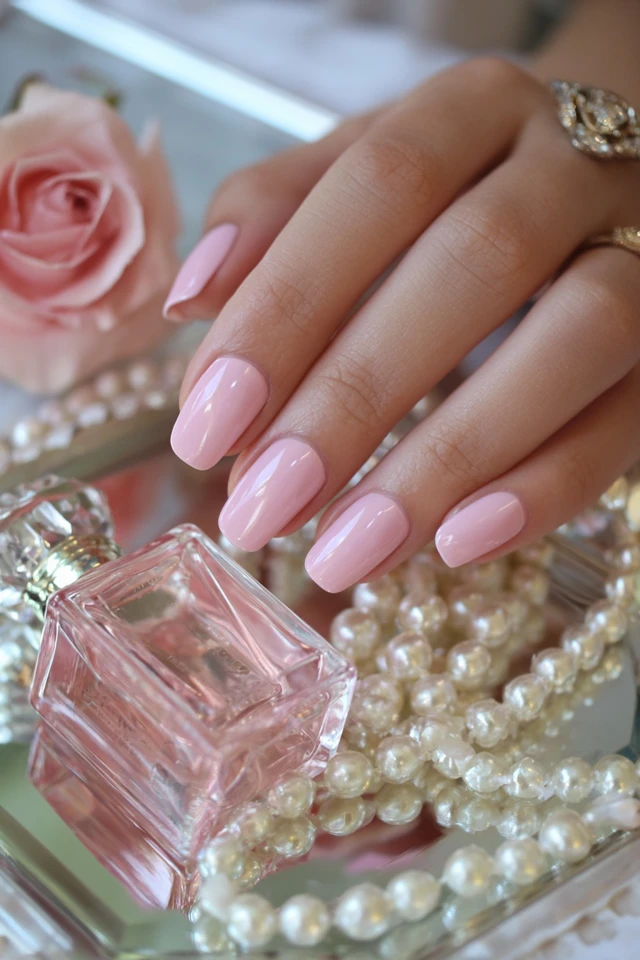
- Sheer nude or milky pink with a glossy top coat suits both shapes.
- A classic red looks sharper on squoval, softer on round.
- A thin French tip follows the squoval edge neatly. On round nails, keep the tip line curved.
- Matte top coats add texture. See matte canvas nails for more.
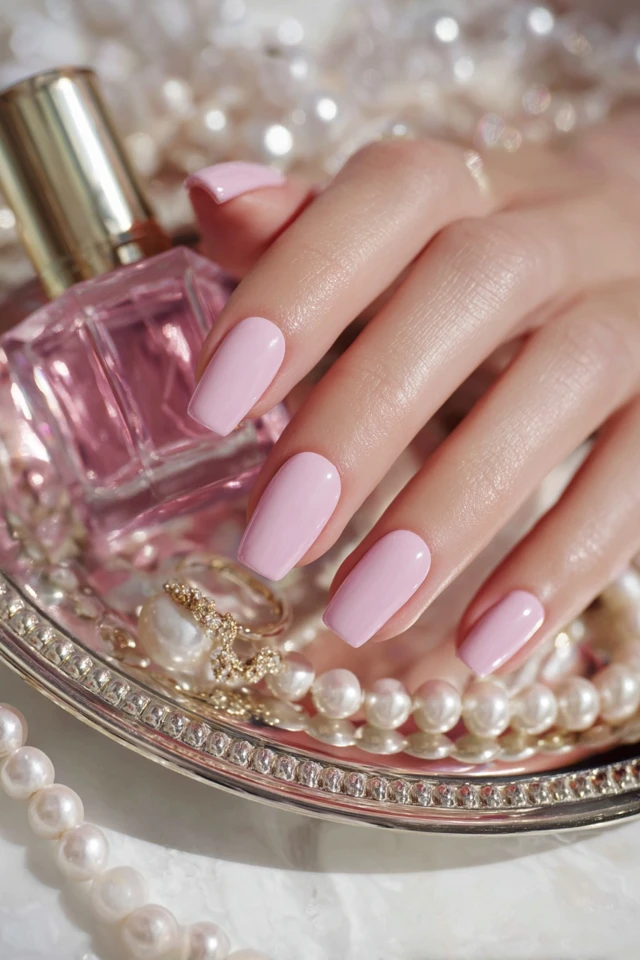
If you prefer clean, low-key looks, minimalist nail designs pair well with either shape. For something more playful on a squoval base, try jelly finishes. And if you are curious about sharper shapes, compare with peak silhouette nails.
Keep the shape and the nail healthy
Gel and dip manicures last, but removal is where nails suffer. The AAD says acetone is the most effective way to remove gel polish at home. Board-certified dermatologist Shari Lipner, MD, PhD, advises: "After removing the color, wait one month before getting another one of these manicures."
Moisturize your cuticles and hands daily, and refile the shape every week or two so the corners stay soft.
Frequently asked questions
Should I get round or squoval nails?
Pick squoval if you want a tidy, slightly structured tip, and round if you want the softest, most natural outline. Both are practical for short or fragile nails.
What nail shape is the most attractive?
It depends on your nail beds and fingers. Slim squoval and softly rounded shapes flatter most hands because they lengthen without sharp corners.
What is the classiest nail shape?
Squoval and round are the shapes most often seen as polished and understated, especially with a sheer nude, pale pink or classic red.
Are squoval nails still in style?
Squoval is a long-standing classic rather than a short-lived trend, so it tends to stay wearable from season to season.
Filed under Nail Design