Watercolor Nails Inspiration
- Words by
- Julio Arco
- Published
- Reading
- 4 min
Ombre gradient nails fade one color into another across the nail, so there is no visible line where the shades meet. The softest versions pair neighbors on the color wheel, like pink into peach, or a pale nude into a deeper rose.
Watercolor nails are a close cousin: the same soft blending, with a more painterly, uneven wash. Below you'll find the ombre vs gradient answer, ideas by style, how to choose colors, and how to keep your nails in good shape.
What is the difference between ombre and gradient nails?
In everyday nail talk, the two words mean almost the same thing, and salons use them interchangeably. If you want a technical split, the difference between ombre and gradient nails usually looks like this:
- Ombre moves from one shade to another, often light to dark, in a clear direction.
- Gradient is the broader term for any smooth blend, including several colors, such as a sunset.
When you book or shop, show a photo. A picture settles the question faster than either word.
Pink and pastel ombre ideas
Gradient nails pink is the easiest place to begin. A sheer pale pink fading into milky white looks clean with almost any outfit. For a bit more color, try blush into lilac or baby pink into baby blue.
Pastels read as soft because they are low in contrast. Through the lens of evidence-based design, I'd keep the two shades close in brightness, since a big jump in lightness makes the blend look like a stripe instead of a fade.
French ombre nails
French ombre nails (sometimes called baby boomers) swap the crisp white tip for a blurred one. The nail bed stays sheer pink or nude, and white fades in from the tip.
It is a forgiving choice. Grow-out is less obvious than with a sharp French line, and it suits office days and weddings alike. For a twist, fade the tip in soft lilac, a pale pastel, or a champagne tone instead of white.
Glitter and chrome ombre looks
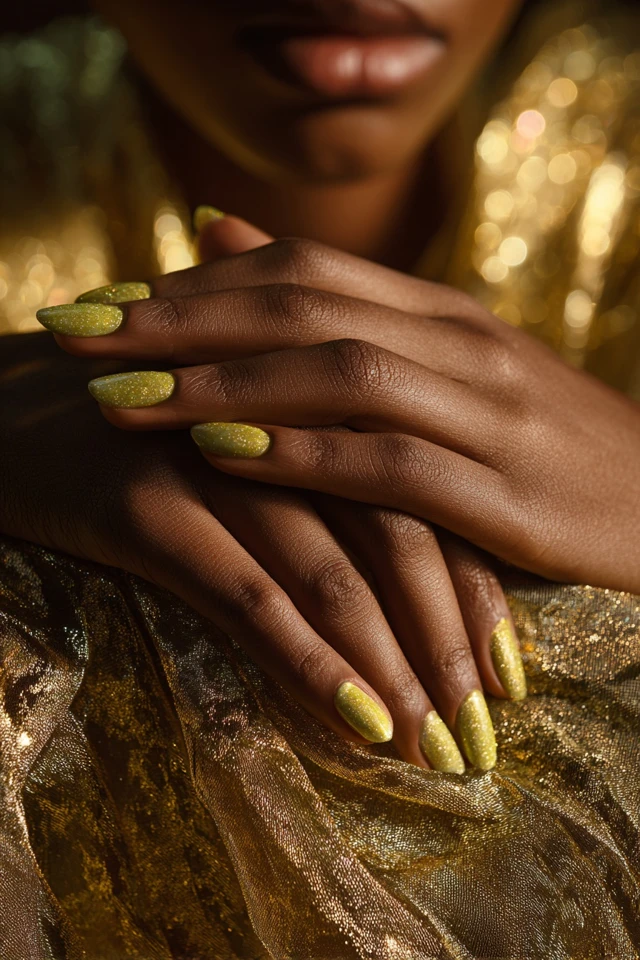
Ombre gradient nails with glitter work best when the sparkle is concentrated at the tip and thins out toward the cuticle. Fine glitter blends more smoothly than chunky pieces, which tend to sit in clusters.
A chrome powder rubbed over a gradient adds a mirror-like sheen. Glossy surfaces catch light and make colors look brighter, while a matte top coat mutes the same blend and makes it look softer and more velvety.

Bold rainbow and sunset gradients
Rainbow and neon fades need more planning. Use colors that sit next to each other (yellow, orange, pink) so the places where they meet turn warm instead of muddy. Blending opposite colors, like orange into blue, often produces a gray-brown middle.
Sunset blends are a good way to start: yellow at the tip, orange in the middle, pink or purple near the cuticle. Keep the rest of your outfit quiet and let the nails do the talking.
What is the best color for ombre nails?
The best color for ombre nails is a pair that suits your skin and your wardrobe. A few reliable starting points:
- Nude into rose or mauve: easy with nearly everything.
- Milky white into pale pink: clean and polished.
- Lilac into baby blue: cool and calm.
- Peach into coral: warm and summery.
Hold the polish against your hand in daylight before committing. Undertone shifts how a shade reads against skin, so the same pink can look fresh on one hand and flat on another.
Short nails, simple designs
Ombre gradient nails short work well because the fade happens in a small space, which keeps things neat. Use two colors only and keep the transition tight. Rounded or squoval shapes suit this look, and a sheer base keeps it light.
Acrylic ombre
Acrylic allows a long, dramatic fade, since the color can be built into the extension itself. Note the trade-offs: according to the American Academy of Dermatology, getting acrylics to stick means filing natural nails until they feel rough, which thins them, and wearing them beyond a few weeks calls for touch-ups every 2 to 3 weeks.

How to make an ombre at home
- Apply a base coat, then two thin coats of your lighter shade. Let it dry.
- Dab both colors side by side on a makeup sponge, slightly overlapping in the middle.
- Press the sponge onto the nail, rolling gently. Repeat once or twice for stronger color.
- Clean up the skin with a brush dipped in remover, then seal with a glossy top coat.
Sponge blending takes a couple of tries. If you want the airier watercolor look, see kinetic watercolor ink nails and modern watercolor ink glam nails. For other patterns, try constellation nails or vaporwave nails.
Removing gel ombre safely
If you use gel, removal matters as much as application. The AAD notes that acetone is the most effective way to remove gel polish at home. The Cleveland Clinic adds that careless removal can temporarily damage nails, with cracking and peeling the most common problems.
Dermatologist Chris Adigun, MD, FAAD, says on the AAD's dip powder page: "Looking closely at your nails after removing the color helps you spot a problem early." If something looks off, check with a dermatologist.
Frequently asked questions
Is ombre nails still in style?
Soft fades keep returning because they are easy to wear and grow out gracefully. Pale pinks, nudes and French ombre tips are the most dependable versions.
What are gradient nails called?
They are usually called ombre nails, gradient nails or fade nails. A French version with a blurred tip is often called baby boomer nails.
Can I do ombre gradient nails with regular polish?
Yes. A makeup sponge and two polishes are enough, and thin layers give the smoothest blend.
Filed under Nail Design