Vintage Silk Blouse Ideas
This guide covers how to judge a vintage or new silk blouse, how it should fit, and how to wear it for work, weekends and evenings.
- Words by
- Julio Arco
- Published
- Reading
- 4 min
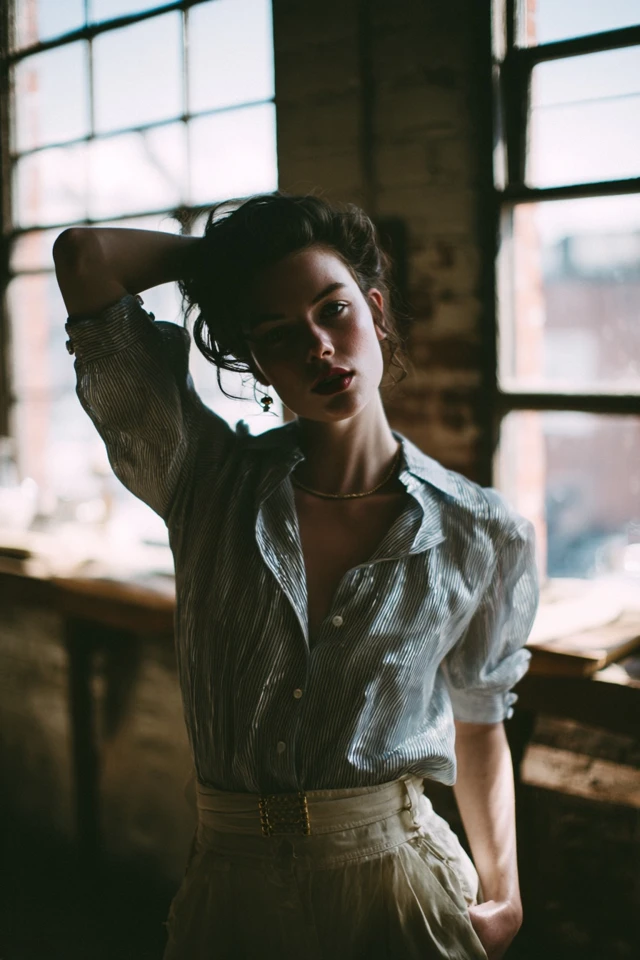
A silk blouse works best when the fit is relaxed at the body, the shoulder seam sits where your shoulder ends, and the rest of the outfit is simple. Pair it with one structured piece, such as tailored trousers or a blazer, and let the fabric do the talking.
How to choose a vintage silk blouse
Start with the fabric. Real silk feels smooth and slightly cool, and it drapes instead of standing away from the body. Hold the blouse up to a window and check for snags, thin patches, and discoloration, especially under the arms and along the collar.
Weave changes how a color looks. A crepe de chine is matte and soft, a satin weave is glossy, and a lighter habotai-style silk is thin and fluid. Through the lens of evidence-based design, I'd choose the matte weave if you want a color to read calm and the glossy one if you want it to catch attention, because the surface changes how light reaches the eye.
Check the small things on vintage pieces: buttons that are all present, seams that aren't pulling, and underarms free of stains or stiffness. Those are the repairs you will notice after you buy.
How should a silk blouse fit?
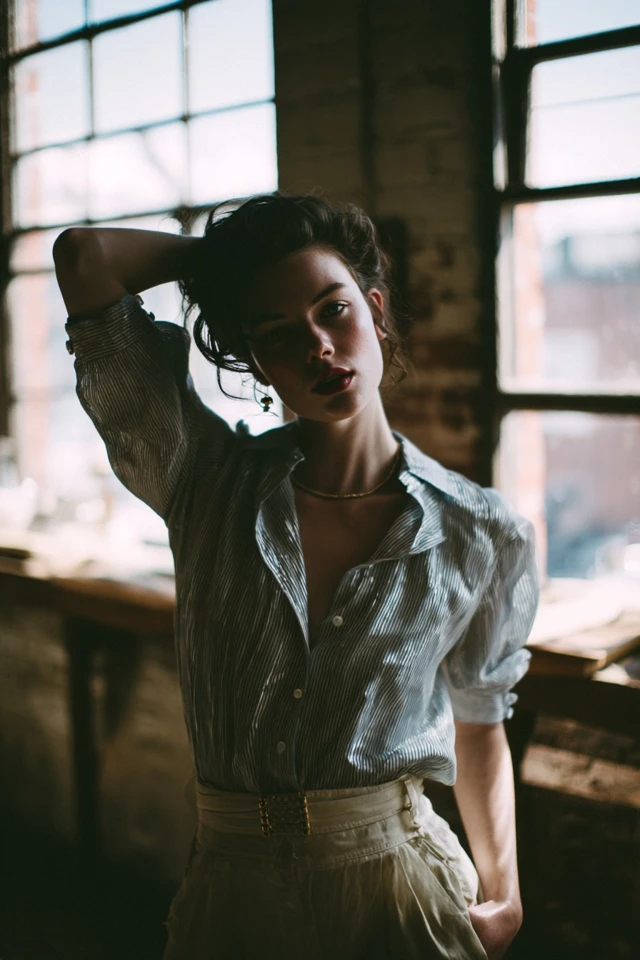
Fit is where most blouses go wrong, and a blouse that pulls across the shoulders or bust is a fit problem, not a you problem. Check these points in order:
- The shoulder seam sits at the edge of your shoulder, not down the arm.
- The buttons lie flat across the chest without gaping.
- You can lift your arms without the hem riding far up.
- The cuffs end at the wrist bone or just past it.
Silk is unforgiving when tight, because it clings and shows every strain line. A little ease through the body gives the drape room to work. If the shoulders fit and the body is too wide, a tailor can usually take in the sides, and that is a far easier fix than the reverse.
Which cut suits which shape?
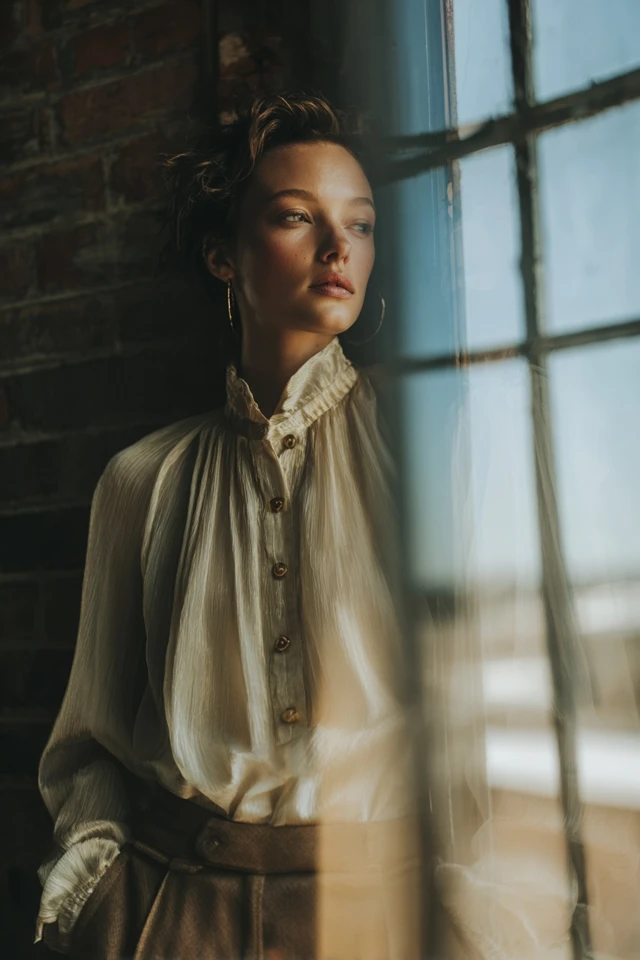
These are starting points, not rules. A tailored blouse with a few darts defines the waist. A looser blouse with a notable collar adds interest at the top if you want to balance wider hips. A V-neck and a longer hem lengthen the torso. Volume at the sleeve, such as a puff or a ruffle, adds shape on a straighter frame.
Which colors and prints work best?
Ivory, cream and soft beige are the easiest to wear and go with nearly everything. Polka dots and paisley are classic vintage prints that dress up or down. For deeper colors, emerald, sapphire and rust are reliable.
Against skin, a color reads warmer or cooler depending on what sits beside your face. If a shade makes you look tired, try the same color in a different tone before giving up on it. Hold the blouse near your face in daylight and judge it there, not under shop lighting.
For pairing, jewel tones sit well with gray or navy bottoms, and pastel silks look fresh with white or soft denim.
How to style a silk blouse for different occasions
Silk blouse office outfit
For work, tuck the blouse into high-waisted tailored trousers and keep the jewelry small. A silk blouse with trousers and a blazer is the dependable formula: the blazer gives structure, and the collar and cuffs peek out. If you like texture, tweed and silk for polished work blouses shows how a rougher fabric balances the smoothness of silk.
Weekend and casual
Wear it untucked or half-tucked with straight or wide-leg jeans, and leave the top button or two open. A leather skirt also works and keeps the look from feeling too soft. More relaxed combinations are in casual silk blouse outfit ideas.
Evening and occasions
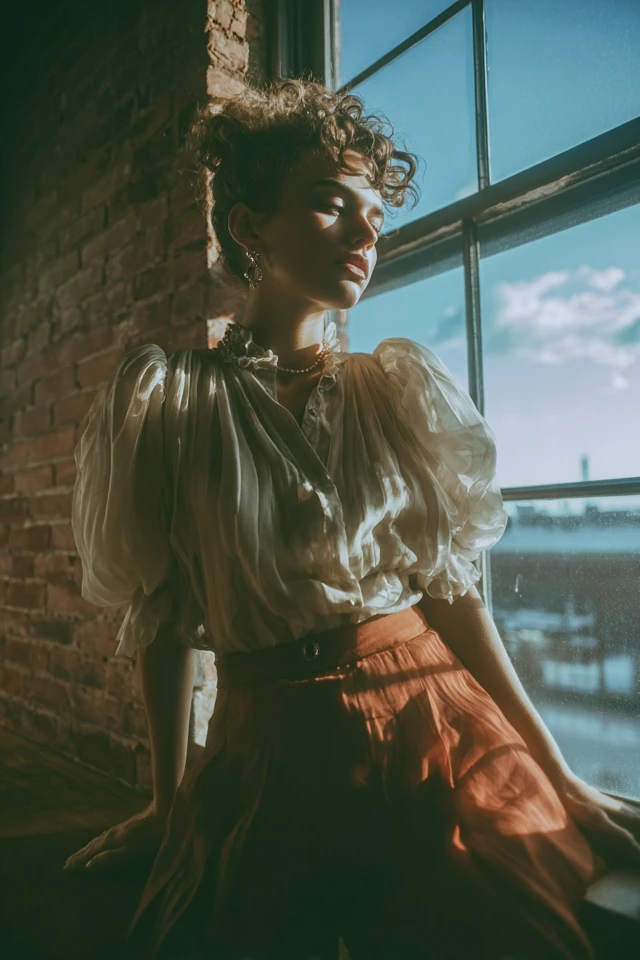
A pussy-bow or deep jewel-tone blouse needs little else. Add a slim skirt or satin trousers, and gold or pearl jewelry that stays quiet next to the sheen. For dressier ideas, see spring silk blouse occasionwear.
Vintage details that feel current
Bows, puff sleeves and balloon sleeves keep returning, and vintage blouses often have them already. Ivory and cream remain the safe base, and polka dots and paisley anchor mixed outfits. If you want more inspiration along these lines, try vintage silk blouse vibes or retro silk blouse basics.
How to care for silk
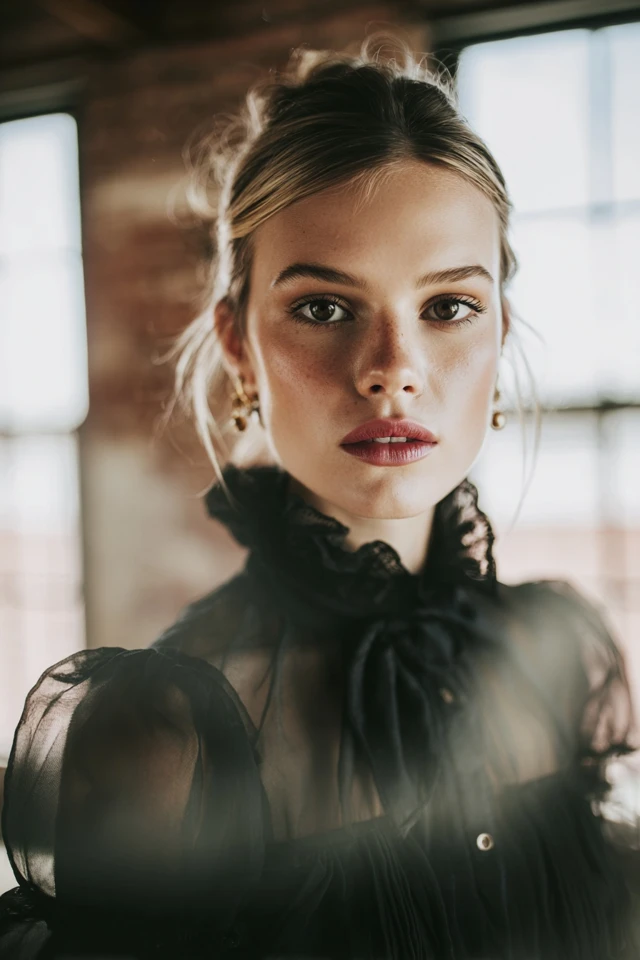
Hand wash in cool water with a gentle detergent made for silk, or use a dry cleaner for older pieces. Dry flat or hang to air dry, away from direct heat.
Act quickly on stains. The University of Georgia Extension notes that stains set by heat will be difficult to remove, so avoid hot water or a dryer on a marked blouse. The same page warns that ammonia damages silk, so skip household cleaners that contain it.
Frequently asked questions
Which silk fabric is best for a blouse?
Crepe de chine is a good all-round choice because it drapes well and has a soft matte look. Satin weaves are glossier and dressier, and lighter habotai-style silks are thin and fluid.
What are the trendy blouse styles right now?
Bows, pussy-bow necklines and puff or balloon sleeves are popular, along with soft pastels and muted jewel tones. Classic ivory and cream remain easy to wear.
Can I wear a silk blouse every day?
You can, but rotate it, since silk needs gentle washing and rest between wears. Check the underarms and collar after each wear, and follow the care label.
Filed under Outfit Ideas