
Victorian Lace Pattern Nail Art Ideas and How-To
- Words by
- Julio Arco
- Published
- Reading
- 4 min
Victorian lace is one of the most forgiving pieces of pattern nail art: fine scrollwork, small florals and scalloped edges in white or cream over a soft base. The quick version is a sheer nude or ivory base, one thin lace motif on each accent nail, and a glossy top coat.
This page works as simple pattern nail art inspiration, with color pairings, shape advice and a beginner method you can do at your own table.

What makes a nail design look like Victorian lace?
Lace reads as lace because of three things: thin lines, repeated small shapes (petals, dots, tiny loops) and a lot of empty space between them. Copy those and the design works even if your florals are wobbly.
Through the lens of evidence-based design, I'd think about line weight first. A hairline white pattern on a pale base looks delicate and almost fabric-like, while the same motif drawn thicker looks like a sticker. The eye reads thickness and contrast before it reads the motif.
Which colors work best for lace nails?
Lace was classically white or cream, and that is still the safest start. Here are pairings that hold up well:
- Soft ivory base with matte white lace lines.
- Blush pink base with pearly white or champagne lace.
- Deep navy or burgundy base with thin gold lace lines, for an evening version.
- Pale lavender base with white lace, for something softer.
Contrast decides how loud the design is. Low contrast (cream on ivory) looks quiet and works for the office. High contrast (gold on navy) is the one people notice from across a table.
Which nail shape and length suit lace designs?
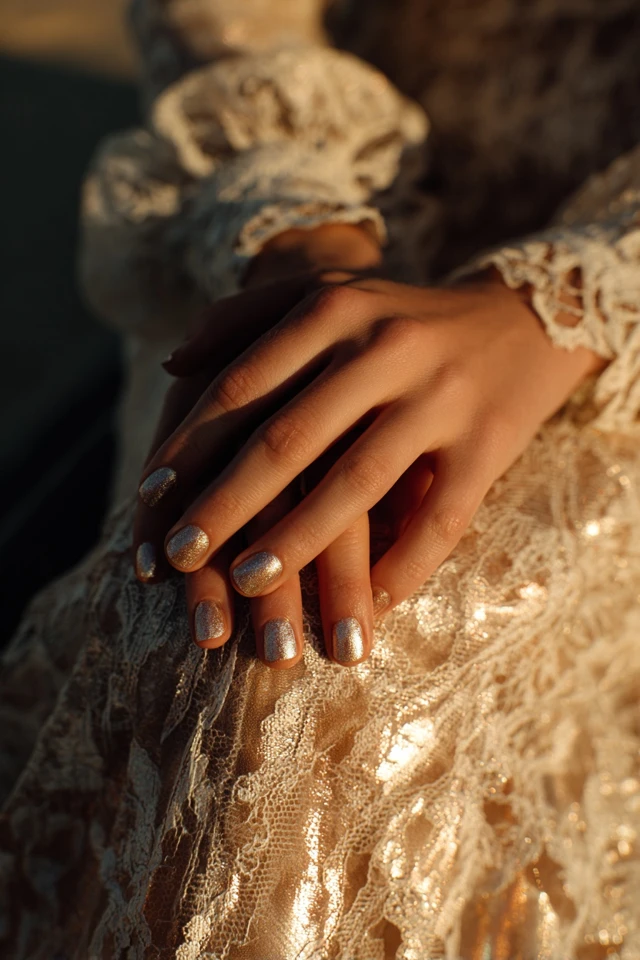
Oval and almond shapes echo the curves in lace and tend to make fingers look longer. Square tips give the same pattern a more modern edge. Medium length gives you room for detail. On short nails, use a simpler motif, such as a single scalloped edge along the cuticle or tip, rather than a full floral.
If you like geometric edges more than florals, the lace edge geometry nails take the same idea in a sharper direction.
How do you do lace nails at home?
These are easy nail art designs for beginners if you keep the motif small. For simple nail designs to do at home, you need a base color, white or metallic polish, a thin detail brush or dotting tool, and a top coat.
- Apply base color and let it dry fully. Wet polish drags under a brush.
- Put a little white polish on a scrap of foil and load only the tip of the brush.
- Draw a gentle scallop or a row of tiny dots along the tip or cuticle.
- Add small dots or petal shapes beneath it. Imperfect spacing looks like handmade lace.
- Seal with a glossy or matte top coat, depending on the finish you want.
Stamping plates with lace patterns are an alternative if freehand feels shaky. Practice on one hand first, or on a nail tip practice wheel.
Matte or glossy: which finish looks more like lace?
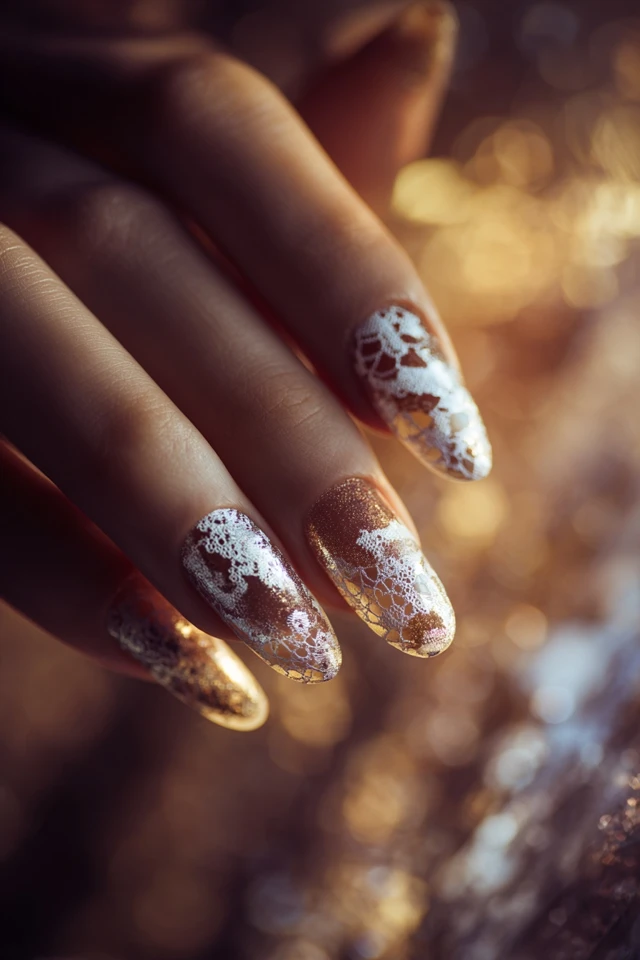
I'd pick matte for the lace lines and gloss for the base. Texture changes how a color reads, and a matte white line next to a shiny base looks closer to thread on silk. A fully glossy design looks sleeker and a bit more formal.
Keeping lace nails classy
For classy simple nail designs, limit the lace to one or two accent nails and keep the rest in the base color. Keep metallic touches to a single color, and match them to your jewelry if you wear any. Lace pairs naturally with other patterns of the same quiet mood; compare it with snowflake nails or snowfall nails for similar white-on-pale ideas, or go bolder with zebra nails.

Removing detailed nail art safely
Fine lace is usually done in regular polish or gel. If you used gel, the American Academy of Dermatology says acetone is the most effective way to remove it at home. Careless removal can cause cracking and peeling, according to Cleveland Clinic, so go slowly and don't scrape. If your nails look damaged afterward, check with a dermatologist.
Frequently asked questions
What are some nail design inspirations?
Stripes, dots, plaid and lace are the usual starting points. Lace works well when you want something delicate, using thin white or metallic lines over a soft base.
What nail shape is most flattering for older hands?
Soft oval or short almond shapes are generally easy to wear and look gentle on the fingers. Keep length moderate and pick a sheer or pale base so the design looks light.
What are the 5 basic nail designs?
There is no official list. Commonly cited basics are French tips, stripes, dots, ombré and accent nails, and lace can be built from dots and thin lines.
Filed under Nail Design