Mixing Prints and Patterns: Tropical and Nautical Rules
- Words by
- Julio Arco
- Published
- Reading
- 5 min
Yes, you can put two different prints together. The easiest way is to keep one shared color, make the prints different sizes, and let one of them lead while the other stays quiet. A tropical print and a nautical stripe are a good pair to practice with on a beach trip.
Below is how to mix prints and patterns using the two themes that show up most in summer luggage: tropical (palm leaves, hibiscus, bright florals) and nautical (stripes, anchors, navy and white).
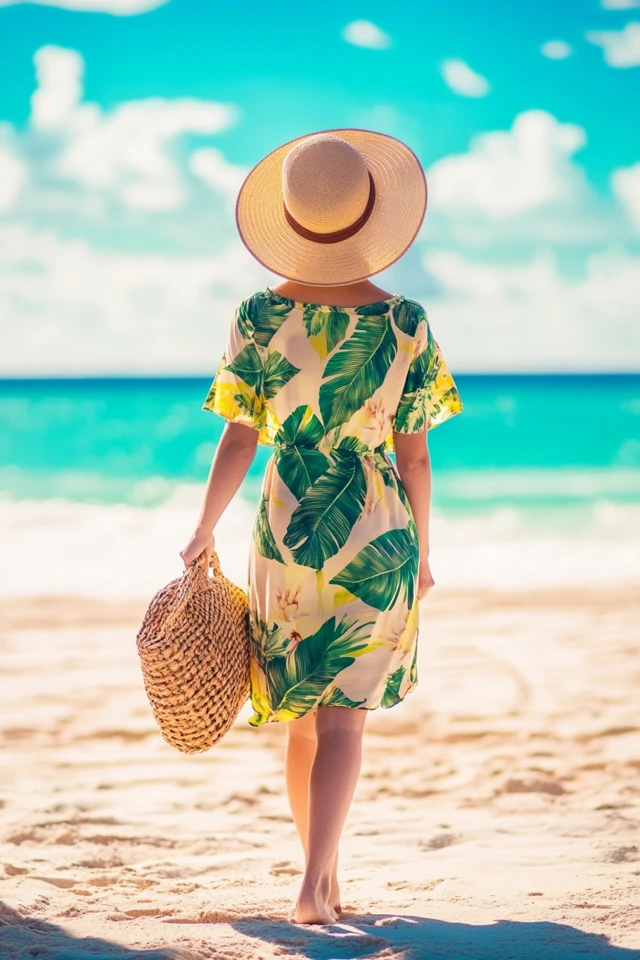
How do you mix prints and patterns without it looking messy?
Three checks do most of the work: color, scale and a resting place for the eye. If an outfit passes all three, it usually reads as intentional. If it fails one, change that one thing rather than starting over.
Through the lens of evidence-based design, I'd think about what the eye reads first. Two prints of equal size and strength compete for attention, and that competition is what people call clashing.
Keep one color in common
Pick a shared color and both prints will feel related even if the motifs have nothing in common. A navy-and-white striped top works with palm shorts that include a bit of navy in the leaves. A coral hibiscus print works with a stripe that has a thin coral line.
If you cannot find a shared color, use a neutral to bridge the gap. White, beige and navy sit comfortably next to turquoise, coral and green. The same idea is covered for jewelry and bags in how to match accessories with bold prints and patterns.
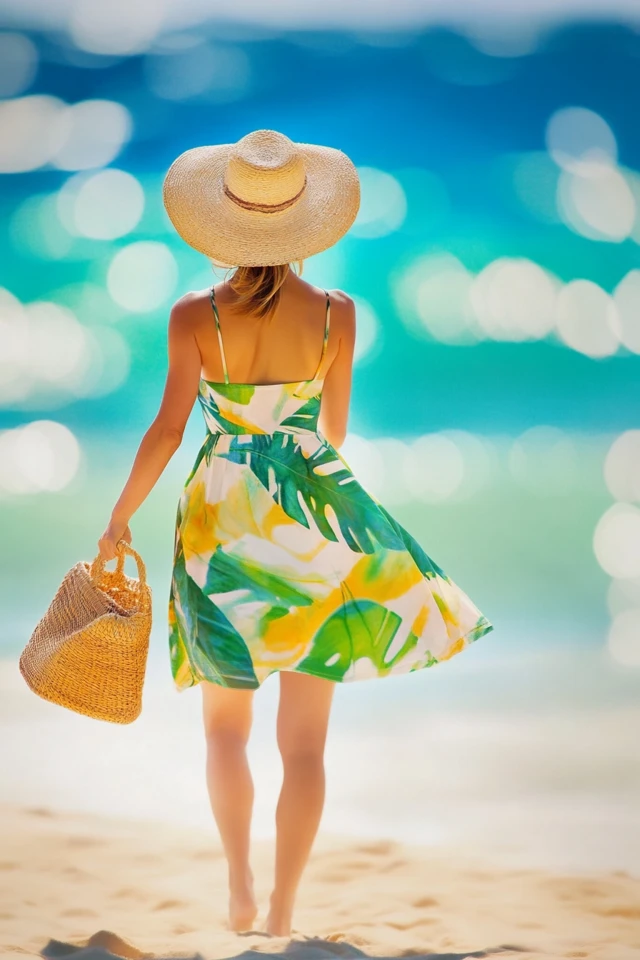
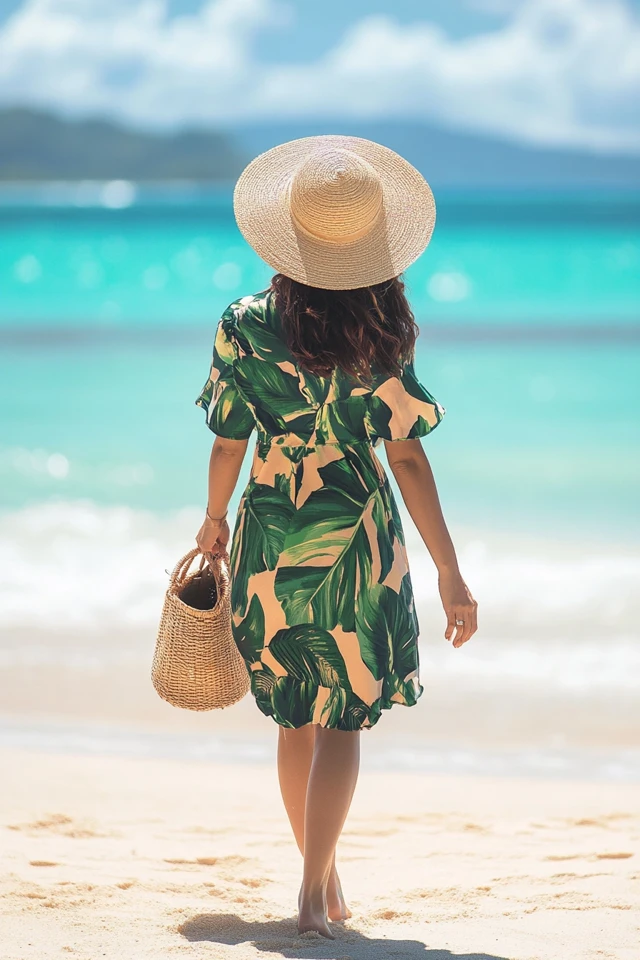
Mix patterns of different scales
Pair a large print with a small one. A wide palm-leaf shirt looks balanced with a fine pinstripe or a thin nautical stripe, while two big florals fight each other. A useful rule of thumb: the smaller print should be about half the scale of the larger, or less.
Fine patterns also blur into a soft tone from a distance, so they behave almost like a textured solid next to a bold motif.
Let one print lead
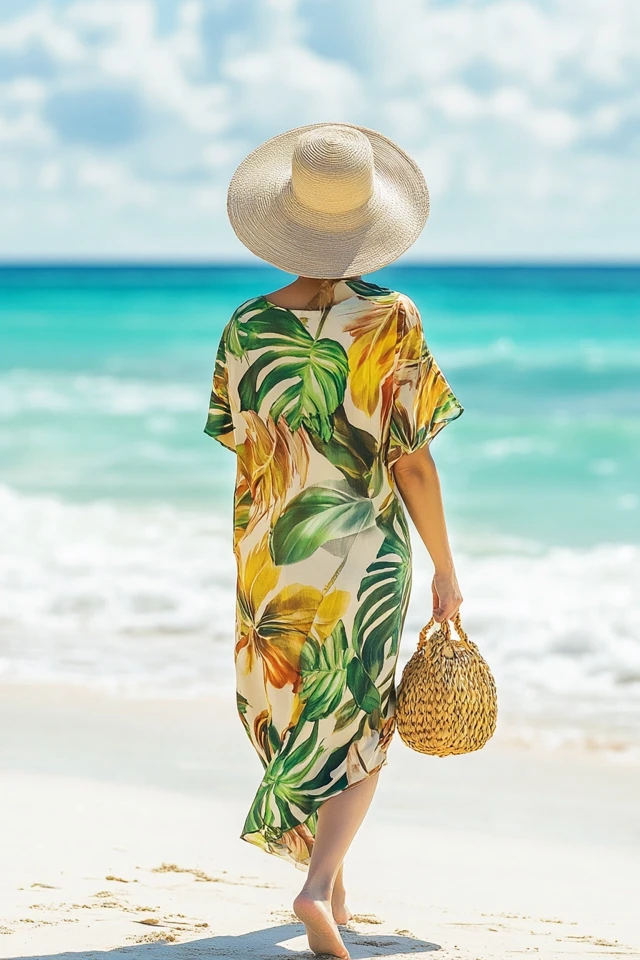
Decide which print is the star. The bold tropical dress is the lead, and the stripe is a supporting piece such as a scarf, belt or bag. Keeping the supporting print small and in the same color family prevents the outfit from looking busy.
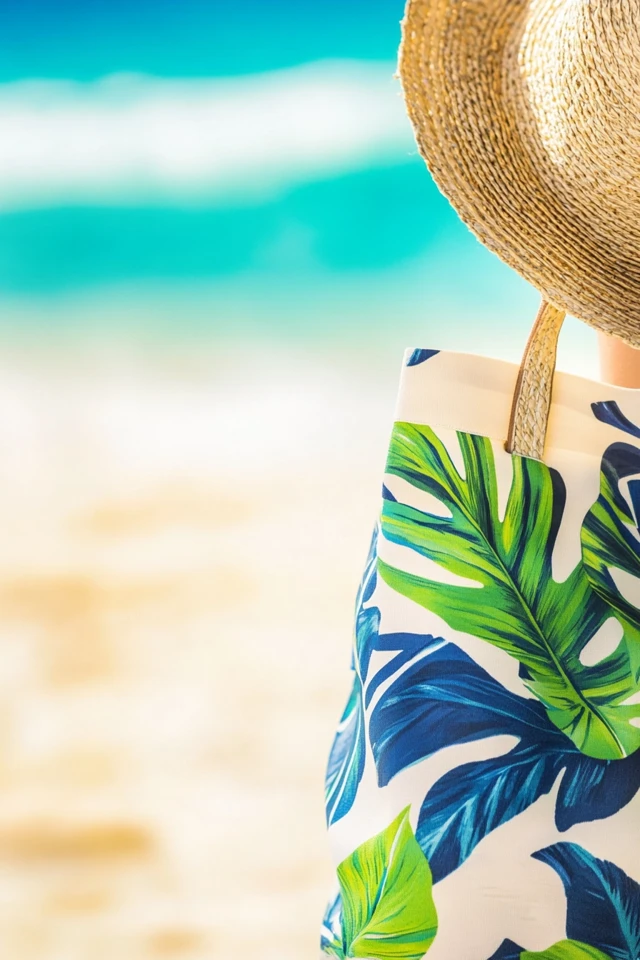
Stripes are the easiest supporting print because they read close to a neutral. A navy stripe under a tropical shirt, or a striped tote with a floral cover-up, rarely looks wrong.
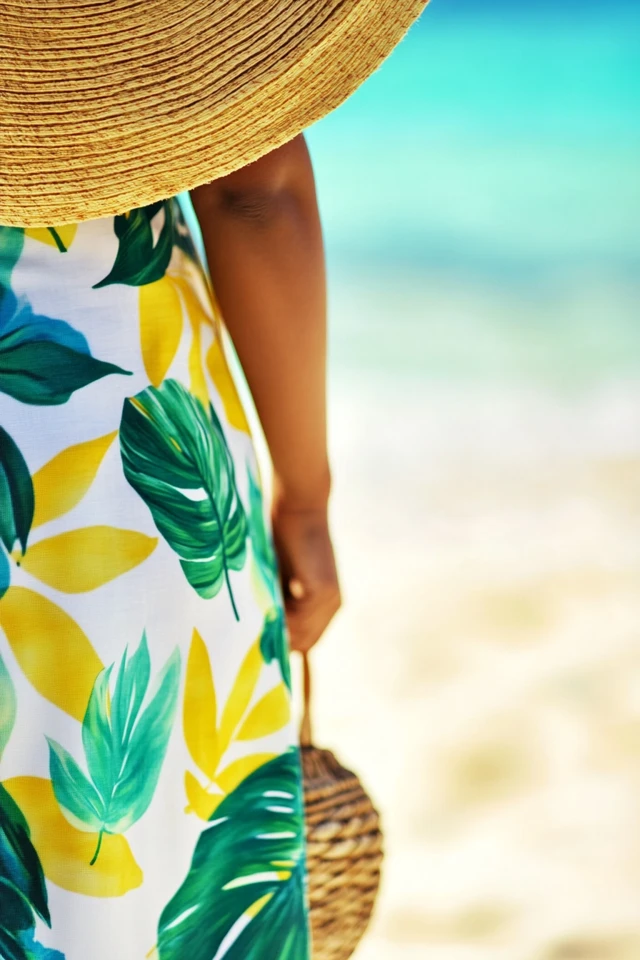
Which patterns do not go together?
What patterns do not go together depends on scale and color more than motif. These pairings tend to look wrong:
- Two large, high-contrast prints of similar size, such as big palms with big anchors.
- Two prints with no shared color and equal strength.
- Several busy prints in one outfit, including accessories.
Change the scale of one, add a common color, or swap it for a solid and most of these pairings improve.
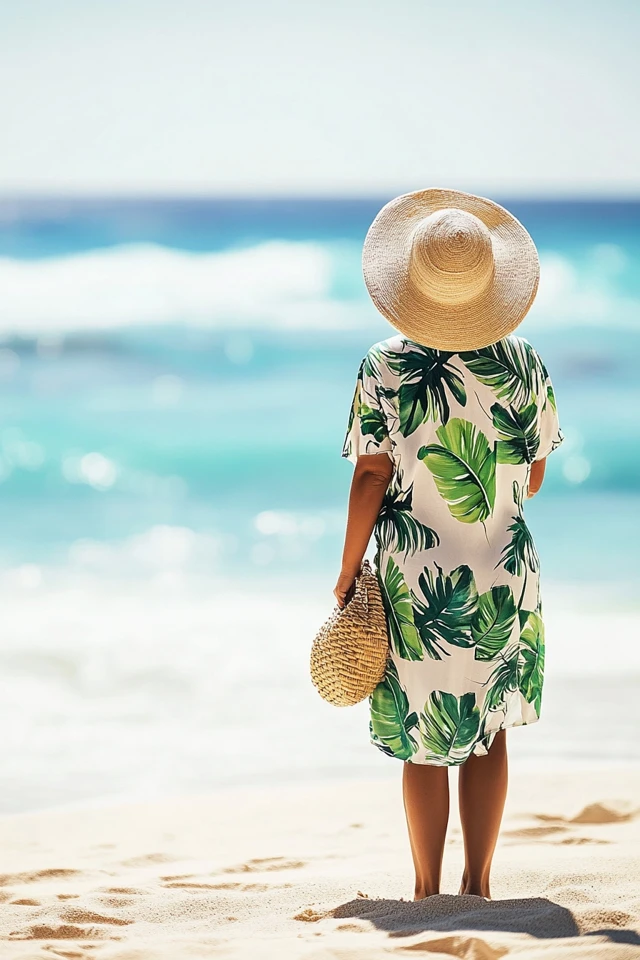
Add a solid to rest the eye
A solid piece gives the prints somewhere to settle. A white linen shirt over a printed swimsuit, a navy blazer over a tropical dress, or plain sandals with a striped skirt all do this job. Solids in the same palette work best.
Texture helps too. As an architect trained in evidence-based design, I'd pick a matte linen or cotton beside a printed silk because surface changes how a color reads, and it keeps the outfit from feeling flat.
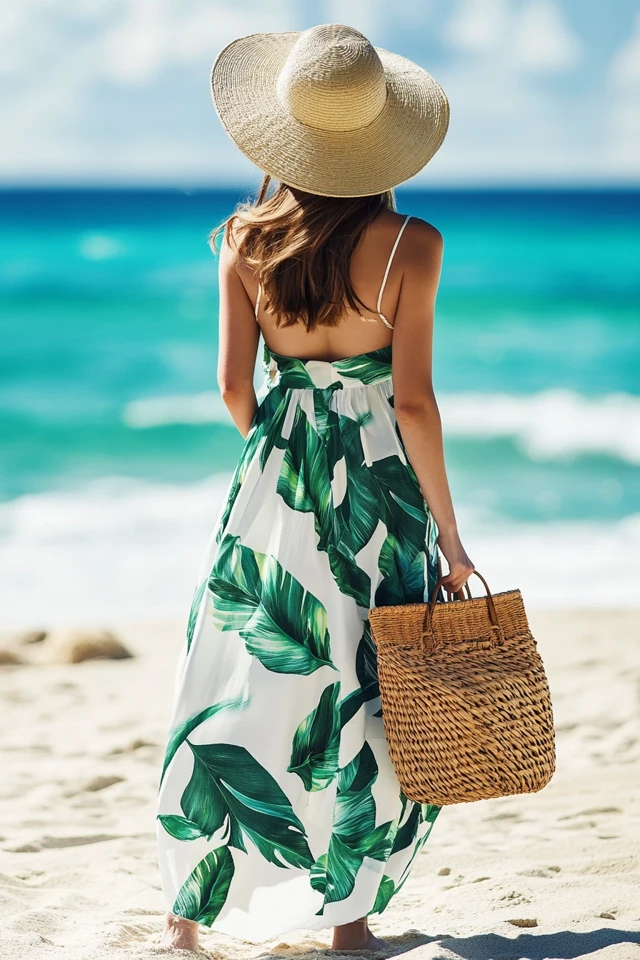
Pattern mixing outfits for a beach trip
Casual beach day
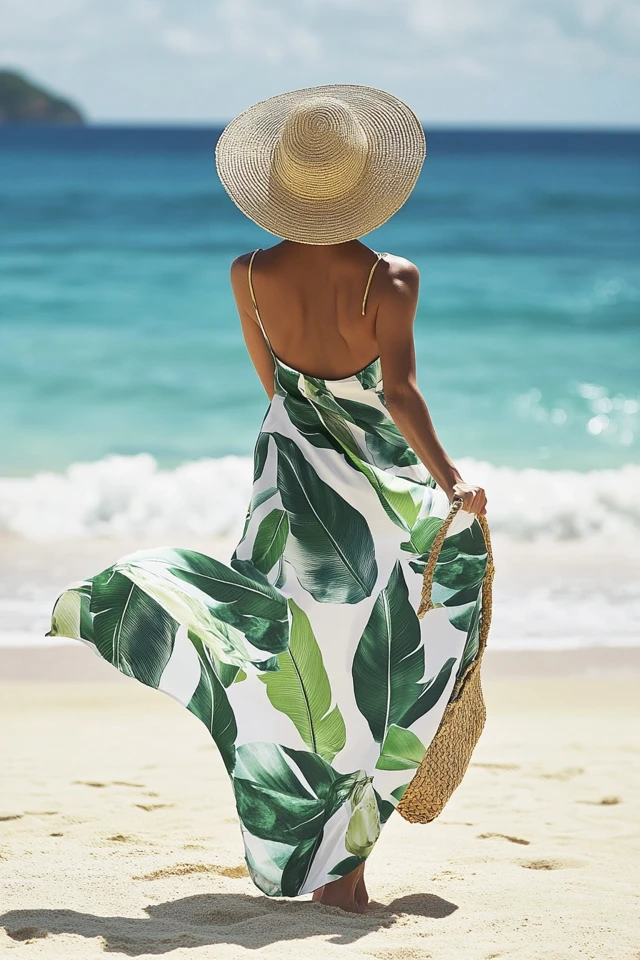
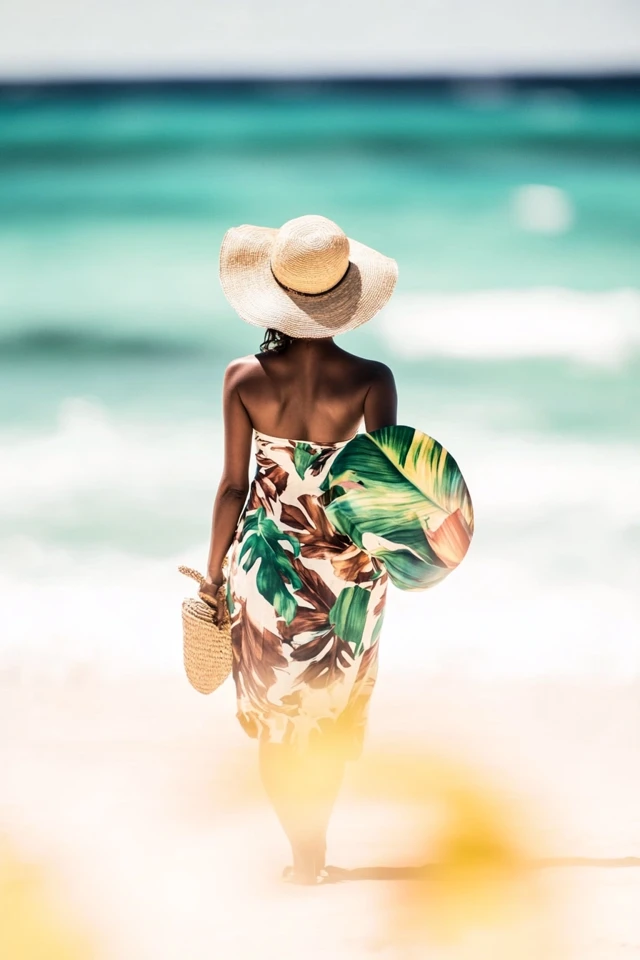
Tropical bikini, white cotton cover-up, straw hat and a striped tote. The bold print sits at the center, and the stripe is small and quiet.
Coastal town walk
A chambray shirt with fine stripes, white cropped trousers, boat shoes and a printed silk scarf tied to a bag. Keep the scarf in the shirt's colors.
Dinner by the sea
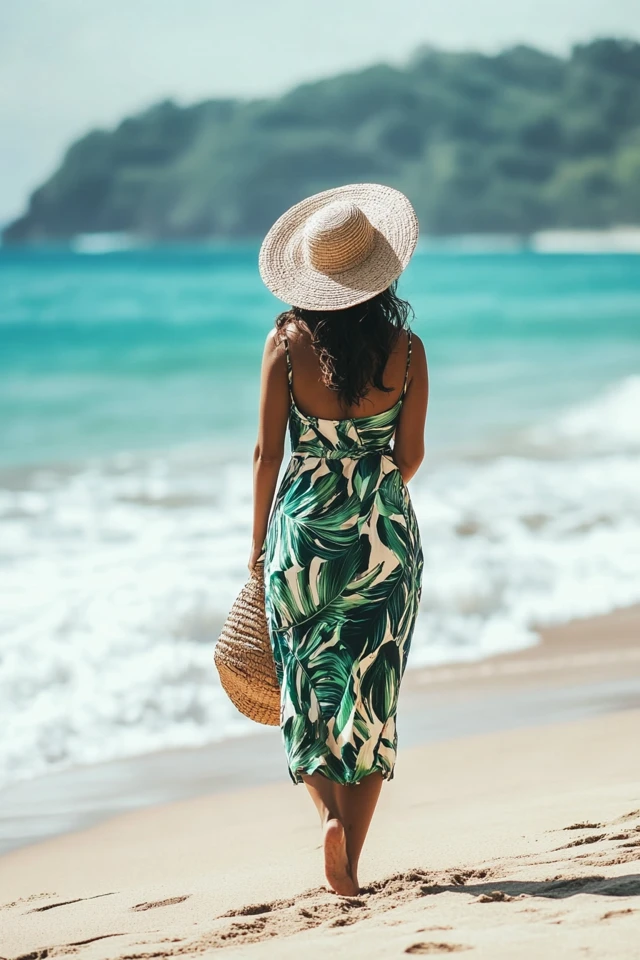
An emerald maxi with a subtle tropical print, a white cardigan and a gold necklace. Here the single print does the talking, so skip a second pattern.
For more ideas on single statement pieces, see beach vacation dresses with tropical prints and tropical jumpsuits for summer beach days.
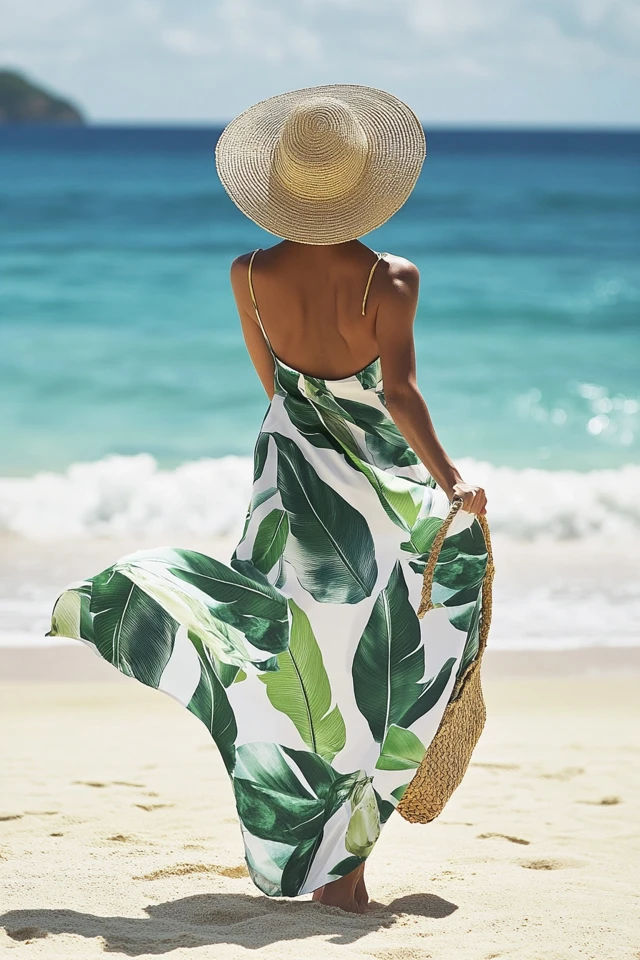
Choose fabrics that suit the heat
Cotton, linen, rayon and silk are comfortable in warm weather. Light layers such as a cardigan, shawl or thin jacket cover cooler evenings and add a solid to a printed outfit at the same time.
Care for printed pieces
- Follow the care label, and wash in cold water on a gentle cycle.
- Air dry when you can, or use low heat.
- Iron printed garments inside out on the right setting for the fabric.
- Store them out of direct sunlight so colors fade more slowly.
If you are building a wider vacation wardrobe, tropical prints for summer vacation wardrobes and tropical color palettes for vacation maxi dresses help with picking colors that already work together.
Try it on and trust your eye
Stand back from a mirror, or take a photo. If your eye jumps between the two prints, make one smaller or swap it for a solid. If your gaze moves smoothly, the mix is working. Aim to mix patterns without looking like a clown by starting with just two and adding a third only if the first two are calm.
Frequently asked questions
What is the 3 3 3 rule in fashion?
It usually refers to building outfits from a small set of pieces, such as three tops, three bottoms and three layers, that all mix together. For prints, the same idea means choosing a few patterns that share a color palette.
Can I wear nautical prints in a professional setting?
Yes, stripes in particular work well. Pair a striped blouse or blazer with tailored trousers or a skirt and keep the rest of the outfit solid.
What colors work best for tropical and nautical themes?
Tropical looks use turquoise, coral, yellow and green. Nautical looks use navy, white and red. Beige, white and navy bridge the two.
How do I accessorize a bold tropical print outfit?
Keep accessories simple: neutral shoes and bag, small jewelry, and a hat or belt in a solid color that appears in the print.
Filed under Seasonal Trends