Tailored Black Blazers: How to Pick and Layer One
- Words by
- Julio Arco
- Published
- Reading
- 5 min
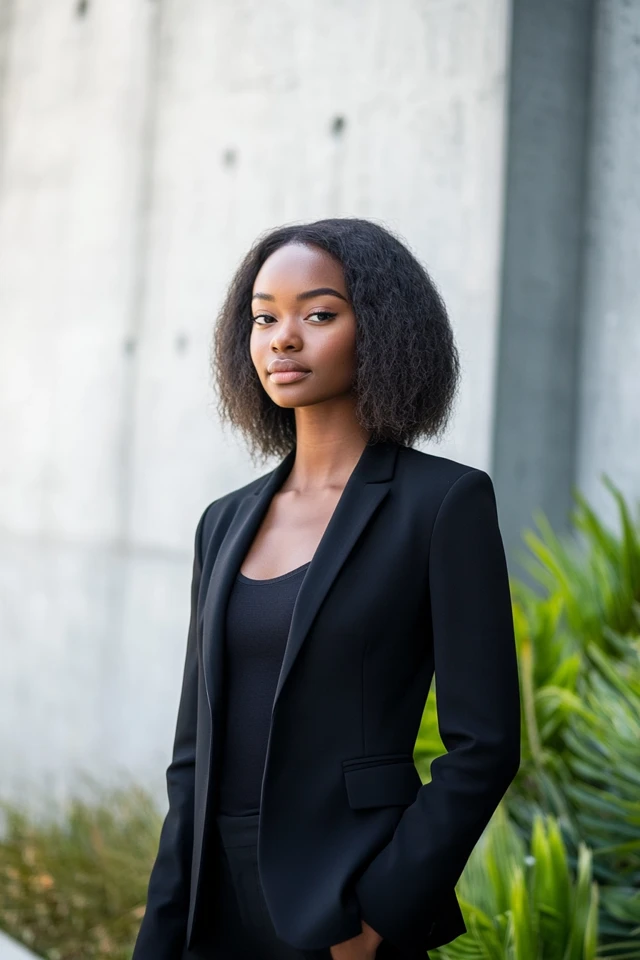
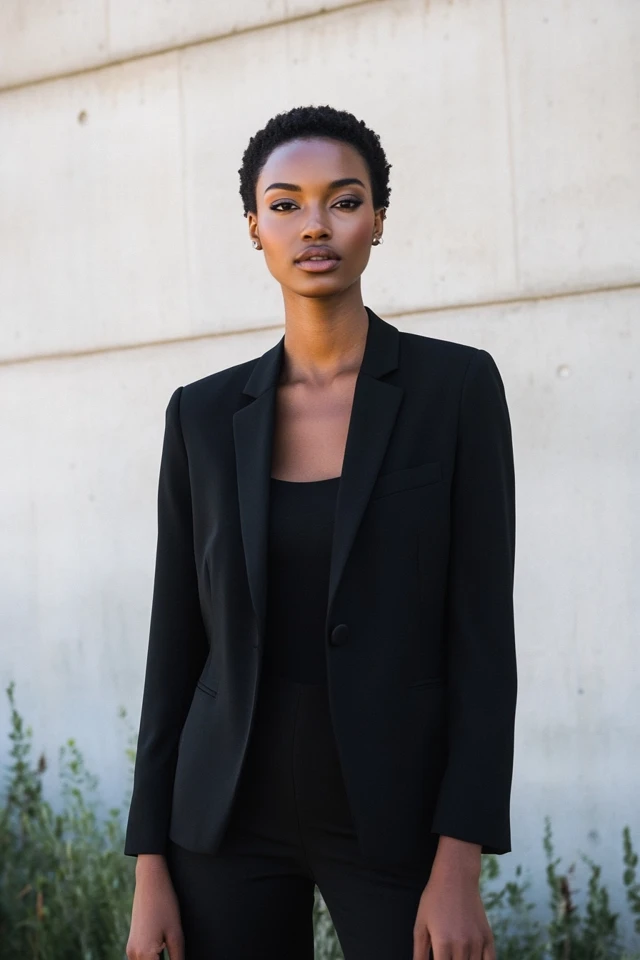
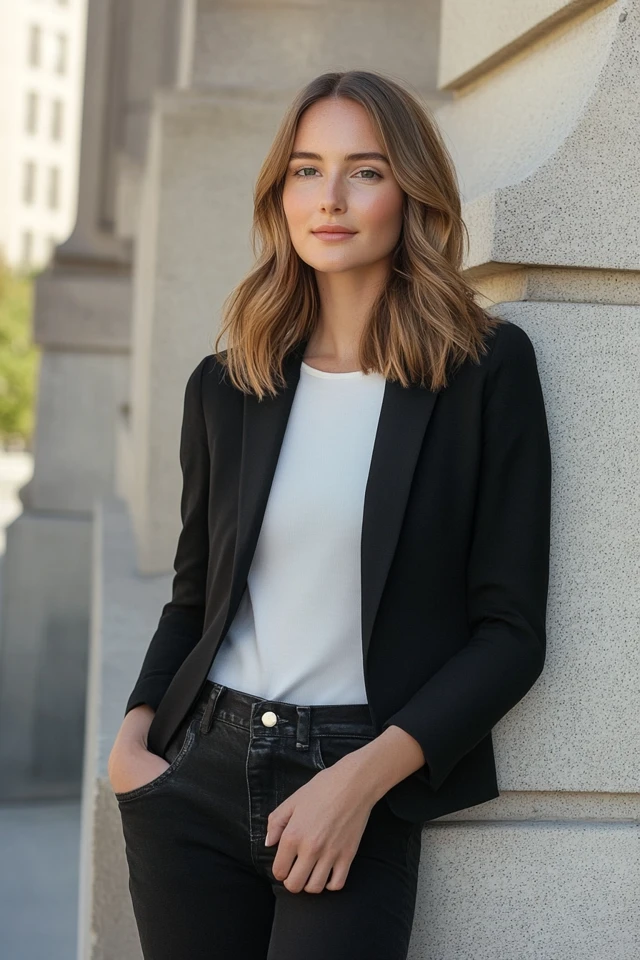
A good tailored black blazer fits at the shoulders, closes without pulling, and has sleeves that end at the wrist bone. Get those three things right and it layers over almost anything: a white tee, a slip dress, a chunky knit.
Below you'll find what to check before you buy, which cut suits which frame, and a set of outfit formulas that put one jacket to work across seasons.
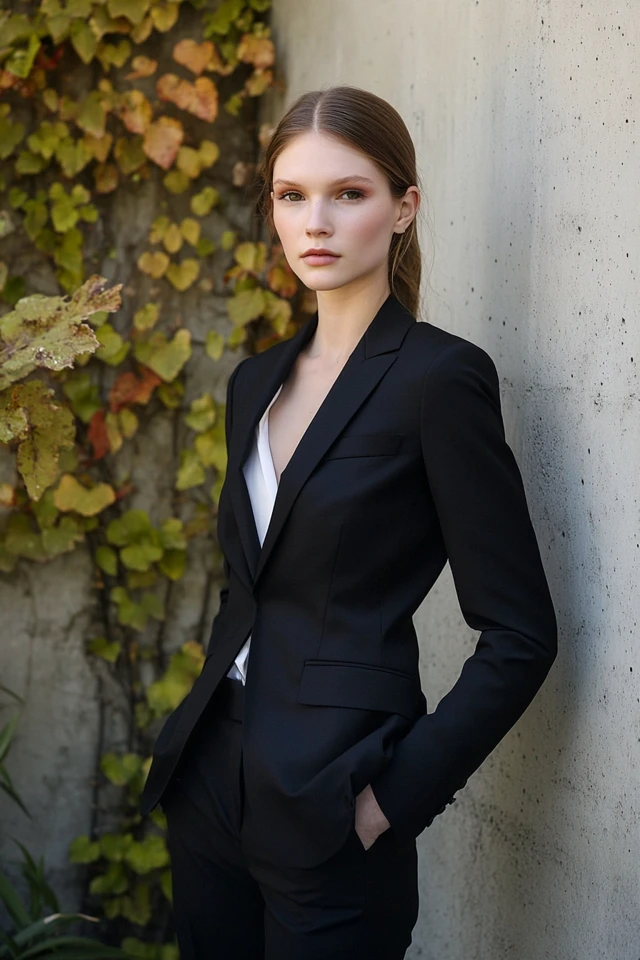
What to look for in a tailored black blazer
Start with the shoulder seam. It should sit where your shoulder ends. A jacket that pulls across the upper back or leaves a dent at the shoulder is a fit problem, not a you problem, and only some of it can be altered.
- Shoulders: the one thing a tailor can rarely fix well, so judge it first.
- Closure: button it. If the fabric forms an X around the button, size up.
- Sleeves: they can usually be shortened, so a slightly long sleeve is an easy fix.
- Length: the hem should cover the top of your hips for a classic look, or end at the waist for a cropped one.
A fitted shoulder pad blazer gives a clean, sharp line and holds its shape over thin layers. Light padding also makes narrower shoulders read broader, which can balance wide-leg trousers.
Which fabric suits your climate?
Through the lens of evidence-based design, I'd look at fabric before cut, because texture changes how black reads. A matte wool crepe looks deep and quiet. A shiny weave looks flatter and more formal, and it shows lint.
- Wool or wool blend: warmer, drapes well, resists wrinkles. Good for fall and winter.
- Cotton or linen blend: lighter and breathable, but creases more. Good for warm weather.
- Stretch blends: forgiving for travel and long days, though they can look less crisp.
Check the care label too. If it says dry clean only, factor that into the price you're willing to pay.
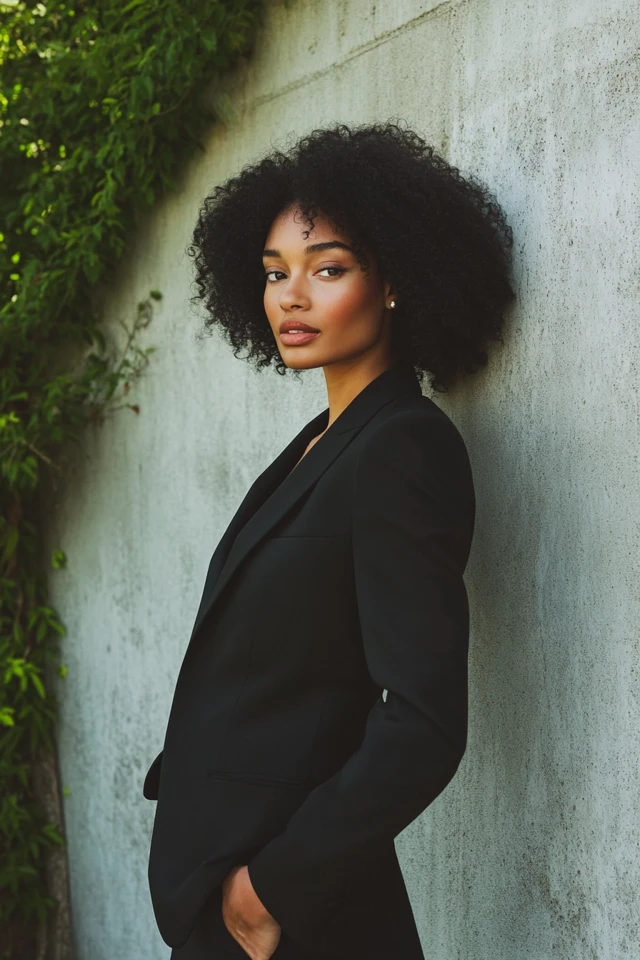
Which cut flatters your frame?
Black blazers work on every body, but the cut changes the proportions. These are starting points, not rules.
Petite frames
A cropped black blazer keeps the legs looking longer, especially with high-waisted pants or skirts. Look for a defined waist and avoid sleeves that swallow your hands.
Curvier shapes
Choose a nipped-in waist or a belted jacket. Very boxy cuts can hide the waist, which some people want and others don't.
Athletic builds
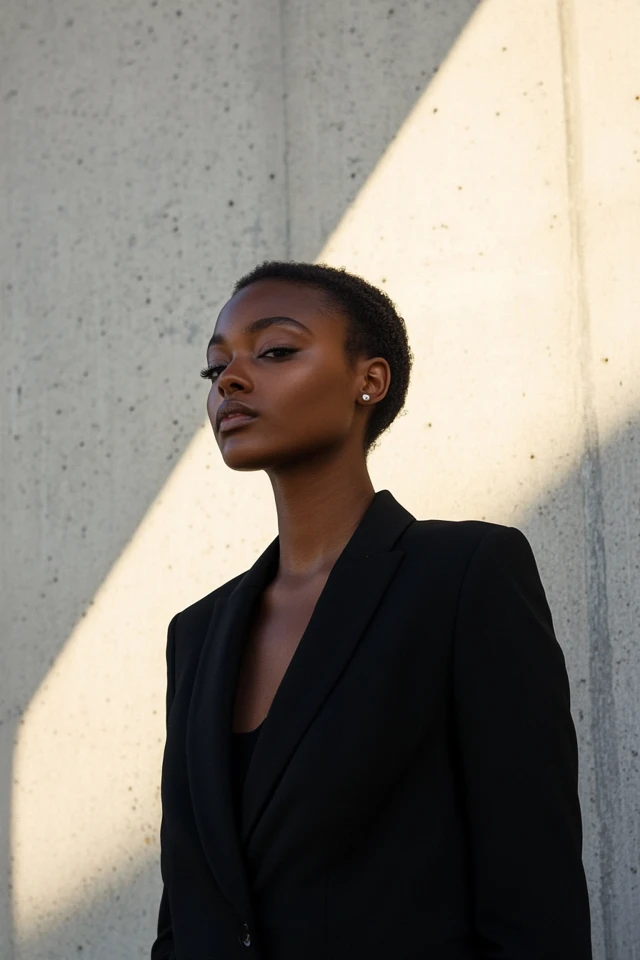
A slim-fit blazer can feel tight across the shoulders. A double breasted black blazer adds structure across the front, and a little shoulder padding adds shape.
Tall frames
Longline and boyfriend cuts suit height and make a long vertical line. Check that the sleeves are long enough.
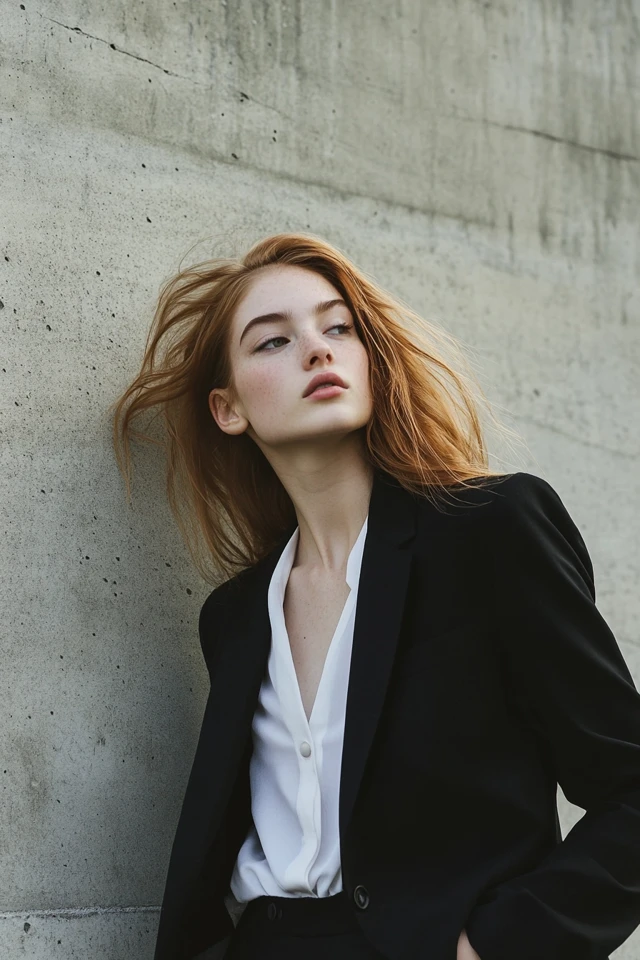
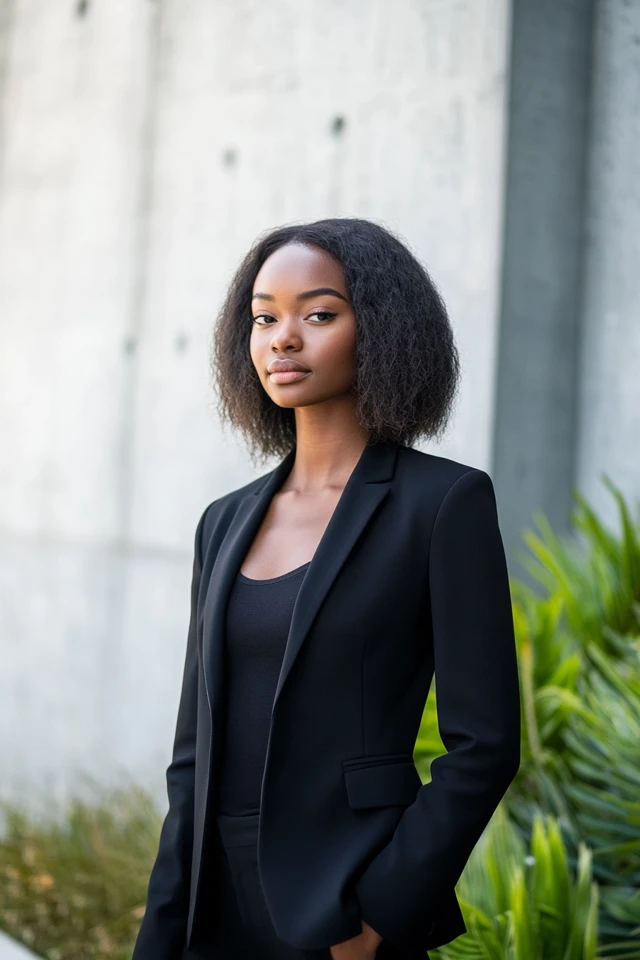
Single or double breasted?
A single-breasted jacket is the easiest all-rounder. It opens into a long vertical line and works over nearly every top. A double breasted black blazer is more formal and more graphic, with two columns of buttons that add visual weight to the torso. It suits you if you want a strong look, and it's usually best worn buttoned.
If you're choosing only one, go single-breasted. Add a double-breasted one later for a sharper alternative.
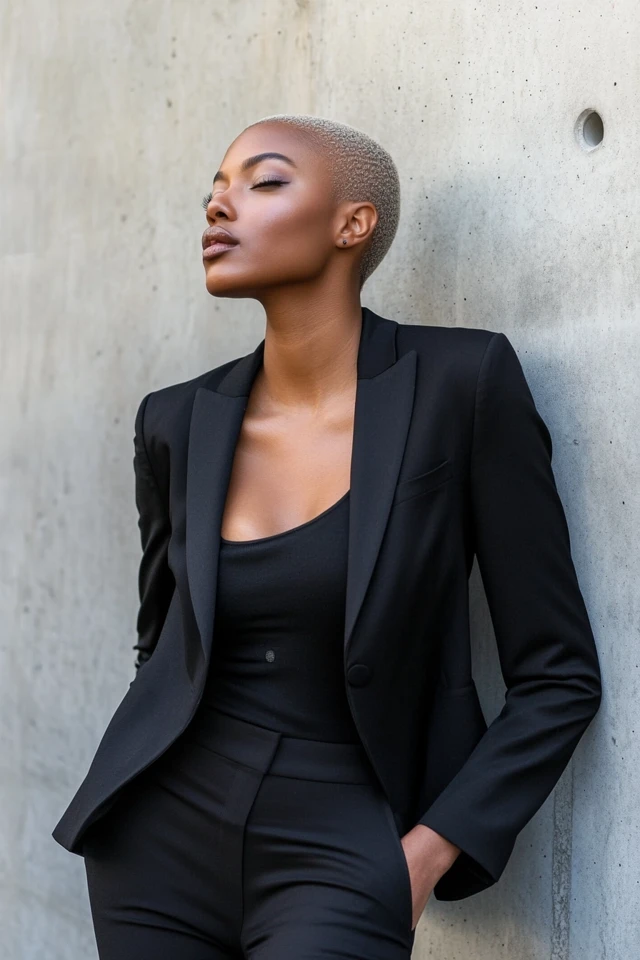
Black blazer outfit ideas that use one jacket all year
These black blazer outfit ideas rely on contrast: structure against something soft, or polish against something casual.
- Office: blazer, white silk tank, cropped beige trousers, loafers.
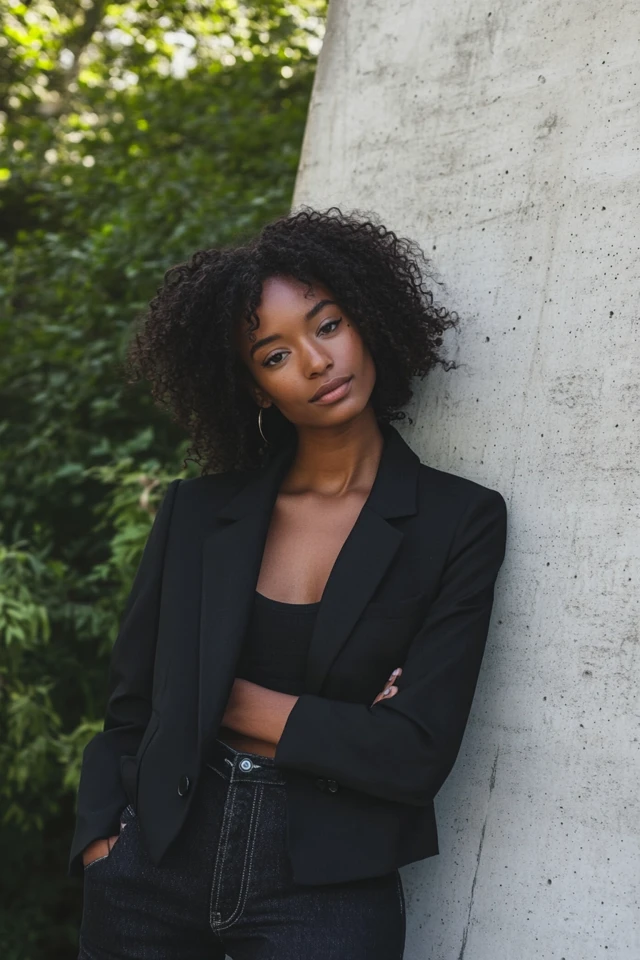
- Weekend: an oversized black blazer, graphic tee, light-wash jeans, white sneakers. Keep the bottom half slimmer to balance the volume.
- Evening: blazer over an emerald satin slip dress with gold heels. The matte jacket makes the satin look richer.
- Winter: a longline blazer over a chunky knit, with leather leggings and ankle boots.
- Formal dinner: a tuxedo-style blazer with wide-leg black trousers, a lace camisole and metallic heels.
For more formulas, see black and white combinations for blazers, or try a denim blazer when you want a lighter spring option.
How do you layer a blazer well?
Layer thin to thick. A blazer should slide over a knit without bunching at the shoulders, so size for the heaviest thing you'll realistically wear under it. Turtlenecks, bodysuits and fine tees are the easiest bases. A bodysuit stays smooth under the jacket, with no hem to bunch.
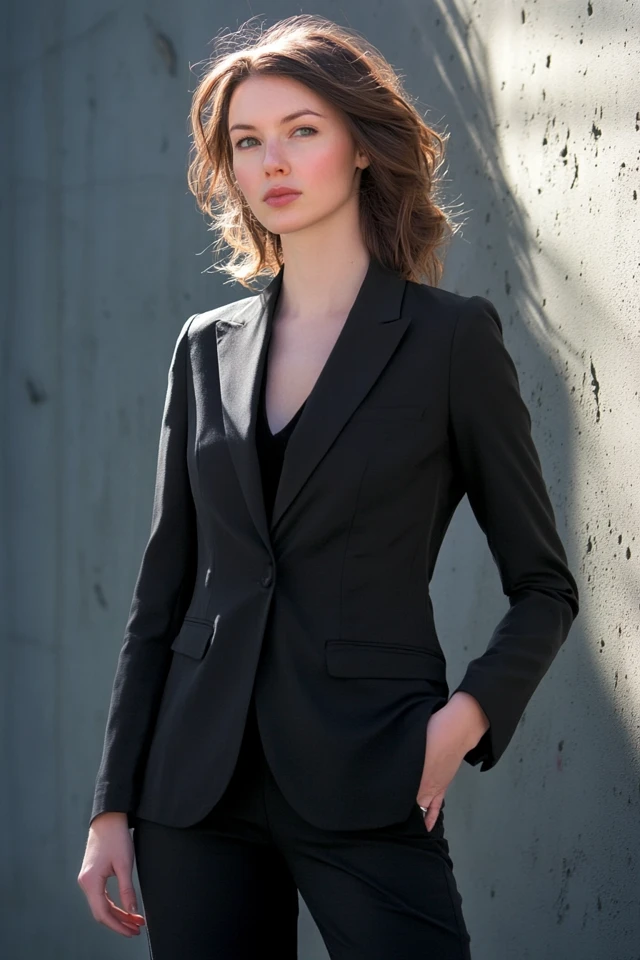
Mix textures. Leather, denim, satin and knit all look good against a structured black jacket, because the contrast between surfaces is easy for the eye to read. Keep jewelry simple if the neckline is busy.
Clothing can also affect how people feel and act. In one study published in Frontiers, wearing the Red Cross uniform led to more prosocial behavior compared to civilian clothing. That was a uniform, not a blazer, but it suggests that what you put on can shift your mindset. If a structured jacket makes you stand taller, that's a good reason to wear it.

How much should you spend?
You don't need a high price tag for a good black blazer, but a few checks matter more than the label. Look for a lining that isn't stiff, buttons that are sewn on firmly, seams that lie flat, and fabric that springs back when you crush it in your hand. A lower-priced blazer with a good fit usually looks better than an expensive one that doesn't fit.
Budget a little for tailoring. Shortening sleeves or taking in a waist can make an inexpensive jacket look much more expensive. For work-focused options, see fitted black blazers for professional wear.
Store the jacket on a padded or shaped hanger, spot clean when you can, and dry clean only when needed to protect the structure.
Frequently asked questions
Can a black blazer be dressed down?
Yes. Wear an oversized cut open over a tee and jeans, or over a hoodie with sneakers. Keep the rest of the outfit simple so the jacket stays the polished element.
Can you wear a black blazer in warm weather?
Yes, if you choose a lightweight cotton or linen blend and wear it open over a sleeveless top or dress. Unlined styles are cooler.
How should a black blazer fit?
The shoulder seam should sit at the end of your shoulder, the buttoned front should lie flat, and the sleeves should end near the wrist bone.
Is a cropped black blazer worth buying?
It is if you often wear high-waisted pants or skirts, since the short hem shows the waistline. If you prefer low-rise bottoms, a standard length is usually easier.
Filed under Wardrobe Basics