Abstract Nail Designs: Subtle Ideas You Can Wear Daily
- Words by
- Julio Arco
- Published
- Reading
- 4 min
Abstract nail designs use loose shapes, lines, dots and color blocks instead of a recognizable picture. For a subtle version, start with a sheer or neutral base and add one or two soft marks in a second shade, on one or two nails.
That formula works on short nails, on a work-friendly manicure and on a Saturday brunch alike. Below are the styles worth trying, how to choose colors, and how to take it all off without punishing your nails.
What is abstract art on nails?
It is nail art that skips realistic motifs. Think a wobbly line, a smudge of color, a cluster of dots or a curved shape floating on bare nail. Nothing has to match or be symmetrical, which is why abstract nail art ideas suit beginners: a slightly uneven stroke looks intentional.
Simple abstract nail designs to try first
Squiggles and single swirls
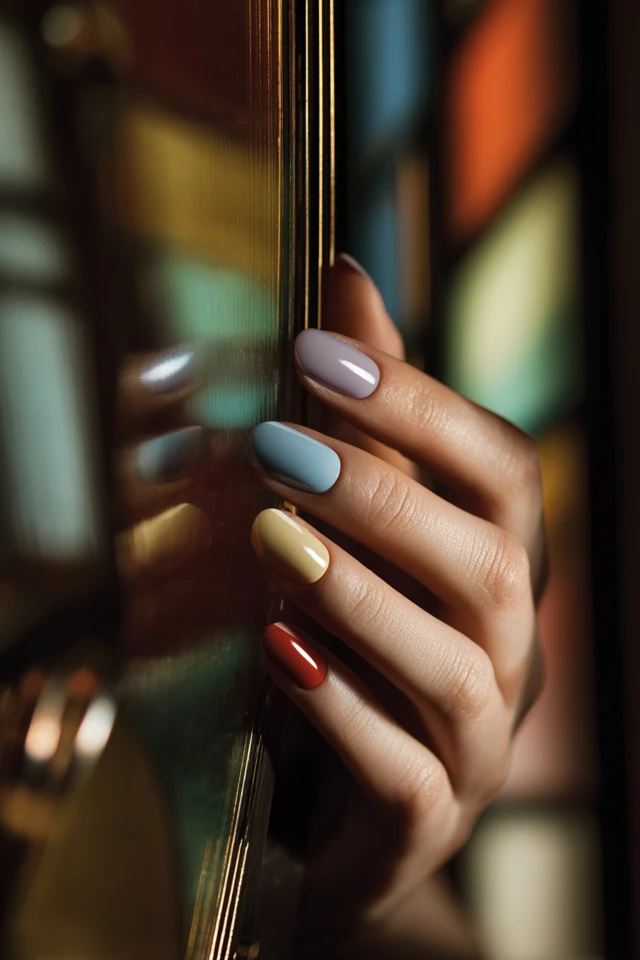
Paint a nude or milky base, then draw one thin wavy line across two or three nails with a fine brush. Keep the line in a tone close to the base (taupe on beige, soft gray on cream) and it reads as texture rather than pattern.
Dots and soft splashes
A dotting tool and a second color are enough. Place three or four dots of different sizes near the cuticle or tip and leave the rest bare. Use less polish on the tool than you think you need, so the dots stay small.
Negative space
Leave part of the nail unpainted and place a curve or a half moon of color against it. The clear area makes the shape look lighter, which is the quickest route to minimalist abstract nail art.
Abstract nail designs for short nails
Short nails handle abstract work well when the marks are small and kept low or off to one side. A long, vertical line can make a short nail look narrower and longer, while a heavy block across the middle shortens it. Keep the base sheer, and skip busy patterns on every finger.

Which colors work together?
Contrast is what the eye reads first, so decide how loud you want the design. Low contrast (beige with warm taupe, pale pink with dusty rose) looks quiet and works nearly everywhere. Higher contrast looks graphic.
- Black and white: the sharpest pairing. Try a cream base with a thin black squiggle, or the reverse on one accent nail.
- Cool skin tones: soft blues, lavender and silver-gray tend to sit comfortably.
- Warm skin tones: caramel, terracotta, olive and gold-leaning neutrals.
- Deep skin tones: plum, navy and burgundy bases look good with cream or rose-gold marks.
These are starting points, not rules. Hold the polish bottle against your hand in daylight before you commit, because skin changes how a shade reads.
Finish and texture: matte, gloss and glitter
Through the lens of evidence-based design, I'd think about texture before color. A matte surface scatters light and looks softer, while gloss reflects it and looks brighter, so the same shade can read as two different colors. A matte base with a glossy abstract line is an easy way to get depth with a single polish.
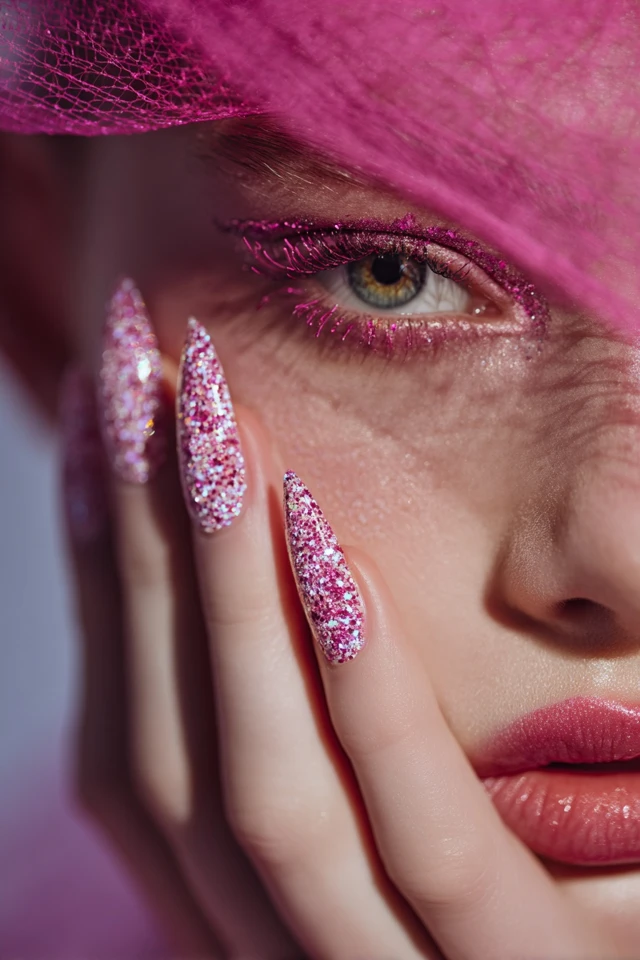
If you like sparkle, keep it small: a fleck of glitter or gold foil at the edge of a shape is enough. See matte canvas ideas for more on that finish.
Gel, acrylic and dip: what to know before you commit
Intricate abstract art lasts longest under gel or acrylic, but those systems have a cost. The American Academy of Dermatology notes that getting acrylics to stick means filing the natural nail until it feels rough, which thins it. It also says that if you wear them for more than a few weeks, you will need touch-ups every 2 to 3 weeks as the nails grow.
Removal matters just as much. The AAD reports that acetone is the most effective way to remove gel polish at home, and that after about 10 minutes under wrap most or all of the gel should be gone. The Cleveland Clinic adds that careless removal can temporarily damage nails, with cracking and peeling the most common issues.
On dip powder, dermatologist Chris Adigun, MD, FAAD, says: "Looking closely at your nails after removing the color helps you spot a problem early." If something looks off, check with a dermatologist.
How to make it easy at home
- Shape and buff your nails, then apply a base coat.
- Paint two thin coats of your base color and let them dry fully.
- Dab a little polish onto foil or a plastic lid and draw your shapes with a detail brush or dotting tool.
- Fix mistakes with a small brush dipped in remover before the polish sets.
- Finish with a top coat, sealing the free edge.
Start with one accent nail. If you want more looks, soft ombre nails and harmonic abstract designs use the same base-plus-accent approach.
Matching nails to your outfit
Pick one color already in your outfit and echo it in the nail design, or keep the nails neutral if the clothes are busy. As an architect trained in evidence-based design, I'd treat the nails as a small accent in the overall composition: one repeated tone ties things together better than three new ones. For a more playful take, browse eclectic abstract nails.
Frequently asked questions
What is the most trending nail design right now?
Soft, minimal looks such as milky bases with a single line, dots or a French-tip twist are popular, but trends shift quickly. Pick what suits your nail length and routine.
What are some abstract nail art designs?
Common ones are squiggles and swirls, scattered dots, color splashes, negative-space curves and matte-and-gloss contrast. Black and white and neutral palettes are easy places to start.
Can I do abstract nail art on short nails?
Yes. Keep shapes small, use a sheer base and put the design on one or two accent nails so the nail does not look crowded.
How do I keep abstract nail art from looking messy?
Use thin coats, let each layer dry, and work with a fine brush and little polish. Slightly irregular lines are part of the style, so aim for deliberate rather than perfect.
Filed under Nail Design