Mixing Prints and Patterns With Tie-Dye Accessories
- Words by
- Julio Arco
- Published
- Reading
- 4 min
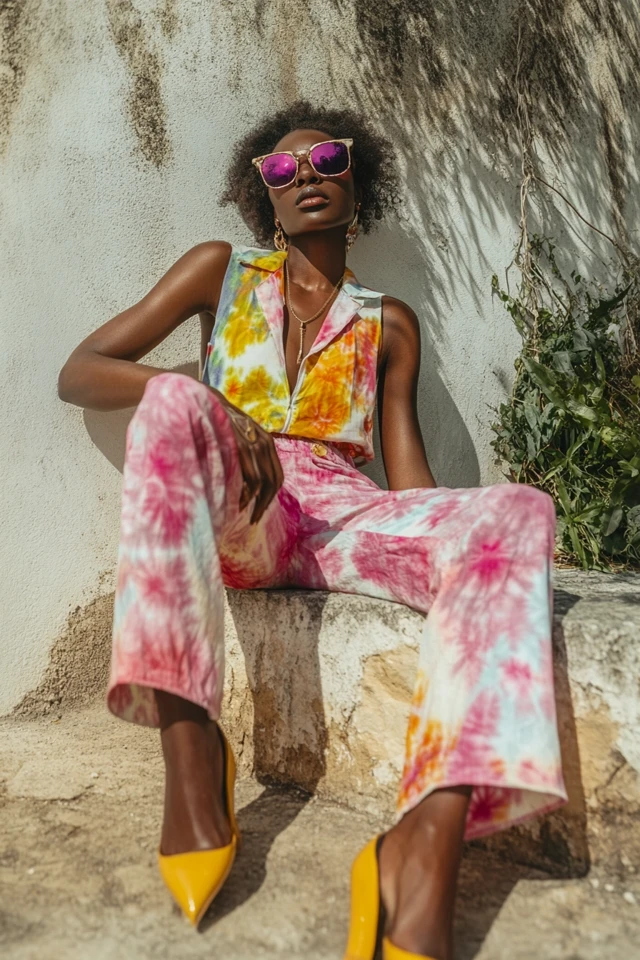
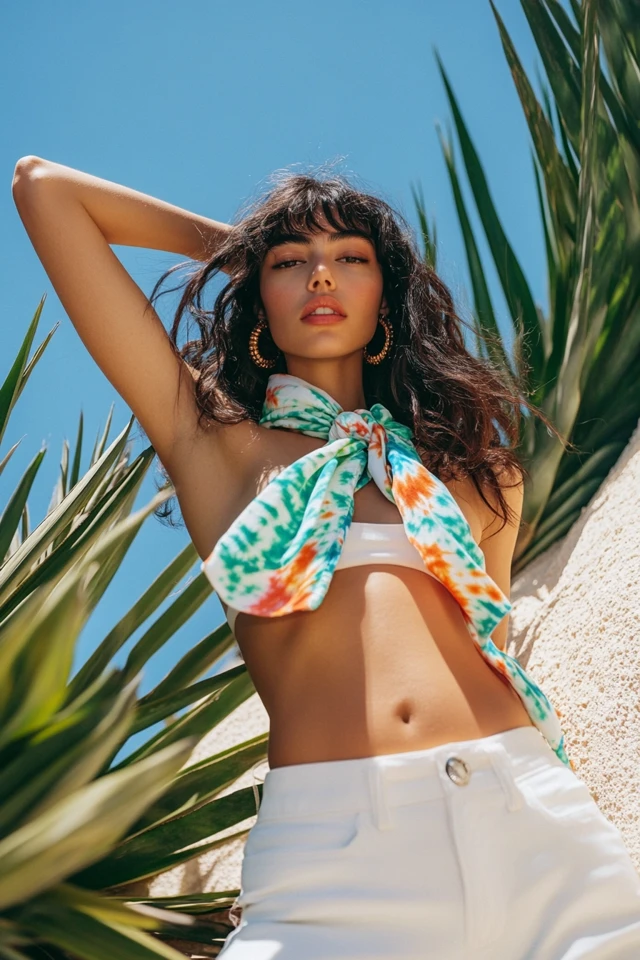
The easiest way into mixing prints and patterns is to let one tie-dye accessory be the loud piece and keep everything else quiet, small-scale or solid. A tie-dye scarf, bag or scrunchie gives you a retro accent without a head-to-toe commitment.
Below is how to mix prints and patterns around tie-dye, which patterns that go together tend to work, and how to mix patterns without looking like a clown.
Can you put two different prints together?
Yes. Two prints work when they differ in scale, share at least one color, or when one of them is calm enough to act like a neutral. Tie-dye is blurry and soft-edged, so it pairs more easily with crisp, regular patterns (stripes, polka dots) than with another busy, organic print.
Start with a shared color
Pick one or two colors in the tie-dye piece and repeat them elsewhere in the outfit. A lavender and mint scrunchie looks planned next to a thin lavender stripe or a mint cardigan. The eye reads the repeated color as a link, so the prints feel like one decision.
Through the lens of evidence-based design, I'd check this in daylight too. Dye colors shift under warm indoor bulbs, and a match that works at home can drift apart outside.
Mix patterns of different scales
Pair a large, loose pattern with a small, tight one. A big swirl of tie-dye on a tote works with a fine pinstripe or small polka dot on the blouse. Two patterns of the same size compete, and the outfit starts to vibrate.
- Large tie-dye bag with a thin-stripe tee
- Small tie-dye bandana with a bold gingham shirt
- Rainbow scrunchie with a micro polka-dot blouse and flared jeans for a 70s feel
Pair a loud print with a quiet one
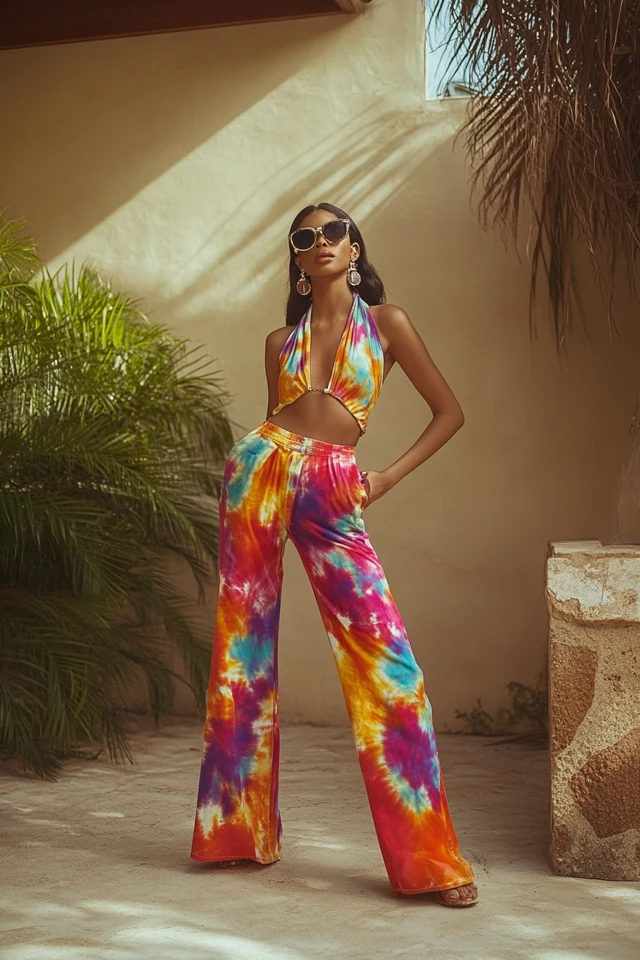
Decide which piece is the lead. If the tie-dye is bright, let the second pattern be low contrast: a tonal stripe, a faint check, a washed-out denim texture. If you want a very small touch of tie-dye, such as a hair tie or earrings, you can be braver with the clothes.
Stripes, small dots and denim behave almost like neutrals next to tie-dye. Another full-color floral usually does not, so I'd keep the two apart.
What patterns do not go together?
There is no banned pair, but some combinations are harder. Tie-dye with a large floral, leopard print with a large tie-dye, or two bold prints of equal size and equal contrast will fight for attention. If you love both, shrink one of them (a small accessory) or mute it (soft colors).
Add a solid piece to balance
A plain white tee, beige jumpsuit, black midi dress or denim jacket gives the eye somewhere to rest. Solids between two patterns, such as a solid top between a patterned scarf and patterned shoes, make the whole outfit easier to read.
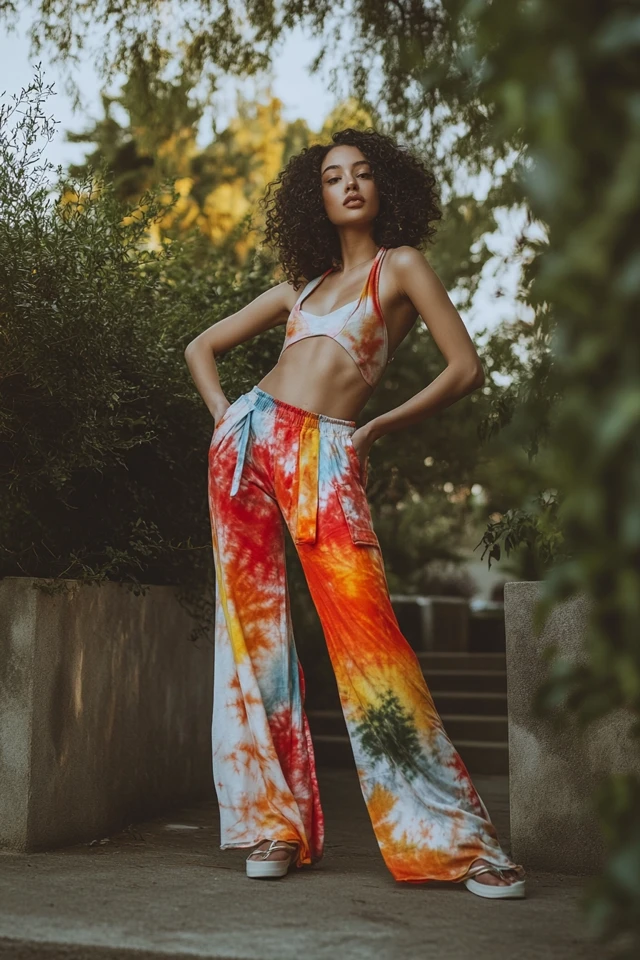
For high-contrast looks, see styling accessories with high-contrast outfits.
Pick the right tie-dye palette for your outfit
Rainbow
Best with white, denim and simple sneakers. It is cheerful and casual, so keep the clothes plain.
Pastel
Lavender, mint and blush are soft enough to sit beside a stripe or a beige base. A pastel scarf with a neutral jumpsuit looks relaxed and polished.
Black, gray and white
Monochrome tie-dye behaves like a texture. It suits leather jackets, tailored trousers and minimalist outfits, and it is the safest option if you are nervous about pattern mixing.
Earthy tones
Olive, rust and mustard go well with linen, cotton, suede and flowy maxi dresses. For a fuller dress option, see bold tie-dye maxi dresses for summer fun.
Outfit formulas to try
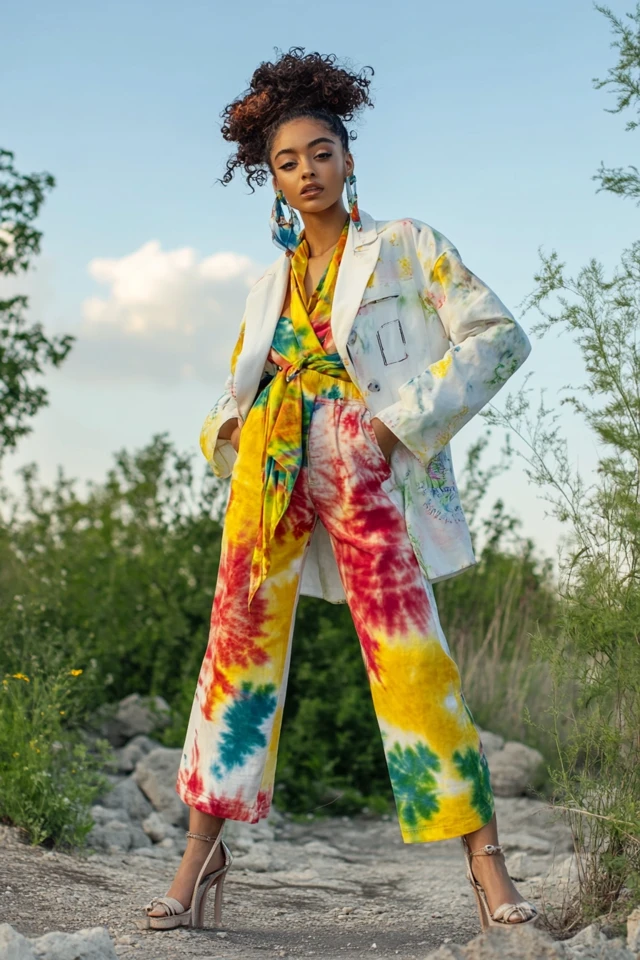
- Casual: tie-dye crossbody, white tee, mom jeans, white sneakers.
- Boho: tie-dye scarf, peasant blouse, wide-leg pants, leather sandals.
- Sporty: tie-dye sneakers, joggers, cropped hoodie, cap.
- Minimal: gray-and-white tie-dye scarf, black midi dress, leather jacket, ankle boots.
- Retro: rainbow scrunchie, polka-dot blouse, flared jeans, platform sandals.
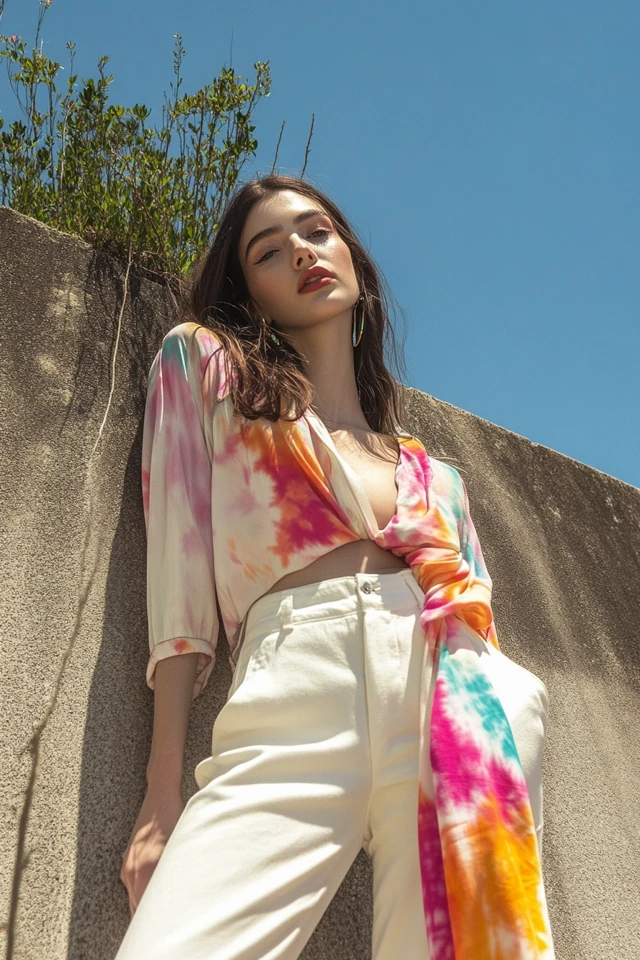
If you like a retro direction, the retro spring color palette and capsule wardrobe posts give more base pieces to build around.
Keep texture consistent
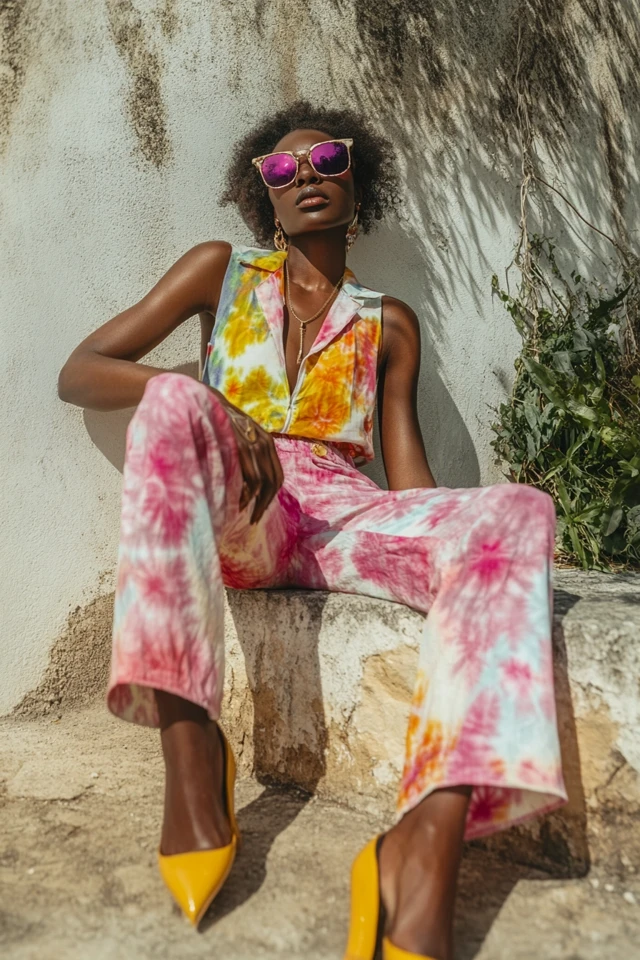
Texture changes how a pattern reads. As an architect trained in evidence-based design, I'd pair tie-dye with natural, matte fabrics such as cotton, linen and denim, because a glossy fabric next to a dyed one adds a second thing for the eye to process. Metal chains can sit well with it too; chain accessories are an easy way to add edge.
Try it on and trust your eye
Put the full outfit on and step back. If your eye jumps between three spots, remove one pattern or swap it for a solid. If it settles on one lead piece with the rest supporting it, you are done. Start with small accessories (scrunchies, bandanas, jewelry) before moving to a big tote or shoes.
Frequently asked questions
How to mix prints and patterns?
Choose one lead print, repeat one of its colors elsewhere, and vary the scale of the patterns. Add a solid piece so the outfit has a place to rest.
What patterns do not go together?
Two bold prints of the same size and contrast compete, such as a large floral with large tie-dye. Shrink or soften one of them and the pair becomes easier to wear.
Can you put two different prints together?
Yes, if they differ in scale or share a color. Stripes and small polka dots are the easiest partners for tie-dye.
Can tie-dye accessories work for formal events?
Muted or neutral tie-dye on a scarf or clutch can look polished with solid, tailored clothes.
How do I care for tie-dye accessories?
Check the care label first. Washing fabric pieces gently in cold water is a common way to protect the colors.
Filed under Accessory Trends