Color Blocking Outfits: How to Style Bold Colors
- Words by
- Julio Arco
- Published
- Reading
- 4 min
Color blocking means wearing two or more solid, contrasting colors in large, clean sections, so each color reads as its own shape. The easiest way to start is one bold piece, one second color, and neutral or metallic accessories to hold it together.
Accessories are where most people get stuck. A belt, bag or pair of shoes can act as a small color block of its own, or it can calm things down. Below are the rules I'd follow and the combinations that work.
What is color blocking in an outfit?
It is the pairing of solid color areas with sharp edges between them: a cobalt top with orange trousers, or a green dress with a yellow belt. The color change is the design. Prints and fine patterns blur those edges, so solids work best.
The idea is old. The Fashion Institute of Technology's timeline describes parti-color as a fashion in Medieval Europe, from the late twelfth century to the end of the fifteenth, where garments were made in one color on one half or quarter and a different color or pattern on the other sections. Today's version is calmer, but the logic is the same.
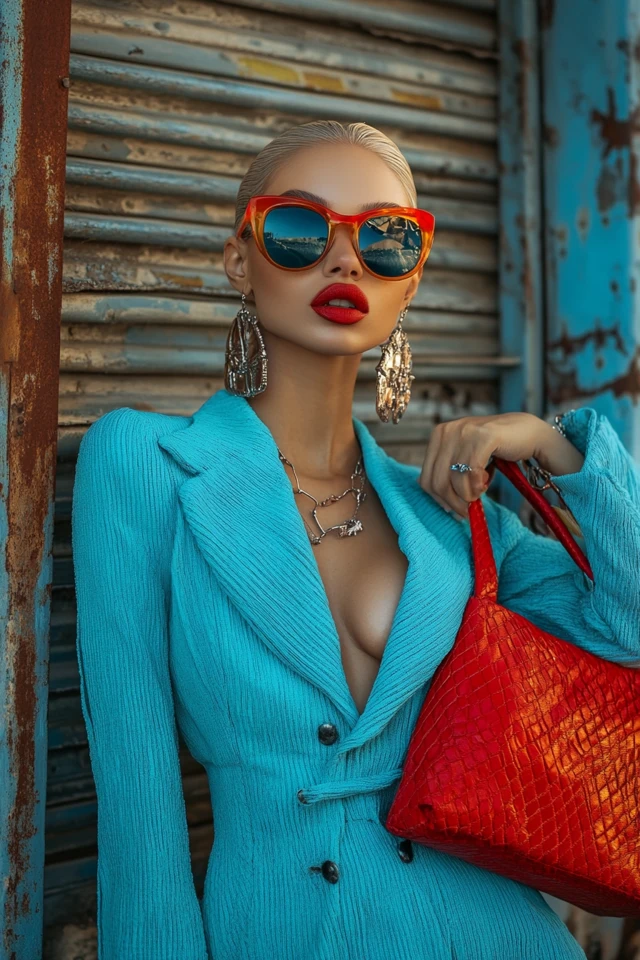
How to color block outfits: start with one rule
Choose two colors for the clothes, then let accessories either repeat one of them or stay neutral. Three strong colors can work, but the eye then has no place to rest, so keep that for when you're comfortable.
Keep the saturation matched
Two colors at the same intensity look planned. A bright pink next to a dusty sage can look like a mistake, because one color overpowers the other. Pair brights with brights, and softer shades with softer shades.
Use the color wheel
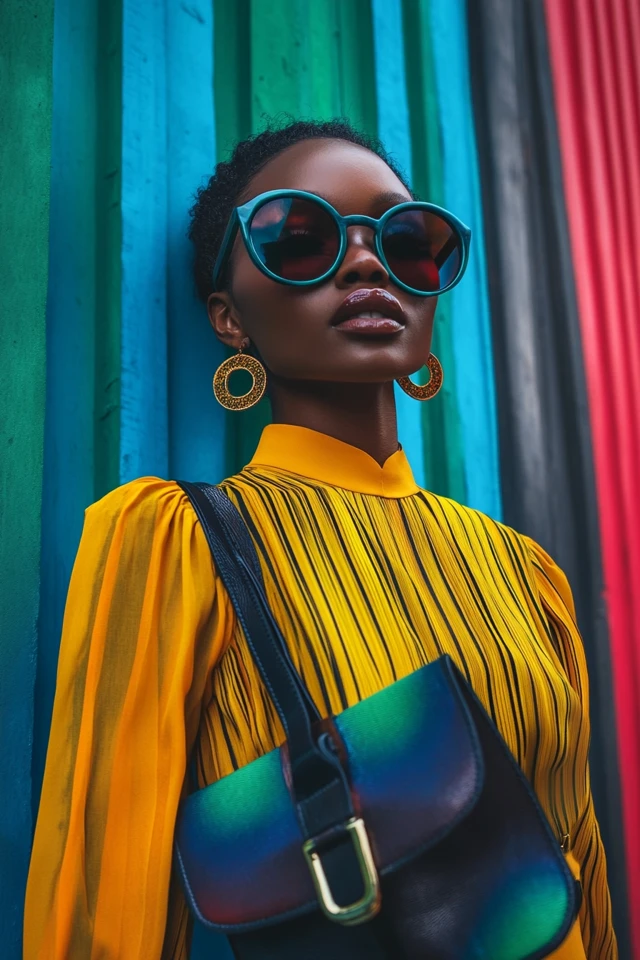
Colors opposite each other (blue and orange, red and green, purple and yellow) give the strongest contrast. Neighbors on the wheel, such as teal and blue or red and orange, feel calmer and are easier to wear.
Think warm vs cool tone color blocking
Warm colors (red, orange, yellow) tend to look closer and more energetic. Cool colors (blue, green, purple) tend to recede and feel calmer. Through the lens of evidence-based design, I'd put the warm color where you want attention, usually the top, and the cool color on the lower half to keep the look grounded.
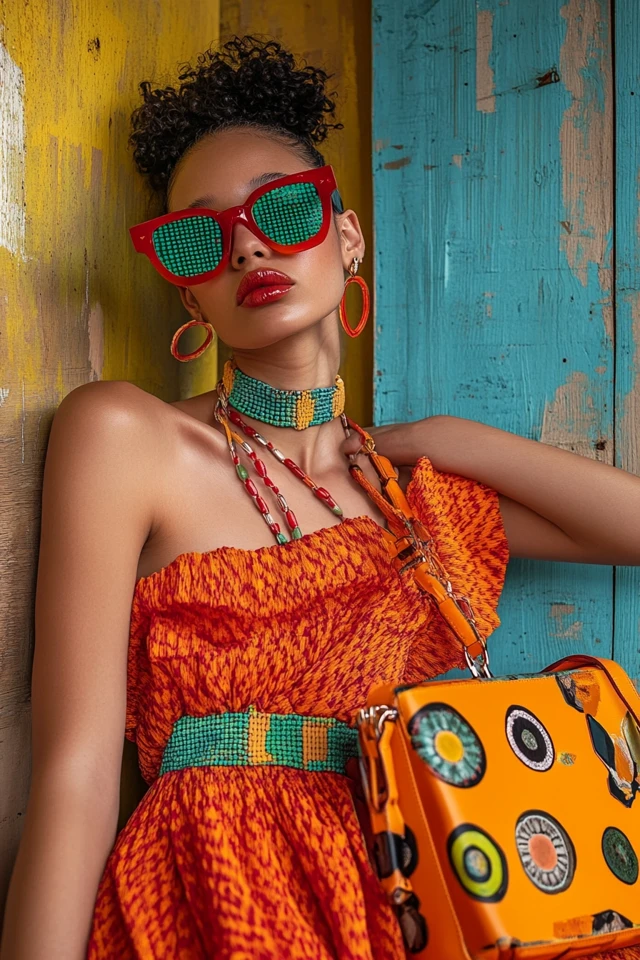
Color blocking examples with accessories
Neutral accessories
A yellow jumpsuit with nude heels and a cream clutch lets the color do the talking. Black leather accessories on a bright red outfit look sleeker and more modern. Gold or silver also reads as neutral against bold color.
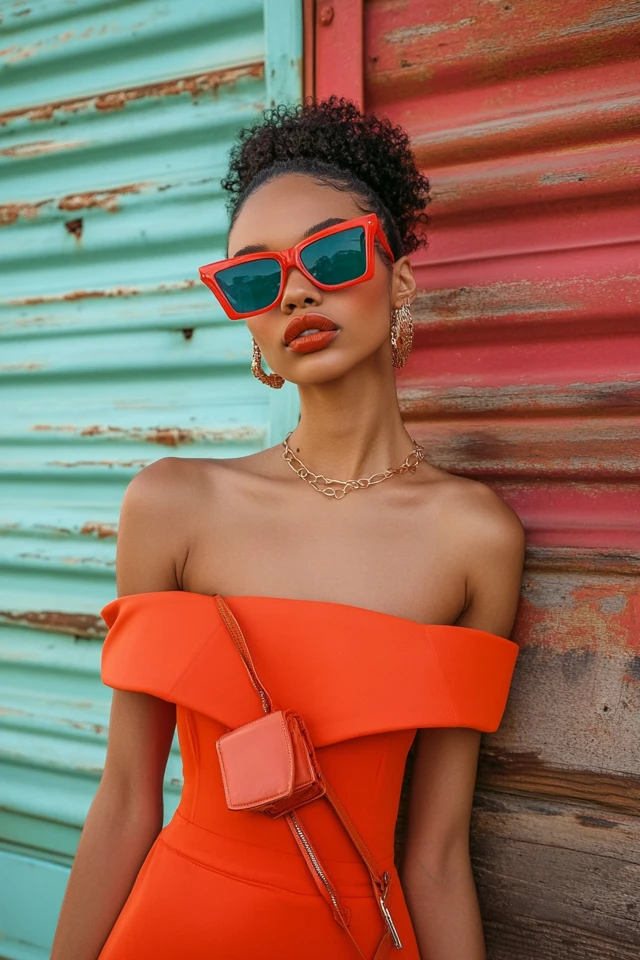
Complementary accessories
A hot pink dress with emerald earrings and a matching bag is a clear contrast pairing. Keep the accessory color in one or two places so it reads as deliberate.
Same-family accessories
A cobalt dress with navy heels and a navy bag is a quieter route. Mix textures, such as suede shoes and a patent clutch, so the outfit doesn't go flat. As an architect trained in evidence-based design, I'd lean on texture here because a matte and a glossy version of one color catch light differently and read as two tones.
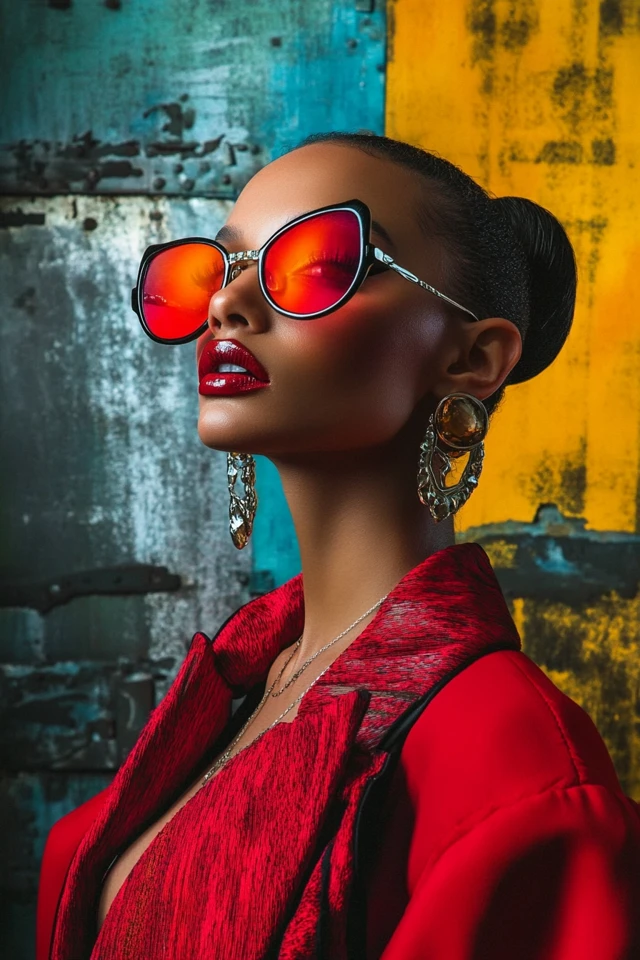
A contrasting pop
A turquoise maxi dress with coral sandals, or a purple dress with bright orange earrings, turns the accessory into the second block. Pick one piece for this, not three.
Which accessories work best as blocks?
- Belts: a wide belt in a contrasting color cuts the outfit at the waist and makes a clear color break.
- Shoes: nude heels stay quiet, while colored flats or sneakers add a second block at the bottom.
- Bags: a neutral or textured bag, such as woven straw, balances a loud outfit. A colored bag works when the clothes are neutral.
- Jewelry: oversized earrings or a cuff in gold suit most bold colors. For ideas, see bold statement earrings, bold beaded necklaces and statement rings.
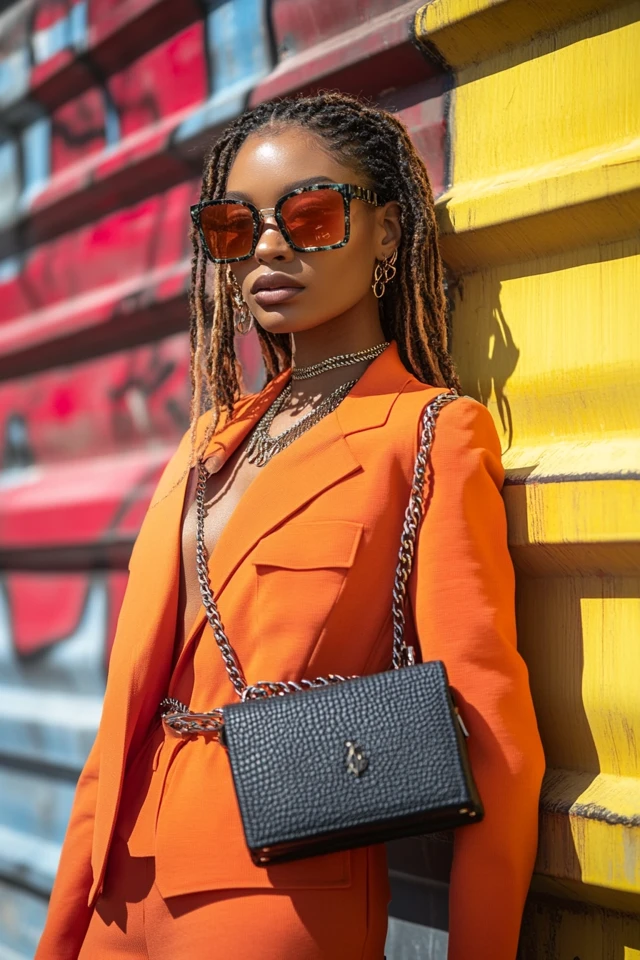
Color blocking outfits for summer
Summer light makes saturated color look even brighter, so lighter fabrics such as linen and cotton keep it comfortable. Try pastels in matching sets, or a neon piece paired with white. More ideas are in bold neon summer dresses and vibrant fiesta looks.
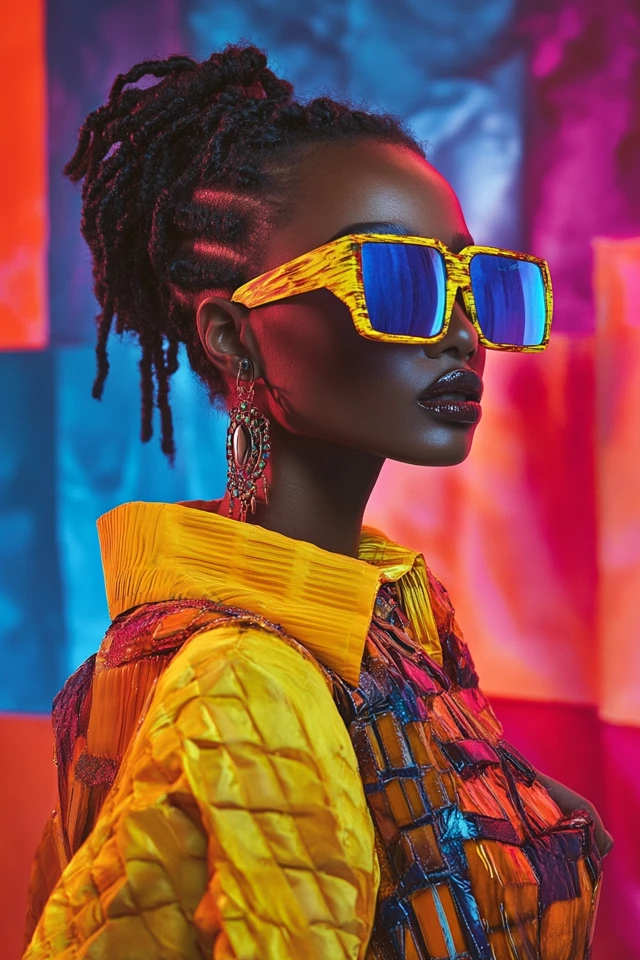
Color blocking do's and don'ts
- Do stick to separates and tailored pieces, since clean seams make the color edges look sharp.
- Do begin with one bold item and neutrals if you're nervous.
- Do check proportion: oversized accessories suit simple outfits, and delicate ones suit voluminous outfits.
- Don't mix several busy patterns into the blocks.
- Don't match every accessory to the outfit. A little mismatch looks more relaxed.
- Don't worry if it feels loud at first. A bold color that fits well is mostly a styling problem, not a you problem.
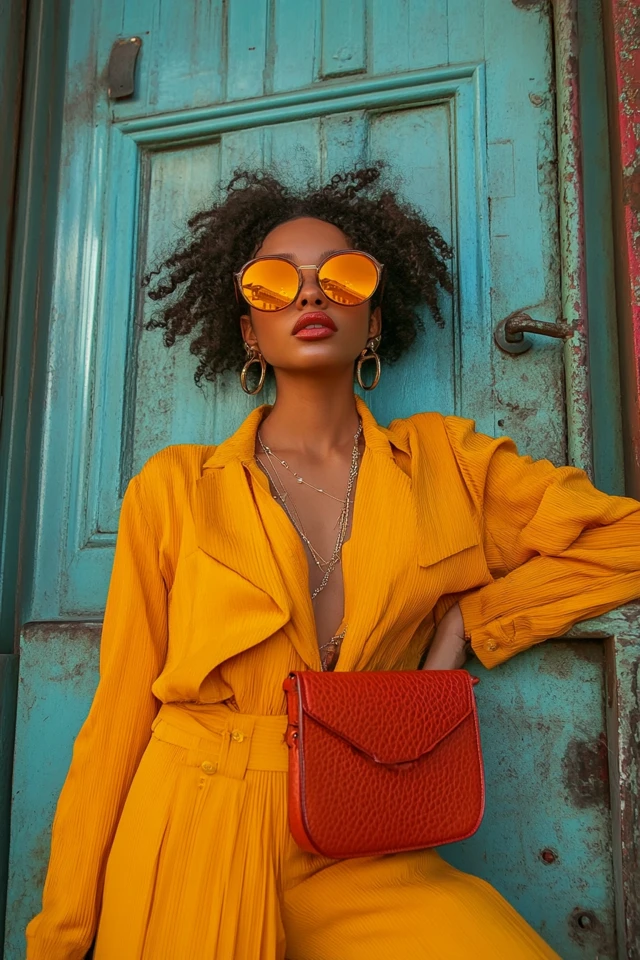
For related looks, try red and purple statement tops, which pair well with the neutral-accessory approach above.
Frequently asked questions
What is color-blocking in an outfit?
It is wearing solid, contrasting colors in large sections, such as a blue top with orange trousers. The sharp edge between colors is what makes it work.
Is color-blocking outdated?
Wearing solid contrasting colors together has a long history, so it doesn't belong to one season. It looks current when the fit is clean and the colors are chosen on purpose.
What is the 3-3-3 rule for outfits?
It usually means building an outfit from three tops, three bottoms and three pairs of shoes. It is a wardrobe-planning idea, not a color blocking rule.
Can I wear bold colors to work?
Yes. Pair them with tailored pieces and minimal accessories, such as a cobalt blazer over a white blouse and black trousers.
Filed under Accessory Trends