Round and Squoval Nails: How to Pick Your Shape
- Words by
- Julio Arco
- Published
- Reading
- 4 min
Round nails follow the curve of your fingertip with no corners. Squoval nails keep a flat, square-ish tip and soften the corners into a gentle curve. If you want the softest, most natural look, pick round. If you want a little more polish and a bit more polish surface, pick squoval.
Both shapes are low-maintenance and hard to get wrong, which is why they are the usual answer for short nails, everyday wear and nails that tend to snag.
What do round and squoval nails look like?
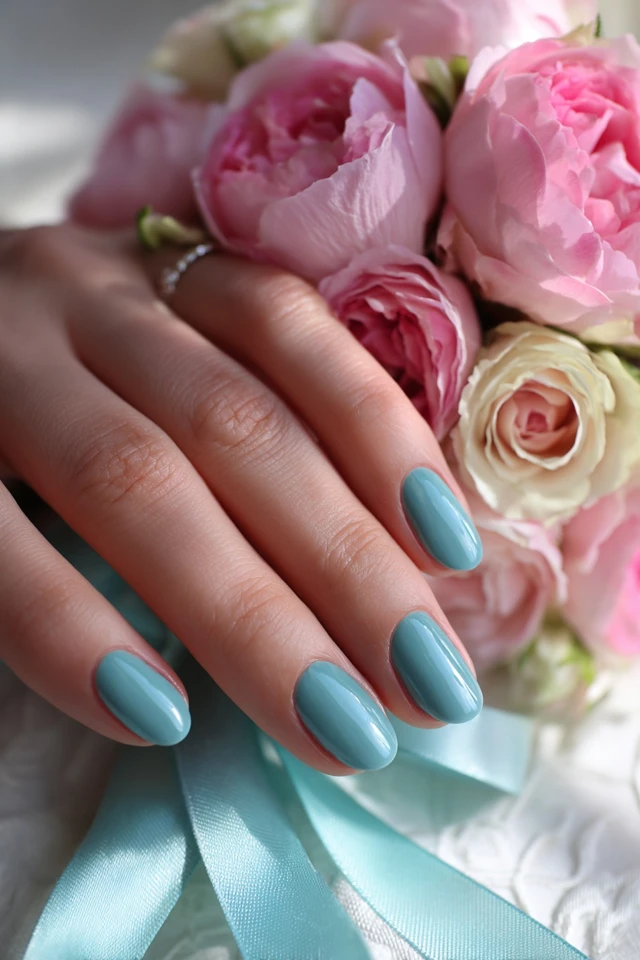
A round nail is an even curve from one side wall to the other. Nothing sticks out, so it reads as neat and quiet, almost like a natural nail that has been tidied.
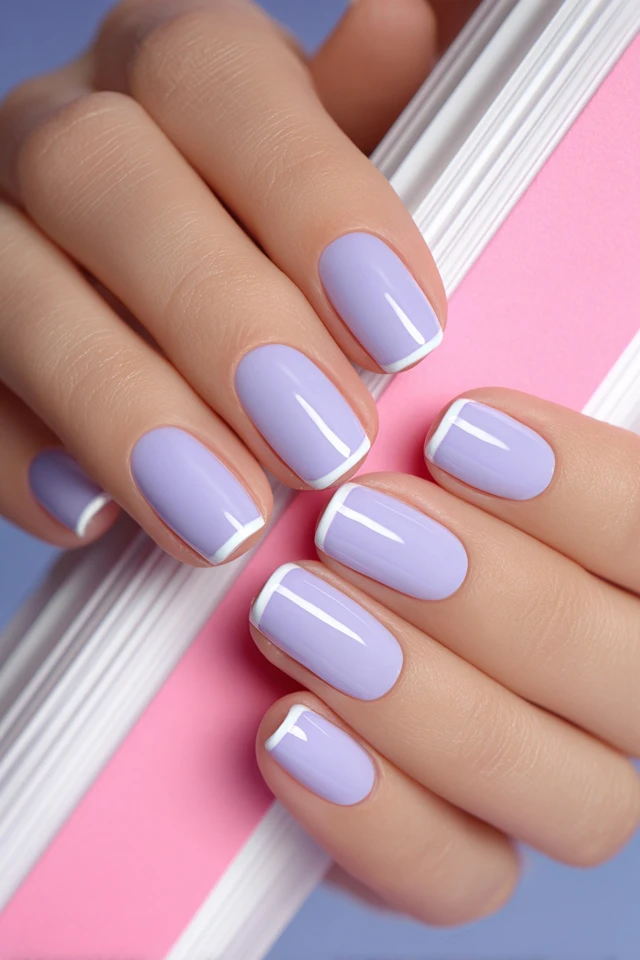
A squoval nail (a mix of square and oval) has a straight free edge with rounded corners. From the front it looks slightly broader than a round nail, and the flat tip gives color a clean, finished edge.
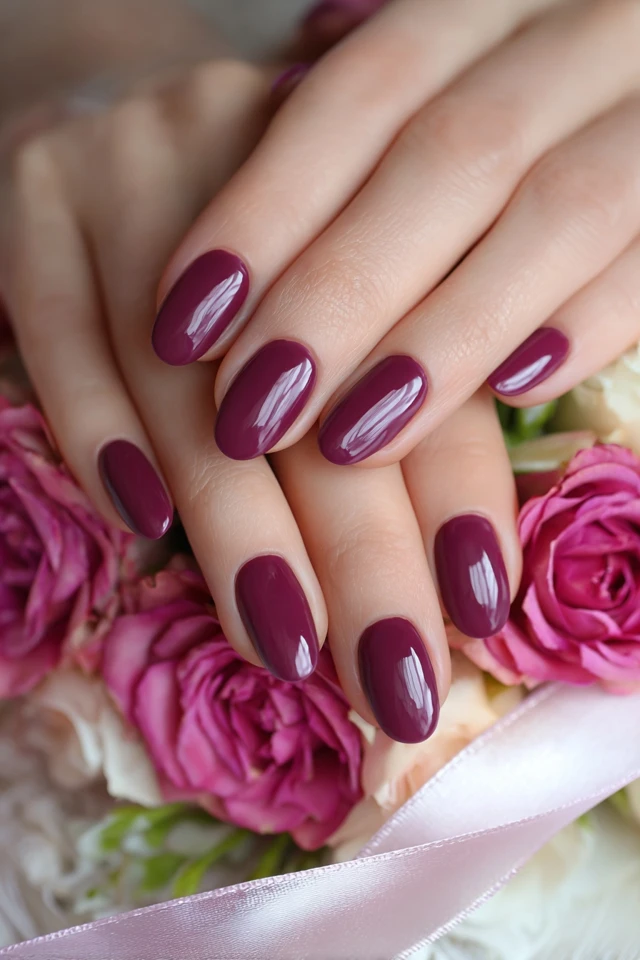
Round or squoval nails: how they compare
| Feature | Round | Squoval |
|---|---|---|
| Tip | Fully curved | Flat with softened corners |
| Look | Soft, natural | Tidy, a little more structured |
| Snag risk | Very low | Low, corners are rounded |
| Best length | Short to medium | Short to medium-long |
| Nail art space | Slightly less at the tip | Flat tip suits French lines and color blocks |
Compared with square nails, both shapes lose the sharp corners that catch on sweaters and hair. Square nails make a stronger graphic statement, but the corners are also the first place a nail chips or splits.
Which nail shape suits my hands?
Judge it by your nail bed and fingers, then by how you live. A few rules of proportion usually hold:
- Short, broad nail beds: squoval keeps the width tidy, while round looks softer. Both work if you leave a thin strip of skin visible at the sides.
- Long, narrow nail beds: round or a slightly longer squoval echoes the finger's length without exaggerating it.
- Wider or fuller fingers: a gentle curve with the nails filed a touch past the fingertip can read as longer. A nude or sheer color close to your skin tone extends that line further.
Through the lens of evidence-based design, I'd look at the outline first. The eye reads the edge of a shape before it reads the color, so a soft curve makes hands look calmer than sharp corners do.
What is the best nail shape for short nails?
Round and squoval nails are both strong choices. Squoval nails on short length keep a little tip width, which gives you room for a thin French line or a single accent. Round suits very short nails best, because there is no corner to file back as the nail grows.
Keep the free edge just past the fingertip. Going shorter than that makes the nail bed look cut off, and going much longer adds more leverage for breakage.
Are squoval nails good for fragile nails?
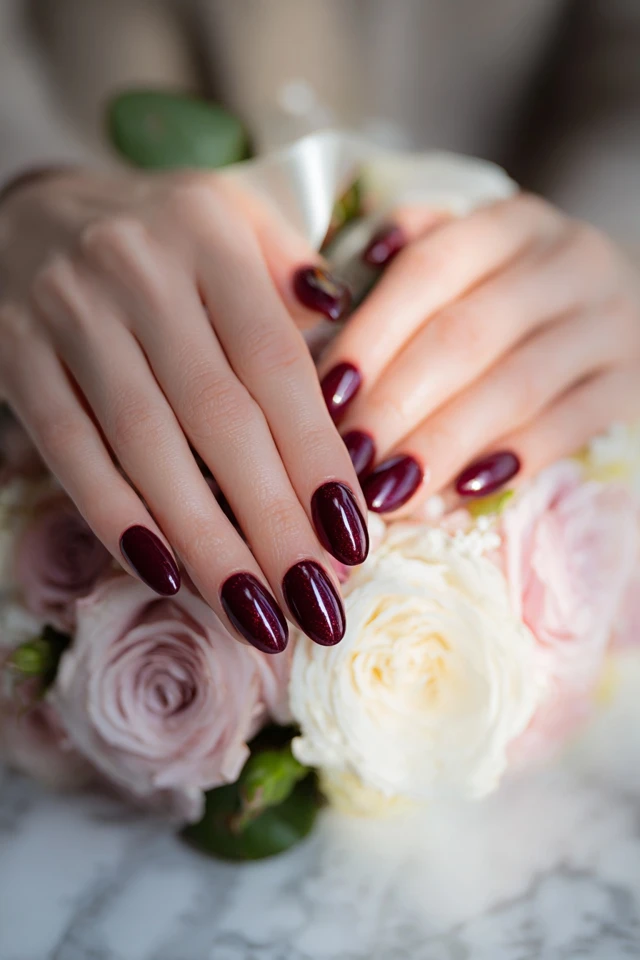
Squoval nails for fragile nails are a sensible pick, with one condition: keep the corners rounded. Sharp corners are weak points, and a rounded edge spreads wear more evenly. Round is just as forgiving.
What you put on top matters as much as the shape. The American Academy of Dermatology explains that getting acrylics to stick means filing your natural nails until they feel rough, which thins them and makes them weaker. If your nails are already fragile, plain polish on a short round or squoval shape is the gentler route.
Removal needs care too. The Cleveland Clinic notes that removing gel polish carelessly can temporarily damage nails, with cracking and peeling the most common issues. If a nail looks damaged or painful, check with a dermatologist.
How to shape round and squoval nails at home
- Trim to your length first, with nails dry and clean.
- Use a fine-grit file and move in one direction from the side toward the center, not back and forth.
- For squoval, file the tip straight across, then round each corner lightly.
- For round, follow the shape of your fingertip so the curve is even on both sides.
- Check from the front, with fingers together, and match the shape across all ten nails.
File a little at a time. It is easy to take more off and impossible to put it back.
Polish colors and simple nail art for each shape
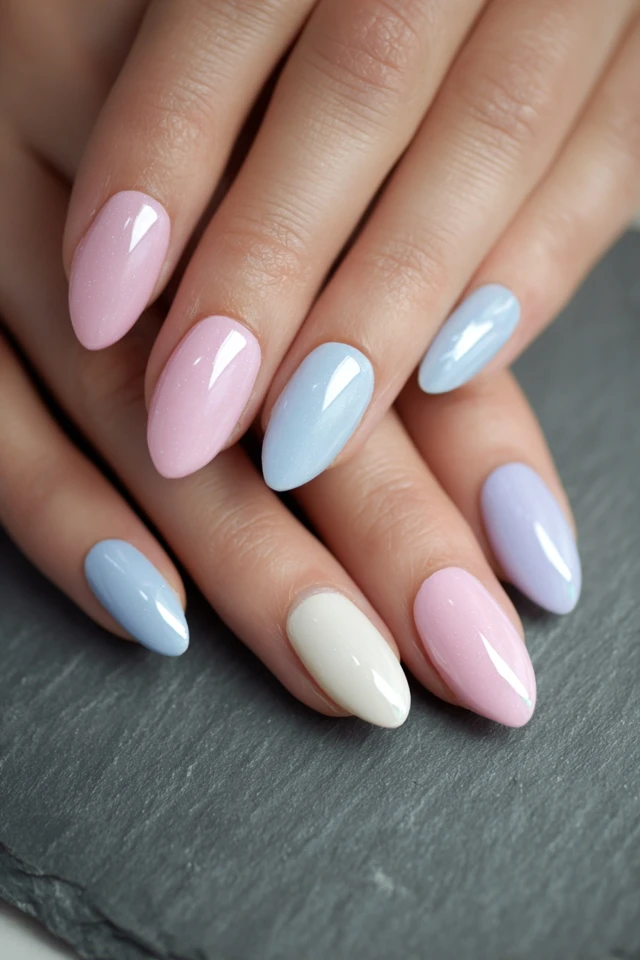
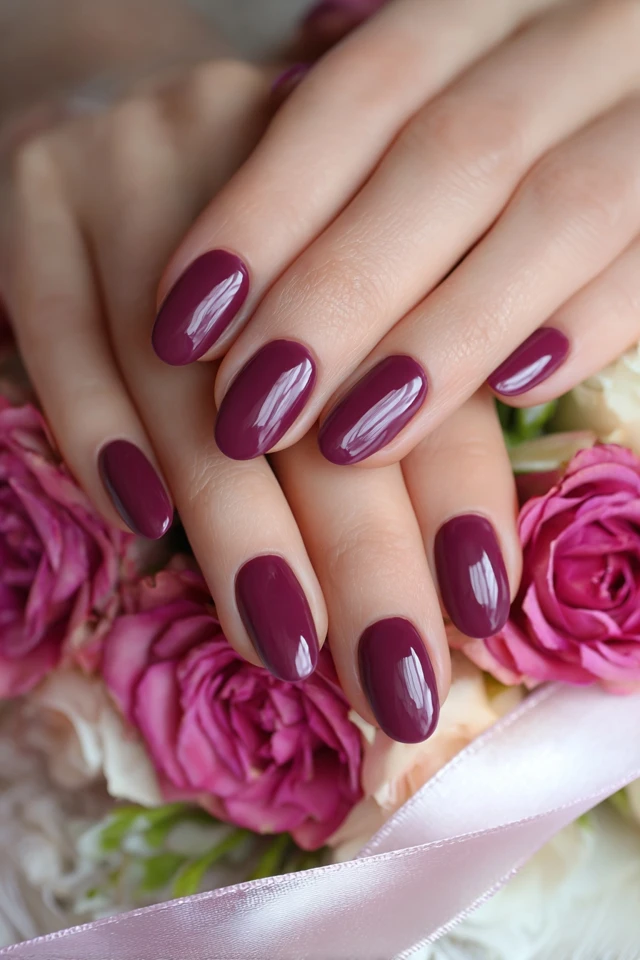
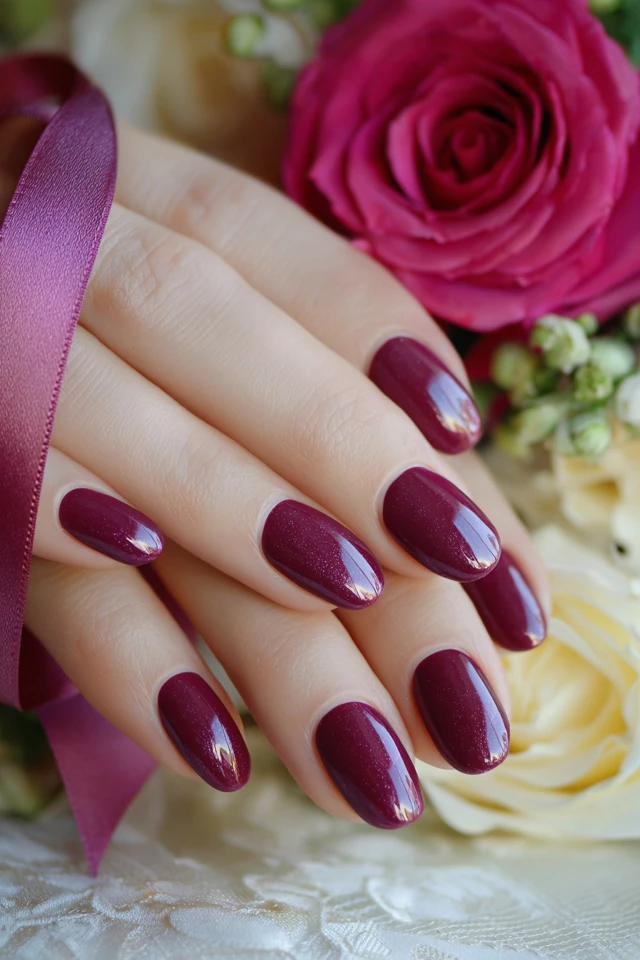
For simple round and squoval nails, color does most of the work. Sheer pink and nude tones make the shape look clean and slightly elongated. Deep burgundy or a muted terracotta adds contrast without competing with the outline.
Texture changes how a color reads. A glossy finish catches light along the curve of a round nail, while a matte finish looks flatter and more modern in the same shade.
- On round nails, thin lines, a small dot near the cuticle or negative space keep the look soft.
- On squoval nails, a micro French tip or a single metallic accent uses the flat edge well.
For more shape ideas, see Luxe Round Nails, Striking Micro Round Artistry Nails and Signature Round Silhouette Nails. If you want a little color play, try Striking Ombre Concept Nails.
Frequently asked questions
Should I get round or squoval nails?
Choose round for the softest, most natural look and the lowest snag risk. Choose squoval if you want a flat tip that shows off a French line or color blocking while keeping soft corners.
What nail shape is the most attractive?
There is no single winner. The shape that flatters most is the one that follows your nail bed and suits your length, which is why round and squoval work for many hands.
What is the classiest nail shape?
Round and squoval are the shapes most often seen as polished and understated, especially in short to medium lengths with a sheer or neutral color.
Can I switch between round and squoval as my nails grow?
Yes. Squoval is often easier to grow out from round, since you only need to keep the tip flat and the corners soft as the length returns.
Filed under Nail Design