Marble Nail Designs: Color Ideas and How to Do Them
- Words by
- Julio Arco
- Published
- Reading
- 4 min
The easiest marble nail designs to wear start with a soft base (nude, white or pale pink) and one or two thin, wispy veins in a darker shade. Keep the veins fine and slightly uneven, and the nail reads as stone rather than a swirl of paint.
Below are the color families that work best, a simple way to get the effect at home, and how to take it off without punishing your nails.
Which marble nail designs are worth trying?
Marble is forgiving because no two nails need to match. That makes it a good pattern for beginners and for anyone who finds perfect symmetry stressful.
Nude marble nails
Start with a beige or pale taupe base and drag a thin line of white and a touch of gray through it. This is the most office-friendly version, and it works with almost any outfit because the contrast is low. Through the lens of evidence-based design, I'd keep the contrast soft here: a low-contrast surface reads as calm and polished from a distance, while the veins reward a closer look.
Pink marble nails
A milky pink base with white veins is the classic soft option. Move toward rose or blush with a hint of cream for a warmer look. If you like pink but not sweetness, add one fine gray vein to cool it down.
White and gold marble nails
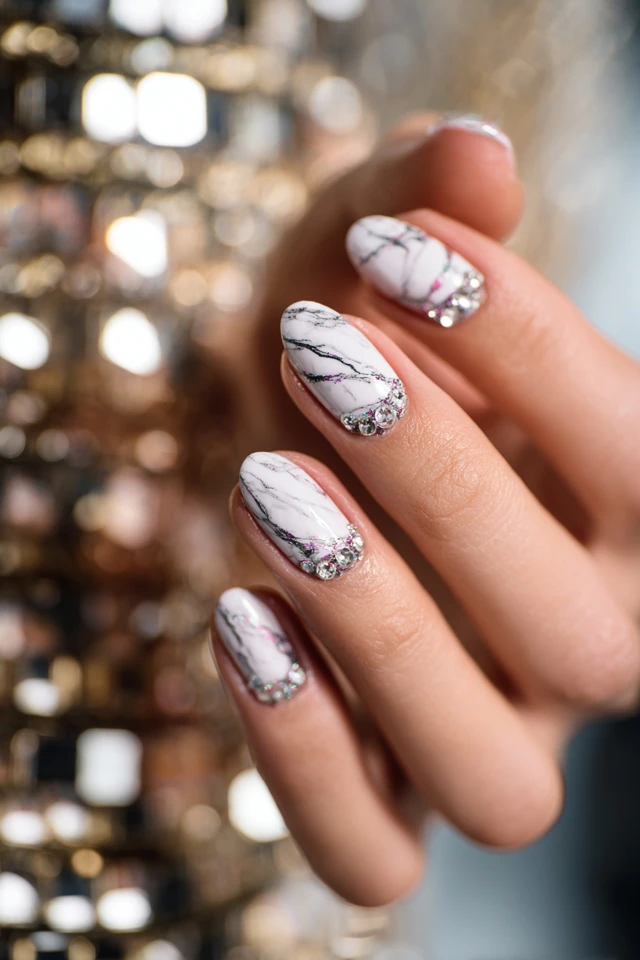
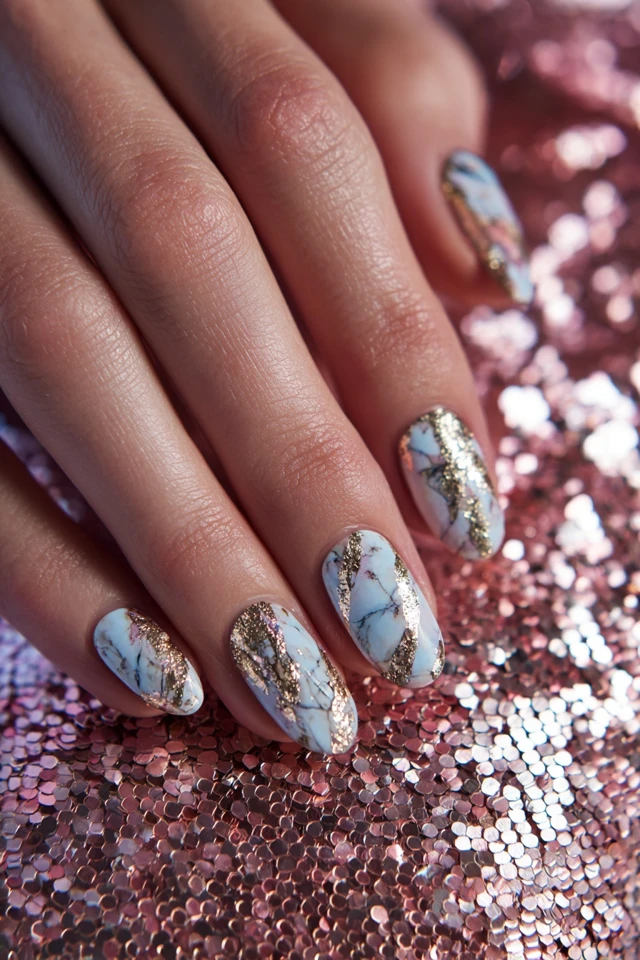
White polish with thin gold lines is the dressy choice. Use the gold sparingly: a single vein across two or three nails looks more like real stone than gold on every nail. It pairs well with simple jewelry in a similar metal.
Black marble nail designs
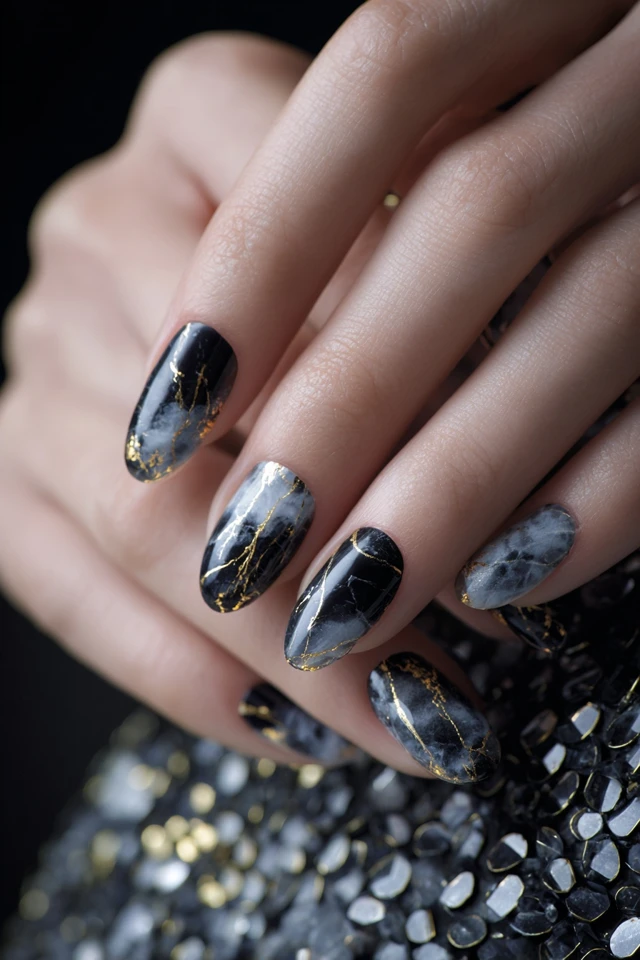
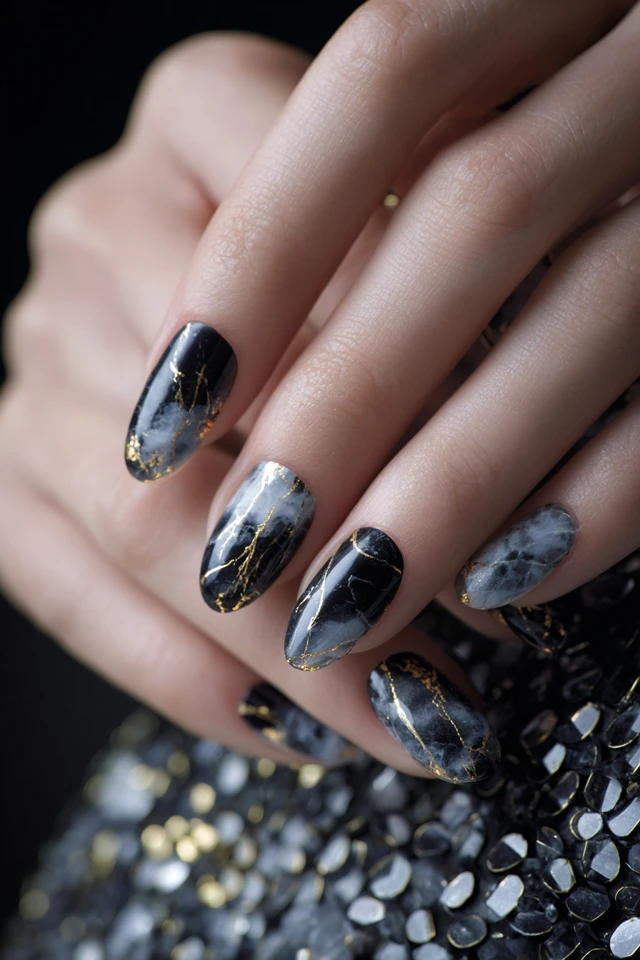
A black base with white or silver veins is dramatic and hides small mistakes well, since the dark ground is forgiving. Flip it for white nails with black veins if you want something lighter. A glossy top coat makes black marble look like polished stone.
Blue and colorful marble
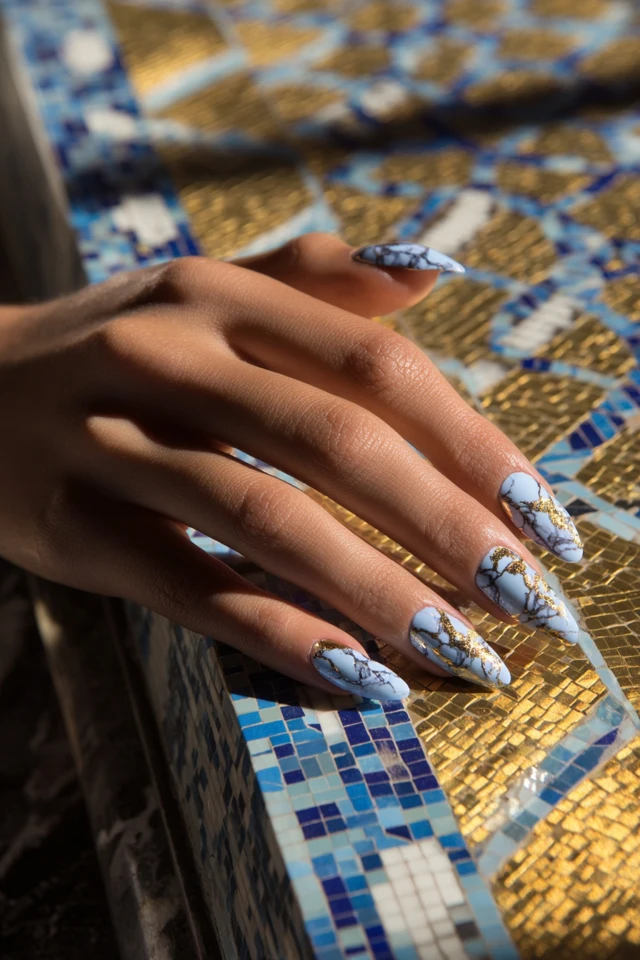
Navy with white, or pale blue with silver, gives a cool, clean look that suits fair and deep skin tones alike. For bolder colorful marble, pair two neighbors on the color wheel (teal and green, or lilac and pink) so the blending stays smooth instead of muddy.
How to create a marble effect on nails
You don't need a special kit. The dry method below uses ordinary polish and a thin brush or toothpick.
- Apply your base color in two thin coats and let it dry fully.
- Put a small dot of white (or your vein color) on a piece of foil or a plastic lid.
- Dip a fine brush or toothpick and draw a few diagonal, uneven lines on the nail. Vary the thickness.
- Dab the lines lightly with a barely damp sponge or a brush dipped in a little remover to soften the edges.
- Add a second, thinner vein in another shade if you want depth.
- Seal with a glossy top coat, including the free edge.
The water marble technique also works, but it is messier and takes patience. For that method, use regular quick-drying polish and keep a little tape or liquid barrier around your fingertips to simplify cleanup.
How do you match marble nails to your outfit?
Treat the nails as the pattern in your look. If your clothes are busy, choose a quiet nude or white marble. If you're wearing solid colors, a bolder blue or black marble gives the outfit a focal point.
Metals help too: silver or white gold rings suit cool marble, and yellow gold suits creamy or gold-veined designs. Skin tone matters less than most people fear. Gray veins on a warm base, or a hint of warmth on a cool one, usually fixes any clash.
How to remove marble nails without damaging them
If your marble design is gel, removal is where nails get hurt. The Cleveland Clinic notes that removing gel polish carelessly can temporarily damage nails, with cracking and peeling the most common issues. The American Academy of Dermatology says acetone is the most effective way to remove gel polish at home, and that leaving acetone-soaked wraps on for 10 minutes should remove most or all of it.
Dermatologist Chris Adigun, MD, FAAD, says in the AAD's dip powder advice: "Looking closely at your nails after removing the color helps you spot a problem early." If you see anything unusual, check with a dermatologist.
Regular polish needs far less effort. Standard remover and a cotton pad are enough, and a break between manicures gives your nails time to recover.
Which marble look should you pick?
- Work or school: nude or pale pink with fine white veins.
- Evening: black with white or white and gold.
- Summer: pale blue or colorful pastels.
- First attempt at home: white base with gray veins, since mistakes blend in.
For more ideas, see Chroma Marble Mani for color-forward looks, Smoky Marble Nails Inspiration for gray tones, and Striking Glitter Craft Nails if you want sparkle in the mix. Sculpted Marble Design Nails goes further into texture.
Frequently asked questions
How to create a marble effect on nails?
Paint a base color, then draw thin, uneven diagonal lines in a second shade with a fine brush or toothpick. Soften them lightly with a barely damp sponge and seal with a glossy top coat.
What kind of nail polish for water marble?
Regular quick-drying nail polish is what most tutorials use, and thinner formulas spread more easily on water. Test one nail first, since formulas vary by brand.
Can marble nails look subtle enough for work?
Yes. A nude or pale pink base with thin white veins is low-contrast and reads as polished rather than loud.
How often should you change a marble manicure?
Regular polish usually looks best for a week or two. Artificial or gel nails need attention sooner, and the AAD says artificial nails need touch-ups every 2 to 3 weeks as the nail grows.
Filed under Nail Design