Street Style Summer Curated Fabric Focus
- Words by
- Julio Arco
- Published
- Reading
- 4 min
The best fabric for summer clothes is usually one that is loose in weave and light on the skin: linen, lightweight cotton, chambray, and drapey rayon or viscose. They let air move and sweat evaporate, and they look relaxed on the street without trying hard.
Heavy knits, dense polyester and anything clingy tend to trap heat. Below you will find what each fabric feels like, how to wear it, and how to mix textures so an outfit looks put together instead of just cool.
What are the best lightweight fabrics for summer?
Weave matters as much as fiber. An open, airy weave lets air through, while a tight, thick one holds warmth even in a natural fiber. When you shop, hold the fabric up to a window: if you can see light through the weave, it will usually breathe well.
Linen for loose, relaxed fits
Linen is often named the coolest fabric to wear in summer because its slightly stiff, open structure keeps cloth away from your skin. It wrinkles, and that is part of the look. Wide-leg trousers, an oversized button-up or a drawstring short in linen all read as deliberate when the cut is generous.
Through the lens of evidence-based design, I'd say the texture is the point here: the uneven surface scatters light, so a wrinkled linen shirt looks softer than a flat cotton one in the same color.
Cotton and chambray summer pieces
Cotton is soft, easy to wash and available in many weights. For summer, look for poplin, voile, seersucker or gauze rather than thick jersey. Chambray looks like denim but is far lighter, so a chambray shirt over a tank is a good stand-in for a jacket.
For summer t-shirts, a light, breathable cotton jersey in a regular fit works well. Pick one that skims instead of clinging, since a bit of air between fabric and skin helps you feel cooler.
Rayon, silk and satin options
Rayon (also sold as viscose) drapes like silk at a lower price and feels smooth against the skin. It suits slip skirts, camp-collar shirts and flowy trousers. Silk and satin look polished and feel cool at first touch, but they show sweat marks and can cling, so choose darker shades or prints if you run warm.

Which fabric to avoid in summer?
The fabric to avoid in summer is anything thick, tightly woven or non-breathable: heavy polyester, thick fleece, chunky knits and stiff, coated synthetics. They hold heat and moisture against you.
Cotton deserves a nuance. Texas A&M's Howdy Health notes that cotton absorbs moisture and can keep it next to your skin, which is advice written for cold-weather exercise. In heat, that same trait means a heavy cotton tee can feel damp during a long, sweaty walk. For daily summer wear a light weave is fine; for a workout or a very humid day, a moisture-wicking layer is the better pick.
How do you wear summer fabrics as street style?
Start with one relaxed piece and balance it with one fitted or structured piece. Proportion does most of the work in summer street style outfits.
- Linen wide-leg trousers, a fitted cotton tee and flat leather sandals.
- A chambray shirt open over a white tank, with denim cutoffs.
- A rayon midi skirt with a boxy cotton tee tucked at the front.
- A satin camisole under an unbuttoned linen shirt, with straight jeans in a light wash.
These also work as summer street style women's looks because they rely on cut and texture instead of a specific size or body type. If a waist feels lost in a loose outfit, tuck or belt just one layer.
How do you mix fabrics and layer in heat?
Pair two or three textures at different levels of shine: something matte (linen or cotton), something with a little sheen (rayon or satin) and something crisp (poplin or chambray). The contrast gives the outfit depth even when the colors are all neutral.
For layers, keep the one next to your skin light. Howdy Health advises that the layer closest to your skin should be moisture wicking and draw sweat away, a principle that carries over to hot, active days. On top, an open overshirt or lightweight cardigan handles air-conditioned rooms and cooler evenings. There are more ideas in layered summer basics.
What color should you pair with summer fabrics?
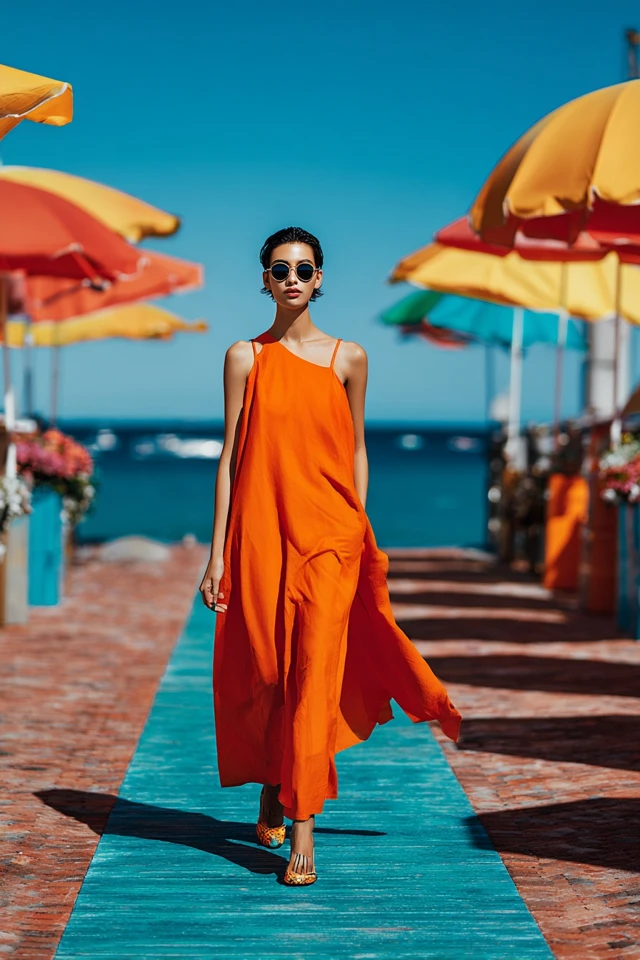
Light colors reflect more sun and usually feel cooler, while very dark solids can feel heavier. Whites, creams, sand and soft blues are easy bases. Add one stronger color, such as terracotta or olive, through a single piece or a bag.
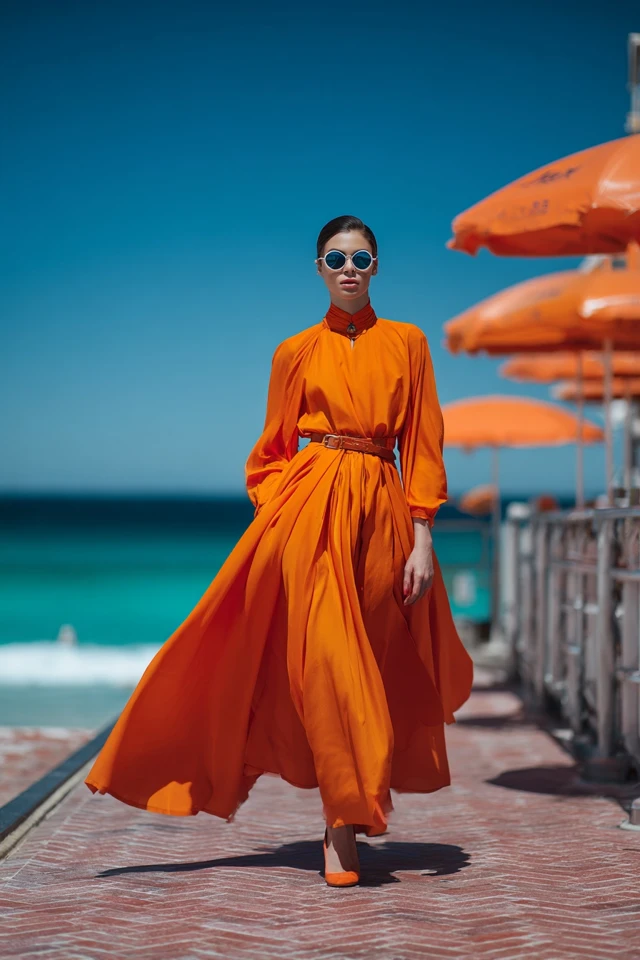
As an architect trained in evidence-based design, I'd treat fabric and color together: the same coral looks louder in satin than in linen, because shine intensifies how the eye reads it.
Where to go next
If you want more on specific pieces, read about summer street style fabrics, crop top fabrics and jumpsuit fabrics. For a denim-based look, see mom jeans street style.
Frequently asked questions
What is the coolest fabric to wear in summer?
Linen is usually the coolest, thanks to its open weave and the way it holds away from skin. Lightweight cotton voile or gauze and airy rayon are close behind.
What fabric to avoid in summer?
Skip thick, tightly woven or non-breathable fabrics such as heavy polyester, fleece and chunky knits. Very clingy synthetics also trap heat and moisture.
What is the 3-3-3 rule for clothing?
It is a capsule-wardrobe idea, commonly described as choosing three tops, three bottoms and three pairs of shoes to mix and match. Versions vary, so treat it as a framework rather than a fixed rule.
Can I wear denim in summer?
Yes, if it is light. Chambray, thin denim and light washes in a relaxed cut breathe far better than heavy raw denim.
Filed under Outfit Ideas