Soft Infinity Scarves for Cozy Accessories
- Words by
- Julio Arco
- Published
- Reading
- 4 min
For the warmest result, pick a thick wool or wool-blend scarf with a dense knit and wear it close to the neck. Cashmere is nearly as warm at a lighter weight, and fleece or sherpa wins for very cold, dry days. An infinity scarf is the easiest shape to wear because there are no ends to tuck or knot.
Below: which fabrics hold heat best, how the main scarf shapes compare, and how to style and care for them.
What scarf is the warmest?
Warmth comes from fabric, thickness and how much of your neck and chest it covers. A chunky wool infinity scarf looped twice gives you two layers around the neck without any extra bulk at the ends. A thin scarf wrapped once will always feel cooler than a heavy one, whatever it is made of.
If you want a quick rule: heavy knit wool, then cashmere or a wool-cashmere blend, then fleece, then cotton and jersey, then silk.
Which fabric is best for winter scarves?
Wool
Wool is the dependable choice for cold weather. It is springy, so it traps air, and it still feels warm when slightly damp. Merino is softer on the skin than coarse wool, which matters because a scarf sits against your jaw and neck all day.
Cashmere
A winter scarf in cashmere is soft and light, with a gentle drape that suits a tailored coat. It costs more and pills with friction, so it is a better fit for commuting and dressier outfits than for hiking.
Fleece and sherpa
These are the cozy, fluffy options for the coldest days and for lounging. They are warm for the price and easy to wash, though they can look sporty under a dressy coat.
Cotton, jersey and silk
These are lightweight. They work for mild days, indoors, or as a layer under a heavier scarf. Cotton is the one to be careful with in serious cold or sweaty activity: Texas A&M's Howdy Health advises avoiding cotton for cold-weather exercise because it absorbs moisture and can keep it next to your skin, making you cold.
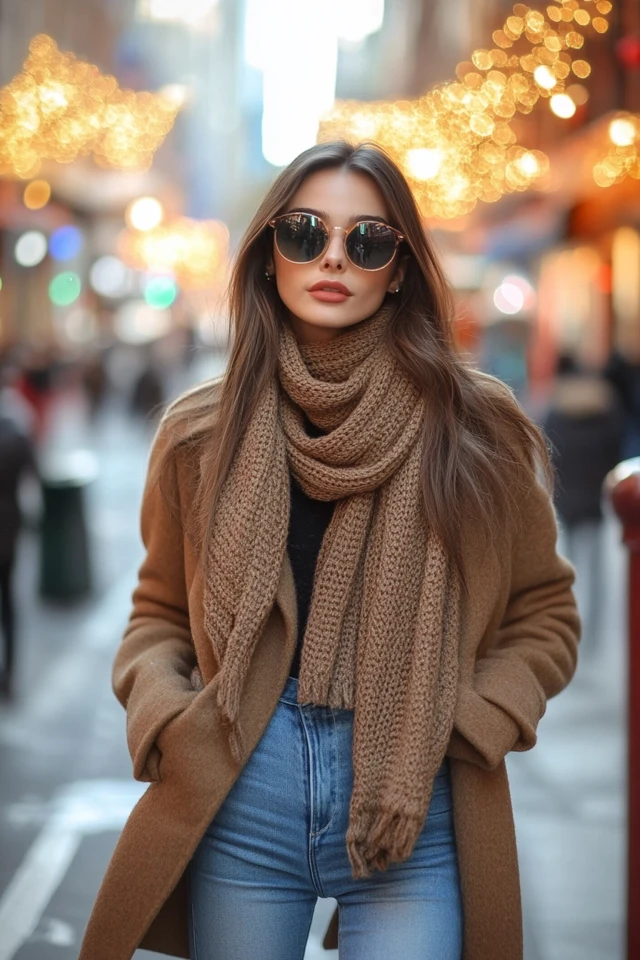
Infinity scarves: the easiest warm option
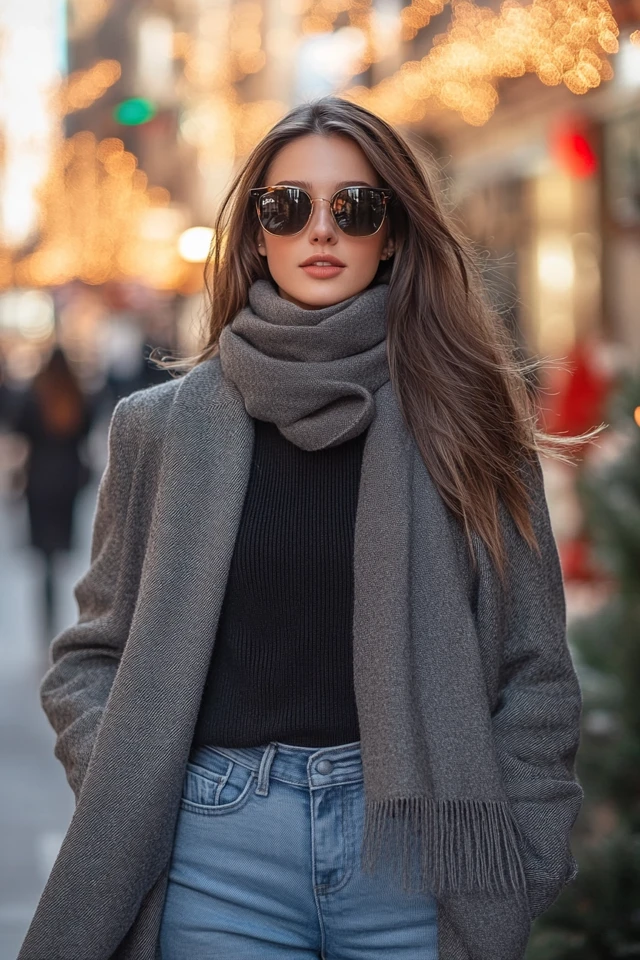
An infinity scarf is one closed loop. Pull it over your head, and it sits as a snug single loop or doubled into a cowl. Because nothing hangs loose, it will not catch in a bag strap or slip out of a coat.
Through the lens of evidence-based design, I'd pay attention to the surface of the knit. A brushed or fluffy texture reads softer and warmer to the eye before you even touch it, which is part of why oatmeal, cream and gray knits feel so cozy.
For more on this shape, see soft infinity scarves for winter warmth.
Blanket and oversized scarves
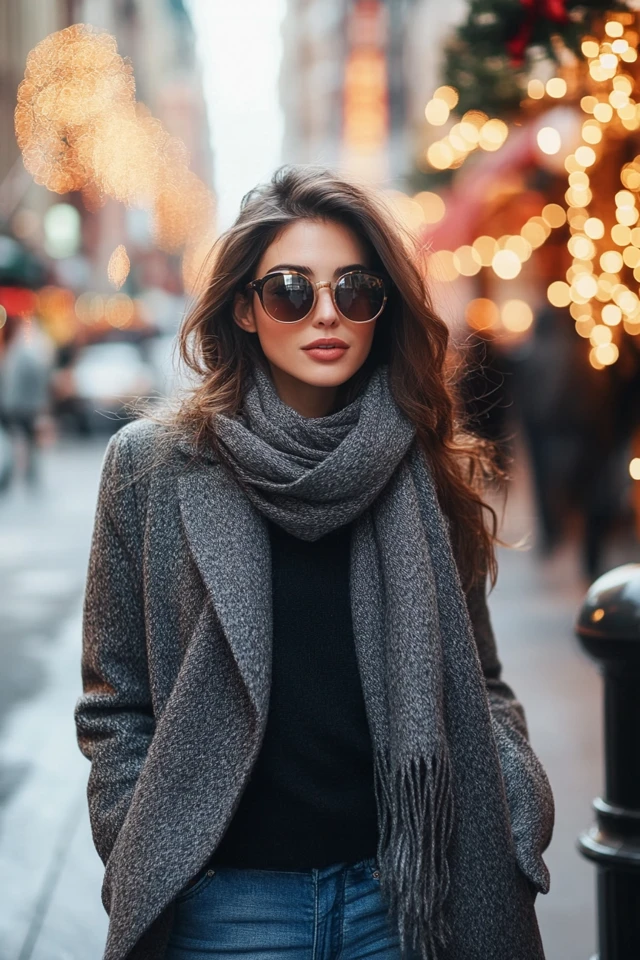
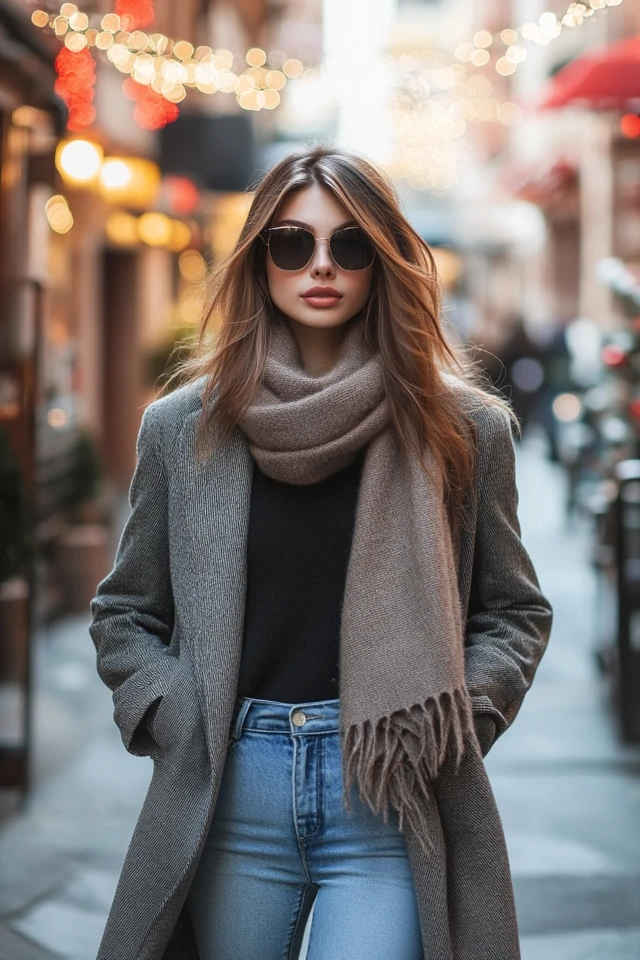
If you want maximum coverage, an oversized or blanket scarf can be draped over the shoulders and chest, not just wrapped around the neck. It is the warmest shape for standing around outdoors, and it doubles as a travel wrap. Browse cozy blanket scarves or learn how to style oversized scarves.
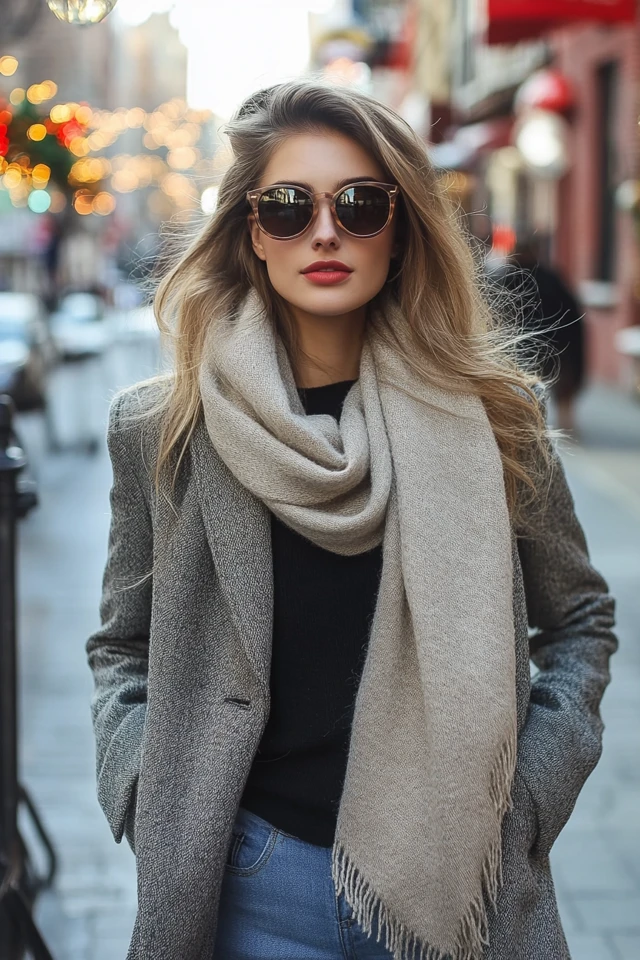
How do you choose the warmest scarf for you?
- Check the fiber content on the label. Wool, cashmere and blends of the two are the warmest natural options.
- Look at the knit. Dense, tight stitches block wind better than open ones.
- Match the width and length to your coat. A bulky scarf under a narrow collar feels cramped.
- Think about skin feel. If wool itches, try merino or a cashmere blend.
Neutral tones such as gray, beige and cream go with almost any coat. For color, deep tones like emerald, burgundy or mustard stand out against dark winter outerwear.
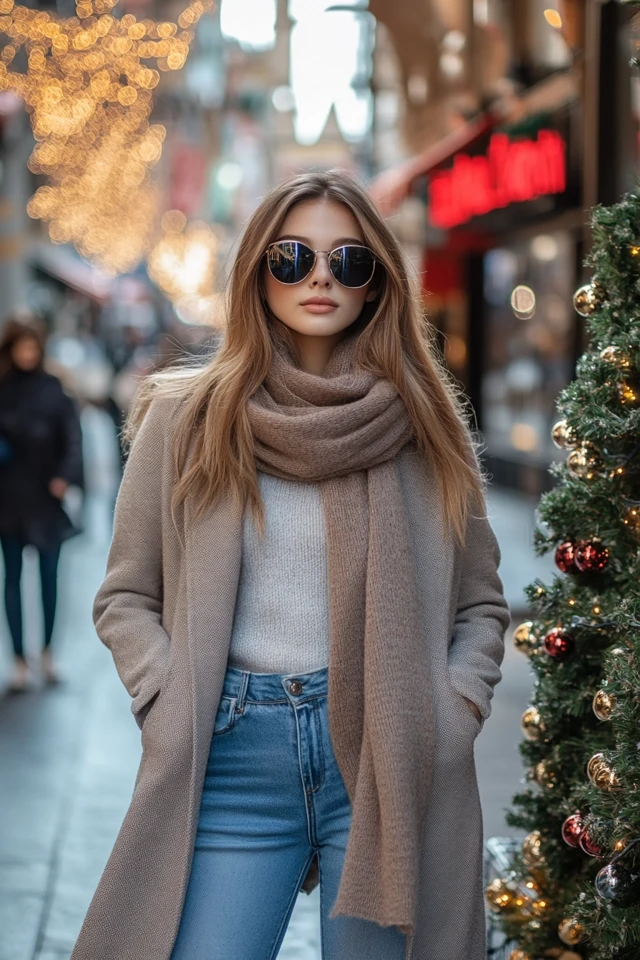
How to style a winter scarf for women
Some outfit formulas that work:
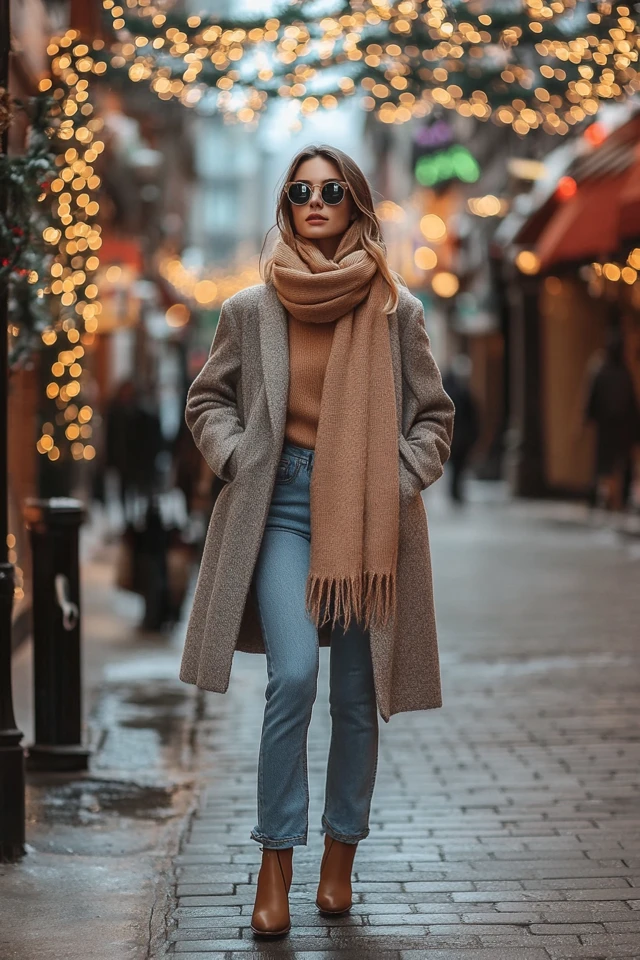
- Weekend: chunky infinity scarf, sweater, jeans and ankle boots.
- Office: medium-weight scarf in a solid color under a tailored blazer or coat.
- Outdoors: fleece scarf with a puffer jacket, matching beanie and gloves. See winter accessories for scarves, gloves and beanies.
- Evening: silk or satin infinity scarf with a fitted dress or blouse and skirt.
- Travel: a lightweight jersey scarf that can double as a wrap on a cold flight.
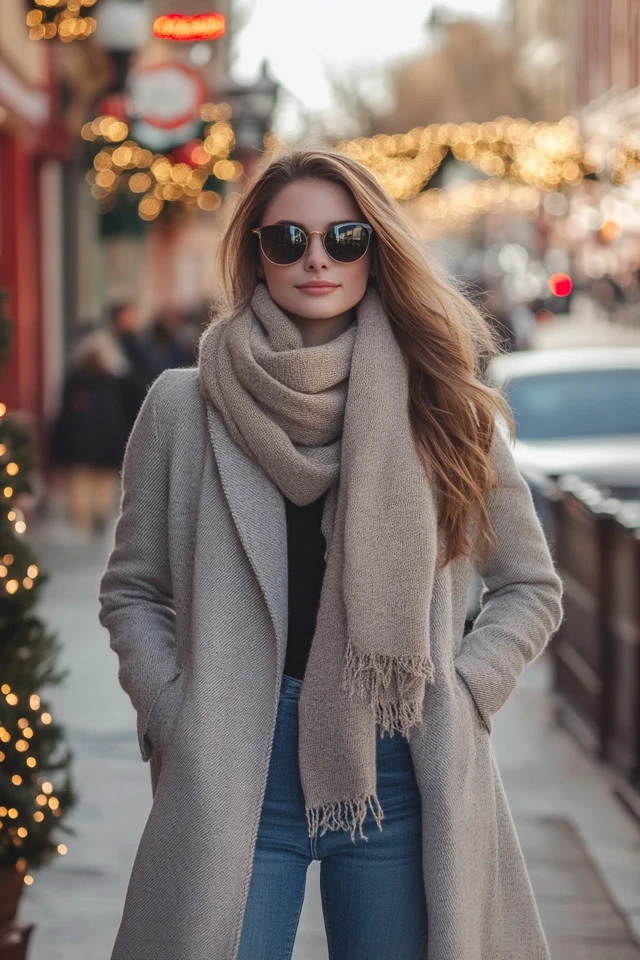
On a petite frame, a lighter scarf worn loosely keeps proportions balanced. On a tall frame, a long, thick loop can be doubled or tripled for drama. As an architect trained in evidence-based design, I'd treat the scarf as the first thing the eye reads near your face, so choose its color and texture first and build the outfit around it.
How do you care for a scarf?
- Read the care label. Wool and cashmere usually need hand washing or dry cleaning; fleece and cotton are often machine-washable.
- Dry flat. Heat from a dryer can shrink knits.
- Store folded or on a hook, and use a fabric bag for delicate fibers.
- Remove pilling with a fabric shaver or sweater comb.
To pair your scarf with a matching hat, take a look at soft beanies for cozy winter accessories.
Frequently asked questions
What are the best scarves for staying warm in winter?
Thick wool, wool-blend and cashmere scarves are the warmest natural choices, and fleece or sherpa works well for the coldest days. A dense knit worn doubled around the neck adds warmth.
Which scarf is best for winter?
A medium to heavy wool or cashmere scarf in a closed loop or a long rectangle suits most winter days. Choose merino or a cashmere blend if wool feels itchy.
Can infinity scarves be worn year-round?
Lightweight cotton or jersey infinity scarves work in spring and fall, and silk ones can be worn most of the year. Save the chunky knits for winter.
How do I style an infinity scarf with a coat?
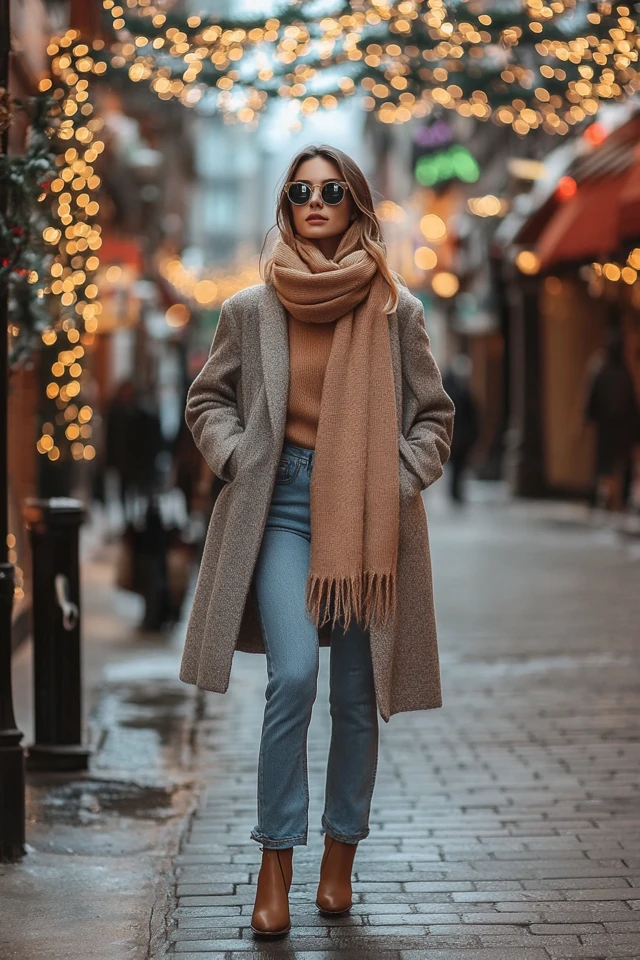
Wear a chunky scarf outside the coat so it stays visible and roomy. A thinner scarf can sit inside the collar for a sleeker line.
Filed under Wardrobe Basics