Sleek Claw Split Mani
- Words by
- Julio Arco
- Published
- Reading
- 4 min
The shape you file your nails into changes how the whole hand reads. Rounded and oval shapes look soft and quiet, while pointed, tapered or split shapes look graphic and deliberate. If you want something more distinctive than a plain square, start with almond, coffin or a split claw, then adjust the length to your daily life.
Below are the shapes people most often search for, what each one looks like, who it suits, and how to choose. The sleek claw split from this post's photos sits in the unusual group, so it gets its own section.
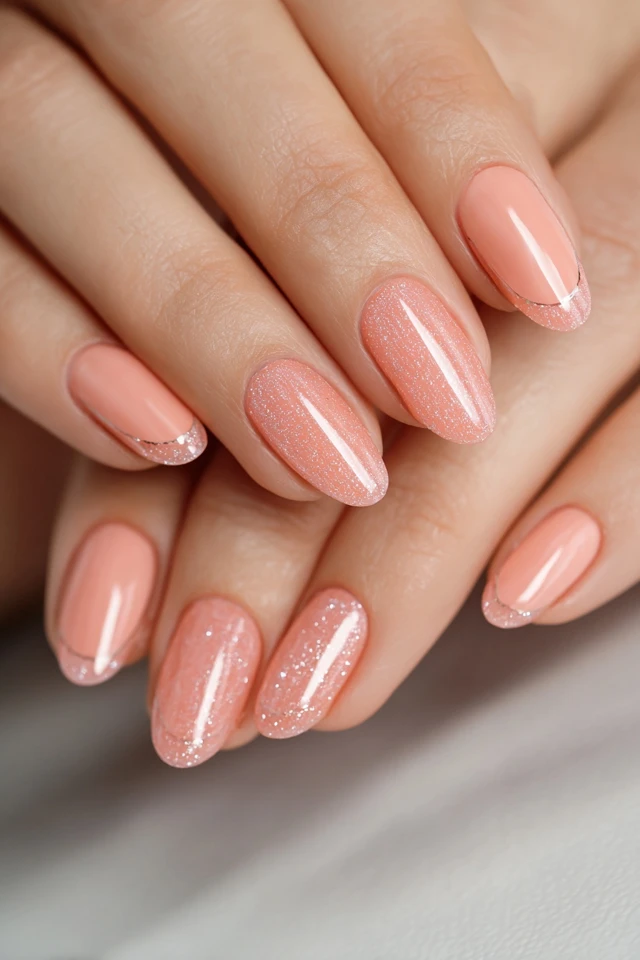
Types of nail shapes and names
Most shapes are variations on how the tip is cut (flat, curved or pointed) and how the sides taper. Here are the main ones, from the most conventional to the most dramatic.
Round, oval and squoval
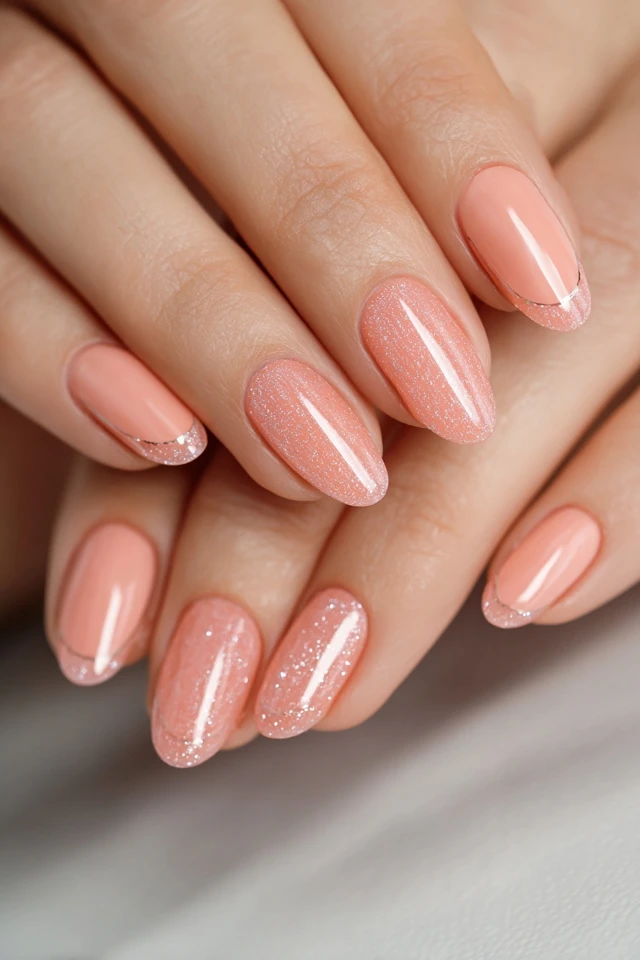
Round follows the fingertip and is the most practical shape for short nails. Oval is slightly longer, with a tapered tip. Squoval (a square tip with softened corners) keeps the strength of a flat edge without the sharp corners that catch on sweaters and hair.
Square
Square nails have a straight tip and crisp corners. They suit broad nail beds and show off a French tip or a bold block of color well. The corners are the weak point, so keep the length moderate if you type a lot.
Almond
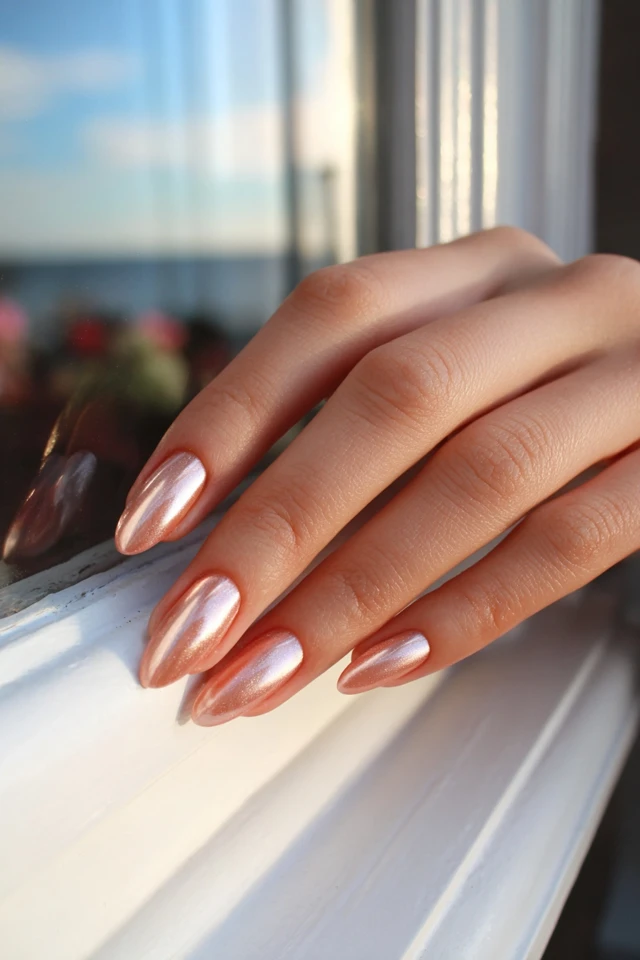
Almond tapers from the sides to a softly rounded tip. It tends to make fingers look longer, which is why it appears so often in lists of the most attractive nail shape. It works on short and medium lengths too, not only long ones.
Coffin and ballerina
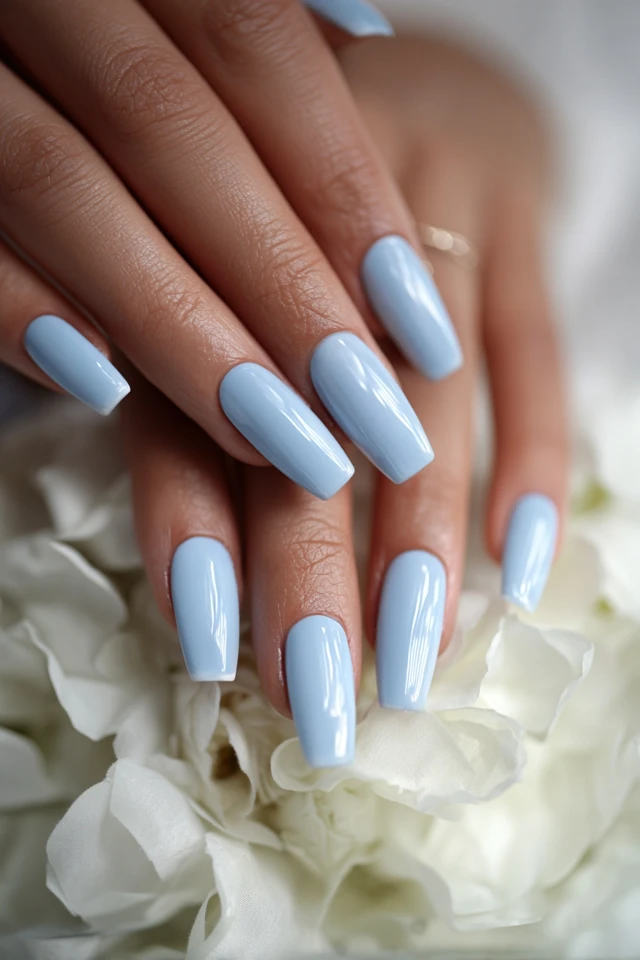
Coffin nail shapes taper along the sides and end in a flat, squared tip. Ballerina is the same idea under a different name. The flat tip is a stress point, so the shape holds up best when the nail is thick enough or reinforced.
Stiletto
Stiletto nails taper to a sharp point. They are the most dramatic of the classic pointed shapes and need real length, which makes everyday tasks slower. Think of them as an occasion shape unless you are comfortable adapting your routine.
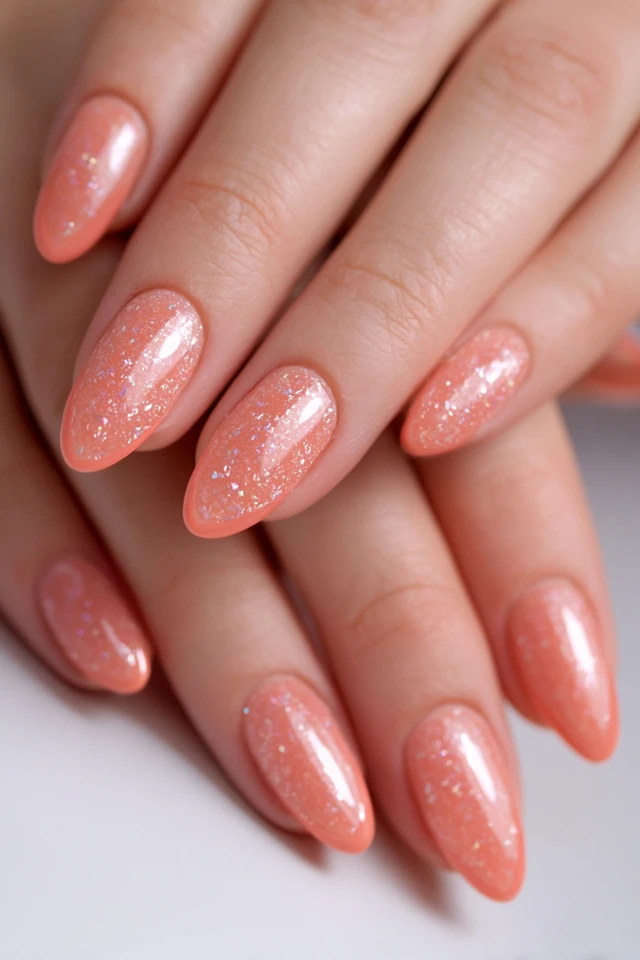
Unusual nail shapes worth knowing
These are less common, so a salon may use different names for them. Bring a photo to avoid confusion.
- Flare: narrow at the nail bed and widening toward the tip, like a bell.
- Arrowhead: a pointed tip with a defined angle on each side, more geometric than almond.
- Lipstick: a slanted, diagonal tip that looks like a lipstick bullet.
- Edge: a tapered, sharply pointed shape with strong angles.
- Claw: a curved, tapered nail that hooks slightly downward at the tip.
The claw split mani
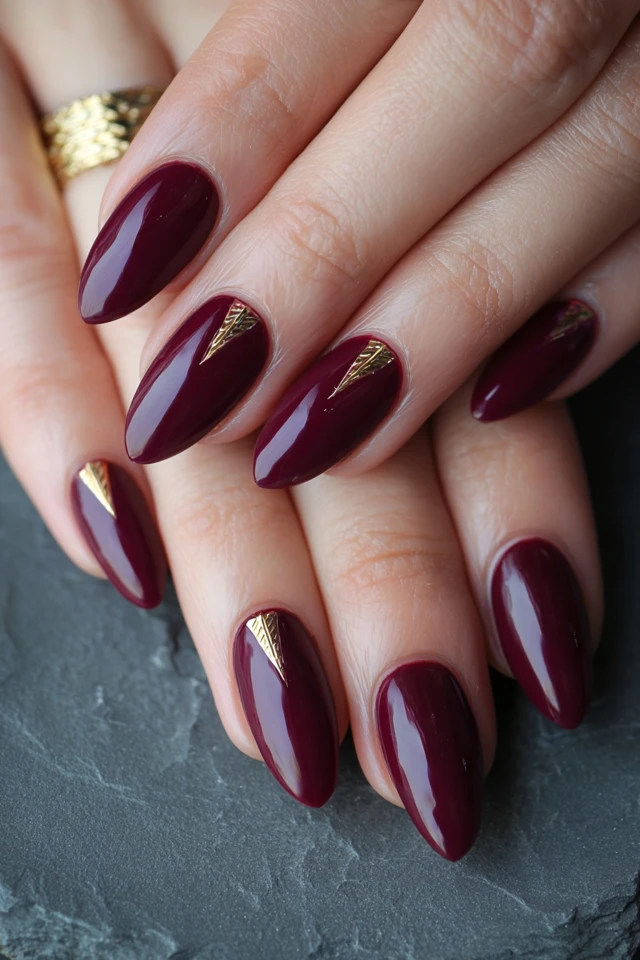
A split mani divides each nail into two color zones, often along a diagonal or a clean line near the tip. On a claw shape, the curve of the nail follows the split, so the two colors read as one design rather than two stripes. If you want to see more variations, browse sculpted claw split geometry nails, artful claw split silhouettes and the sharper arrow split nails.
Through the lens of evidence-based design, I'd pick the two colors by contrast first. A high-contrast pair, like deep burgundy against a matte nude, makes the split the focus. Two close tones read as a soft gradient, which is easier to wear with busy outfits.
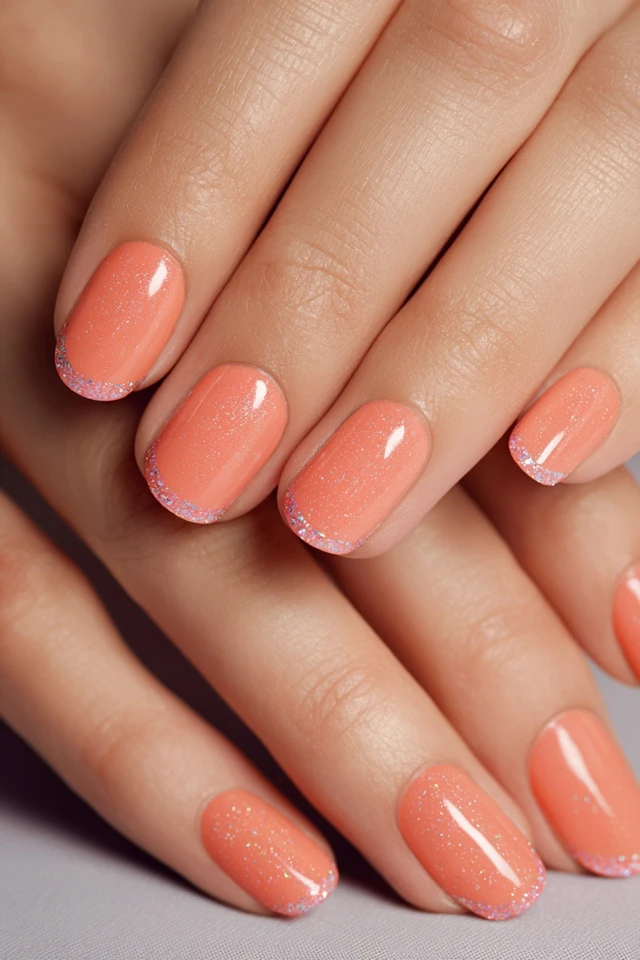
Which is the most attractive or classiest nail shape?
There is no single winner, because it depends on your hands. Almond and oval are the most commonly flattering because they lengthen the finger line. For the classiest nail shape, I'd choose a short squoval or oval in a sheer pink or nude. As an architect, I read proportion first: a clean, even tip and a tidy cuticle line do more than the shape itself.
How to choose a shape for your hands
- Short fingers or wide nail beds: almond, oval or lipstick lengthen the line.
- Long, slim fingers: nearly anything works, including square and coffin.
- Active hands, typing, or work with your hands: short squoval or round.
- Short nails but want something distinctive: a short almond, a soft flare or a short claw split keeps the interest in the design rather than the length.
Your natural nail also sets limits. Thin or peeling nails will not hold a long, pointed shape well, so start shorter and build up.
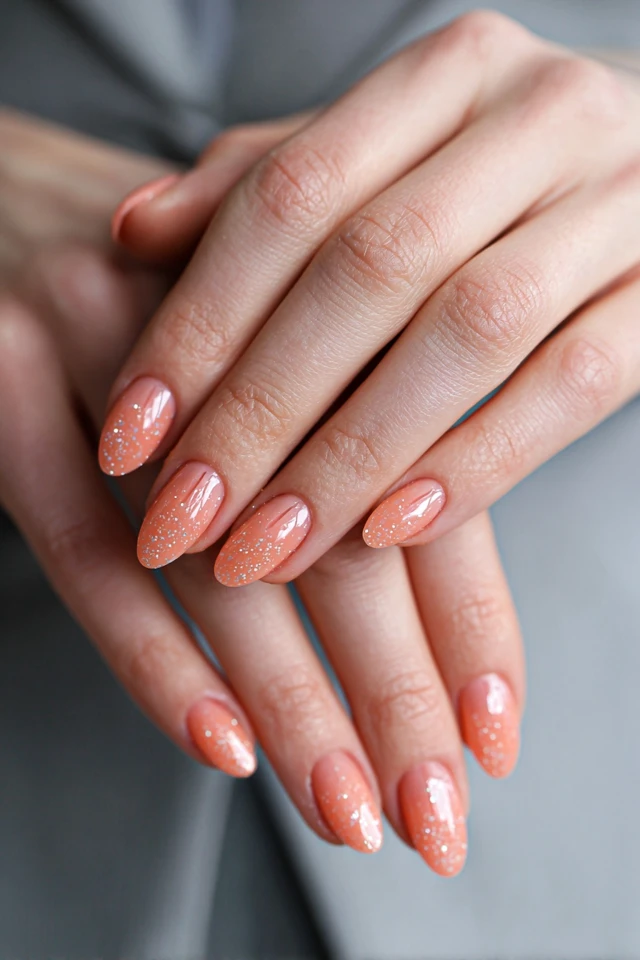
Acrylics, gels and keeping your nails healthy
Extreme shapes usually need extensions, and acrylic is the common choice for unique nail shapes. The American Academy of Dermatology notes that to get acrylics to stick, the surface of your natural nails must be filed until they feel rough, which thins them and makes them weaker. The same page says that if you wear artificial nails for more than a few weeks, you will need touch-ups every 2 to 3 weeks as your nails grow.
Removal matters as much as application. Board-certified dermatologist Shari Lipner, MD, PhD, says "After removing the color, wait one month before getting another one of these manicures." If you notice cracking, peeling or anything that looks unusual, check with a dermatologist or nail professional.
Frequently asked questions
What is the most attractive nail shape?
Almond and oval are the most often picked because they lengthen the fingers and suit most nail beds. The best choice still depends on your hand shape and how you use your hands.
What are some unusual nail shapes?
Flare, arrowhead, lipstick, edge and claw are among the less common options. A split design can be added to many of them for extra contrast.
What is the classiest nail shape?
A short squoval or oval in a sheer or neutral color is the usual answer. The even tip and clean finish matter more than the shape.
Can I get unique nail shapes on short nails?
Yes. Short almond, soft flare and short claw shapes work if you shape the tip carefully, and a split color design adds interest without needing length.
Filed under Nail Design