Velvet and Satin Evening Blouses: How to Choose
- Words by
- Julio Arco
- Published
- Reading
- 5 min
Choose velvet when you want warmth, depth and a soft, matte look. Choose satin or silk when you want sheen and movement. Both work for evening, and a blouse that mixes them, such as a satin body with velvet cuffs, gives you the contrast in one piece.
Below: how each fabric reads, which sleeve and neckline to pick, what suits a wedding, and how to style the result. These are dressy blouses for special occasions, so the focus is on fit, finish and what you wear them with.
Velvet or satin: how do the fabrics differ?
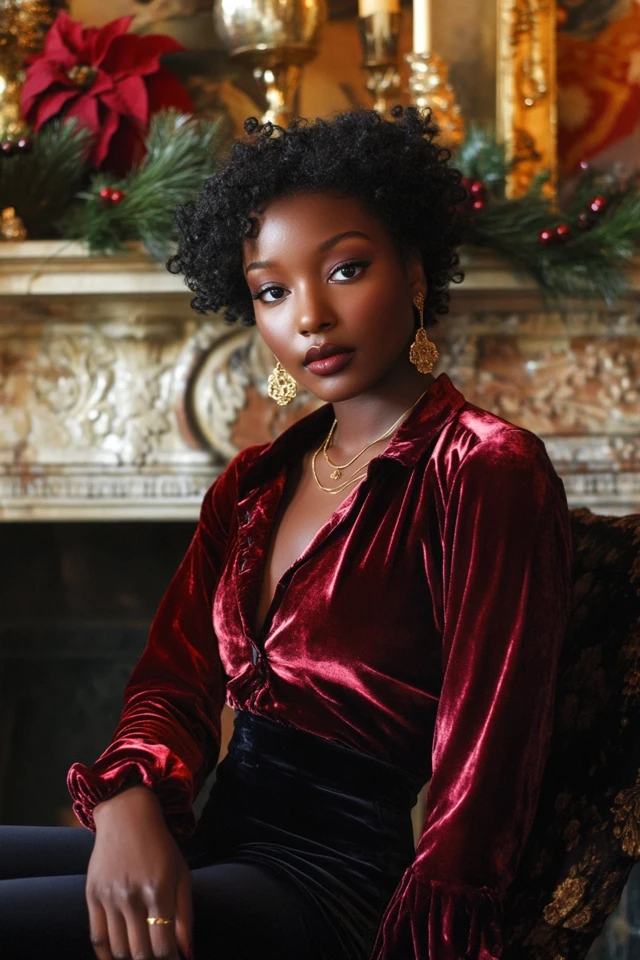
Satin has a smooth, flat surface that reflects light, so it looks brighter and slightly paler where it catches a lamp. Velvet has a dense pile that absorbs light, so the same shade looks deeper and darker. (Silk is a fiber and satin is a weave, so a blouse can be silk satin or a polyester satin. Check the label if the fiber matters to you.)
Through the lens of evidence-based design, I'd think about texture before color. A navy satin and a navy velvet do not read as the same navy, because the surface changes how light reaches the eye.
| Fabric | Look | Drape | Best for |
|---|---|---|---|
| Velvet | Matte, deep color | Soft but with body | Cold-weather evenings, long sleeves |
| Satin | Glossy, light-catching | Fluid | Dinners, weddings, layering under blazers |
| Mixed | Contrast of shine and matte | Varies by panel | When you want one piece to do both |
Velvet blouse styles for evening
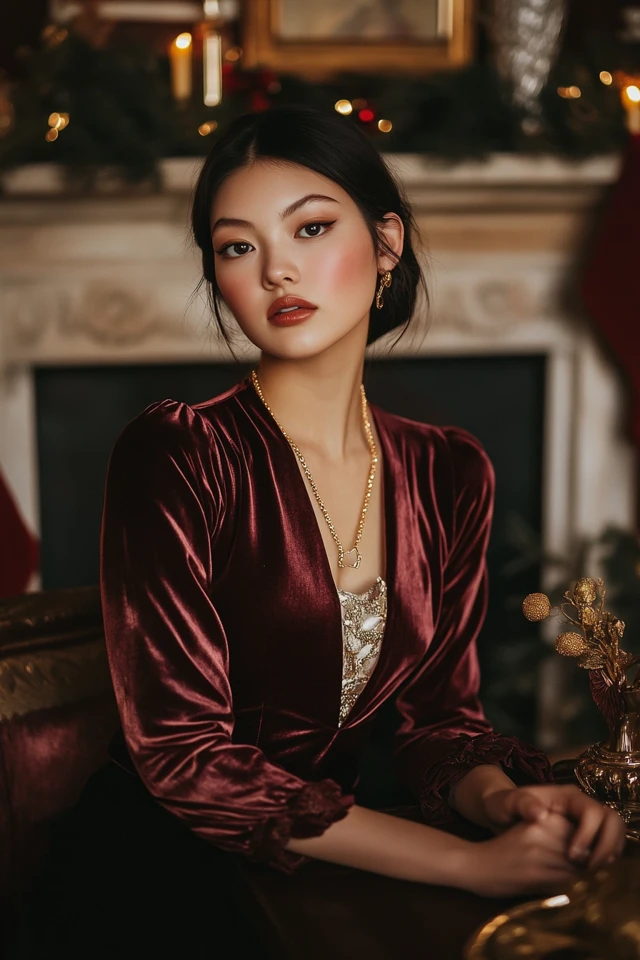
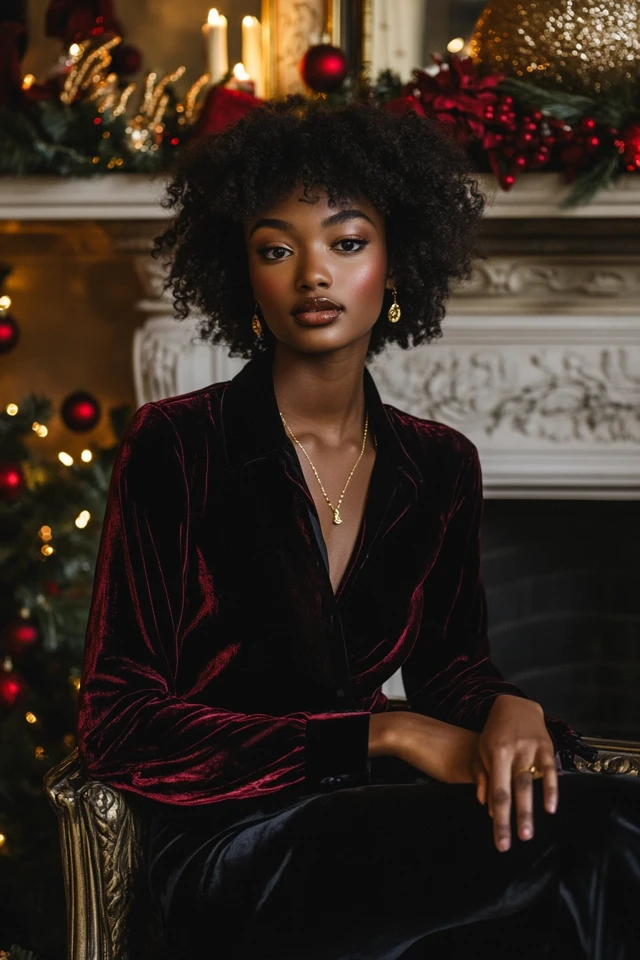
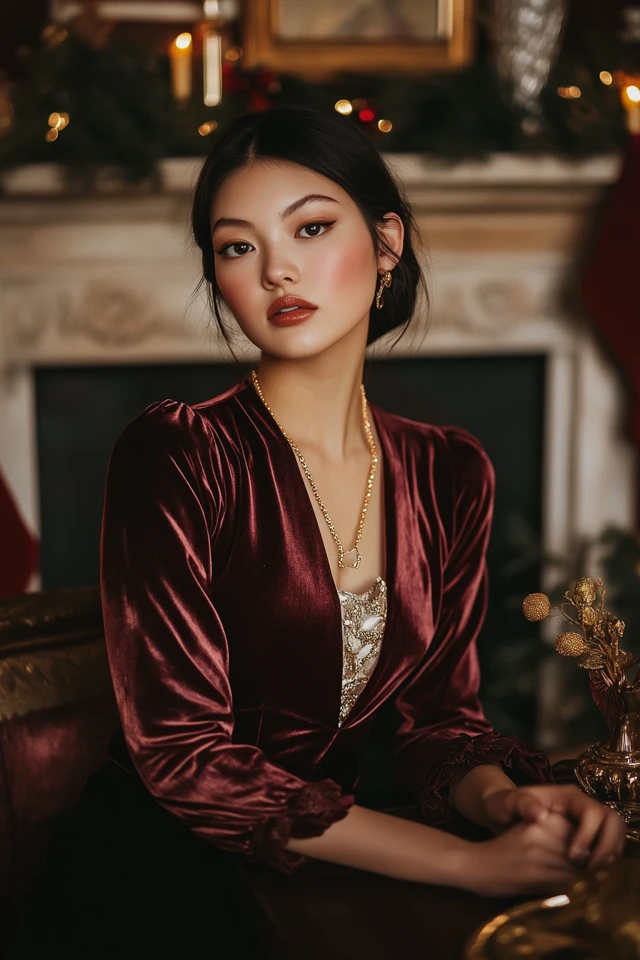
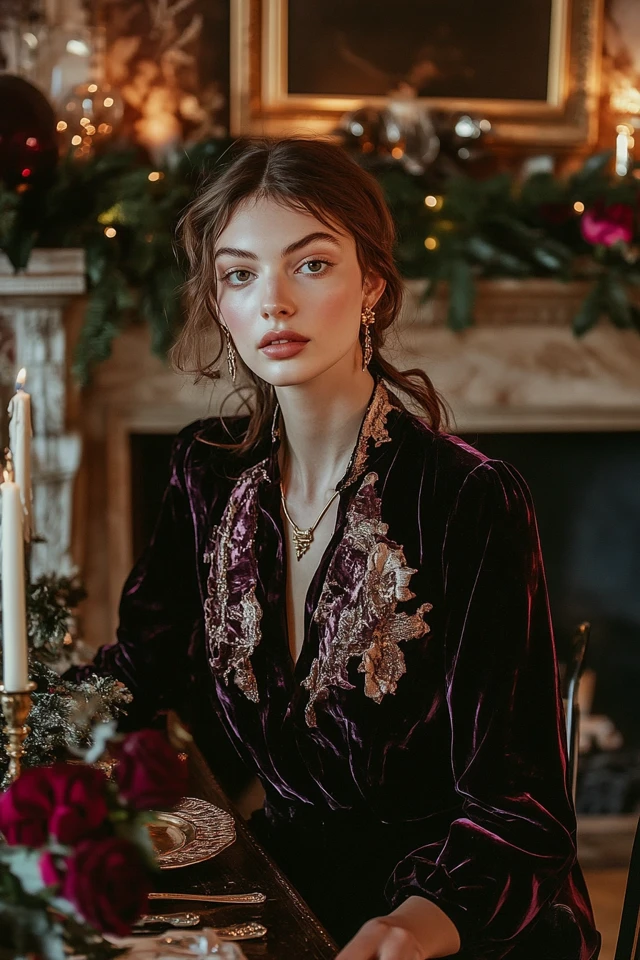
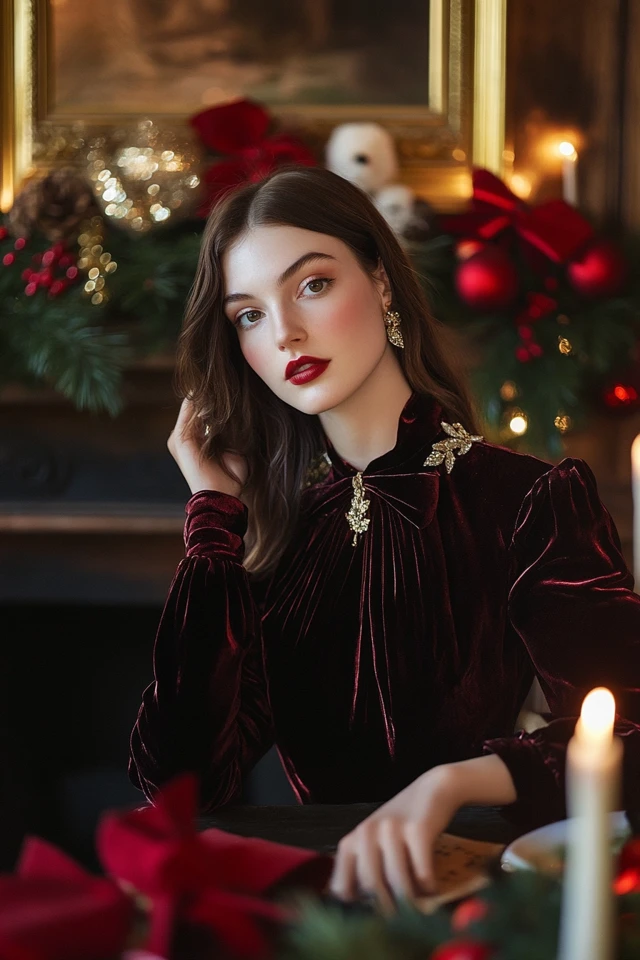
A fitted velvet blouse with a simple neckline is the easiest place to start. It needs little jewelry, and the fabric does the work. Puff sleeves add drama, and a wrap front adds a defined waist without a stiff structure.
Velvet can add bulk, so a stiff, heavy piece may not flatter if you want a streamlined line. Look for a stretch or lightweight velvet that follows the body, and check that it doesn't pull across the shoulders. Pulling there is a fit problem, not a you problem.
Satin blouse styles and details
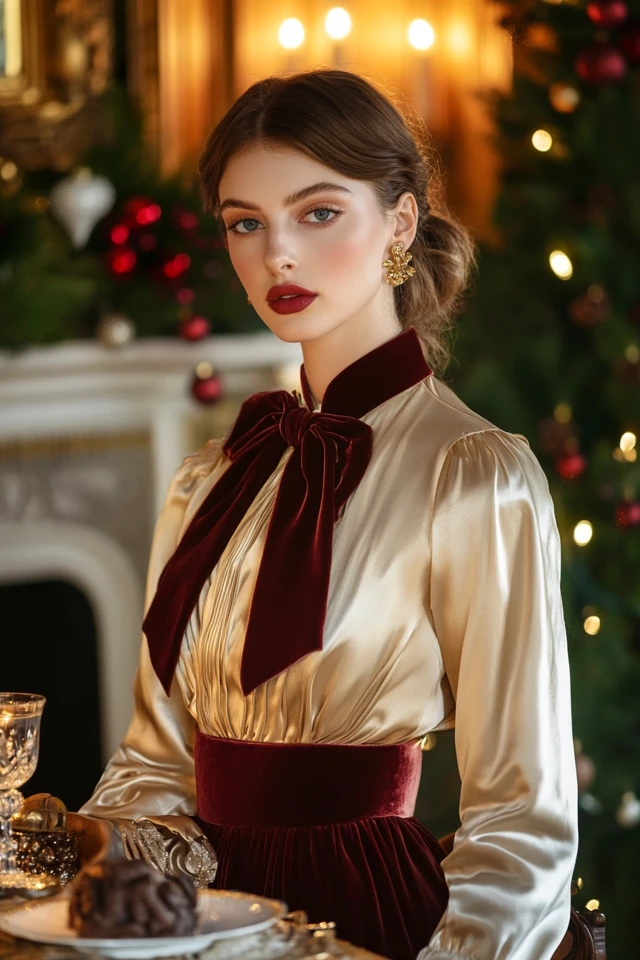
Satin shows every detail, so the cut matters. A bias-cut or softly draped front falls well. A button-down gives you a classic option that goes from dinner to a party. Bows, pleats and a high neck add interest without extra accessories.
Satin also shows pressure marks and water spots, and a very clingy piece highlights seams underneath. A slip or a smooth, seamless layer helps, and a slightly looser cut usually looks more polished than a tight one.
Long sleeve or short sleeve?
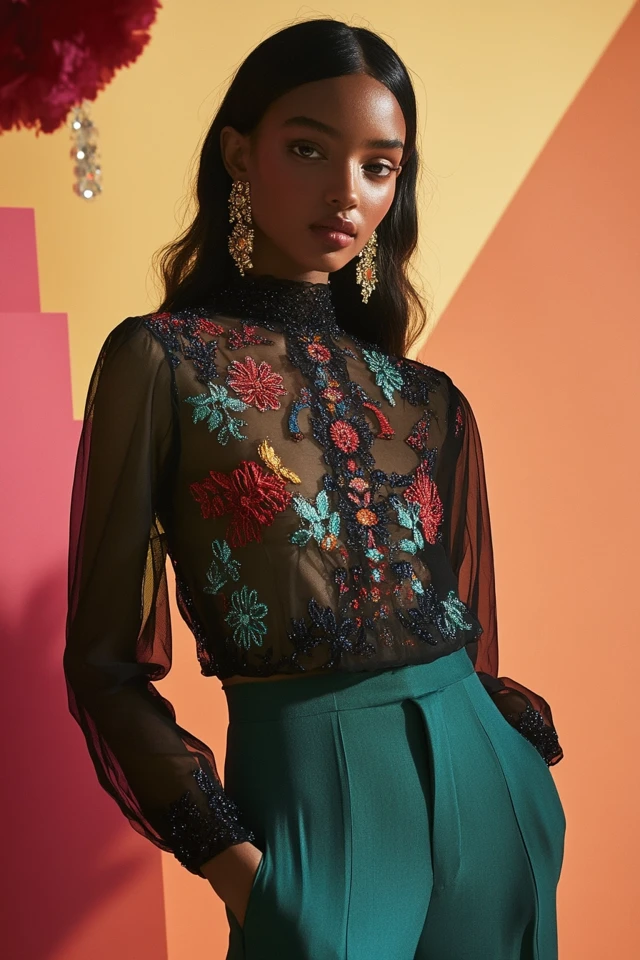
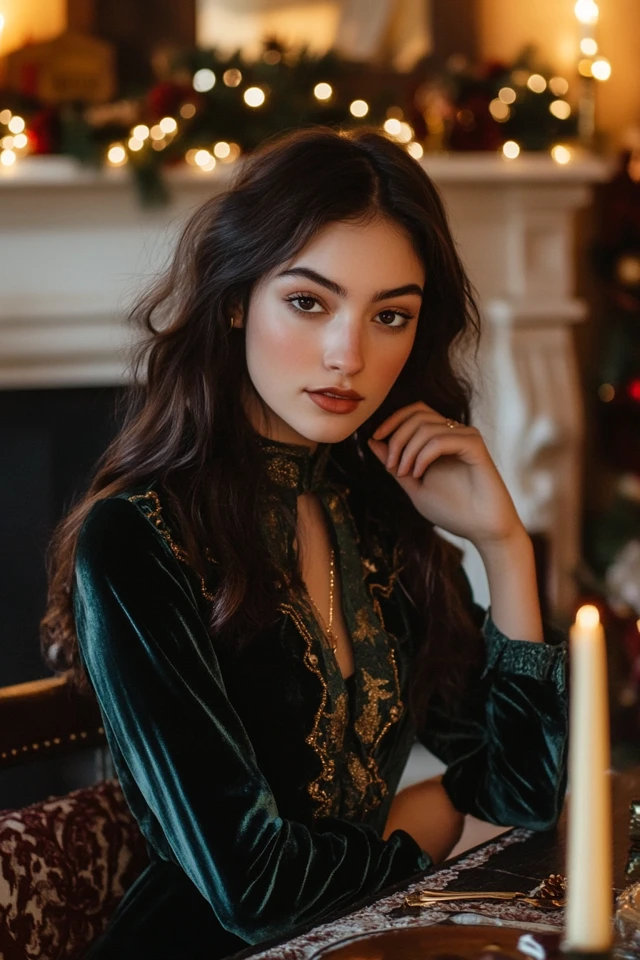
Long sleeve velvet and satin evening blouses suit winter events and venues with strong air conditioning. Cuffs in a contrasting fabric, like velvet on satin, finish the look. Make sure the sleeve ends at the wrist bone so it doesn't ride up when you reach.
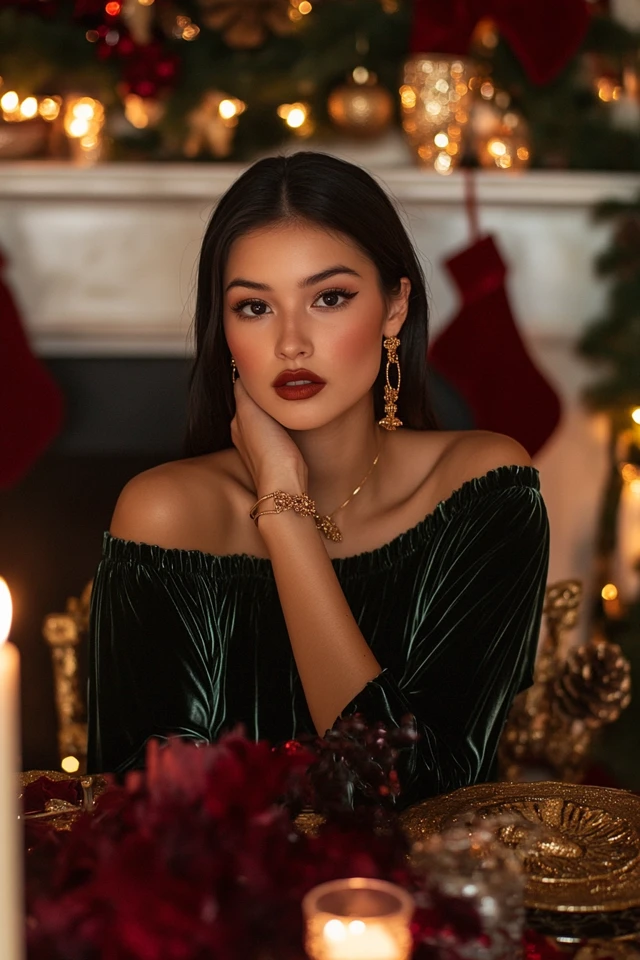
Short sleeve velvet and satin evening blouses work well for warm rooms, or under a blazer you may take off. A sleeve that ends mid-upper-arm usually looks neat. If you prefer more coverage, a three-quarter sleeve is a good middle ground.
What to wear to a wedding
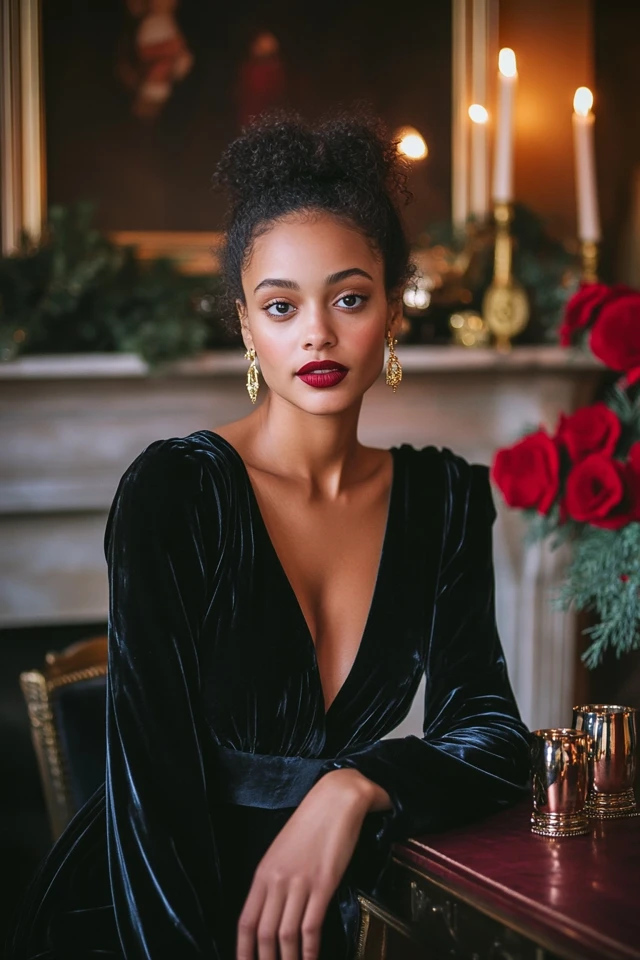
For velvet and satin evening blouses for weddings, treat the blouse like a dress: choose the formality first. A satin blouse with a long, flowing skirt or tailored wide-leg trousers reads dressier than a blouse with jeans. Velvet suits an evening ceremony or a winter wedding.
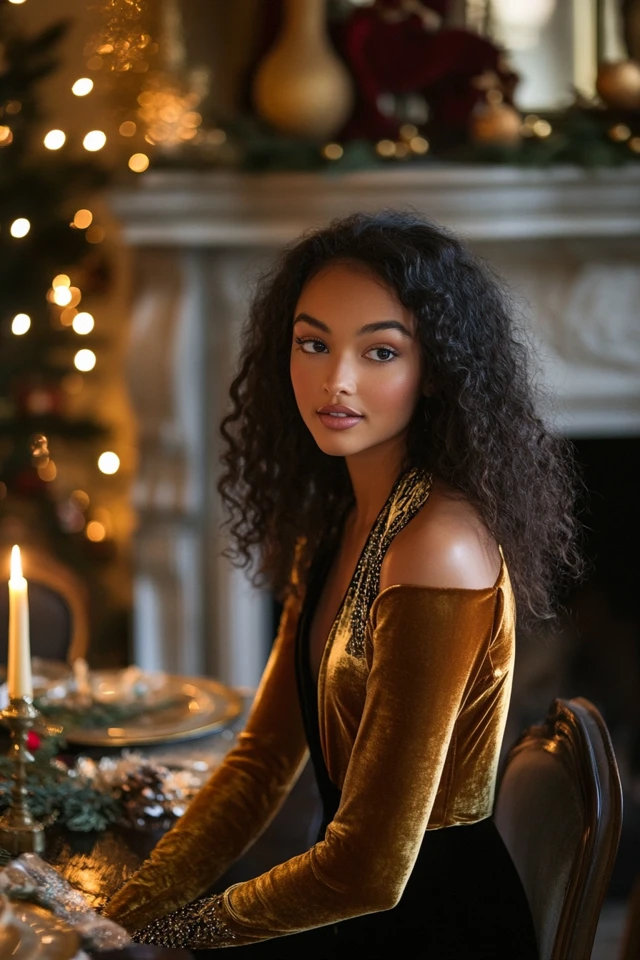
Avoid white or ivory unless you know it's welcome. Deep jewel tones, soft champagne and dark neutrals are safe, and they photograph well. Formal blouses for weddings look best with one focal point: a statement neckline or earrings, not both.
Choosing colors and combining fabrics
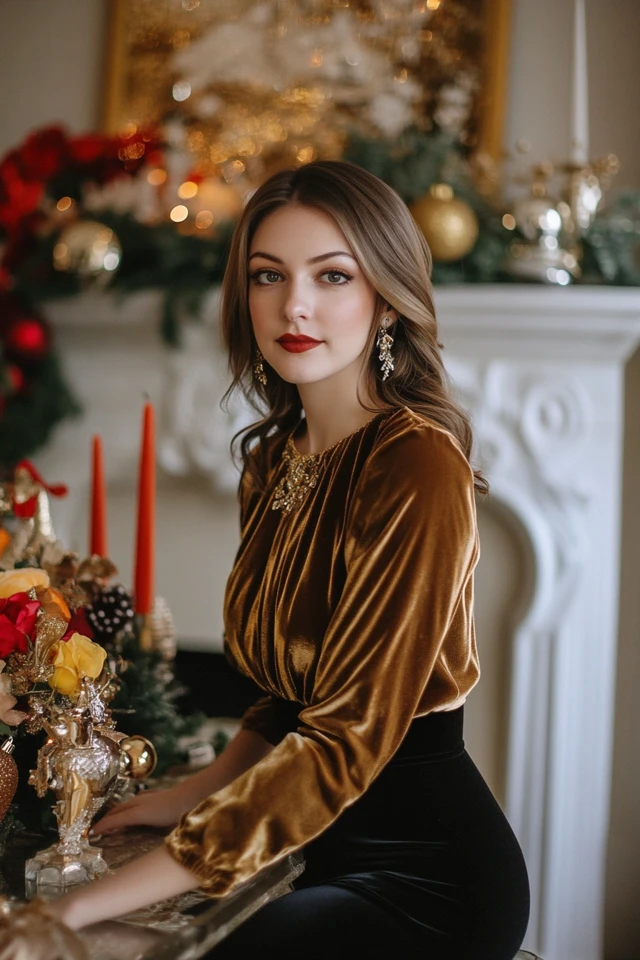
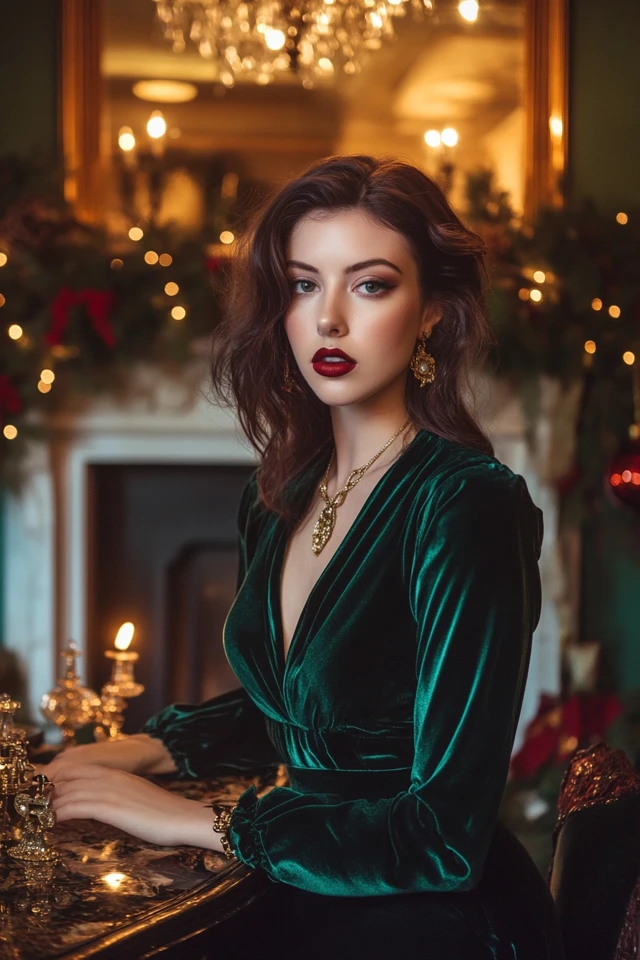
Deep reds, emerald, midnight blue and burgundy look especially rich in velvet. In satin, metallic shades like gold, silver and champagne give shine without heavy sparkle.
- Tonal: a burgundy satin blouse with velvet trousers in the same family.
- Contrast: a gold satin blouse with a black velvet skirt.
- Texture split: a velvet blouse with satin trousers or a satin skirt, so the shine stays below the waist.
For more ideas, see sophisticated holiday outfit ideas and elegant holiday dinner outfits with velvet blouses.
Dressy blouses for different ages and body shapes
Dressy blouses for women of any age follow the same rules: a clean shoulder line, a neckline you feel comfortable in, and a hem that sits well over the waistband. A looser satin blouse with a soft collar or a velvet top with three-quarter sleeves gives coverage without losing polish.
- Petite frames: fitted or slightly cropped tops with high-waisted bottoms keep proportions balanced.
- Curvy figures: wrap fronts or gentle ruching define the waist, and a soft velvet works better than a stiff one.
- Tall figures: longer, flowing satin or an oversized velvet top with slim trousers.
As an architect trained in evidence-based design, I'd treat the neckline as the first thing the eye reads, so pick that detail before anything else.
Styling and accessories
Tuck a satin blouse into high-waisted velvet trousers for a clean line, or wear it open under a velvet blazer. Chandelier earrings suit a simple neckline, while a high neck calls for smaller studs. Velvet clutches, belts or headbands repeat the fabric without overloading the outfit. Our guide to styling velvet accessories has more options.
Care basics
Follow the care label first. Many silk and velvet pieces are dry-clean only. If a label allows it, hand-wash silk in cool water with a gentle detergent. Steam velvet from a distance rather than pressing it, because an iron can flatten the pile.
Frequently asked questions
Can velvet and satin blouses be worn casually?
Yes. A velvet blouse with jeans or a satin top with wide-leg trousers keeps the fabric dressy without being formal.
What are the best formal blouses for weddings?
A satin blouse with a long skirt or tailored trousers, or a velvet blouse for winter evenings, works well. Choose a color that is not white or ivory.
Can I mix velvet and satin in one outfit?
Yes. Keep one fabric as the main piece and let the other appear in a trim, a skirt or a blazer so the outfit has contrast without competing textures.
How do I care for a velvet or satin blouse?
Check the care label. Dry cleaning is the safest option for most, and velvet is best steamed rather than ironed.
Filed under Fabrics & Textures