Shoulder Length Haircuts: 8 Ideas to Show Your Stylist
- Words by
- Julio Arco
- Published
- Reading
- 4 min
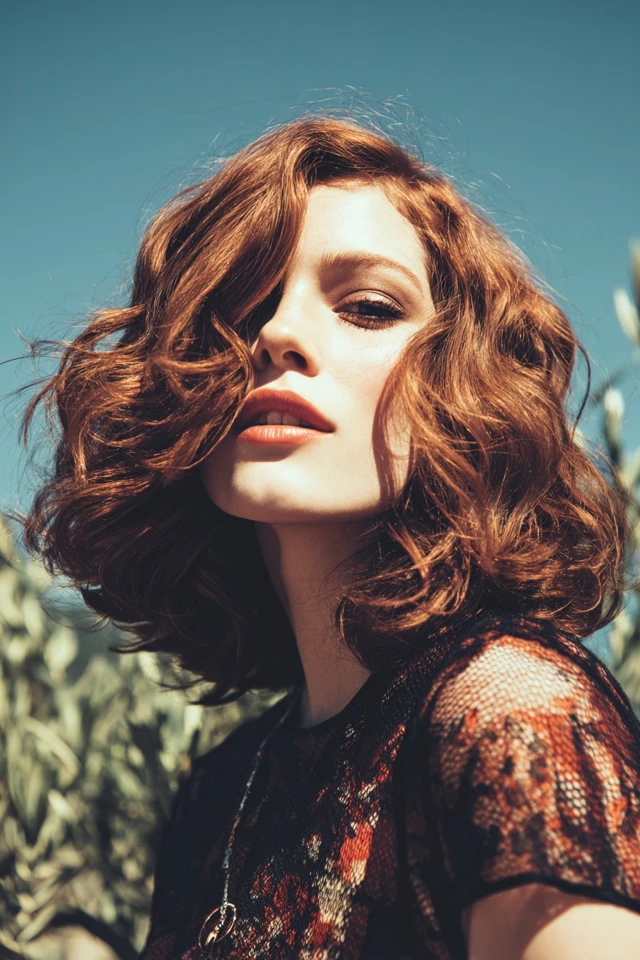
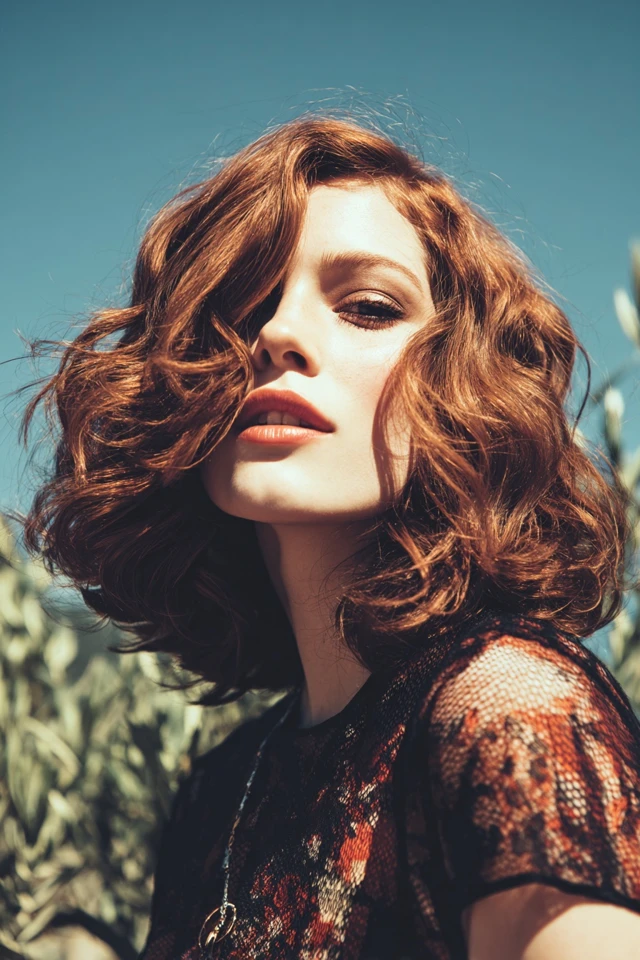
Wavy hair at shoulder length is one of the most forgiving places to start: the length is long enough to tie back and short enough to dry fast, and the bend in the hair hides small uneven spots in the cut. If you want one idea to bring to your stylist, ask for a wavy lob with soft, long layers and tell them how much you plan to style it.
Below are the shoulder length haircuts worth screenshotting, what each does for different hair, and how to keep waves looking intentional without a long routine.
Which shoulder length haircuts suit wavy hair?
The wavy lob
A lob (long bob) that ends at or just above the collarbone is the simplest version. Waves add width at the ends, so ask for the length to be cut with the hair dry or at least checked dry. Wavy hair shrinks as it dries, and a cut that looks right wet can land shorter than planned.
Shoulder length haircuts with layers
Long layers remove weight so waves can bounce instead of hanging in a triangle. Ask for layers that start around the chin and blend down, not short, choppy ones near the crown. If you like a slightly longer or lower version, see the collarbone-length wavy haircut.
Shaggy and textured shapes
A shag has more layers, more movement and a deliberately undone finish. It suits thick waves well, because the layers take out bulk. For a lighter, broken-up finish, the shoulder-length textured haircut is a good next read.
Shoulder length hair with curtain bangs
Curtain bangs part in the middle and sweep to each side, so they work with waves instead of fighting them. They are also easy to grow out, since the longest pieces blend into the face-framing layers. Waves lift bangs shorter, so ask for them a touch longer than you want the final result.
Side-swept and angled cuts
A slightly longer front with a shorter back draws the eye toward the face and adds a diagonal line that waves soften. It reads polished with a side part and relaxed with a middle part.
Straight and sleek alternatives
If you wear your hair straight some days, a blunt shoulder-length cut shows off the line of the ends. The shoulder-length sleek haircut covers that look.

How do you choose a cut for your hair and face?
Start with texture, then face shape. Both are about proportion: where the eye lands and how much width sits at each height.
- Round face: waves that end just below the jaw and a side part add a vertical line.
- Oval face: most lengths work, so choose by hair texture.
- Heart-shaped face: side-swept waves and fuller ends balance a wider forehead and narrower chin.
Shoulder length haircuts for thin hair
Fine hair looks fuller with a blunt or lightly layered perimeter, because a solid bottom edge reads as density. Heavy layering can make thin ends look wispy. Waves help too: bends add visible volume that straight fine hair lacks. Ask for a few face-framing layers rather than layers throughout.
Does shoulder length make you look older or younger?
Length alone does not decide it. Shape and finish do. Soft layers and movement around the face usually read fresher, while a heavy, one-length cut with no movement can look severe on anyone. For mature women, a wavy lob with soft layers and a side part is a flattering, low-fuss starting point, and your stylist can adjust it to your hair's density.
How do you style easy shoulder length haircuts?
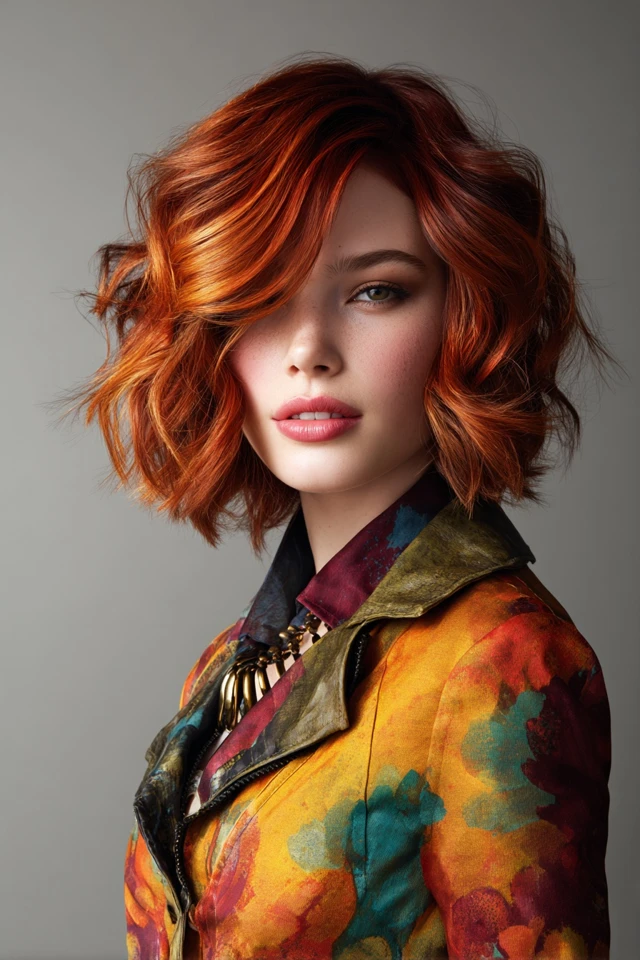
Easy shoulder length haircuts depend on working with your natural bend. A lightweight mousse or sea salt spray on damp hair, then air drying or a diffuser, is enough for most waves. Through the lens of evidence-based design, I'd treat texture as the first thing people read: defined, glossy waves look intentional, while dry, frizzy ones look unfinished, even in the same cut.
If you want a smoother, bouncier finish, the shoulder-length blowout haircut shows how to get it.
How do you keep waves healthy?
Hair is delicate when wet, so the American Academy of Dermatology recommends a wide-tooth comb instead of a brush to detangle wet hair. If you use a flat iron to smooth waves for a day, the AAD says to use it on dry hair on a low or medium heat setting, no more often than every other day.
A leave-in conditioner helps with frizz. Board-certified dermatologist Zoe D. Draelos, MD, FAAD, says: "You should see less frizz. Your hair should be easier to brush or comb, so you'll have less breakage."
Trim about every 6-8 weeks if you want the shape to hold, since split ends break up the wave pattern. For scalp or hair concerns, check with a dermatologist.
What to tell your stylist
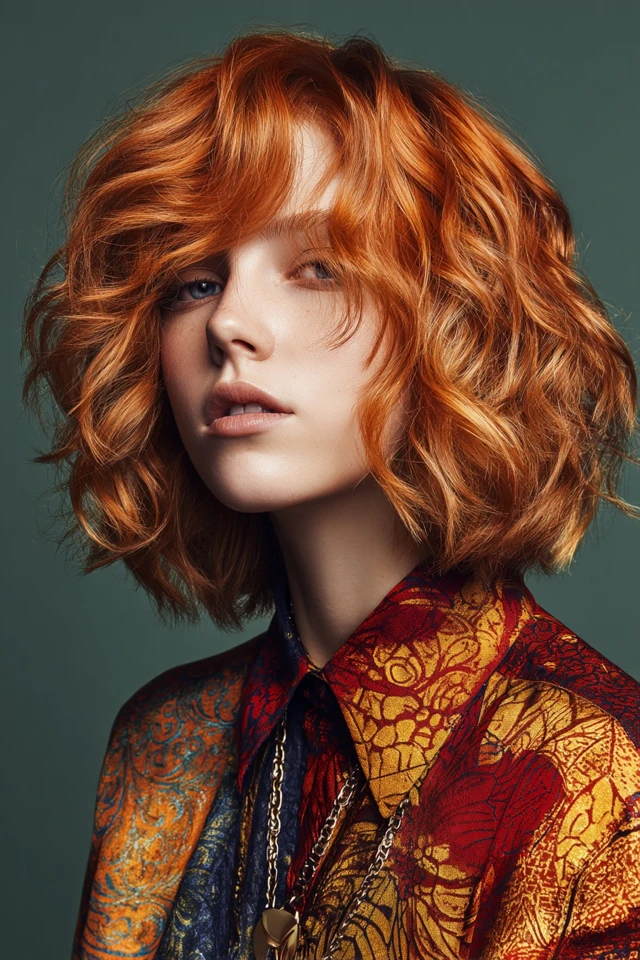
- Show two or three photos on hair close to your texture and density.
- Say how you usually wear it: air-dried, diffused or blow-dried.
- Ask where the shortest layer will fall and how the cut will look as it grows.
- Mention whether you want bangs now or only as an option later.
Prefer a finer, lighter edge? Compare with the shoulder-length wispy haircut, and if your waves are tighter, the shoulder-length curly haircut is the closer match.
Frequently asked questions
What is the most flattering haircut for an older woman?
A shoulder-length cut with soft layers and a side part is a common choice, because movement around the face looks lighter than a blunt, heavy line. The best version depends on hair density, so bring photos to your stylist.
What are the shoulder-length haircut trends for 2026?
Trends shift, so treat any forecast loosely. Wavy lobs, shags and curtain bangs are all widely worn now, and each can be adapted to your texture.
How often should I wash wavy hair?
The American Academy of Dermatology says that if your hair is dry, textured, curly or thick, you can shampoo when needed, at least once every 2 to 3 weeks. Check with a dermatologist if your scalp feels irritated.
Filed under Haircuts